
Matter, Zigbee, Z-Wave, and Wi-Fi smart home standards explained for Australians
Confused by smart home protocols? Here's what each standard actually does, which products use which, and why Matter is the one to bet on for new Aussie installs in 2026.
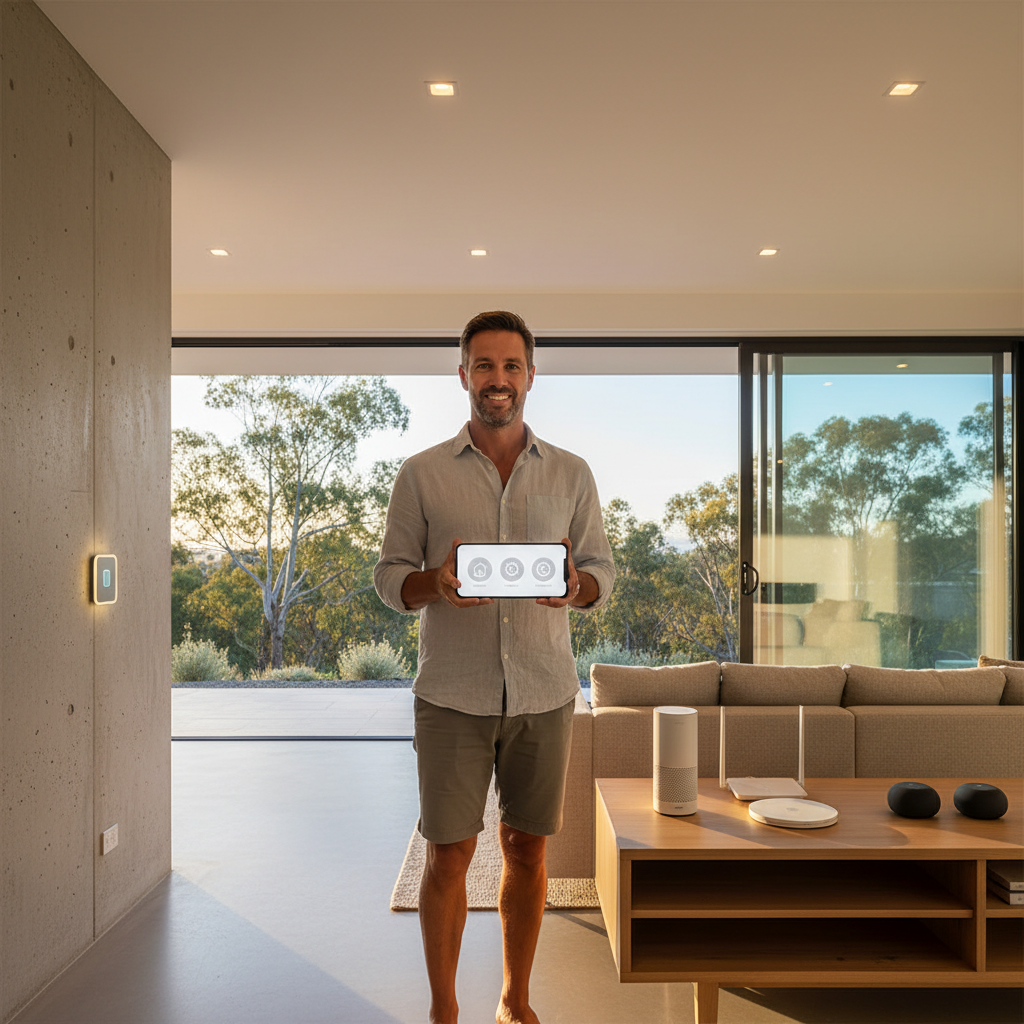
Smart home protocols are confusing. Five competing standards exist; products advertise compatibility with several. The good news for 2026: Matter is consolidating the market, and you can stop worrying about ecosystem lock-in for new purchases.
The five protocols, plain explanation
| Protocol | What it is | Range | Power | Hub needed? |
|---|---|---|---|---|
| Wi-Fi | Same Wi-Fi as your phone | Throughout the house | Higher power, mains usually | No (just your router) |
| Zigbee | Mesh wireless, low-power | Devices relay each other | Battery-friendly | Yes (Hue Bridge, Aqara, SmartThings) |
| Z-Wave | Mesh wireless, low-power | Devices relay each other | Battery-friendly | Yes (Z-Wave hub) |
| Bluetooth (LE) | Short-range wireless | Close to your phone | Battery-friendly | Phone is the hub |
| Thread | Mesh wireless, low-power, IPv6 | Devices relay each other | Battery-friendly | Thread Border Router needed |
| Matter | App-layer protocol on top of Wi-Fi, Ethernet, or Thread | Depends on transport | Depends on device | Sometimes (for Thread devices) |
Each in detail
Wi-Fi devices
Simplest, no hub needed. Plugs straight into your router. Limitations:
- Higher power use (not great for battery-only devices)
- Wi-Fi network congestion when you have 30+ devices
- Range limited to your Wi-Fi coverage
- Updates each device individually
Good for: mains-powered devices like smart plugs, mains-powered cameras, large home appliances.
Zigbee
The veteran mesh standard. Battery-powered sensors run for 1 to 2 years on a coin cell. Mains-powered devices act as repeaters, building a mesh. Strengths:
- Very battery-friendly
- Self-healing mesh
- Mature ecosystem (Philips Hue, Aqara, IKEA TRÅDFRI, SmartThings)
- Devices from different brands often work together (with caveats)
Weaknesses:
- Needs a coordinator hub
- Some brands implement Zigbee slightly differently, occasionally compatibility surprises
- 2.4 GHz radio competes with Wi-Fi in congested homes
Z-Wave
Similar in concept to Zigbee but runs on a different radio frequency (915 MHz in Australia, less congested than 2.4 GHz). Strengths:
- Battery-friendly
- Less interference
- Strict certification (all Z-Wave devices guaranteed to work together)
Weaknesses:
- Smaller Aussie product range
- Z-Wave hubs less common
- Increasingly niche as Matter gains share
Thread + Matter (the future)
Thread is a low-power mesh radio (similar to Zigbee in concept but built on IPv6, so devices can be addressed like internet devices). Matter runs on top of Thread (or Wi-Fi or Ethernet).
A Matter-over-Thread smart bulb in 2026 works with HomeKit, Google Home, and Amazon Alexa simultaneously. No more ecosystem lock-in.
Strengths:
- Cross-platform compatibility (the big win)
- Battery-friendly (Thread)
- Future-proof
- Strong privacy (IPv6 addressing, end-to-end where supported)
Weaknesses:
- Still ramping up; not every category has Matter products yet
- Some early Matter products had buggy implementations
- Requires a Thread Border Router for Thread-based devices
Bluetooth Low Energy
Short range (10m typically), phone-as-hub model. Good for:
- Smart door locks (you’re physically near them anyway)
- Trackers (Apple AirTag, Tile)
- Fitness sensors
Not good for whole-home automation. Range too short.
Which to buy for new installs in 2026
| Use case | Best choice |
|---|---|
| First-time smart home buyer | Matter-certified devices on a HomePod mini / Nest Hub Border Router |
| Already invested in Philips Hue | Stay Zigbee (Hue Bridge), add Matter bridge for cross-ecosystem |
| iPhone-only household | HomeKit + Matter mix |
| Mixed iPhone + Android household | Matter (works with both) |
| Heavy-use household with 50+ devices | Zigbee or Matter-over-Thread for low-power devices |
| One-off smart plug | Wi-Fi (simplest, cheap) |
| Bulk smart bulb fitout | Philips Hue (Zigbee) or Matter-certified |
The transition right now (2026)
Most major brands are adding Matter support:
- Apple HomeKit: full Matter controller support since 2022
- Google Home: full Matter controller support since 2022
- Amazon Alexa: full Matter controller support since 2022, Echo devices act as Thread Border Routers
- Samsung SmartThings: full Matter support, often as the most universal bridge
Older Zigbee and Z-Wave installs can be bridged into Matter via a SmartThings hub or specialised Matter bridges. So existing investments aren’t wasted.
What protocol does each product use?
Hard to tell from packaging sometimes. Look for:
- “Works with Matter” on the box: Matter certified
- “Zigbee” or specific brand badge (Hue, IKEA): Zigbee
- “Wi-Fi” on the spec: Wi-Fi
- “Thread” on the spec: Thread-based, usually Matter as application layer
- No protocol listed but “needs Wi-Fi”: Wi-Fi
- Specific hub required: probably Zigbee or Z-Wave
Don’t worry about protocol lock-in (much) in 2026
The point of Matter is that you no longer have to plan your smart home around protocols. If a device is Matter-certified, it works with any major ecosystem and any other Matter device.
For products without Matter (older Zigbee, Z-Wave), you still pick an ecosystem (Hue Bridge, SmartThings, Aqara). But the universe of Matter products grows monthly, and within 2 to 3 years the ecosystem question will be largely settled.
The practical buying advice
- First device: pick a Matter-certified smart plug ($30 to $60). It’ll work with whatever ecosystem you adopt later.
- For lighting: if you want a complete bulb solution, Philips Hue (Zigbee + Matter bridge) is the most polished. Otherwise, individual Matter bulbs work for cross-platform.
- For sensors and small devices: Aqara (Zigbee + their hub bridges to HomeKit/Google/Alexa) or Eve (HomeKit + Thread + Matter) are the best value.
- For cameras: stick with one brand’s app for live feed; the cross-platform integration of cameras through Matter is less mature than other categories.
When to NOT bother with smart home
- You rent and can’t install fixed gear
- Your Wi-Fi is unreliable (improve Wi-Fi first)
- You don’t have an always-on smart device (phone or speaker) to control things
- You want to “set and forget”, smart homes need occasional maintenance
For everyone else, smart home in 2026 is more accessible, less locked-in, and more useful than ever. Start small, build over time.
Frequently asked questions
What's the difference between Matter, Zigbee, and Z-Wave?
Zigbee and Z-Wave are wireless mesh protocols for low-power devices. Matter is a newer application-layer protocol that runs on top of Wi-Fi, Ethernet, and Thread (Thread is a Zigbee-like mesh standard). Matter is the cross-platform standard for the next decade; Zigbee and Z-Wave continue but are increasingly being bridged to Matter.
Do I need a hub for smart home devices?
Wi-Fi devices, no, they connect directly to your router. Zigbee and Z-Wave, yes, they need a coordinator hub (Aqara hub, Philips Hue Bridge, SmartThings hub). Matter over Thread needs a Thread Border Router (built into HomePod mini, Apple TV 4K, Google Nest Hub second gen, Amazon Echo 4th gen+).
Is Matter the same as Thread?
No. Matter is the application protocol (what the device says). Thread is the network it can run on (how the device talks). Matter can run on Wi-Fi, Ethernet, or Thread. Most low-power Matter devices use Thread; mains-powered ones often use Wi-Fi.
Should I buy Zigbee or Matter products in 2026?
Matter for new purchases where available, especially for cross-platform households or future-proofing. Zigbee remains an excellent ecosystem if you're committed to a Zigbee hub (Hue Bridge, Aqara, SmartThings). Z-Wave is increasingly niche; only buy if your existing setup is already Z-Wave.