
Solar PV rebates by state, what you actually get in 2026
Federal STCs plus state rebates cut Australian solar install costs by 30 to 50%. Here's what each state's program pays in 2026, who's eligible, and how the maths actually works out.
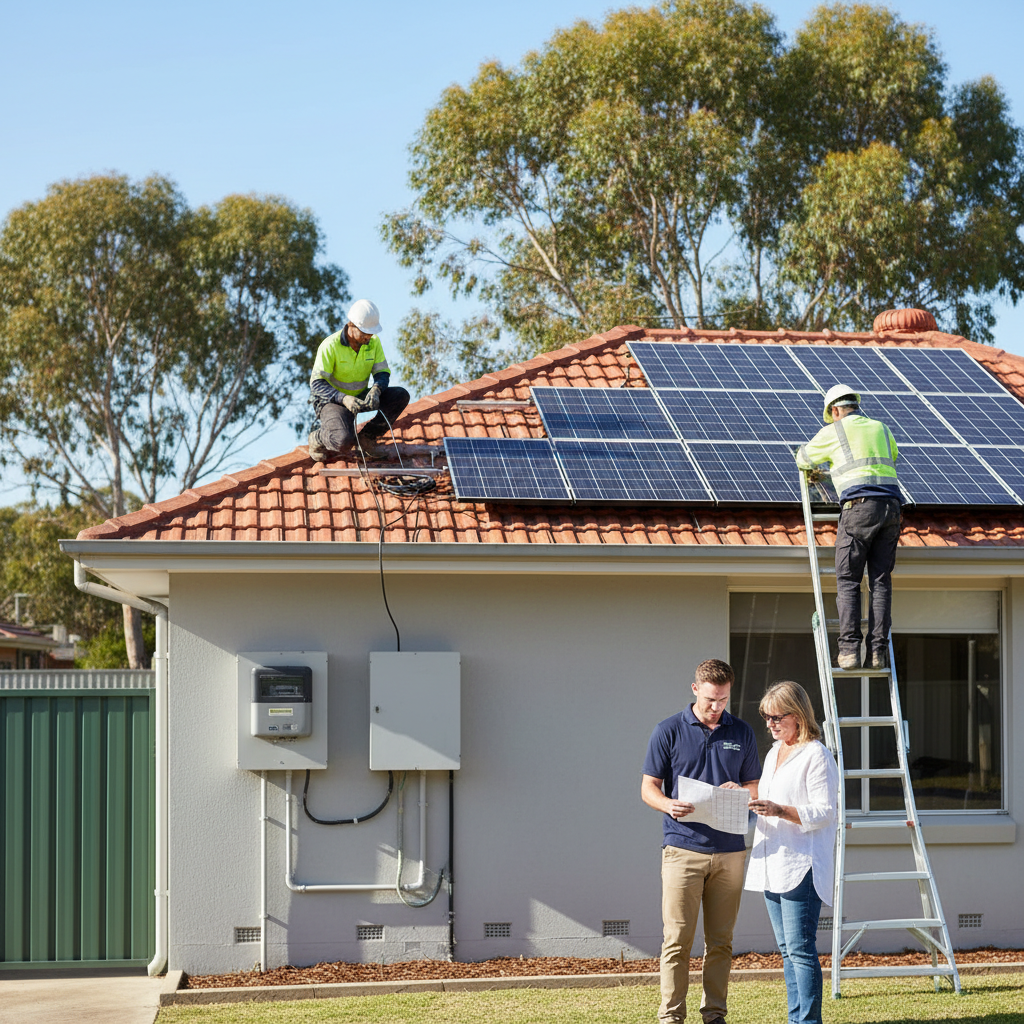
Solar PV is one of the most successful policy programs in Australian energy. Over 3.5 million Aussie homes had solar installed by mid-2026, more per capita than any country on earth. The combination of federal STC rebates and state schemes is the reason.
This guide covers what each state pays in 2026. Programs change year to year, always verify current detail with your state energy department before signing a quote.
Federal STC scheme (national)
The Small-scale Renewable Energy Scheme creates Small-scale Technology Certificates (STCs) per kW of installed solar PV in your state’s zone. The value varies with the market price of STCs (usually $30 to $45 per STC). Effective rebate:
- 2026 deeming period: 4 years (down from 5 in 2025; 3 in 2027; 2 in 2028)
- Approximate value: $400 to $500 per kW
A 6.6kW system gets about 17 STCs in zone 3 (most of NSW, VIC, SA), 20 STCs in zone 1 (northern QLD), 14 STCs in zone 4 (Tasmania, southern VIC). At $35 STC value, that’s $500 to $700 per kW of installed.
Installer claims the STCs on your behalf, discount the invoice. You don’t apply.
VIC, Solar Homes Program
The Victorian Solar Homes program is one of the most active state schemes in Australia. As of 2026:
- Solar PV rebate, up to $1,400 for eligible owner-occupiers (household income cap and property value cap)
- Solar hot water rebate, up to $1,000 for heat pump or solar HW
- Solar battery loan, interest-free loan up to $8,800 for eligible homes (separate from the rebate)
- Subject to combined household income under $210,000 and property value under $3M (caps change, verify)
Rebates limited to a number of households per month, sometimes runs out mid-month. Apply early in the calendar month.
NSW, Empowering Homes program
- Interest-free loan for solar + battery, up to $14,000 (battery component up to $9,000)
- Income test, household combined under $180,000
- Apply via Service NSW
- Stacks with federal STCs
NSW also has historically had separate low-income solar programs run through community housing.
QLD, current programs
- Battery booster rebate, up to $4,000 for battery storage (eligible homes with existing solar)
- Low Income Energy Bill Relief, household-level relief, not solar-specific
- Federal STCs apply
- Subject to change, QLD programs have varied year to year
ACT, Sustainable Household Scheme
- Zero-interest loan up to $15,000 for solar, battery, electric vehicle, hot water, heating upgrades
- One of the most generous schemes in Australia by total per-household amount
- Means tested but generous thresholds
WA, programs
- DEBS feed-in tariff, replaces older retail-style feed-in for new installs; pays differently in peak vs off-peak windows
- No dedicated state rebate currently, federal STCs apply
- Several local government area schemes (City of Joondalup etc.) offer modest rebates
SA, programs
- Home Battery Scheme (now discontinued for new applications but legacy applies)
- Switch for Solar program for income support recipients in some areas
- Federal STCs apply
TAS, NT
- No major state-specific solar rebates as of mid-2026
- Federal STCs apply
- TAS Hydro Tas tariffs favour solar self-consumption (off-peak rates very low)
Doing the maths for a typical 6.6kW system
| Scenario | Install cost | After rebates | Net to you |
|---|---|---|---|
| NSW, $180K household, no battery | $7,000 | $3,700 (STCs only) | $3,700 |
| VIC, eligible Solar Homes (PV only) | $7,000 | $2,300 ($1,400 + STCs) | $2,300 |
| QLD, no battery, no state rebate | $7,000 | $3,700 (STCs only) | $3,700 |
| ACT, with Sustainable Household loan | $7,000 | $3,700 + 0% loan | $3,700 over 5 yrs interest-free |
| TAS, no state rebate | $7,000 | $3,700 (STCs only) | $3,700 |
Add a battery ($12,000 to $16,000 for typical 10kWh system), then state schemes change the maths a lot. CHBP federal battery program drops battery cost by ~30%.
Choosing a solar installer
Solar PV install is licensed electrical work AND requires CEC accreditation. Verify:
- Electrical contractor’s licence (state regulator register)
- CEC accreditation, both designer and installer
- Roof structural assessment included
- DNSP (network) approval handled by installer
- 5-year warranty minimum on workmanship
- Panel warranty 25 years performance, 10 to 12 years product
- Inverter warranty 5 to 10 years
- Certificate of Compliance after install
Avoid:
- “Cash discount” offers (no GST, no insurance recourse)
- High-pressure door-knockers
- Quotes without a roof inspection
- Brands without an Aussie warranty support arm
- Sub-$5,000 6.6kW systems (almost always sub-quality)
Payback maths in 2026
For an average Aussie home with $2,000 to $3,500 annual electricity spend, a 6.6kW system at net $3,500 after rebates saves $1,200 to $2,200 a year. Payback period 2 to 3 years. After payback, 22 to 28 years of effectively-free electricity (panel warranties run 25 years performance).
Solar is one of the highest-ROI investments most Australian households can make in 2026. The combination of federal and state rebates makes it almost free at the install point.
Frequently asked questions
How much is the federal STC rebate worth?
Around $400 to $500 per kW of installed solar PV in 2026, decreasing each year as the scheme phases out. A 6.6kW system gets approximately $2,600 to $3,300 in STC value. The installer claims the STCs and discounts your invoice.
Do state rebates stack on top of federal STCs?
Usually yes. The federal STC scheme is national. State programs sit on top and target specific cohorts (low-income, renters, regional). Most state schemes cap eligibility by household income, property value, or location.
Which state has the best solar rebate?
Depends on your situation. VIC's Solar Homes Program is one of the most generous for owner-occupiers. ACT's Sustainable Household Scheme covers solar via zero-interest loans. NSW Empowering Homes is a loan scheme. QLD has had several rebates. WA's program is more modest.
How much does a 6.6kW solar system cost in Australia 2026?
$5,500 to $8,500 fully installed before rebates. After federal STCs alone, $3,500 to $6,000. After state rebates where eligible, $2,500 to $5,500. Premium quality with high-end panels and inverter, add $1,500 to $3,000.