
Electrician hourly rates in Australia 2026, by state
Sparky rates vary by state, by job type, by time. Here's the realistic 2026 range plus what hidden costs are baked into the rate, and how to spot a dodgy quote.
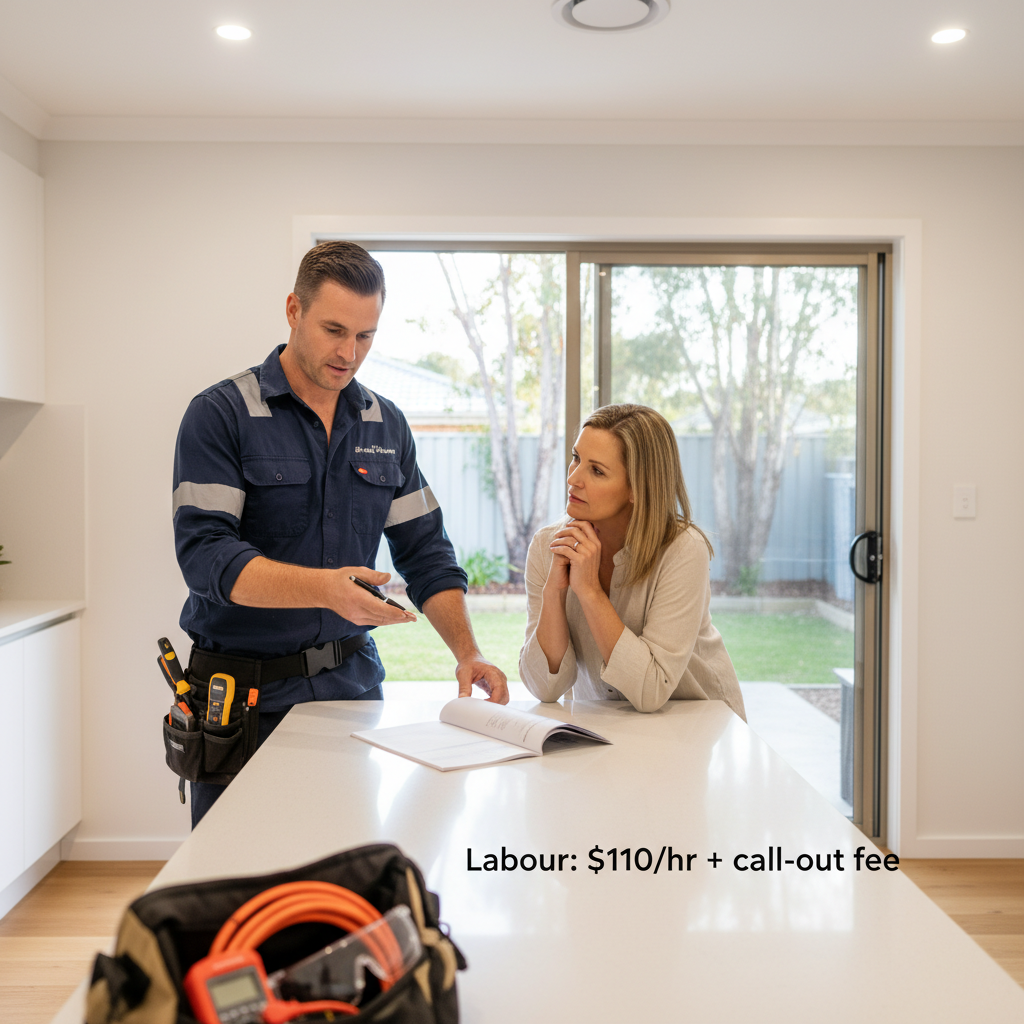
Electrician rates are one of the highest-paid trades in Australia and one of the most-asked costs. The wide range reflects different business models, different state markets, and different job types.
Standard hourly rates by state, 2026
| State | Residential (business hours) | Commercial / specialist | After-hours / emergency |
|---|---|---|---|
| NSW (Sydney metro) | $120 to $180 | $160 to $230 | $180 to $340 |
| NSW (regional) | $95 to $155 | $135 to $200 | $150 to $290 |
| VIC (Melbourne) | $115 to $175 | $155 to $230 | $175 to $330 |
| VIC (regional) | $95 to $150 | $130 to $200 | $150 to $280 |
| QLD (Brisbane) | $105 to $165 | $145 to $220 | $165 to $310 |
| WA (Perth) | $110 to $175 | $150 to $230 | $175 to $330 |
| SA (Adelaide) | $100 to $160 | $140 to $215 | $160 to $300 |
| TAS, NT, ACT | $95 to $180 | $135 to $230 | $155 to $340 |
Specialisation premiums
- Solar PV installer (CEC-accredited), $130 to $200/hour plus per-kW rates
- EV charger installer, $140 to $220/hour
- Three-phase or commercial sparky, $150 to $250/hour
- Smart home / KNX / building automation specialist, $160 to $260/hour
- Switchboard upgrade specialist, $130 to $200/hour
- Renewables (battery storage) installer, $140 to $230/hour
What you’re paying for
A sparky charging $150/hour typically takes home $35 to $55. The rest covers:
- Annual licence and insurance, $5,000 to $15,000
- Ute and fitout, $30,000 to $80,000 over its life
- Test equipment (Fluke multimeters, MFTs, clamp meters), $5,000 to $15,000
- Power tools, $5,000 to $20,000 active inventory
- Per-job compliance paperwork
- Public liability insurance ($10M minimum)
- Sick leave, holidays, super (sole trader funds all of this from gross)
Spark businesses with apprentices and admin staff carry more overhead per billable hour, justifying the higher end of the range.
Call-out fees
Almost universal:
- Standard call-out, $80 to $150 (covers first 15 to 30 mins)
- After-hours call-out, $150 to $300
- Public holiday or post-midnight, $250 to $500
- Country / extended travel, kilometre rate plus flat
After-hours premiums
- Saturday business hours, +25 to 50%
- Sunday or public holiday, +50 to 100%
- After 6pm weeknights, +50%
- After 10pm, +75 to 150%
Pay it only for genuine emergencies: power out at the whole house, sparking from an outlet, burning smell from a switchboard. Most “emergencies” can wait until morning.
Flat-rate vs hourly
Known scope, flat quote:
- Replace a power point
- Replace a light fitting
- Install a ceiling fan (where wiring exists)
- Add a new outlet on an existing circuit
- Install an EV charger
Unknown scope, hourly:
- Diagnose intermittent tripping
- Track down a fault
- Inspect old wiring before purchase
- Find the cause of warm wall plates
Red flags
- No written quote
- No licence number visible on the quote
- “Cash only” offers
- Refusing to provide Certificate of Compliance
- Asking for more than 10% deposit
- Quoting without inspecting
- Vehicle has no business signage
Related electrical cost guides
Frequently asked questions
What's a fair electrician hourly rate in Australia?
$90 to $180 per hour for residential during business hours. Commercial sparkies $130 to $230. Specialists (solar, EV, automation) at the upper end. After-hours adds 50 to 100%.
Why are sparkies so expensive?
Real overheads: licence and insurance $5,000 to $15,000/year, vehicle and tools $25,000 to $60,000 invested, compliance certificates per job, public liability $10M+. Of a $150/hour rate, the sparky's take-home is usually $35 to $55.
Is a call-out fee on top of the hourly?
Almost always. Typical call-out $80 to $150 for the first 30 minutes, then hourly. Sometimes the call-out is waived if the job runs over 2 hours, ask before booking.
How do I check the quote is fair?
Get three written quotes. Verify each sparky's licence on the state regulator's register. Ask for itemised labour, parts, and Certificate of Compliance. Don't pay more than 10% deposit. Pay the balance on completion.