
Cost to build a granny flat in Australia, 2026 budget by state and type
Granny flats are one of the biggest construction trends in Australian backyards. Expect $120,000 to $300,000 for a typical two-bed depending on state, finishes, and council approvals.
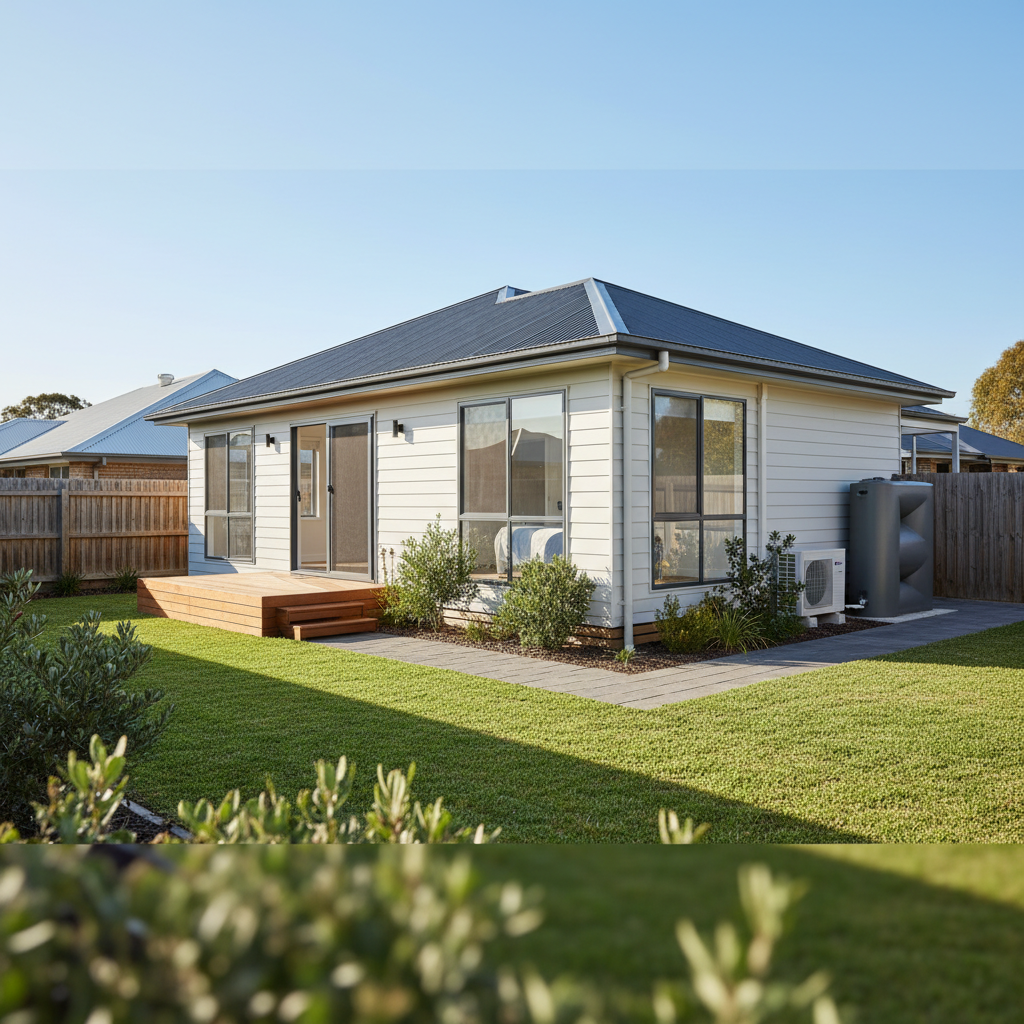
Granny flats are one of the biggest building categories in Australia by lot count. Demand is driven by the housing shortage, rising aged-care costs, and the rental market. Whether it’s a parent moving in, a uni-age kid moving out into the backyard, or a rental income play, the build cost is similar.
This is a national 2026 cost guide. State, site, and finishes move the price significantly.
Typical cost ranges
| Granny flat type | Total cost range (AUD, including site works) |
|---|---|
| Basic 50 m² studio kit home (DIY-assisted) | $80,000 to $130,000 |
| Quality 50 m² studio, builder-built | $110,000 to $170,000 |
| Standard 60 to 70 m² 2-bed, builder-built | $150,000 to $250,000 |
| Premium 80 m² 2-bed with high-end fitout | $230,000 to $350,000 |
| Architect-designed custom 90+ m² | $300,000 to $500,000+ |
These figures include the structure, site preparation, slab or piers, services connection, council fees, and standard fitout. They typically do NOT include landscape work, fencing, or major site excavation.
What’s actually in that number
For a $200,000 standard 65 m² 2-bed granny flat:
| Item | Approximate cost |
|---|---|
| Council application, plans, certification | $4,000 to $10,000 |
| Site preparation and slab | $25,000 to $45,000 |
| Frame and structure | $35,000 to $55,000 |
| Roofing and external cladding | $20,000 to $35,000 |
| Internal lining (plaster, ceilings) | $12,000 to $22,000 |
| Electrical (rough-in + final) | $10,000 to $18,000 |
| Plumbing (rough-in + final) | $10,000 to $18,000 |
| Kitchen fitout | $12,000 to $25,000 |
| Bathroom fitout | $10,000 to $18,000 |
| Floor coverings | $5,000 to $12,000 |
| Paint, fixtures, fittings | $8,000 to $15,000 |
| Connection to mains (water, sewer, power) | $5,000 to $15,000 |
| Contingency (always have) | $10,000 to $20,000 |
The big surprises are usually services connection (especially if the granny flat is far from the main house) and site excavation on sloping blocks.
State-by-state, approximate
| State | Typical 2-bed 65 m² (AUD) | Approval pathway |
|---|---|---|
| NSW (Sydney) | $180,000 to $260,000 | SEPP Secondary Dwellings (CDC) |
| NSW (regional) | $150,000 to $220,000 | SEPP Secondary Dwellings |
| VIC (Melbourne) | $170,000 to $250,000 | Dependent Person’s Unit / Small Second Dwelling |
| VIC (regional) | $150,000 to $220,000 | Small Second Dwelling |
| QLD (Brisbane, SEQ) | $160,000 to $230,000 | Secondary Dwelling under planning scheme |
| WA (Perth) | $170,000 to $250,000 | R-Codes Secondary Dwelling |
| SA (Adelaide) | $160,000 to $230,000 | Development Act |
| TAS, NT, ACT | $170,000 to $260,000 | Varies by jurisdiction |
NSW has the most established granny-flat approval pathway, which is why NSW prices are sometimes lower despite higher construction costs, the approvals are faster and simpler.
Kit homes vs custom builds
Kit home granny flats (where you receive a flat-pack of pre-cut materials):
- Cheaper upfront ($60K to $120K for the kit)
- Site works, slab, plumbing, electrical extra ($50K to $100K)
- Faster to erect (a confident DIYer + tradespeople 6 to 12 weeks)
- Less customisable
- Better for simple, flat sites
Custom-built granny flats (a registered builder builds from architectural plans):
- More expensive overall but smoother process
- Quality-controlled finish
- Better resale and rental return
- Often includes council liaison and approval lodgement
- Worth the premium for complex sites or premium finishes
The pitfalls
- Site cost surprises, sloping blocks add $20K to $80K for excavation and retaining
- Services run length, every metre of trench for water, sewer, power past 20m adds significant cost
- Council surprise rules, some councils require additional studies (bushfire, flooding, heritage)
- Strata or community title issues, granny flats on strata-titled lots are usually banned
- Easement encroachment, building over a sewer or stormwater easement is forbidden
- Setback non-compliance, NSW SEPP requires specific setbacks from boundaries and the main dwelling
Getting quotes
- Site visit, never a sight-unseen quote for a granny flat
- Three quotes minimum
- Compare like-for-like inclusions (some quotes are bare-bones, others include kitchen and floor coverings)
- Verify builder’s licence and Home Warranty Insurance with the state regulator
- Pay no more than 5 to 10% deposit
- Use a HIA or MBA fixed-price contract, not the builder’s own (the standard contracts are heavily builder-favoured)
A granny flat is one of the highest-impact additions to most Australian residential blocks. Done right, it adds rental income, lifestyle flexibility, and significant property value. Done wrong, it’s an unapproved structure that bites you at sale time. Worth getting right.
Frequently asked questions
How much does a granny flat cost in Australia?
$120,000 to $250,000 for a typical two-bedroom 60 to 70 m² flat from a quality builder, including site works, council approvals, and standard fitout. Premium fitouts, complex sites, or coastal locations push above $300,000. Kit homes start at $60,000 to $100,000 for the structure but rarely include the site works that add another $40,000+.
Do I need council approval for a granny flat?
Almost always yes. Most states allow granny flats as Complying Development or Secondary Dwellings under specific rules (NSW SEPP for granny flats, VIC small second dwelling provisions, QLD Secondary Dwelling code). The approval pathway is usually faster and cheaper than a full DA, but it's still required. Set-back, height, and lot-size rules vary by state and council.
How long does it take to build a granny flat?
12 to 20 weeks for the build itself once approval is granted. Add 8 to 16 weeks for design and approval. Total from first thought to moving in: typically 6 to 12 months.
Are granny flats a good investment?
Generally yes if you can rent it out. A $200,000 granny flat in Sydney can rent for $400 to $600 a week, paying back in 7 to 10 years and lifting house value by typically $150,000 to $250,000. In regional or low-rent areas, the return is lower. ATO rules treat the rental income as taxable and capital gains tax may apply on sale.