
Becoming a carpenter in Australia, what it takes in 2026
Carpentry is one of the biggest trades in Australia and one of the best paid. Here's the full path from school leaver to licensed chippy, state by state, with realistic wages, costs, and pitfalls.
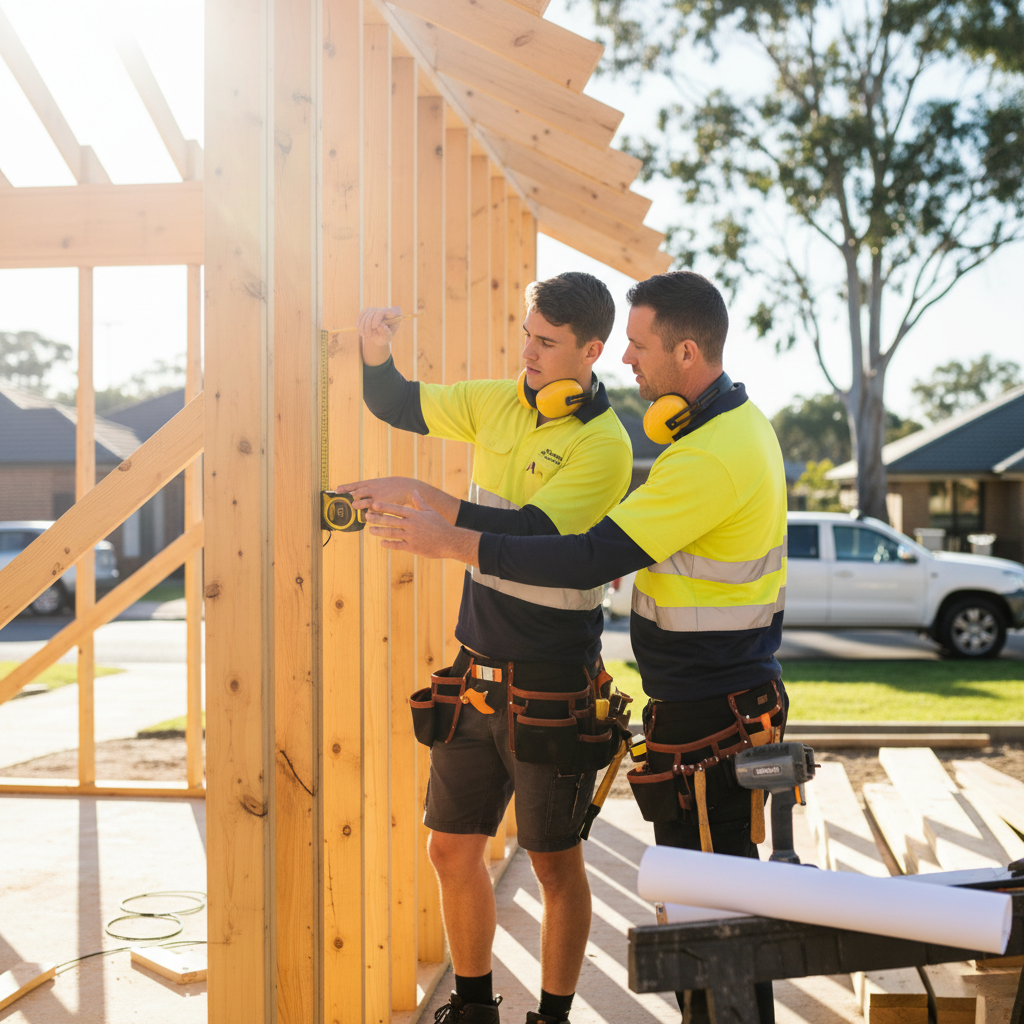
Carpentry is one of the biggest trades in Australia by employment, and one of the most consistently in demand. New houses, renovations, commercial fit-outs, and the ongoing housing shortage all need chippies, and the supply has been thin for years. A four-year apprenticeship pathway lands you on $60K to $80K within five years of starting, and a licensed contractor with their own gang routinely takes home $120K to $200K.
This is the full path from school leaver to licensed chippy in 2026.
The path, in five stages
- Pre-apprenticeship (optional), Cert II in Building and Construction, 6 to 12 weeks at TAFE
- Apprenticeship, four years employed under a licensed carpenter or builder while studying Cert III in Carpentry
- Cert III completion, formal trade qualification
- Post-trade experience, two years working as a qualified chippy under a licensed builder
- Contractor licence, Cert IV in Building plus state-specific licensing exam, lets you contract directly with clients
What an apprentice earns by year (2026 award rates, approximate)
| Year | Weekly wage (gross, AUD) | Annual (gross) |
|---|---|---|
| Year 1 | $530 to $700 | $27,500 to $36,000 |
| Year 2 | $700 to $920 | $36,000 to $48,000 |
| Year 3 | $880 to $1,150 | $46,000 to $60,000 |
| Year 4 | $1,000 to $1,350 | $52,000 to $70,000 |
Wages vary significantly by state and employer. NSW, VIC, and WA commercial sites pay above award. Regional and rural pay at or below. Add 11% super, tool allowances, travel allowances, and overtime to get the real take-home.
Where to find an apprenticeship
- Direct with a builder or carpentry firm, most common path. Hit small local builders’ Facebook pages, drop off resumes, ring around
- Group Training Organisations (GTOs), employ apprentices and host them out to different builders. MEGT, MAS National, Apprenticeship Support Australia are the major Aussie GTOs
- MySkills.gov.au, lists current vacancies
- Jobactive, government job board with apprentice listings
- TAFE pre-apprenticeship pathways, finish the pre-app and many TAFEs help place graduates into apprenticeships
TAFE side of the apprenticeship
Cert III in Carpentry is delivered as block release (1 week on, 3 weeks at work) or day release (1 day a week at TAFE) over 3 to 4 years. Cost varies hugely by state subsidy:
- NSW, Smart and Skilled subsidies bring it to $1,500 to $3,000 over the course
- VIC, Free TAFE for eligible students, otherwise $3,000 to $6,000
- QLD, Construction Skills Queensland subsidies bring it to $2,500 to $5,000
- WA, Jobs and Skills WA subsidies, $2,500 to $5,500
- SA, TAS, NT, ACT, similar mid-range subsidised pricing
Plus textbooks ($300 to $600) and the personal protective equipment some TAFEs require students to supply.
Tools you’ll need over four years
Year 1 essentials, $800 to $1,500:
- Cordless drill and impact driver kit
- Tape measure, square, pencil set
- Hammer (250g and 500g)
- Hand saws (rip and crosscut)
- Block plane
- Safety glasses, ear protection, dust mask
- Tool belt and pouch
Years 2 to 4 additions, $1,500 to $3,500:
- Mitre saw
- Circular saw
- Router
- Levels (600mm and 1.2m)
- Chisel set
- Speed square and combination square
- Battery system expansion
Buying the Year 1 kit second-hand off a finishing apprentice saves 30 to 50%. Make sure cordless tools share a battery system before you commit to a brand.
State-by-state licensing path
After Cert III plus 2 years experience, the contractor licence path differs:
- NSW, Fair Trading contractor licence, Cert IV in Building and Construction required
- VIC, Domestic Builder, registered with the VBA, Cert IV plus practitioner exam
- QLD, QBCC trade contractor licence, Cert IV plus business management module
- WA, Building Services Board contractor authorisation
- SA, TAS, NT, ACT, lighter regimes, generally Cert IV plus application
See Carpentry licence by state for the full breakdown.
What it actually pays once you’re licensed
| Stage | Annual gross (AUD) |
|---|---|
| Apprentice (year 4) | $52,000 to $70,000 |
| Qualified carpenter, employee | $65,000 to $90,000 |
| Carpenter, FIFO mining/regional | $90,000 to $150,000 |
| Sole-trader contractor (10 years in) | $100,000 to $180,000 |
| Builder running a small crew | $130,000 to $250,000+ |
The big jump happens when you go from employee to contractor with your own clients. The next jump is when you employ apprentices and other tradies. Many of Australia’s wealthiest tradespeople start their own building company in their 30s.
The pitfalls
- Wrong employer, some builders use apprentices as cheap labour and don’t teach them. Ask current apprentices in the area about the boss before signing
- Skipped TAFE, sounds tempting, the no-go for actual qualification
- Tool theft, apprentice tool theft from utes is an Aussie epidemic. Lock the box, insure the tools
- Burnout, four years of early starts and physical work, look after your body and your weekends
- Skipping the contractor licence, you’ll cap your income at the employee ceiling unless you push through to the licence
The Carpentry is one of the highest-use trade qualifications in Australia: low entry barrier, strong wages, clear progression, and a contractor licence at the end that turns into business ownership for those who want it. The four years are demanding but every year compounds.
Want the licensing detail? Read Carpentry licence by state. Want costs? Read Cost to build a deck in Australia to see what you’ll be quoting customers on day one.
Frequently asked questions
How long does it take to become a carpenter in Australia?
Four years for the apprenticeship plus Certificate III in Carpentry. Add Cert IV in Building plus a couple of years on the tools to qualify for a sole-trader contractor licence in most states.
What does an apprentice carpenter earn in Australia?
First year typically $25,000 to $35,000 gross. Fourth year $50,000 to $70,000. Wages set by award or EBA, vary by state and employer. Most apprentices get tool allowances, travel allowances, and TAFE day rates on top.
Do I need to finish high school to start an apprenticeship?
No. Most carpentry employers prefer Year 10 minimum but it's not legally required. Some run pre-apprenticeship programs (Certificate II in Building and Construction) for younger or unqualified entrants.
What does it cost to become a carpenter?
Tools $2,000 to $5,000 over four years. TAFE fees $2,500 to $8,000 depending on state subsidies. Many states offer apprentice grants of $1,000 to $5,000 on completion. Net out-of-pocket: typically under $5,000 over four years.