
Choosing ceiling insulation in Australia, R-values, types, and install cost
Good ceiling insulation cuts your power bill by 25 to 40% in summer and winter. Here's the right R-value for your climate, the best types, and what installation costs in 2026.
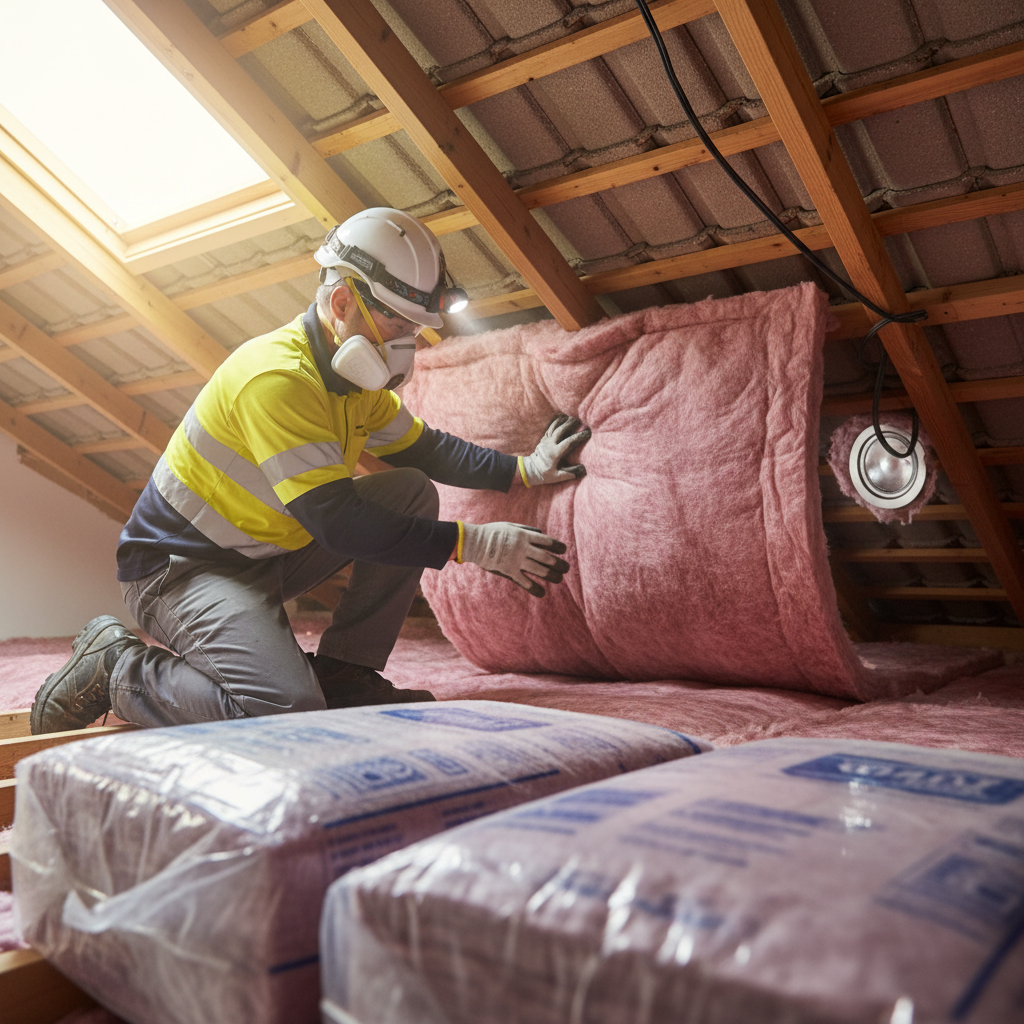
Ceiling insulation is the highest-return energy-efficiency upgrade for most Australian houses. A well-insulated ceiling cuts cooling costs in summer by 25 to 40% and heating costs in winter by similar margins. Payback in 4 to 7 years for most installations.
R-value, the only spec that matters
R-value measures how well the insulation resists heat flow. Higher = better:
| R-value | Where it suits |
|---|---|
| R2.0 to R3.0 | Walls (different application) |
| R3.5 | Older minimum for ceiling, no longer compliant |
| R5.0 | Australian standard for most climate zones in 2026 |
| R6.0 | Better than minimum, common in eco-builds |
| R7.0 | Cold climates (Tasmania highlands, alpine regions) |
The BCA (Building Code of Australia) sets the minimum R-value by climate zone for new builds. Most of Australia is currently R5.0 minimum.
Types of ceiling insulation in Australia
Fibreglass batts (most common)
- R5.0 batts at $14 to $24/m² supplied
- Easy DIY install, comes in pre-cut sizes for typical Aussie joist spacing (450mm or 600mm)
- Soft, no rigid backing
- Itchy to handle, wear PPE
- Common brands: Knauf Earthwool, Fletcher Pink Batts, CSR Bradford
Polyester batts (DIY-friendly)
- R5.0 batts at $20 to $30/m² supplied
- Made from recycled PET (drink bottle plastic)
- Doesn’t itch, more pleasant to handle
- Same insulation performance as fibreglass at same R-value
- Common brands: AutexQuietspace, Polyester Insulation Australia
Rockwool batts
- R5.0 at $20 to $35/m² supplied
- Heavier and denser
- Better fire resistance (often used in bushfire areas)
- Better acoustic performance
- Common brands: Knauf Rockwool, ROCKWOOL
Blown-in cellulose
- Recycled paper treated with fire retardants
- Installed by blowing into the cavity
- Excellent at filling irregular spaces, complex roof cavities
- Cost $30 to $55/m² installed
- Settles over time, lose 5 to 10% effectiveness in first 12 months
- Requires specialist install
Reflective foil
- Aluminium-coated polyester
- Works by reflecting radiant heat
- Best on the underside of the roof (not the ceiling)
- Becomes less effective when dust settles on top
- Used in combination with batts, not alone
Spray foam
- Polyurethane foam sprayed into place
- Highest R-value per mm
- Most expensive ($50 to $120/m² installed)
- Permanent (can’t be removed easily)
- Used in specialist applications (heritage homes, complex shapes)
Best for most Aussie homes in 2026
For most residential ceiling installs, R5.0 polyester batts are the sweet spot:
- Adequate performance for almost every climate zone
- Easy DIY install
- No itching (the fibreglass-handler complaint)
- Recycled content
- Long lifespan
- Comparable cost to fibreglass
Fibreglass R5.0 is cheaper if you don’t mind the handling discomfort. Rockwool is worth the premium in bushfire-prone areas.
Climate-zone breakdown
Use the Building Code’s climate zone map for your area:
| Zone | Where | Recommended ceiling R-value |
|---|---|---|
| Zone 1 (tropical) | Darwin, Cairns, top end QLD | R4.0 minimum, R5.0 better |
| Zone 2 (subtropical) | Brisbane, Sunshine Coast | R5.0 minimum |
| Zone 3 (hot dry summer, warm winter) | Perth, parts of inland Australia | R5.0 minimum |
| Zone 4 (hot dry summer, cool winter) | Inland NSW, much of SA | R5.0 to R6.0 |
| Zone 5 (warm temperate) | Sydney, Adelaide | R5.0 minimum |
| Zone 6 (mild temperate) | Melbourne, regional VIC | R5.0 to R6.0 |
| Zone 7 (cool temperate) | Hobart, Canberra | R6.0 to R7.0 |
| Zone 8 (alpine) | Snowy, Tasmania highlands | R7.0+ |
Going above the minimum R-value almost always pays back over the life of the insulation. R6.0 instead of R5.0 costs 15% more, saves 8 to 12% on heating/cooling.
Cost ranges in 2026 (200 m² house)
| Option | Installed cost (AUD) |
|---|---|
| DIY R5.0 fibreglass batts | $3,000 to $5,500 (materials only) |
| DIY R5.0 polyester batts | $4,000 to $7,000 (materials only) |
| Professional install R5.0 batts | $5,500 to $10,500 |
| Professional install R6.0 batts | $6,500 to $12,000 |
| Blown-in cellulose | $6,000 to $11,000 |
| Spray foam (specialist) | $10,000 to $25,000 |
State rebates for energy efficiency upgrades occasionally include ceiling insulation. Check current programs in your state.
DIY tips
If you’re installing batts yourself:
- Wear long sleeves, dust mask (P2 rated), safety glasses, gloves
- Plan access; many Aussie roof cavities are tight. Use a stepladder positioned in the manhole, work outward
- Lay batts firmly between joists, no gaps
- Maintain 50mm clearance around all downlights, exhaust fan housings, flue pipes (fire risk)
- Don’t compress the batts; their R-value depends on the air pockets in the fibre
- Lay second-layer batts perpendicular to first layer for extra R-value if you want to upgrade
A confident DIYer insulates a 200 m² roof cavity in 1 to 2 days.
When to call a pro
- Roof cavity too tight to crawl through (under 600mm clearance)
- Blown-in cellulose (needs the right machine)
- Sprayed foam (specialist application)
- Spray foam (specialist application)
- Heritage roof where access is restricted
- You don’t have time for a full weekend in a dusty roof cavity
After installing
- Don’t compress the insulation by storing things in the roof cavity
- Don’t disturb it during electrical work (move it gently aside, replace after)
- After 10 years, check that it hasn’t slumped, especially around the eaves
Ceiling insulation is the one home upgrade that pays you back every season for decades. Worth doing properly.
Frequently asked questions
What's the right R-value for ceiling insulation in Australia?
Climate-zone dependent. Most of Australia: R5.0 for ceilings. Tropical north (Cairns, Darwin): R4.0 is sufficient. Alpine areas (Snowy, Tasmania highlands): R6.0 or R7.0. Check your climate zone on the Your Home (yourhome.gov.au) website. New BCA-compliant builds since 2022 require minimum R5.0 ceiling insulation in most zones.
How much does ceiling insulation cost installed in Australia?
$25 to $50 per m² supplied and installed for standard fibreglass or polyester batts at R5.0. $40 to $70/m² for premium options or hard-to-access ceilings. A typical 200 m² house ceiling costs $5,000 to $10,000 fully installed. DIY install of batts can save $1,500 to $3,500 in labour.
Can I install ceiling insulation myself?
Yes, batts (fibreglass, polyester, or rockwool) are DIY-friendly for most accessible roof cavities. You need a dust mask, safety glasses, long sleeves, and a ladder. Avoid contact with downlights and electrical cables. Don't DIY blown-in cellulose or sprayed foam, those need specialist equipment.
How long does ceiling insulation last?
Fibreglass and polyester batts last 30 to 50 years if not disturbed. Rockwool lasts 50+ years. Reflective foil batts can lose effectiveness as dust settles, 20 to 40 year service life. Avoid disturbing insulation once installed unless you're upgrading.