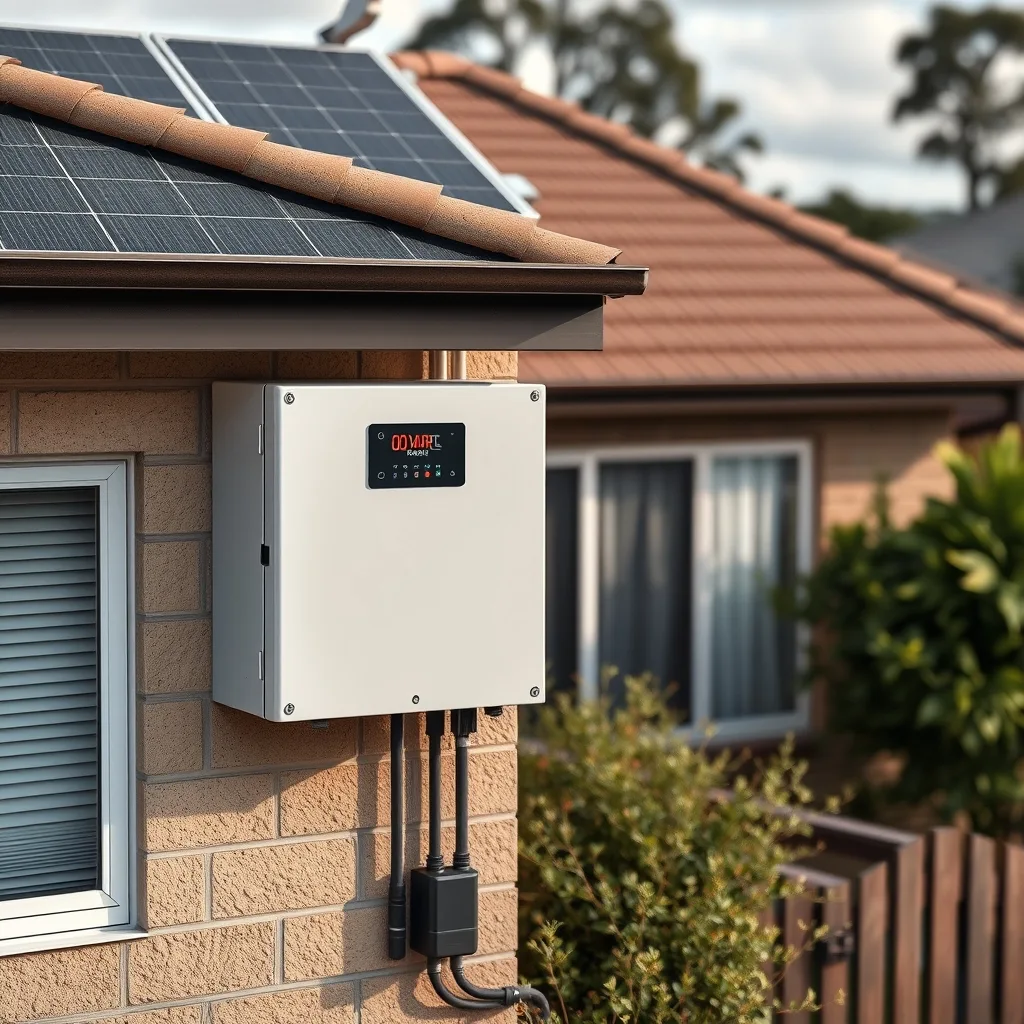

Australia’s home battery boom is cutting power bills for individual households, but broader grid benefits are still being left on the table. The consumer watchdog says too few battery owners are signing up to virtual power plants, and that gap could push up costs for everyone if it isn’t closed.
The Sydney Morning Herald reports that the Australian Competition and Consumer Commission has flagged the issue in a new report, warning that grid-scale benefits from home batteries remain “incidental” because units are not charging and discharging at the times that best serve the network.
Virtual power plants are cloud-based networks run by power retailers or tech companies. They offer households bill credits in exchange for letting the operator co-ordinate thousands of batteries at once, effectively turning them into a single power source that can stabilise the grid when supply and demand get out of balance. The Australian Energy Market Operator has set a target of about 26 per cent of households having batteries by 2050, with more than half of those enrolled in a virtual power plant. Right now, only around 3 per cent of east-coast customers have a battery, and just 24 per cent of those are in a virtual power plant scheme.
Robbie Campbell, chief executive of Plico, which runs a 5,000-household virtual power plant in Western Australia, said the shortfall is a trust problem, not a technology one. “A battery sitting in a garage doing its own thing doesn’t displace a gas peaker. A battery in a virtual power plant does,” he told the SMH. “Right now, most of them are sitting in garages.” Campbell said households won’t join out of goodwill and that operators need to be clearer about how the financial credits work.
Not everyone shares the regulator’s alarm. Tristan Edis, head of analysis at Green Energy Markets, said retail electricity offers are increasingly being designed to push batteries to soak up cheap midday solar and sell it back during the evening peak for a premium. That kind of market-driven behaviour may reduce the need for formal virtual power plant enrolment. “We are probably too pessimistic,” he said. “Maybe we don’t need as many enrolled in virtual power plants as we previously thought.”
For electricians and solar installers, this debate has practical edges. Customers will keep asking whether to join a virtual power plant scheme when they buy a battery, and the honest answer is that the financial case depends heavily on which scheme, which retailer, and which feed-in deal is on offer in their state. The ACCC’s push for clearer consumer information around these schemes may eventually sharpen that conversation.
Frequently asked questions
What is a virtual power plant?
A virtual power plant is a cloud-based network that links thousands of home batteries, allowing an operator to charge and discharge them together to stabilise the electricity grid and balance supply and demand.
Why should I join a virtual power plant?
Enrolling in a virtual power plant typically earns you bill credits or feed-in payments in exchange for letting the operator partly control when your battery charges and discharges. The financial benefit varies by scheme, retailer and state.
What is AEMO’s target for home battery uptake?
The Australian Energy Market Operator has set a target of around 26 per cent of households having a battery by 2050, with more than half of those enrolled in a virtual power plant scheme.
Do I have to join a virtual power plant when I install a battery?
No. Joining a virtual power plant scheme is optional. Many battery owners currently operate their systems independently, though the ACCC is pushing for clearer information to help consumers compare the financial benefits of enrolling.
Sourced from Sydney Morning Herald, ACCC, AEMO, Green Energy Markets. Original article.