
Household battery owners in New South Wales banked about $2 million in two hours on Monday afternoon, after a spring heatwave and a pile of offline coal units drove the wholesale electricity price to $23,107 per megawatt hour, just shy of the market cap. At one retailer alone, Amber Electric, 30,000 customers averaged $69 each for the afternoon.
ABC News reported that NSW prices topped $5,000/MWh in 11 separate five-minute intervals, with the peak landing around 3:30pm AEDT. Sydney’s Observatory Hill hit 34.7 degrees that day, more than 12 degrees above the long-term monthly average.
Amber co-CEO Dan Adams, whose retailer lets battery owners trade directly on the National Energy Market, said Monday’s revenue was “probably” a record.
“Those 30,000 customers made $2 million in the space of two hours,” Adams said.
“So $69 each on average, and the top earners made over $500.”
Four coal units down, 2,800MW stuck behind the wires
Four of the state’s 12 coal-fired generating units were out of action as temperatures climbed, with two more running at reduced capacity.
“In total, approximately 2,400 [megawatts] of coal-fired generation capacity was unavailable across NSW,” an Australian Energy Market Operator spokesman said in a statement. Demand rose by almost 2,000 megawatts inside an hour.
Several high-voltage transmission lines were also running below capacity for maintenance, so renewable generation and storage in the south of the state simply couldn’t get to Sydney when Sydney wanted it. Energy intelligence firm GridScout said the power was curtailed, or throttled at the source.
“Technical curtailment peaked at (2,800 megawatts), with renewables and batteries in Southern NSW being the most heavily affected,” the firm posted on social media. “This was all while prices were above $10,000/MWh.”
Green Energy Markets chief executive Tristan Edis said the spike pointed to a deeper problem with running ageing coal plants in a warming climate.
“It’s normal for electricity prices to be high when temperatures go noticeably above 30 degrees,” Edis said.
“What’s problematic is that doesn’t normally happen in October.”
Spring is traditionally when coal units get their scheduled maintenance done, after winter and before the summer run. Edis said hot days in spring and autumn are squeezing that window shut.
”You can make a lot of money”
AEMO sets the spot price every five minutes, taking the cheapest bids that meet demand and paying everyone the price of the last, most expensive bid it needs. On Monday that last bid got very expensive, very quickly.
Prices whipsawed from about $200/MWh to more than $1,300, back down to $766, then up to the market ceiling within minutes. That pattern repeated for about an hour.
Wholesale power market designer Dave Smith said a new force was driving the gyrations: tens of thousands of household batteries, sitting behind the meter where the market operator can neither see them nor control them. Owners got phone alerts, dumped power into the grid, then pulled back when the price fell in the next interval.
“Everyone sees that, ‘Oh, the spot price is very high’,” Smith said.
“The price [in NSW on Monday] was something like $20 a kilowatt hour ($20,000/MWh). You can make a lot of money.”
On Reddit, owners were swapping screenshots of their earnings. “Rolling power spike pricing, have made $100 in an hour selling 30kw/h,” one user wrote, according to the ABC. For scale, a typical Australian household gets through 15 to 20 kilowatt hours in a whole day.
Adams said gas peakers used to be the only thing that could answer a demand peak like Monday’s.
“It’s both displacing gas from the grid and shifting value from the big generators into the hands of individual households,” he said.
The hog cycle problem
Smith called the seesaw a “hog cycle”, the term for prices and production swinging out of phase because producers always react a beat late.
“I mean, if you’re driving along the road and it was 10 seconds before you turned the wheel after you realised you were going in the ditch, you’d very soon be swerving from side to side, right?” he said.
“I mean, if you’re driving along the road and it was 10 seconds before you turned the wheel after you realised you were going in the ditch, you’d very soon be swerving from side to side, right?”
That’s the bit the market still has to solve. Smith said household batteries move the price more every month as installation numbers climb, while AEMO stays largely blind to what they’re about to do.
What it means for the people installing them
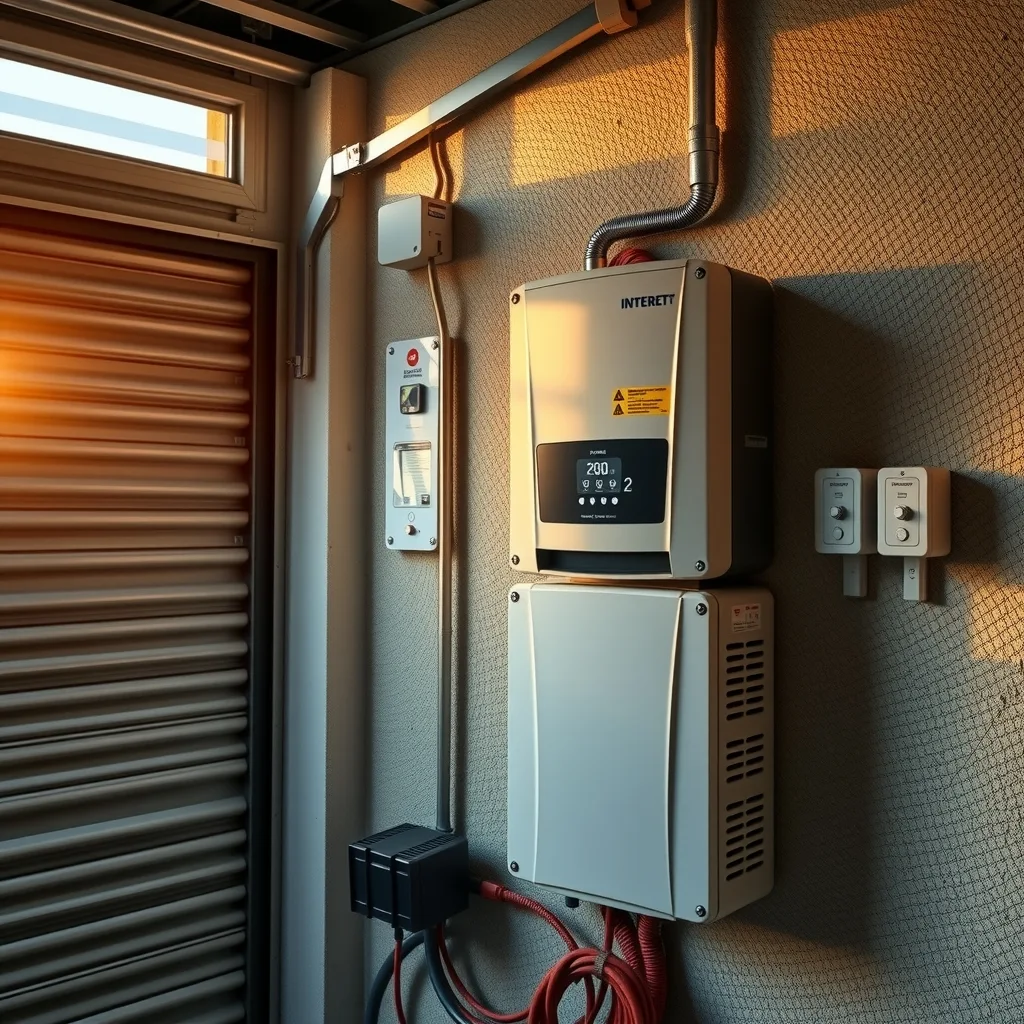
More than 700,000 household batteries have now been installed in Australia, most of them within the past year, and AEMO estimates more than two million will be in garages by 2030. That’s the order book, and it’s a sparkie’s order book: fixed wiring and switchboard work needs a licensed electrician in every state and territory, and the install has to be done by an accredited installer if the owner wants to claim federal small-scale certificates through the Clean Energy Regulator.
Monday also changed the kitchen-table conversation. Installers quoting storage have spent years arguing payback off a feed-in tariff worth cents. A customer who’s just read that someone cleared $500 in an afternoon is asking a different question, and the honest answer is that $69 average came from one freak spring heatwave with 2,400MW of coal missing, not from a normal Tuesday.
The longer trend backs the pitch anyway. AEMO chief executive Daniel Westerman told a conference this month that “Batteries, large and small, are fundamentally changing the way energy is produced, consumed and priced”, with grid-scale capacity more than doubling in a year to over nine gigawatts. Average wholesale prices in the NEM have fallen 44 per cent in two years, from $133/MWh in the June quarter 2024 to $74/MWh in the June quarter 2026. Flat prices lower, spikes sharper: that’s a market that pays storage and punishes anyone exporting raw solar at midday.
What to watch
South-eastern Australia is heading into what could be a record El Niño summer, with coal plants that just showed how thin the margin is in October.
“Let’s just hope that the coal generators are going to be able to get us through another summer and will be reasonably reliable,” Edis said. He added that batteries are only half the job: “They’re no good to us if we can’t feed them with some energy to charge them up.”
For installers, the thing to keep an eye on is orchestration. If AEMO and retailers get a way to see and coordinate home batteries, virtual power plant enrolment stops being a nice-to-have on the quote and starts being the reason the customer signs.
“You’re talking about thousands and thousands of small batteries,” Smith said. “How do you orchestrate them? How do you make them visible? That’s where the solution lies potentially, but it’s not easy.”
Frequently asked questions
Why did NSW electricity prices spike so high?
A spring heatwave pushed demand up fast while four of the state’s 12 coal-fired generating units were offline and two more ran at reduced capacity, taking about 2,400MW of coal capacity out of the system. Transmission lines running below capacity for maintenance also stopped southern NSW renewables and storage reaching Sydney.
How much did home battery owners actually make?
Amber Electric said its 30,000 customers earned about $2 million between them in two hours, an average of $69 each, with top earners making more than $500.
Do I need a licensed electrician to install a home battery?
Yes. Fixed wiring and switchboard work on a battery install needs a licensed electrician in every Australian state and territory, and the installer must be accredited if the owner wants to claim federal small-scale certificates through the Clean Energy Regulator.
Sourced from ABC News. Original article.