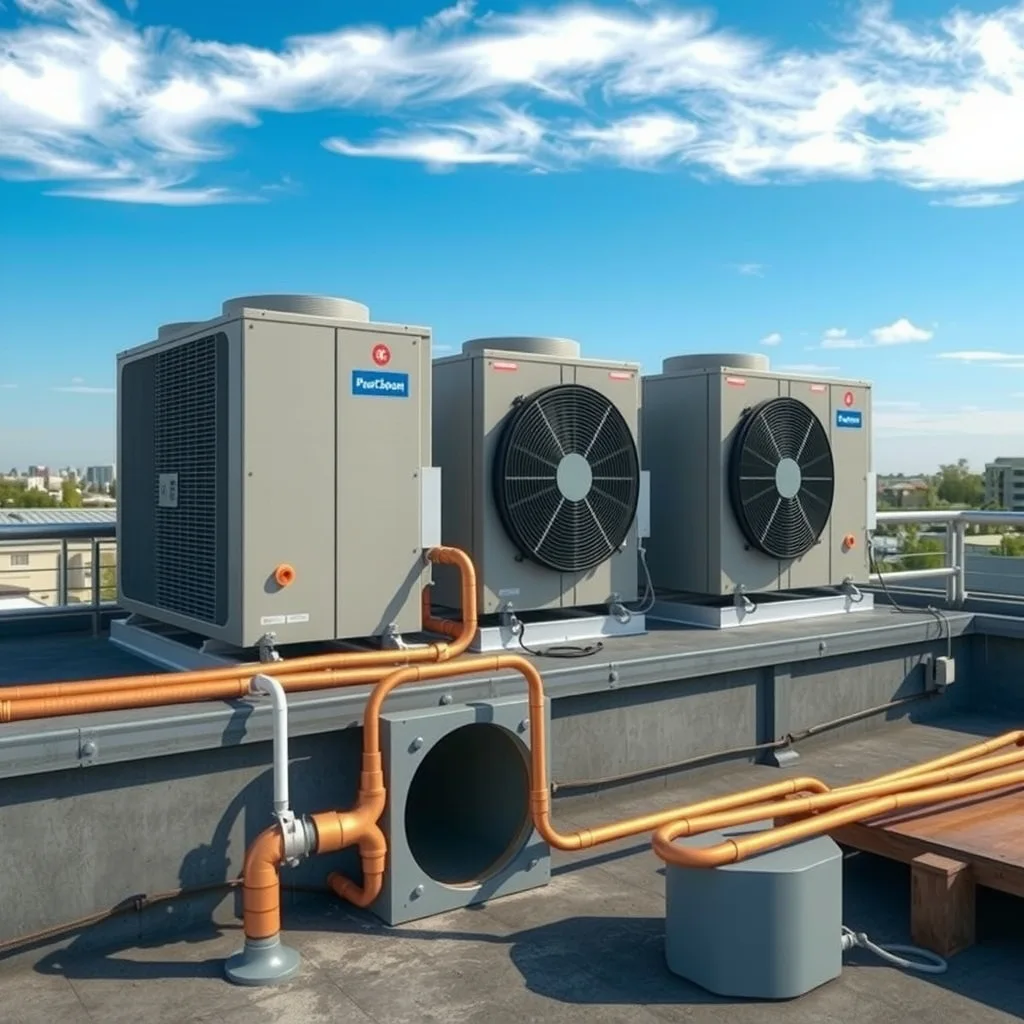

Mitsubishi Heavy Industries Air-Conditioners Australia (MHIAA) has launched the KXZ3 Series, a large-capacity variable refrigerant flow (VRF) system running R32 refrigerant, with up to three outdoor units able to be combined for a total capacity of 100.5kW on commercial jobs.
The launch was reported by Plumbing Connection, which sets out the system’s specs and MHIAA’s own claims for it. Compatible indoor units include ducted, cassette, wall-mounted and ceiling-suspended models, and MHIAA says the outdoor units have a compact footprint for space-constrained plant decks.
The pipe numbers are what you design around
Two figures matter more than the kilowatts when you’re setting out a job. The KXZ3 supports a maximum vertical separation of 30m between indoor units, and a total piping length of up to 160m.
That’s the envelope. Vertical reach decides whether a single system can serve a stack of floors off one plant location or whether the building gets split into zones with a second set of outdoor units. The total pipe run decides how far the furthest cassette can sit from the condenser before the design falls over.
Get those two numbers wrong at tender and the fix isn’t a tweak, it’s a redesign of the riser and a second penetration schedule.
On the hardware side, the system uses an R32 scroll compressor and a slim heat exchanger built on 7.0mm-diameter copper pipes, with MHIAA citing an optimised airflow path and impeller design to cut pressure loss. Its VTCC+ control adjusts refrigerant pressure during partial-load operation, which is where a commercial building spends most of its life anyway.
A2L puts more trades in the ceiling space
R32 is classified as an A2L mildly flammable refrigerant, and that’s the part worth reading twice if you’re pricing the install.
The KXZ3 can be configured with safety components including refrigerant leak detectors, alarms, shut-off valves and ventilation systems. MHIAA says the required measures depend on the conditions and parameters of each project, and are designed to meet applicable AS/NZS requirements.
In plain terms: the scope isn’t just a condenser, a pipe run and a set of heads. Where leak detection and mechanical ventilation are specified, someone has to run the cabling, land it, interlock it with the ventilation and prove it at commissioning. That’s coordination between the refrigeration crew, the sparkies and whoever owns the building management system, and it’s a conversation that’s cheaper in the design phase than on the deck at week 30.

If you’re unsure what applies to your state on flammable refrigerant work and handling requirements, check with your state SafeWork or WorkSafe regulator rather than the datasheet. Guidance sits with Safe Work Australia and the state bodies, not the manufacturer.
The refrigerant maths, as the maker tells it
MHIAA says R32 can reduce CO2-equivalent emissions by approximately 70% compared with R410A, according to Plumbing Connection’s launch coverage. R32 also carries zero ozone depletion potential, needs a lower refrigerant charge for the same duty, and can be handled and recycled as a single-component refrigerant rather than a blend.
That last point is the quiet one. A single-component refrigerant doesn’t fractionate the way a blend can, so top-ups and recovery are a simpler proposition at service time. For a facilities manager looking at a 15-year asset, that’s a maintenance-cost argument as much as an emissions one.
Worth flagging: every figure above traces back to MHIAA’s own statements as reported by Plumbing Connection. There’s no independent testing behind them, and BCN hasn’t tested the unit.
What to watch
The commercial market has been grinding its way off R410A for years, and each new A2L release shifts a bit more work into the safety-systems column of the quote. If you’re bidding mechanical packages into offices, hotels or aged care over the next twelve months, the question to put to the designer early is simple: who’s carrying the leak detection, the shut-off valves and the ventilation interlock in this scope, and has it been priced? That line item has sunk more than one tight mechanical tender.
Frequently asked questions
Is R32 refrigerant flammable?
R32 is classified as an A2L mildly flammable refrigerant. That’s why the KXZ3 can be configured with leak detectors, alarms, shut-off valves and ventilation systems designed to meet applicable AS/NZS requirements.
How far can the KXZ3’s refrigerant pipework run?
MHIAA specifies a maximum vertical separation of 30m between indoor units and a total piping length of up to 160m.
How much capacity does the KXZ3 system offer?
Up to three outdoor units can be combined for a total capacity of 100.5kW on commercial jobs, according to MHIAA.
Who do I ask about flammable refrigerant handling rules?
Check with your state SafeWork or WorkSafe regulator rather than the product datasheet. MHIAA points to Safe Work Australia and the state bodies for compliance guidance.
Sourced from Plumbing Connection. Original article.