
A $1.5 billion commitment to critical infrastructure in regional Australia could get stalled housing projects moving, the Housing Industry Association says. Roads, water, sewerage and power are the constraints choking new supply outside the capital cities, it says.
The commitment was reported by Infrastructure Magazine on 27 August 2026, alongside comment from HIA Managing Director Jocelyn Martin. The report doesn’t name the government making the commitment or say when the money starts flowing, so treat the timing as unsettled until the funding detail lands.
Martin said the money puts the focus on “one of the biggest barriers holding back new housing supply”, which she described as “the lack of shovel-ready land connected to essential infrastructure”.
”We have a shortage of land that is ready to be developed”
The HIA’s argument is that the problem was never buyers.
“HIA has consistently argued that Australia does not have a shortage of demand for new homes. We have a shortage of land that is ready to be developed and supported by the infrastructure needed to service it,”
Martin said.
Anyone who’s watched a regional estate sit as bare paddock with a sales flag on it knows the shape of that. The lots are drawn, the demand is there, and the job stops because there’s nowhere to send the sewage or nothing to pull power from.
“Too often, housing projects that could move forward are held up because the roads, water, sewerage, electricity and other essential services simply aren’t there,” Martin said.
HIA’s own Housing the Regions report, cited in the article, put access to shovel-ready land, inadequate enabling infrastructure and workforce shortages down as three of the biggest barriers to delivering more homes across regional Australia.
What “enabling infrastructure” actually means on the tools
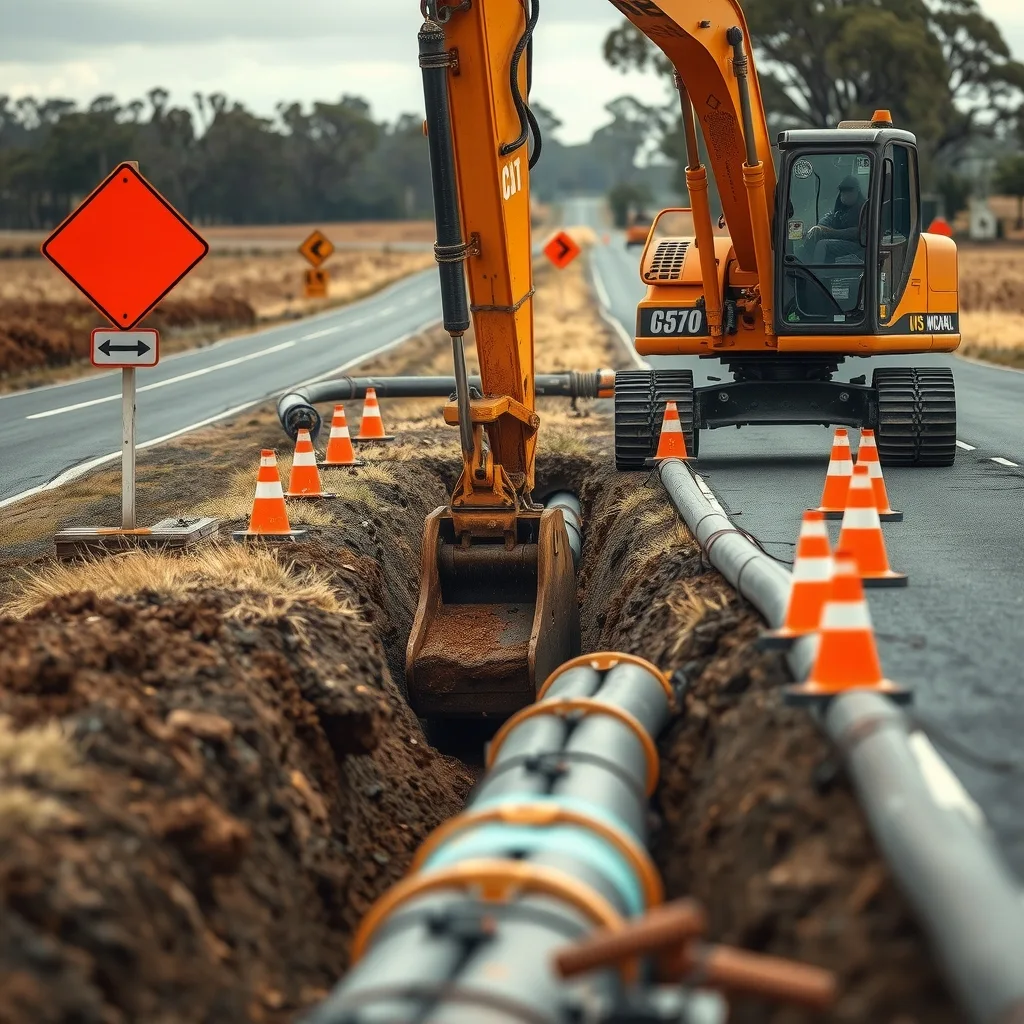
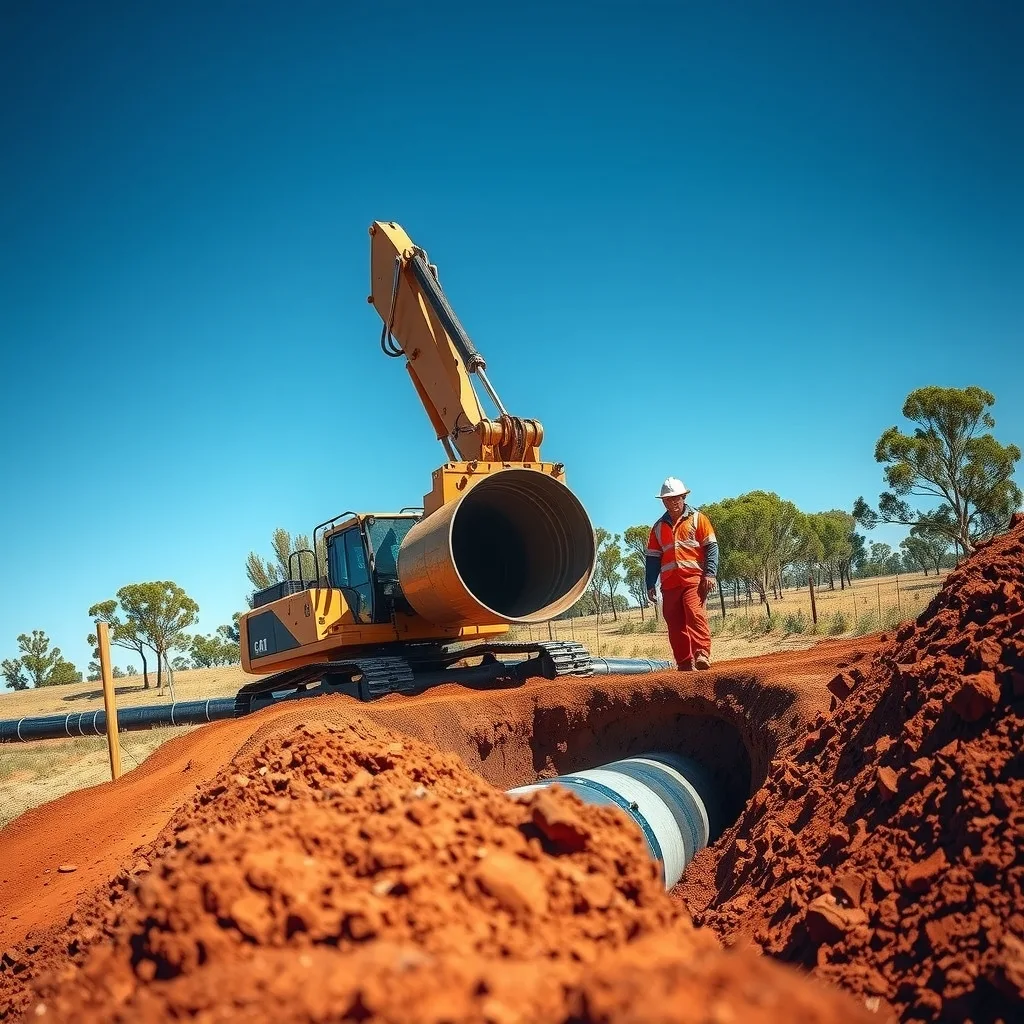
Enabling infrastructure is a planner’s phrase for the boring civil work nobody photographs. It’s the trunk sewer main and the pump station that lets a new estate discharge anywhere. It’s the water main sized for the whole precinct rather than the first 40 lots. It’s the substation, the distribution feed, the conduit runs, the intersection upgrade off the highway so the estate has a legal entrance.

That work runs in a fixed order, and residential trades sit behind all of it. Bulk earthworks and stormwater first, then sewer and water reticulation through the lots, then pavement, kerb and channel, then power and comms conduit, then titles. Only once lots are titled and serviced does a builder pour a slab and a plumber connect a house drain to a live sewer.
So for a chippy or a plumber in a regional town, headworks funding isn’t next week’s work. It’s the reason next year’s work exists at all. Civil crews, pipelayers and plant operators feel it first; the housing trades feel it when the lots come to market.
Martin framed the same point from the industry side.
“Investment in this enabling infrastructure can help unlock development, support regional growth and give the construction industry greater certainty over future project pipelines.”
That certainty question is the practical one for a small outfit. Deciding whether to put on a first-year apprentice, take on a second ute, or move a family to a regional town is a three-year bet. A funded pipeline of serviced lots is the sort of thing that makes that bet look sane. An announcement without a delivery schedule doesn’t.
The code pause and the workforce gap
Martin said the infrastructure money should be read alongside work on regulation and the National Construction Code, which is currently paused while modernisation work is done. The code is administered by the Australian Building Codes Board.
“HIA is not calling for existing safety standards to be stripped away, but we cannot continue adding layers of regulation and cost to every new home without considering the cumulative impact on affordability and supply,” she said.

The other constraint is people, and it’s the one money can’t fix on a budget cycle.
“Residential construction remains critically short of skilled trades, and regional areas can face particular challenges in attracting and retaining workers,” Martin said.
That’s the bit regional builders will nod at. Getting a licensed plumber or a sparkie to a job three hours from a regional centre already means travel time, accommodation and a rate that reflects both. Servicing more lots in those towns doesn’t reduce that problem, it enlarges it.
What to watch
Martin’s summary was that there’s no single fix: “There is no single lever that will solve Australia’s housing shortage. We need more shovel-ready land, infrastructure delivered earlier, faster approvals, a larger skilled workforce and a regulatory system that enables housing delivery.”
“Getting infrastructure ahead of development will be critical if Australia is to turn housing targets into actual homes, particularly in regional communities,” she said.
The number worth chasing over the next few months is not the $1.5 billion. It’s the project list. Which councils, which water authorities, which trunk mains and substations, and what the delivery dates are. That list is what tells a regional plumber or civil contractor whether to start quoting, and when.
Frequently asked questions
What does the HIA mean by ‘enabling infrastructure’?
It’s the civil works that have to go in before a house can be built: trunk sewer mains, water mains sized for a whole precinct, substations, distribution feeds and road upgrades. Housing trades can’t start until this is in place.
Why does the HIA say regional housing supply is stalled?
The HIA argues the problem isn’t buyer demand, it’s a shortage of shovel-ready land connected to roads, water, sewerage and power. Without that infrastructure, approved lots can sit undeveloped.
When does the $1.5 billion start flowing?
That isn’t clear yet. The source report doesn’t name the government making the commitment or give a start date, so the timing of the funding remains unsettled.
Sourced from Infrastructure Magazine, Housing Industry Association. Original article.