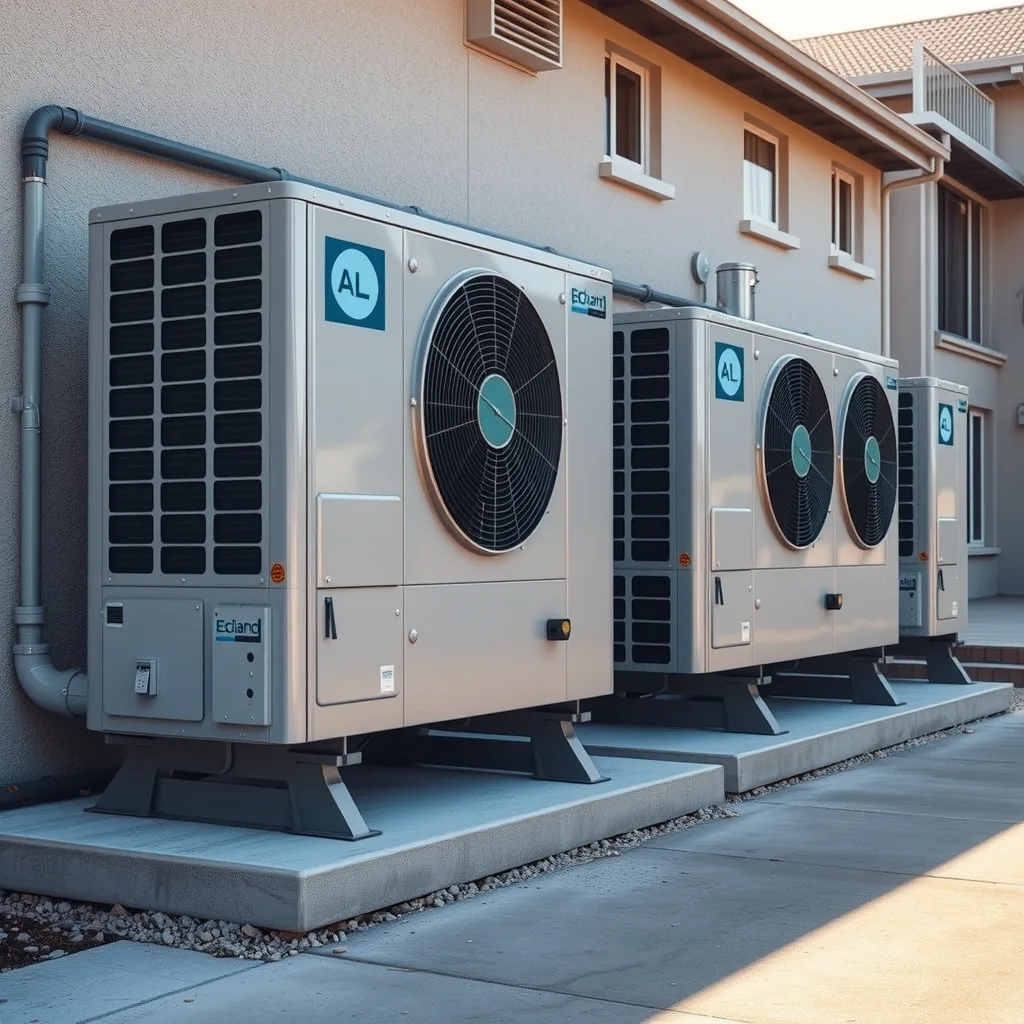

Aged care operators are starting to pull out ageing gas boilers and put high-temperature CO₂ heat pumps in their place, with Mitsubishi Heavy Industries Air-Conditioners Australia (MHIAA) saying its Q-ton unit uses natural refrigerant CO₂ (R744) to deliver sanitary-grade hot water between 60°C and 90°C. At Warrigal Aged Care in Wollongong, an installation that started with two units has since grown to eight.
The detail comes from a feature in Plumbing Connection, which reports Warrigal is one of more than 15 aged care and healthcare projects across Australia and New Zealand to install the system. Worth saying up front: the performance and cost figures below are the manufacturer’s, under its own stated conditions, not independently tested numbers.
Hot water nobody can switch off
Showers, kitchens, laundries and general hygiene mean an aged care facility burns through hot water on a scale most commercial buildings don’t, and it does it every day of the year.
MHIAA product executive Glen Alcock said the demand profile is what rules out a lot of electric options. “Unlike many commercial buildings, aged care facilities require large volumes of reliable hot water every day for resident showers, kitchens, laundries and general hygiene requirements,” he said.
That changes the brief for anyone specifying a replacement, Glen said.
“This means a replacement system must be capable of delivering sanitary-grade hot water consistently, maintain performance in all seasons and provide reliability over the long term. For many aged care facilities, hot water is considered a mission-critical service and downtime is simply not an option given residents are home 24/7.”
There’s a second pressure on operators: old gas plant that’s getting dearer to run and maintain, at the same time as emissions targets push toward electrification.
“Many facilities are also investigating electrification as part of broader sustainability programs. The challenge is finding an electric alternative that can still provide the high temperatures, daily volume and year-round reliability required by aged care,” Glen said.
What the manufacturer claims
The Q-ton uses a patented two-stage rotary scroll compressor to pull heat out of ambient air and push it into water. MHIAA says the Q-ton runs at a coefficient of performance of up to 4.3, with running costs up to 76 per cent lower than electric water heaters and 46 per cent lower than gas boilers under its stated conditions, Plumbing Connection reported in October 2026. For a broader comparison of running costs across the three technologies, see BCN’s heat pump vs gas vs electric hot water guide.

Cold-weather performance is the other claim worth noting, because winter is exactly when demand doesn’t drop, a point covered in BCN’s guide on why hot water systems fail in winter. MHIAA says the unit holds 100 per cent heating capacity down to -7°C and will operate in ambient temperatures as low as -25°C, and that it includes a dedicated anti-Legionella cycle.
“Residents still require showers, kitchens continue operating and laundry requirements remain unchanged. Maintaining reliable performance during colder weather helps ensure facilities can continue meeting those daily demands without compromise,” Glen said.
For the hydraulic contractor doing the paperwork, the useful line is that the unit is directly WaterMark certified as a complete product rather than as a bundle of certified parts. Controls run off a touchscreen for scheduling and monitoring, with optional Modbus integration into a building management system.
The retrofit is the actual job
This isn’t greenfield work. The money in it, for plumbers and hydraulic contractors, is in ripping out tired boiler plant in a building full of people who can’t go a day without a shower.
“While every project is different, a typical retrofit usually involves replacing the existing gas boilers or electric water heaters while retaining much of the existing hot water distribution pipework throughout the facility,” Glen said.
That’s the part that makes the scope manageable. The flow and return runs through the wings, the risers, the valve sets at each outlet group, most of that stays where it is. The work concentrates in the plant room: decommissioning the old boilers, getting units in through whatever access the building actually has, reconnecting into existing pipework, condensate drainage, then commissioning and proving temperatures before anything goes back into service.

One thing to price properly. Taking gas out and putting an electric heat pump in moves the load off the gas meter and onto the switchboard, so the sparkie is involved early, not at the end. On a staged job like Warrigal’s, where two units became eight over later stages, that electrical capacity question is one you want answered before stage one rather than stage three.
And the sequencing is driven by the residents, not the hydraulics. “With careful planning, installations can often be completed with minimal disruption and little to no hot water downtime,” Glen said. In practice that means temporary supply arrangements, night and weekend changeovers, and a program the facility manager signs off on.
Rebates, and the usual caveat
Plumbing Connection reports the Q-ton is now eligible under the Victorian Energy Upgrades program and the NSW Energy Savings Scheme, with eligible projects potentially receiving thousands of dollars in rebates. The article doesn’t put a figure on individual projects, and neither will we. Check the scheme rules and an accredited provider before you write a number into a quote.
The same goes for the savings case. As the source puts it, the financial case varies between projects depending on existing equipment, energy tariffs, operating schedules and system design, and should be assessed project by project.
What to watch
If you do commercial hydraulic work, the thing to track is how many aged care and health operators move from scoping studies to actual tenders over the next couple of years. Fifteen-plus installed sites across two countries is a track record, not a wave. But it’s a pipeline of retrofit work in buildings that can’t be shut down, which is the kind of job that rewards contractors who can plan a staged changeover rather than just quote a swap.
Frequently asked questions
Do CO2 heat pumps keep working in cold weather?
Mitsubishi says its Q-ton unit holds 100 per cent heating capacity down to -7°C and continues operating down to -25°C, with a built-in anti-Legionella cycle.
What does a gas-boiler-to-heat-pump retrofit involve in an aged care building?
According to MHIAA, a typical retrofit replaces the existing gas boilers or electric water heaters while keeping most of the existing hot water distribution pipework in place, so the work concentrates in the plant room rather than throughout the building.
Are there rebates for installing a Q-ton heat pump in Australia?
Plumbing Connection reports the Q-ton is eligible under the Victorian Energy Upgrades program and the NSW Energy Savings Scheme, but neither it nor BCN puts a dollar figure on individual projects, check scheme rules with an accredited provider.
Sourced from Plumbing Connection. Original article.