
Plumber hourly rates in Australia 2026, what's reasonable and what's a rip-off
Plumber rates vary by state, by city, by time of day, and by what the job is. Here's the honest range for 2026, plus how to tell whether your quote is fair.
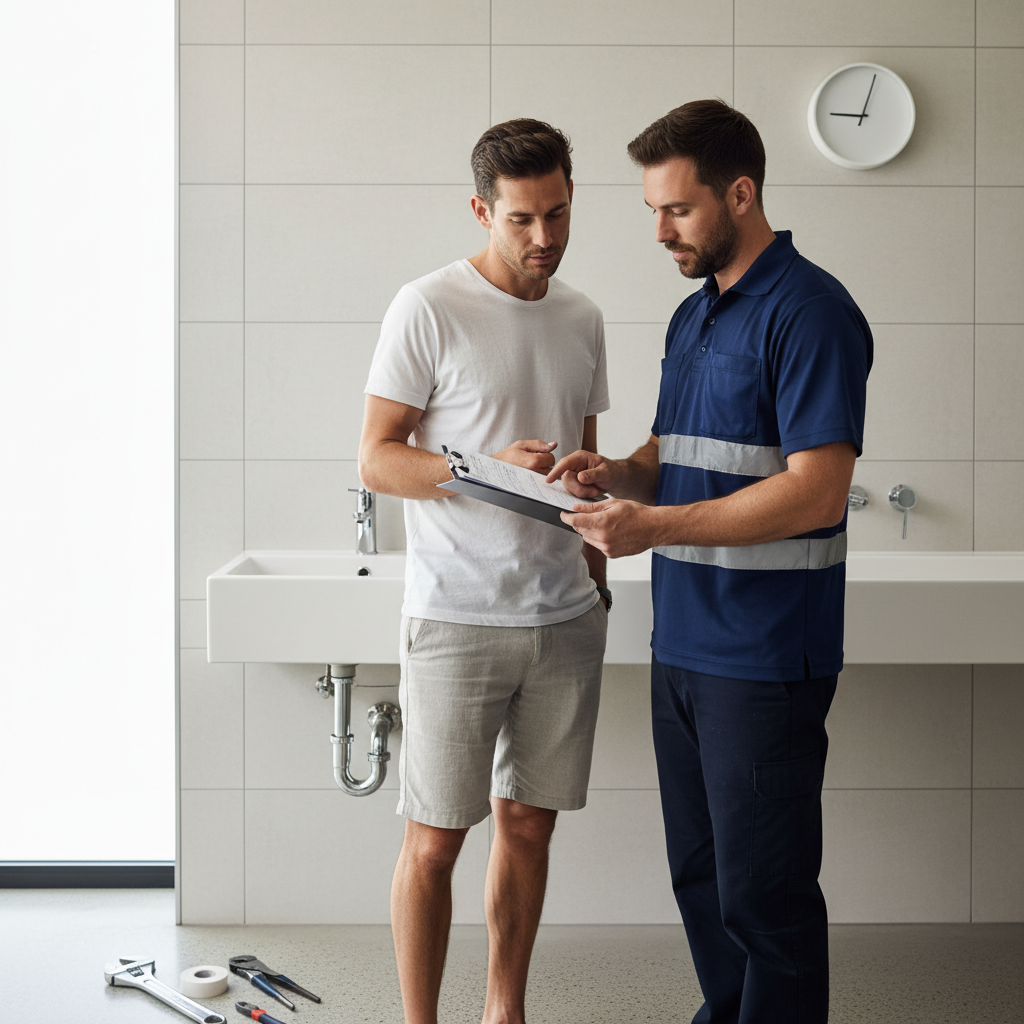
Plumber rates are one of the most-Googled costs in Australian home services. The honest answer is that the range is wide, the variables are many, and the only sensible move is three quotes for any non-emergency job.
This is a national 2026 rate guide. Specific job pricing sits in the per-job guides linked at the bottom.
Standard hourly rates by state
| State | Residential (business hours) | Commercial / specialist | After-hours / emergency |
|---|---|---|---|
| NSW (Sydney metro) | $110 to $180 | $160 to $250 | $180 to $350 |
| NSW (regional) | $90 to $150 | $130 to $200 | $150 to $300 |
| VIC (Melbourne) | $110 to $180 | $160 to $240 | $180 to $340 |
| VIC (regional) | $90 to $145 | $130 to $200 | $150 to $290 |
| QLD (Brisbane) | $100 to $170 | $150 to $230 | $170 to $320 |
| QLD (regional / Sunshine Coast / Gold Coast) | $95 to $160 | $140 to $220 | $160 to $300 |
| WA (Perth) | $105 to $175 | $155 to $230 | $175 to $330 |
| SA (Adelaide) | $95 to $160 | $140 to $220 | $160 to $300 |
| TAS (Hobart) | $90 to $150 | $130 to $200 | $150 to $280 |
| NT (Darwin) | $120 to $200 | $170 to $260 | $200 to $380 |
| ACT (Canberra) | $105 to $175 | $155 to $230 | $175 to $330 |
These are real rates plumbers actually charge in 2026. The lower end is usually a smaller residential operator. The upper end is established firms with overheads, modern vans, GPS-tracked vehicles, and salaried admin staff. Both can be good plumbers; you’re paying for different business models.
The hidden costs in a plumber’s hourly rate
For every $130/hour residential rate, the plumber’s actual take-home is usually $30 to $50/hour. The rest covers:
- Licence and insurance, $5,000 to $15,000/year
- Vehicle and fuel, $15,000 to $25,000/year
- Tools and equipment, $5,000 to $15,000/year depreciation
- Compliance certificates and paperwork, $1,500 to $4,000/year
- Apprentice wages and supervision, where applicable
- Sick leave, holiday, super (sole trader), none of which the rate explicitly funds
Plumbing is one of those trades where the rate looks like a lot but the take-home is solidly middle-income. Anyone telling you plumbers are getting rich on the hourly rate has never run a plumbing business.
Call-out fees
Almost every plumber charges a call-out fee separate from the hourly rate. Typical:
- Standard call-out, $80 to $150
- After-hours call-out, $150 to $300
- Public holiday or 2am call-out, $250 to $500
- Travel beyond the standard service area, kilometre charge or flat fee
The call-out usually covers the first 15 to 30 minutes of work. If the job’s done in that window, you pay the call-out only. If it runs longer, hourly kicks in.
After-hours and emergency premiums
Real rates Australian plumbers charge for out-of-hours:
- Saturday business hours, +25% to +50%
- Sunday or public holiday, +50% to +100%
- After 6pm weeknights, +50%
- After 10pm any night, +75% to +150%
Genuine emergencies (burst pipe, sewer overflow, no water to the house) are worth paying the premium. Slow blocks and dripping taps usually aren’t, they can wait until tomorrow.
Flat-rate quotes vs hourly
Known scope of work → ask for a flat quote. Common flat-quote jobs:
- Replace a hot water system
- Replace a kitchen sink and tap
- Replace a toilet suite
- Install a rainwater tank (plus connection)
- Replace a showerhead and arm
Unknown scope (diagnostic) → expect hourly. Common hourly jobs:
- Track down a hidden leak
- Diagnose recurring blockages
- Locate underground pipes
- Inspect after a renovation
A plumber who flat-quotes a “find the leak” job is padding for unknowns.
Red flags in a quote
- No written quote
- No licence number on the quote
- No call-out fee disclosed
- “Cash discount” offered (often means no GST receipt and no insurance recourse)
- Asking for more than 10% deposit upfront
- Refusing to provide Certificate of Compliance in states that require it
- Rate quoted in 15-minute increments rounded up (some shops round every part-hour to a full hour, ask)
How to keep a plumber’s bill down
- Bundle jobs, save a separate call-out for each task. Get everything fixed in one visit
- Be available, every minute the plumber waits for you is on the clock
- Have access ready, clear the under-sink cupboard, move the furniture, find the meter
- Diagnose what you can, “the tap drips when I turn it off” is more useful than “something’s wrong in the bathroom”
- Avoid genuine emergencies, by replacing aged hot water systems before they fail, fixing leaks while small
Related cost guides
Frequently asked questions
What's a fair plumber hourly rate in Australia?
$80 to $180 per hour during business hours for residential work. Commercial plumbers and specialists (hydraulics, gas) charge $130 to $250. After-hours, weekend, and emergency rates run 50 to 150% above. Most plumbers charge a minimum call-out of $80 to $150 plus hourly.
Why are plumbers so expensive?
Real costs the customer doesn't see: licence and insurance, $5,000 to $15,000 per year for a sole trader. Vehicle and tools, $30,000 to $80,000 invested. Apprentice wages and oversight. Compliance certificates, public liability. The hourly rate covers all of that plus the plumber's take-home.
Is a flat quote better than hourly?
For known jobs (replace a sink, install a hot water system), flat quotes are usually better, both sides know the price. For unknown work (track down a leak, fix recurring blocks), hourly is fairer because the plumber doesn't have to pad the quote for unknowns.
How do I check a plumber's quote is fair?
Get three quotes. Verify each plumber's licence on the state regulator's online register. Ask for a written quote with itemised labour, parts, and call-out. Refuse to pay more than 10% deposit. Pay the balance only on completion with a Certificate of Compliance where your state requires one.