
The Electrical Trades Union and the National Electrical and Communications Association want the Federal Government to make data centre developers train apprentices and pay towards new training facilities, writing those obligations into the first tranche of national artificial intelligence legislation. The two bodies, which between them speak for electrical workers and the contractors who employ them, took the case to federal parliamentarians during the sitting week that began 23 November.
The push was reported by Infrastructure Magazine, which said the joint representations cover apprentice training, training infrastructure, energy generation and water use.
Behind it sits a number that has moved fast. Powering Skills Organisation now projects Australia could be short more than 70,000 electrical workers by 2030, up from an earlier forecast of about 40,000, with demand from data centre construction among the factors driving the revision.
”One in ten ETU members is working on a data centre build”
ETU National Secretary Michael Wright said the sector is already a major employer of his members and is growing from nothing.
“Today one in ten ETU members is working on a data centre build, up from zero in only a few years,” Wright said.
His argument is that the work is coming either way, and the only question is what the country gets out of it.
“Australia is going to have a data centre industry, but how we do it is critically important,” Wright said.
“These projects require thousands of electrical workers. They are a singular opportunity to train local kids for secure, well-paid electrical careers. If they do not, they worsen an existing crisis for electrical skills.”
Wright said some operators are already doing it without being told to, and that rules would stop them being undercut by the ones that aren’t.
“There are already data centre operators in Sydney and Melbourne employing one apprentice for every three licensed electrical workers. They’ve shown it can be done. Regulation means that they won’t be competing with data centres that aren’t investing in our future.”
He summed the ask up in a line: “This is how we make sure the data centre boom is a bonanza instead of a blowout.”
“This is how we make sure the data centre boom is a bonanza instead of a blowout.”
Contractors say their third and fourth years are walking out the gate
The contractor side isn’t arguing against the builds. It’s arguing about who ends up carrying the training bill.
“NECA supports data centre construction as an important piece of Australia’s future; however, we are seeing electrical contractors lose qualified tradespeople and third and fourth-year apprentices to data centres,” NECA CEO Stewart Joyce said.

“This is taking labour off critical infrastructure and housing projects and contributing to construction delays.”
Joyce said the pay on offer is pulling people off existing jobs and pushing up the cost of the work left behind.
“Data centres are offering inflated wages as incentives for electricians to jump ship. This is significantly affecting construction costs in major centres, as contractors are forced to pay more in efforts to retain staff.”
His fix is the same one the ETU is chasing. “As is the case with water and energy, the data centres must help train and provide the additional electricians needed to maintain a balance across the industry.”
Why losing a third-year hurts more than losing a tradesman
If you’ve ever taken an apprentice through a full electrical apprenticeship, you already know the shape of this. The first couple of years are the expensive ones: supervision, TAFE blocks, a kid who can’t be left to run a job. The third and fourth years are when that investment starts paying back, when they’re pulling and terminating their own work and freeing up a tradesman to be somewhere else. Lose them at that point and the host employer has worn the cost and missed the return.
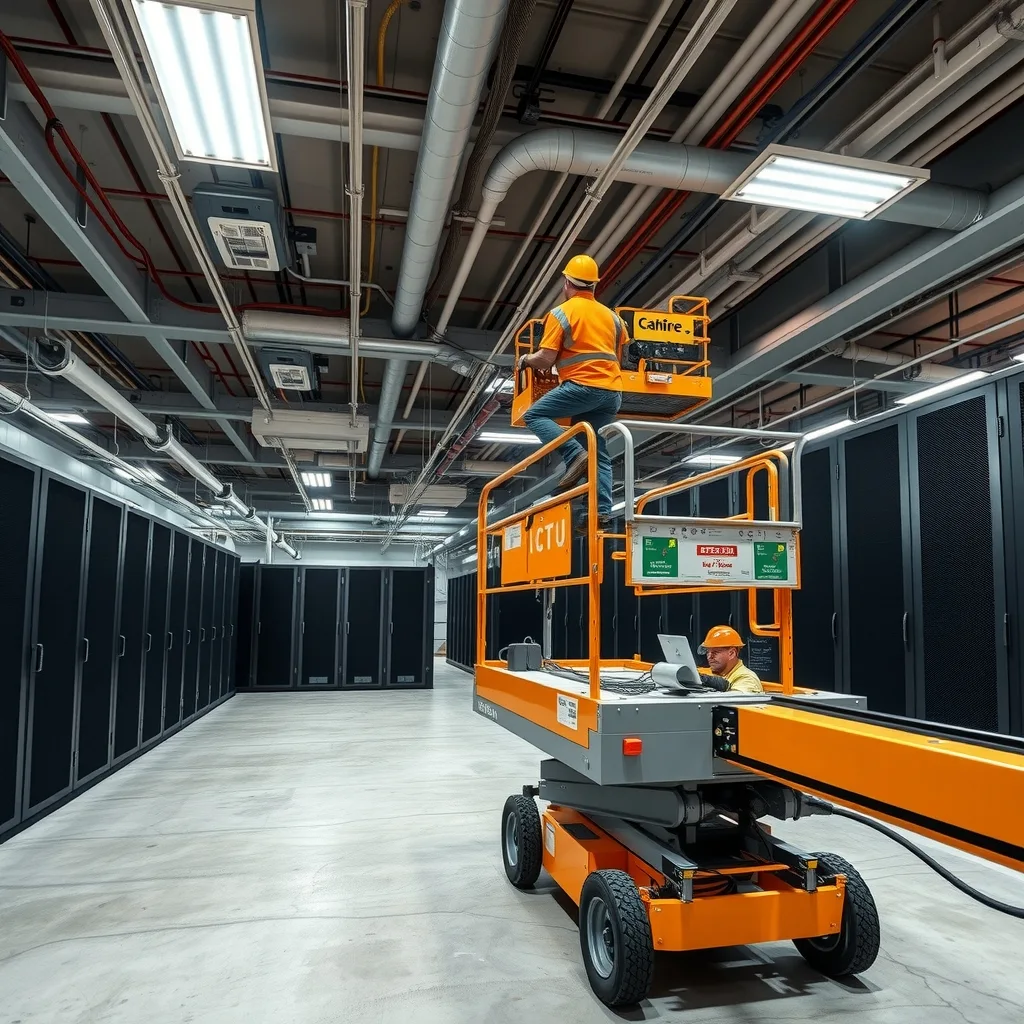
That’s the gap the one-apprentice-to-three-licensed-workers ratio Wright pointed to is meant to fill. On a build employing thousands of electrical workers, a ratio like that turns a hall full of cable tray, containment, switchrooms and terminations into a training site rather than a place that only consumes finished tradespeople. Repetitive, high-volume fitout work is good training ground precisely because there’s enough of it to learn on.
For a small electrical contractor on housing or civil work, the immediate problem isn’t policy. It’s that the client across town is bidding for the same people, and the contract you priced twelve months ago didn’t budget for a retention pay rise. Joyce’s point about construction costs in major centres is really a point about fixed-price contracts meeting a moving labour market.
What to watch
The test is whether training obligations survive into the drafting of the first tranche of AI legislation, or whether they get parked as a skills issue for another department to handle. Nothing announced so far binds a data centre developer to put on a single apprentice.
In the meantime, the shortage figure is the one to keep an eye on. A projection that jumped from roughly 40,000 to more than 70,000 electrical workers short by 2030 is a forecast of who gets to name their price on site for the rest of the decade, and of how long the wait will be for anyone trying to get a switchboard upgraded or a subdivision energised.
Frequently asked questions
What are the ETU and NECA asking the government to do?
They want data centre developers required to train apprentices and contribute to training infrastructure, with those obligations written into the first tranche of federal AI legislation.
How big is the projected electrician shortage in Australia?
Powering Skills Organisation projects Australia could be short more than 70,000 electrical workers by 2030, up from an earlier forecast of about 40,000.
Are data centre developers currently required to train apprentices?
No. Nothing announced so far binds a data centre developer to put on a single apprentice; the unions and contractors are pushing for that to change in the first tranche of AI legislation.
Sourced from Infrastructure Magazine. Original article.