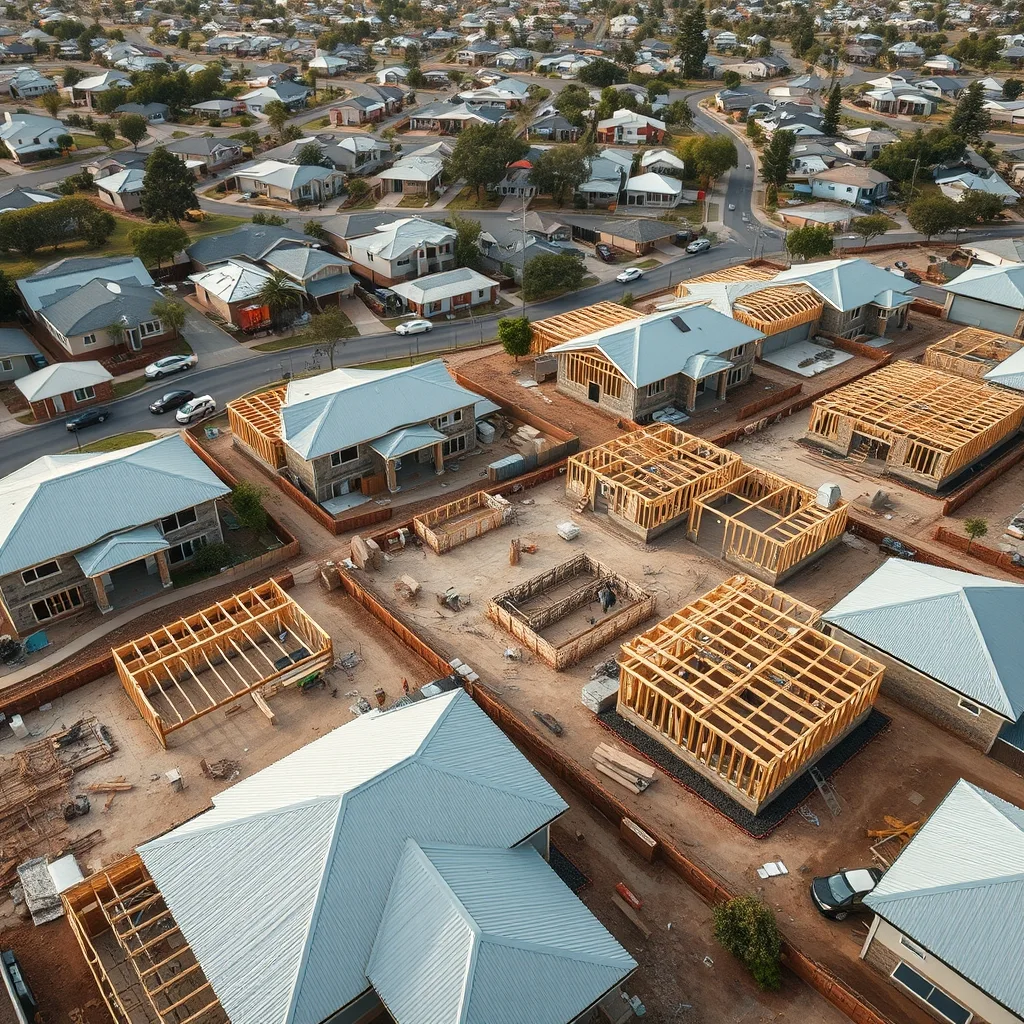

Australia’s housing pipeline is growing, but the gap between approvals and what the federal government needs remains stubbornly wide. ABS data released 30 July 2025 shows total dwelling approvals rose 7.2% in June to 18,328, bouncing back after an 11% fall in May.
For the full 2025/26 financial year, just over 205,000 dwellings were approved, a 9.2% lift on the prior year and the highest annual figure since 2020/21. Daniel Rossi, Head of Construction Statistics at the ABS, said the June rebound pushed the yearly total to its best level in five years.
Private sector dwellings excluding houses drove the monthly result, surging 17.8% after May’s sharp drop. Private house approvals were more subdued, up just 0.4% in June, though it was the sixth straight month the national tally stayed above 10,000. The value of total residential building approved in June jumped 15.1% to $11.75 billion, pointing to solid forward demand for trades labour and materials.
The good news stops there. The National Housing Accord requires 253,000 approvals a year to hit its target of 1.2 million new homes, including 20,000 affordable, by 30 June 2029. At 205,000, the 2025/26 result falls roughly 48,000 short. Shane Garrett, Chief Economist at Master Builders Australia, put it plainly: “The big message from today’s figures is that 47,750 fewer homes were built over the year compared with what we needed, and marks two consecutive years of Accord target shortfall.” The Property Council of Australia also flagged the persistent gap, according to a report by Michael West Media carrying the full AAP wire.
For Western Australian tradies, the local picture is mixed. WA private sector house approvals fell 1.5% in June in seasonally adjusted terms, bucking the national trend. Victoria was the only state to record a rise in private sector houses during the month.
The five-year high in annual approvals signals a sustained workload ahead for builders, subbies, and tradies. But a persistent 48,000-dwelling shortfall means pressure on construction capacity, trades labour, and materials won’t ease any time soon. With the federal deadline set for mid-2029, approvals need to keep climbing, and crucially, so does the conversion rate from approvals to completions. If your business is weighing up new projects, the cost to build a granny flat in Australia guide has current 2026 pricing by state.
Frequently asked questions
What is the National Housing Accord target?
The federal government’s National Housing Accord requires 253,000 dwelling approvals a year to deliver 1.2 million new homes, including 20,000 affordable homes, by 30 June 2029.
How far behind is Australia on the housing accord target?
Australia approved roughly 205,000 dwellings in 2025/26, about 48,000 short of the annual target. According to Master Builders Australia, this is the second consecutive year the accord target has been missed.
How did Western Australia perform on housing approvals in June 2025?
WA private sector house approvals fell 1.5% in June in seasonally adjusted terms, bucking the national trend. Victoria was the only state to record a rise in private sector houses that month.
Sourced from Australian Bureau of Statistics, Master Builders Australia, Michael West Media, Property Council of Australia. Original article.