
Testing your smoke alarms, the 30-second check Australian Standards say you must do
Smoke alarms save lives but only if they work. Here's the test schedule Australian Standard AS 3786 says you should follow, and what to do when one fails.
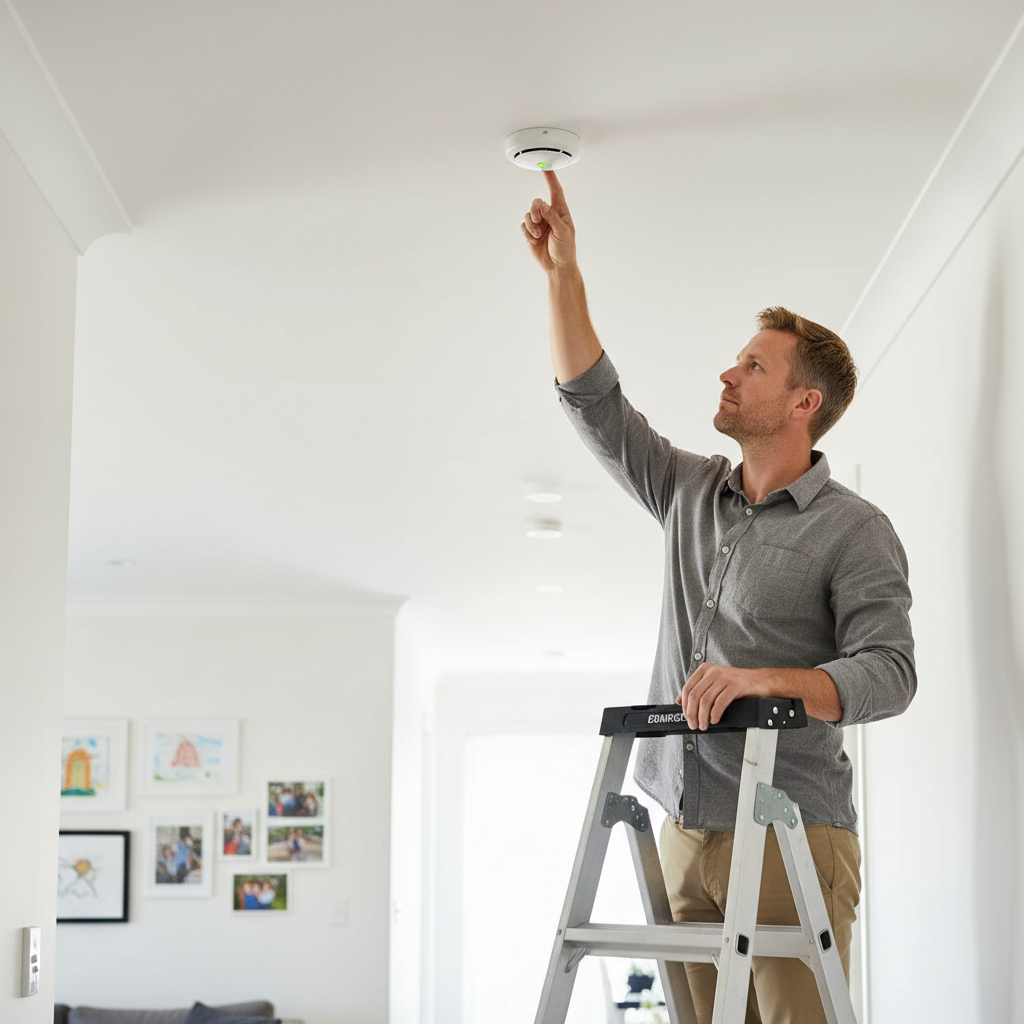
Tools and materials
Tools
- Step ladder (for ceiling alarms)
- Broomstick (alternative for high alarms)
Materials
- Replacement 9V battery (for battery alarms), keep one spare
Smoke alarms killed off-the-shelf the time you didn’t bother to check. Australian Standard AS 3786 says press the TEST button monthly. Most homeowners do it never. Here’s the 5-minute routine that actually keeps the things working.
The 30-second monthly test
- Press TEST for 5 seconds
- Listen for the 85 dB siren
- If silent or weak, replace the battery (or the whole alarm if sealed)
- Move to the next alarm
- Move on
Five alarms in a house, 5 minutes total. Do it on the first Sunday of every month. Set a calendar reminder.
What state law actually requires
| State | What the law says |
|---|---|
| NSW | Photoelectric alarms in every bedroom and hallway. 10-year replacement. Hardwired interconnected for all new builds and major renovations |
| VIC | Smoke alarms in every level. From 2027, all rental properties must have interconnected alarms |
| QLD | Since 2022, all dwellings must have interconnected photoelectric alarms in every bedroom and hallway. Strictest in Australia |
| WA | Hardwired alarms in residential, photoelectric on each storey and in any common area |
| SA, TAS, NT, ACT | Similar; verify with state fire service |
QLD’s 2022 rules are the strictest and the model many other states are moving towards. Worth meeting that standard regardless of your state, it’s the safest configuration.
The 10-year replacement rule
The sensor inside a smoke alarm uses a small amount of radioactive material (ionisation type) or an LED-photodiode pair (photoelectric type). Both degrade over time. After 10 years, response time slows enough that the alarm may miss the smoke that would have set off a new alarm.
Check the date on the back of every alarm in your house. Any over 10 years old, replace today. $25 to $50 each. Cheapest safety upgrade you’ll ever make.
Step by step
-
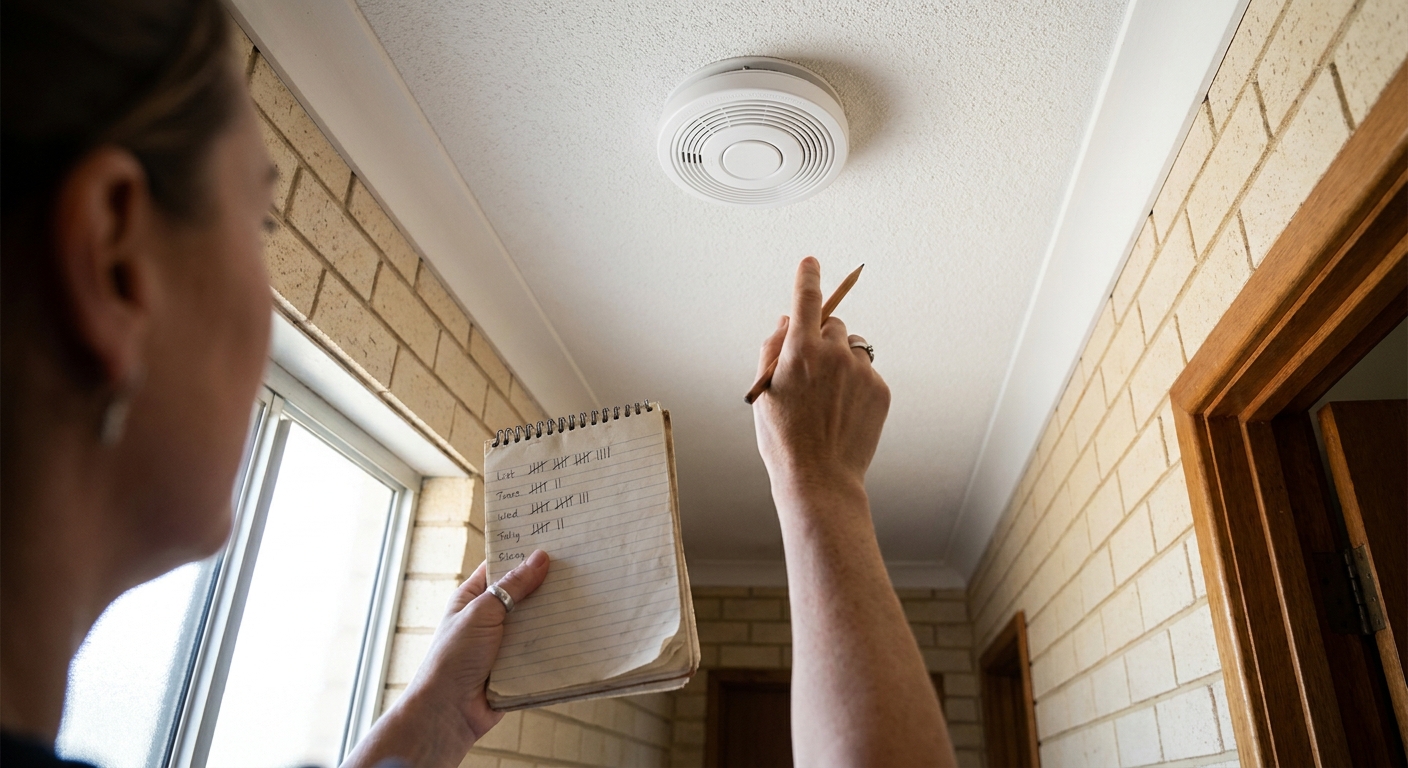
Aussie code requires alarms in every bedroom, hallway leading to bedrooms, and on every storey. Walk the house, count them. Most houses have 3 to 6. Make a list so you don't miss one.
-
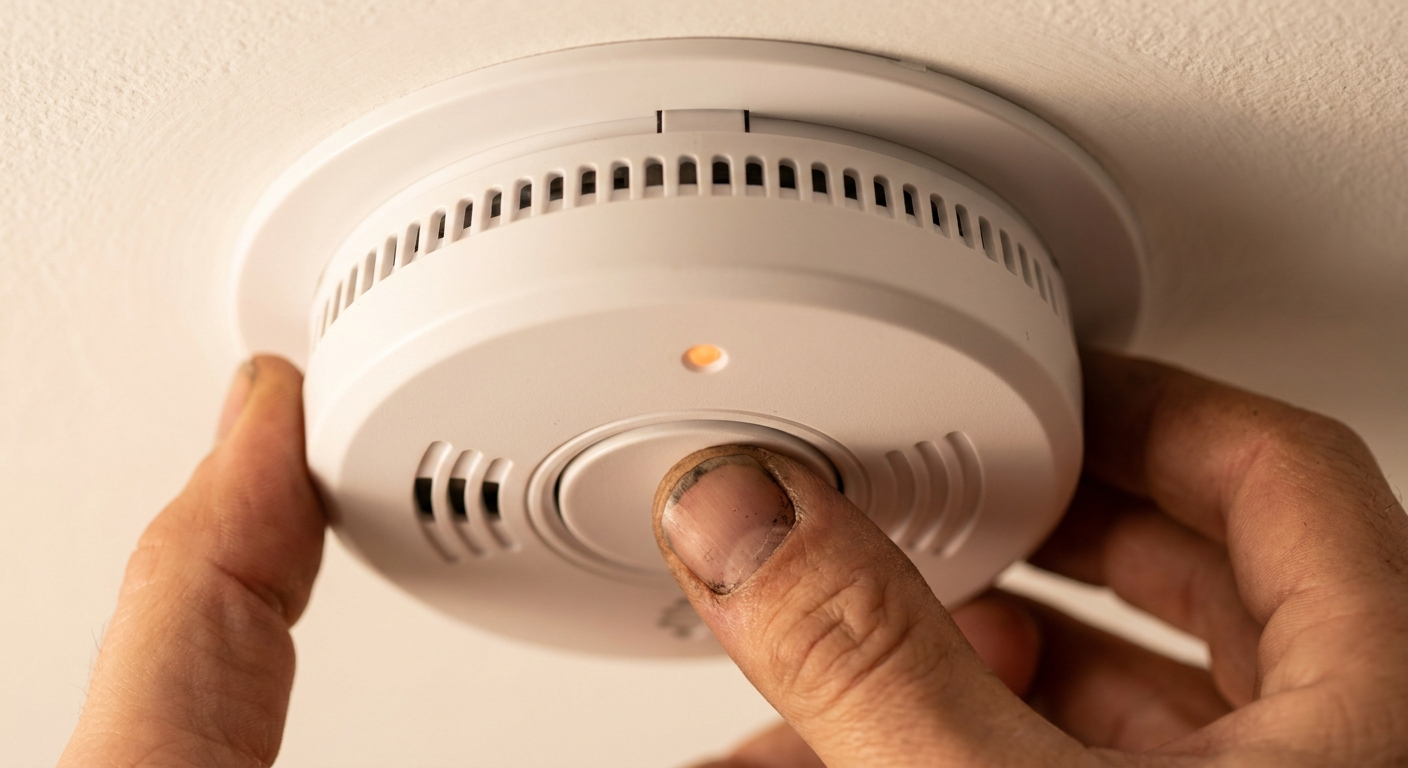
Each alarm has a TEST button on its face. Press and hold for 5 seconds. The alarm should sound a loud 85 dB siren. If it doesn't sound, or the sound is weak, the alarm has failed.
-
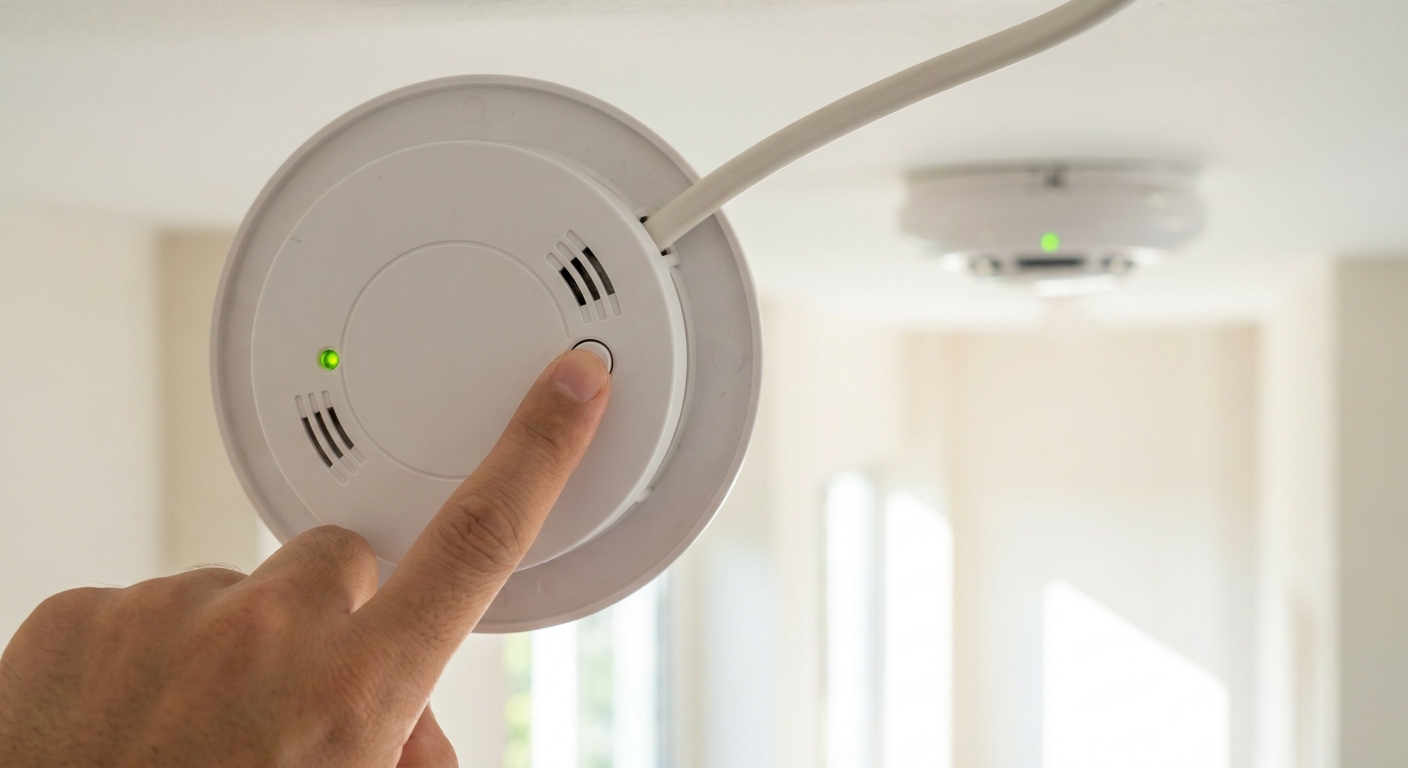
If your alarms are interconnected (wired or wireless), pressing TEST on one should sound all of them. If only one sounds, the interconnection has failed and needs a sparky.
-
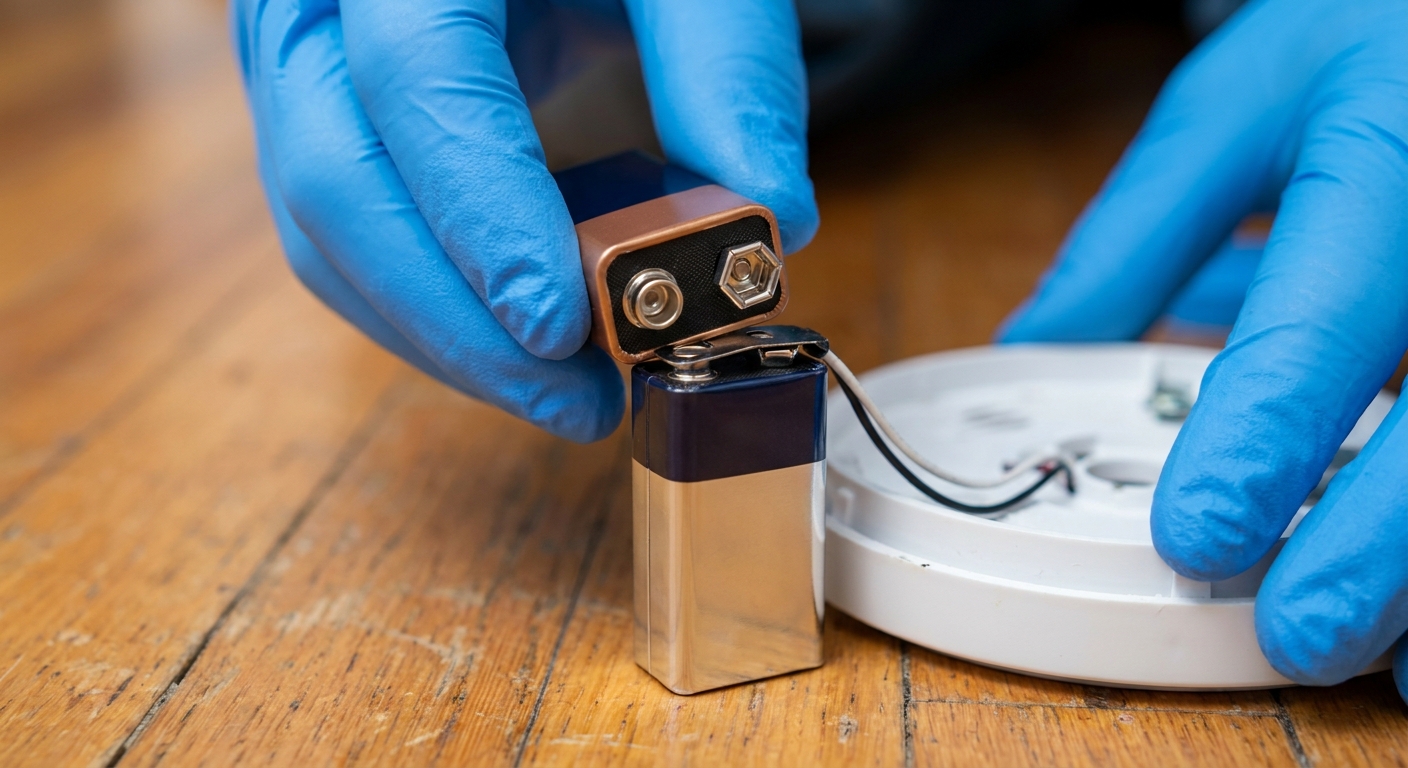
Standard 9V battery alarms need a new battery every year. 10-year sealed lithium alarms don't need battery changes but DO need testing. When a sealed alarm starts chirping, replace the whole unit.
-
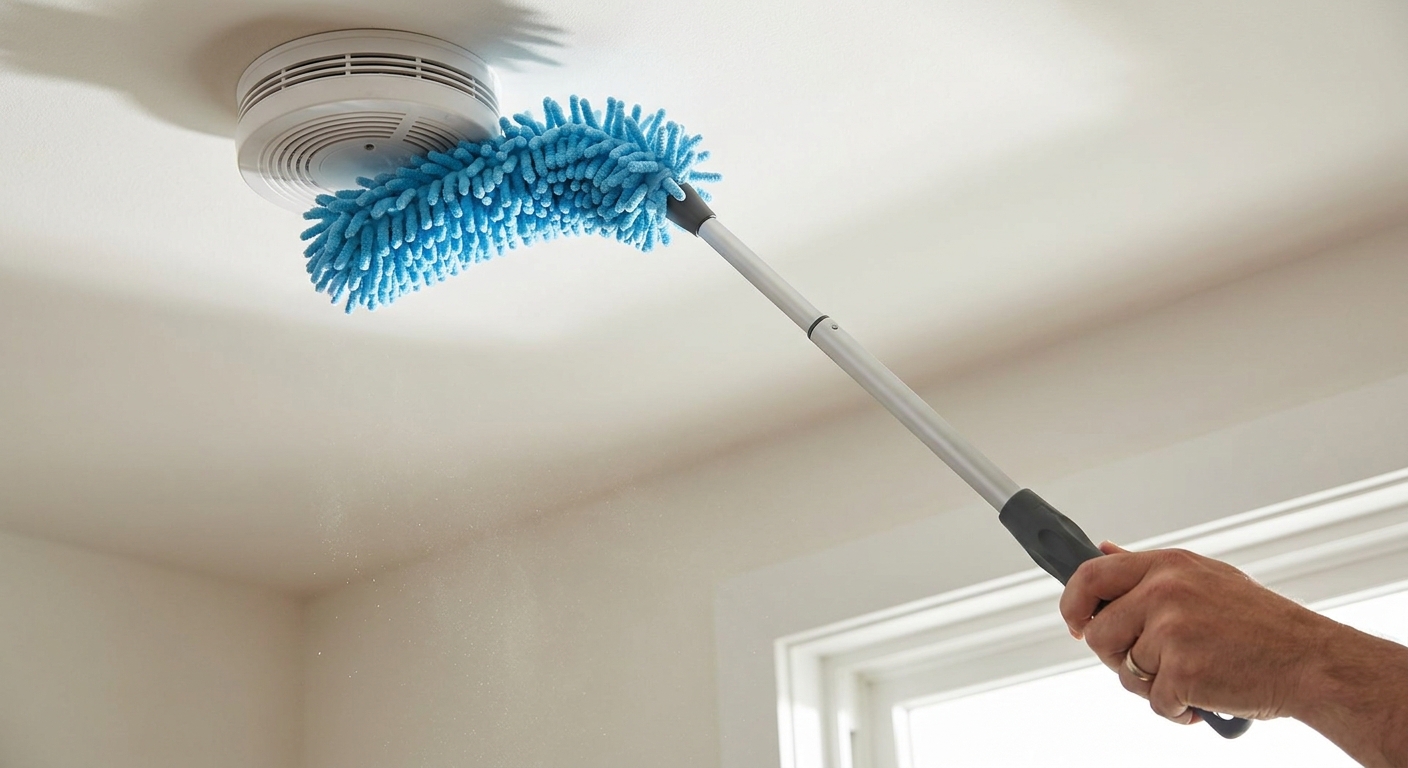
Dust on the sensor causes false alarms and missed real alarms. Once a year, vacuum the alarm using the brush attachment, or wipe gently with a clean dry cloth. Don't use chemicals.
-
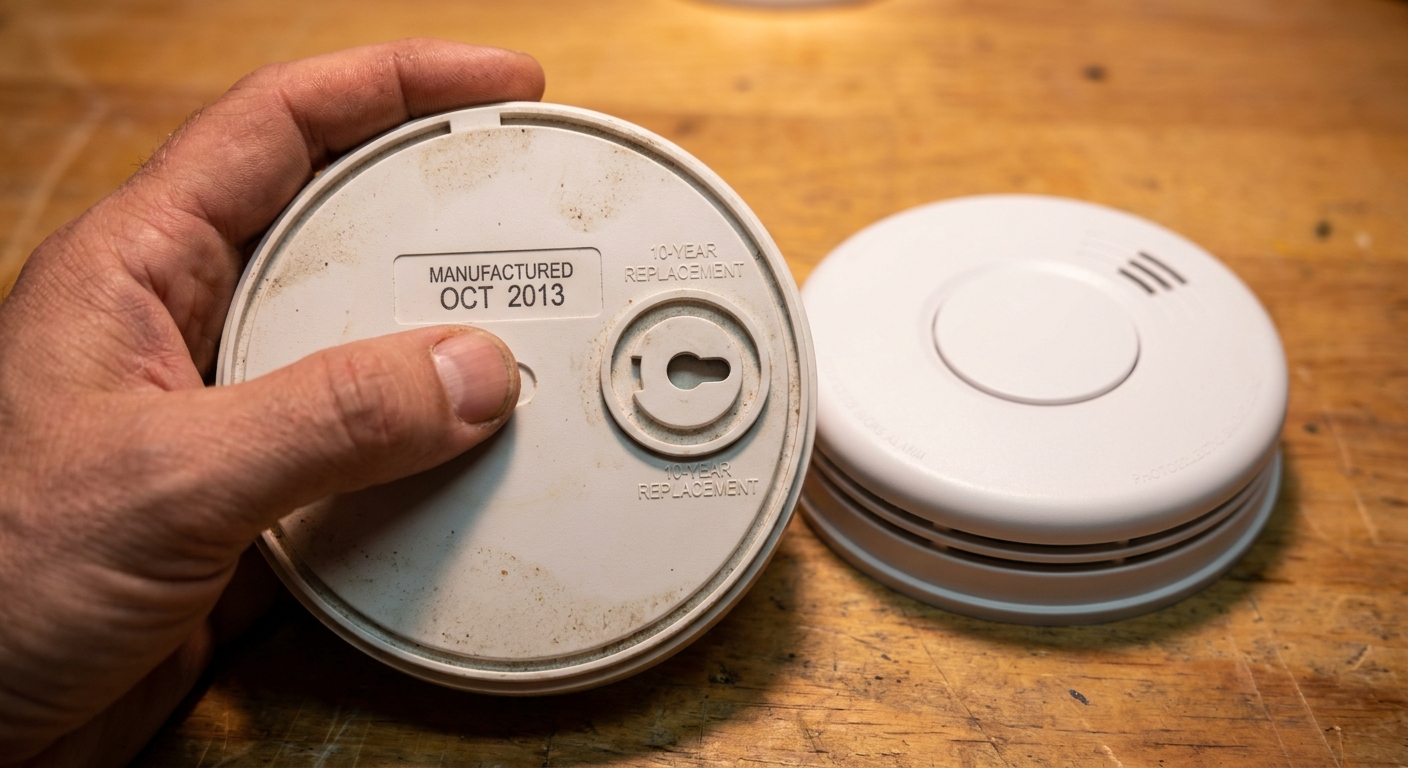
AS 3786 says all smoke alarms have a 10-year service life. The chemical in the sensor degrades. Check the manufacture date printed on the back of each alarm. Anything older than 10 years gets replaced regardless of whether it still beeps in the test.
Frequently asked questions
How often should I test smoke alarms in Australia?
AS 3786 recommends pressing the TEST button monthly, cleaning every 6 months, and replacing batteries annually for 9V alarms. Sealed 10-year alarms still need monthly testing. The full unit gets replaced every 10 years.
My smoke alarm chirps at 3am, what do I do?
That's the low-battery warning. Replace the 9V battery (or replace the whole unit for a sealed 10-year alarm). Chirps roughly every 30 to 60 seconds, always in the middle of the night because the temperature drop makes a marginal battery drop voltage just enough.
Photoelectric vs ionisation, which type should I buy?
Australian Standard AS 3786 favours photoelectric for residential. They detect smouldering fires (the most dangerous overnight fires) faster than ionisation alarms. NSW, QLD, and TAS all mandate photoelectric for new installs and most replacement situations. Stick with photoelectric.
Do I need a sparky to install a smoke alarm?
Battery-only alarms (9V or sealed lithium) you can fit yourself, they screw into the ceiling and run on internal power. Hardwired (240V) alarms must be installed by a licensed electrician, they connect to the lighting circuit. Most modern code requires hardwired interconnected alarms.