
Testing your RCD safety switch, the 30-second job every Aussie homeowner should do
Pushing the test button on your safety switch every three months is the cheapest insurance in your house. Here's how to do it, what 'tripped' looks like, and when to call a sparky.
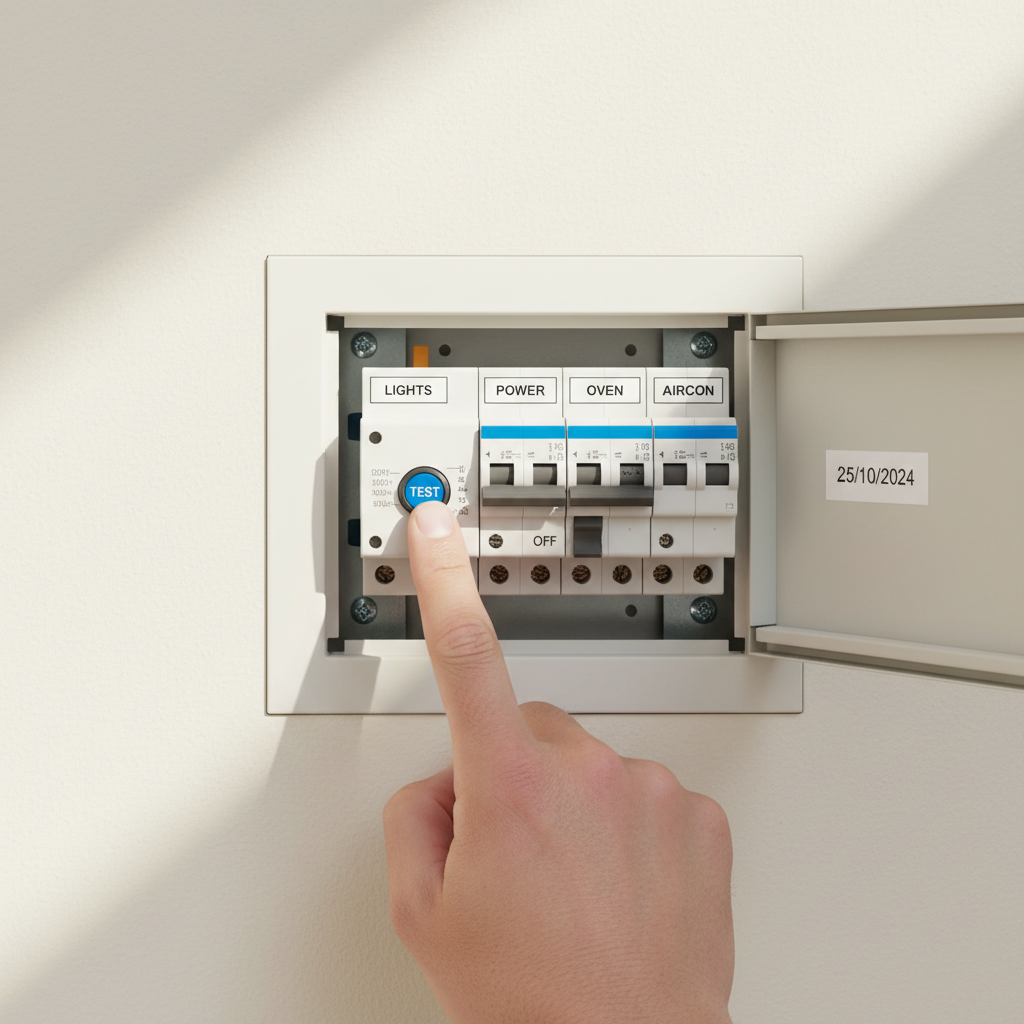
Tools and materials
Tools
- Your finger
Pressing the TEST button on your switchboard’s RCD is one of two electrical jobs every Australian homeowner can legally do. (The other is changing a light bulb.) It takes 30 seconds, costs nothing, and verifies that the device protecting your family from electrocution actually works.
Most Australians never test theirs. RCDs do fail, the moving parts inside can stick, and a failed RCD only reveals itself when you actually need it. Don’t let that day be the test.
Why this is one of the few electrical DIYs
Pushing a button on the front of a switchboard is allowed in every Australian state, the RCD is designed to be tested by users this way. Opening the switchboard cover, touching any wiring, or removing any cover panel inside the board is licensed-only work.
Older houses without RCDs
Australian wiring rules (AS/NZS 3000) didn’t require RCD protection on all sub-circuits until 2007. Houses wired before that may have partial protection or none. If your switchboard has no TEST button, or only one RCD that covers part of the house, get a licensed electrician to quote a full upgrade. Cost is typically $400–$1,200 depending on circuit count, and it’s the highest-return electrical safety upgrade you can buy.
Step by step
-
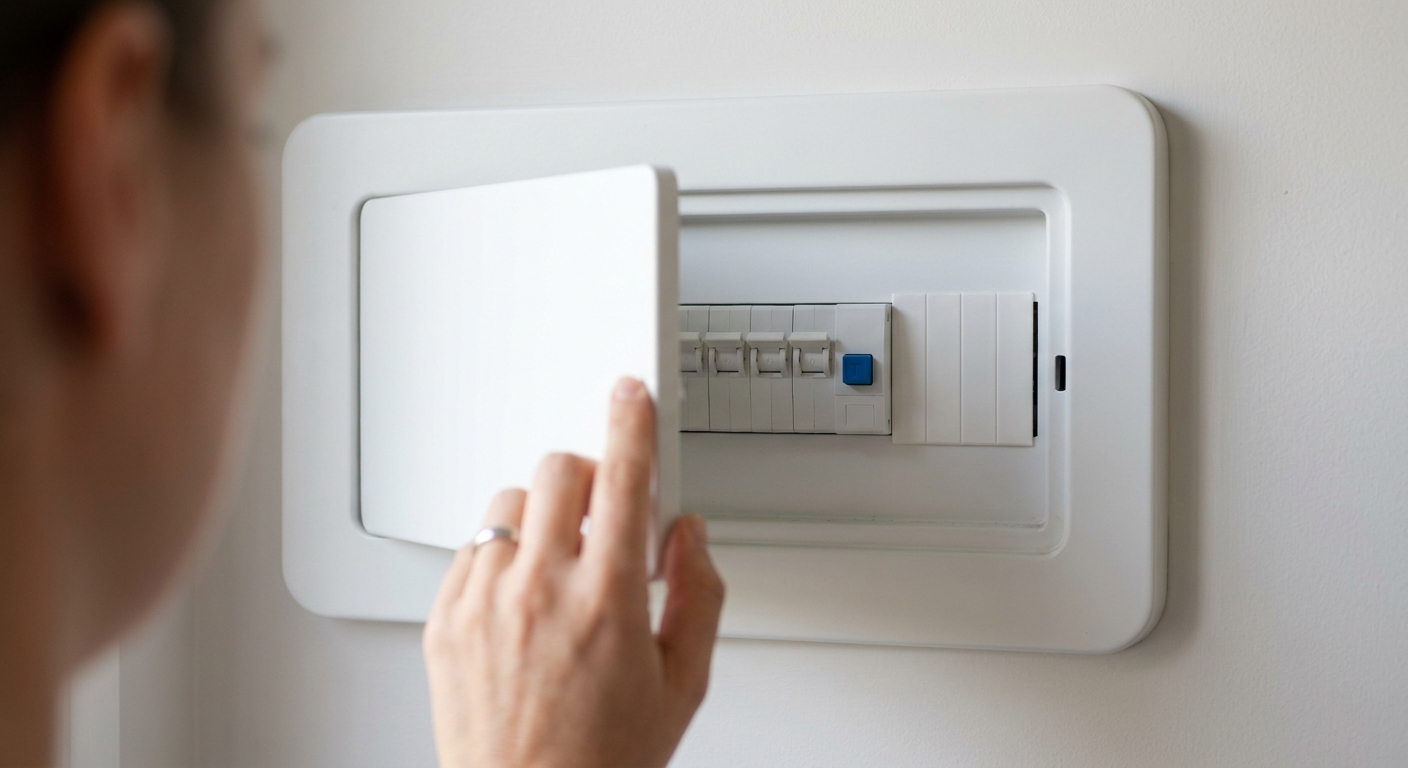
Usually in the garage, laundry, hallway, or outside wall. Open the cover. You'll see rows of switches, circuit breakers (these are the everyday switches that trip if a circuit overloads). The RCD is a wider switch with a small T or TEST button on the front.
-
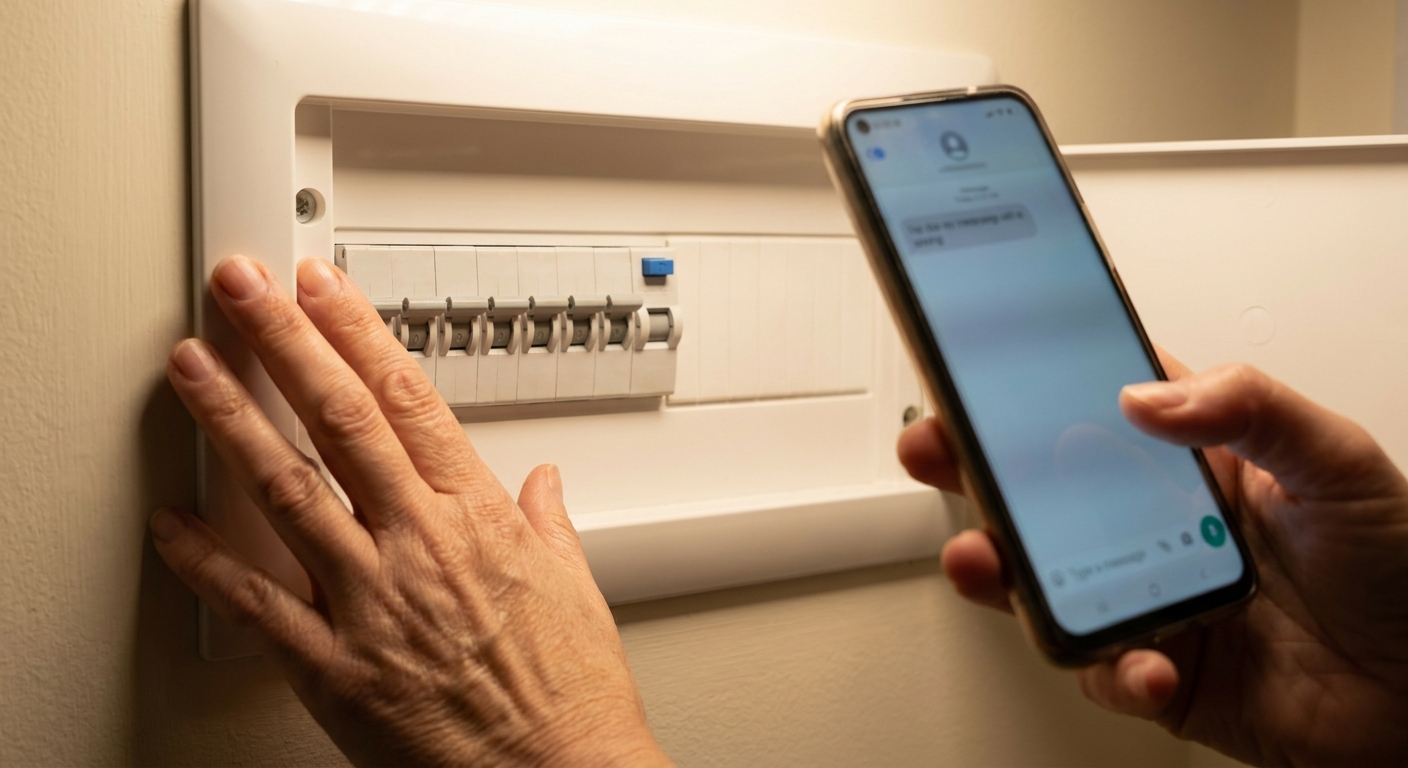
Pressing TEST will cut power to whatever the RCD protects. In many Australian homes one RCD covers half the house (lights and power on one phase, or all power points). Tell anyone in the house, save anything on the computer, and don't do this mid-cooking on an electric oven.
-
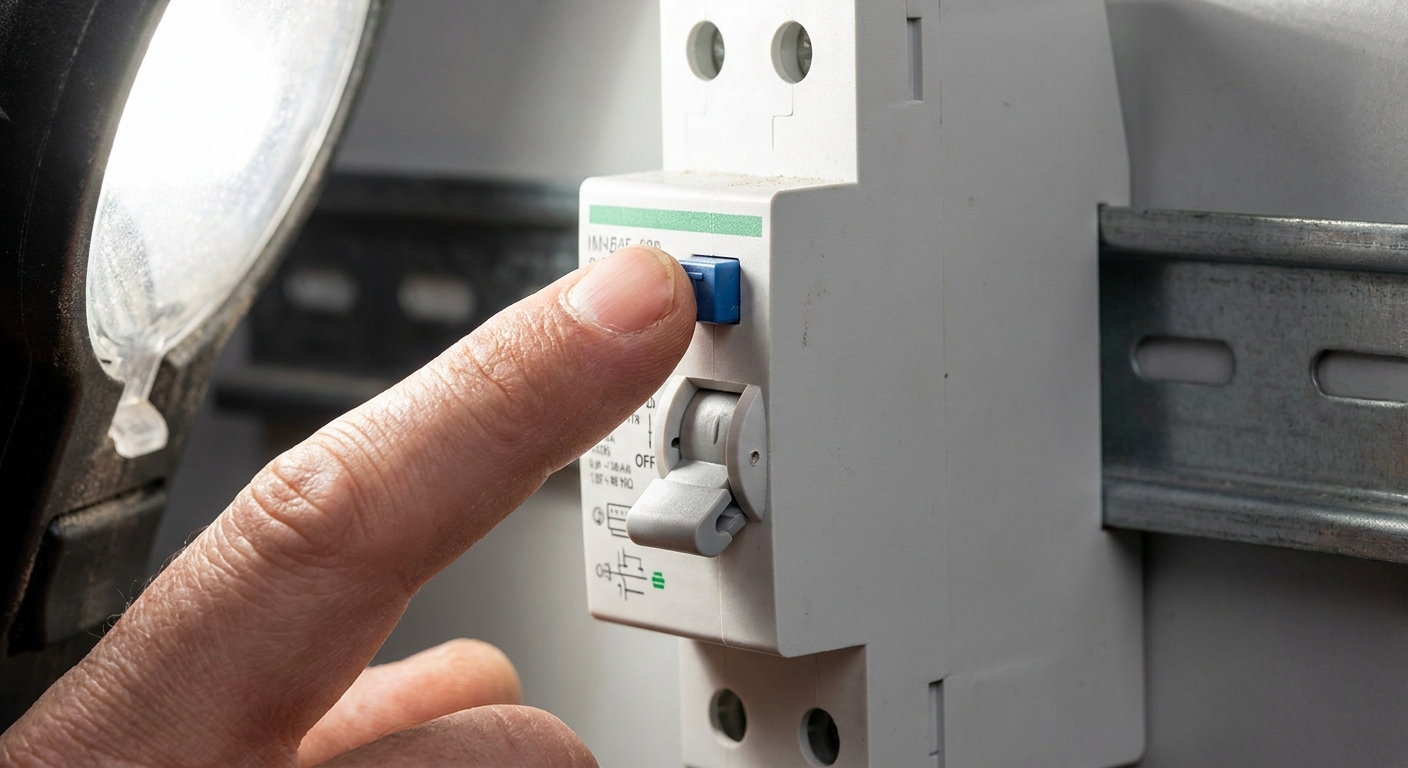
Just press it. The RCD should snap to the OFF position immediately. If it does, good, the RCD is working. If it doesn't trip when you press TEST, the RCD has failed and needs replacement by a licensed electrician.
-
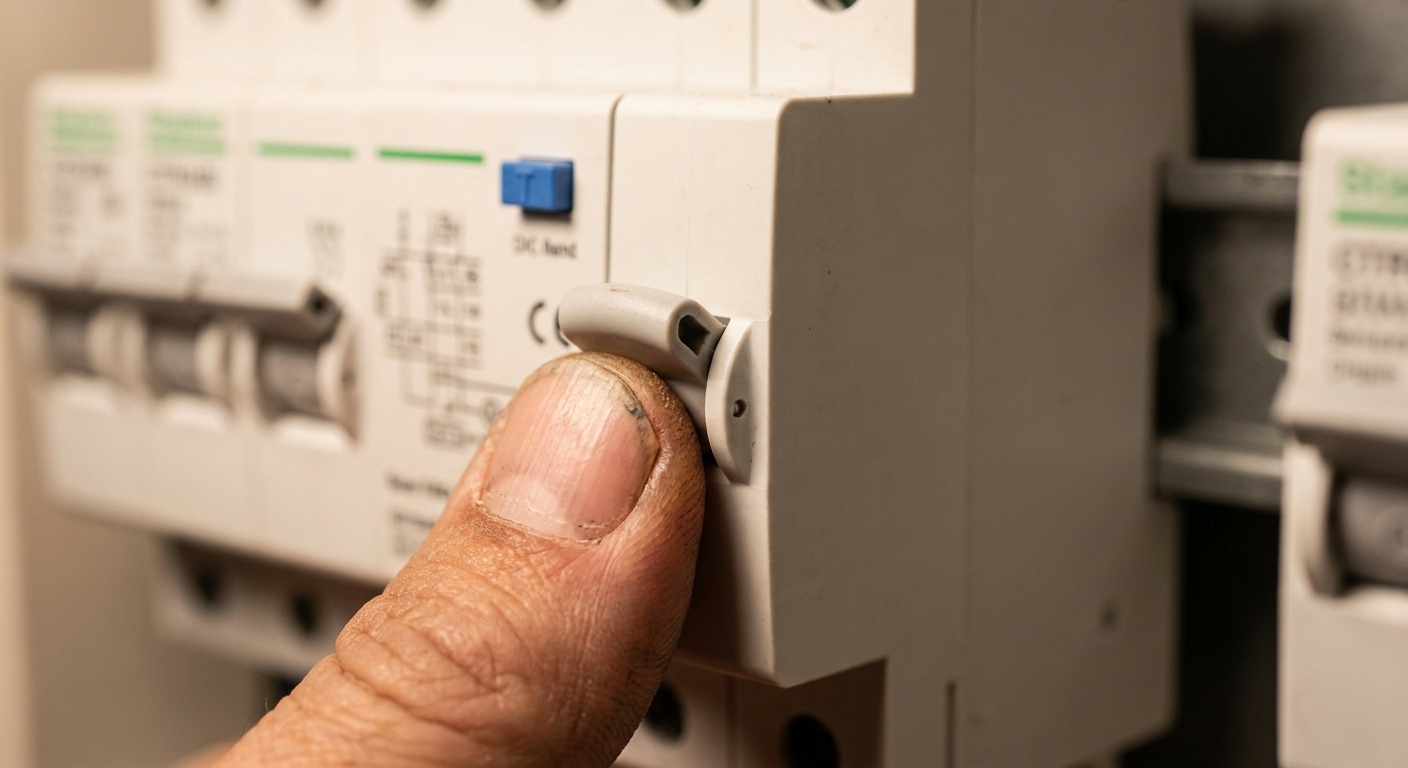
Flip the switch back to ON. If it stays on, you're done. If it trips again immediately, there's an actual earth-leakage fault somewhere on the protected circuit, unplug appliances one by one, reset after each, until you identify the faulty one. If it trips with nothing plugged in, call a sparky.
-
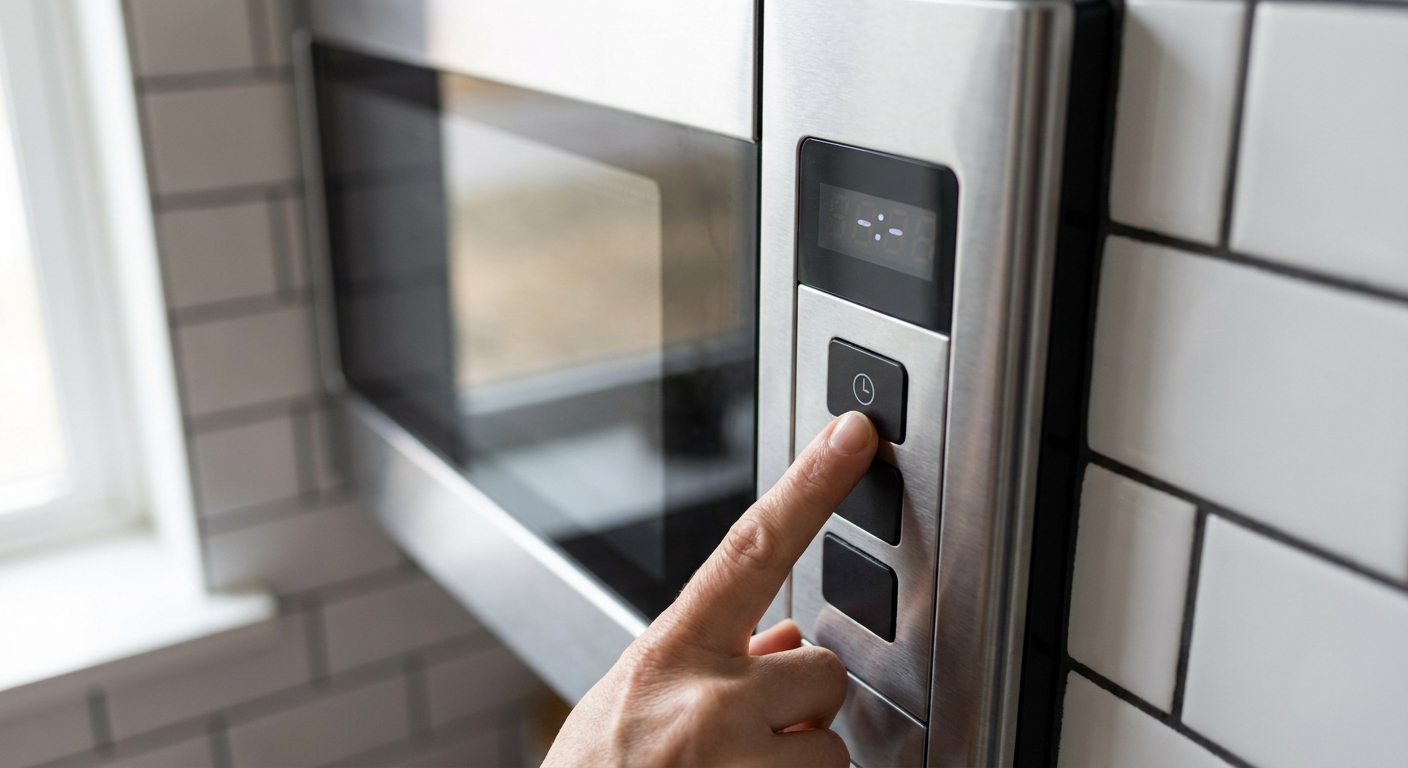
Microwave, oven, alarm clocks, and other electronics that lost power will need their time reset. This is the tax for safety.
-
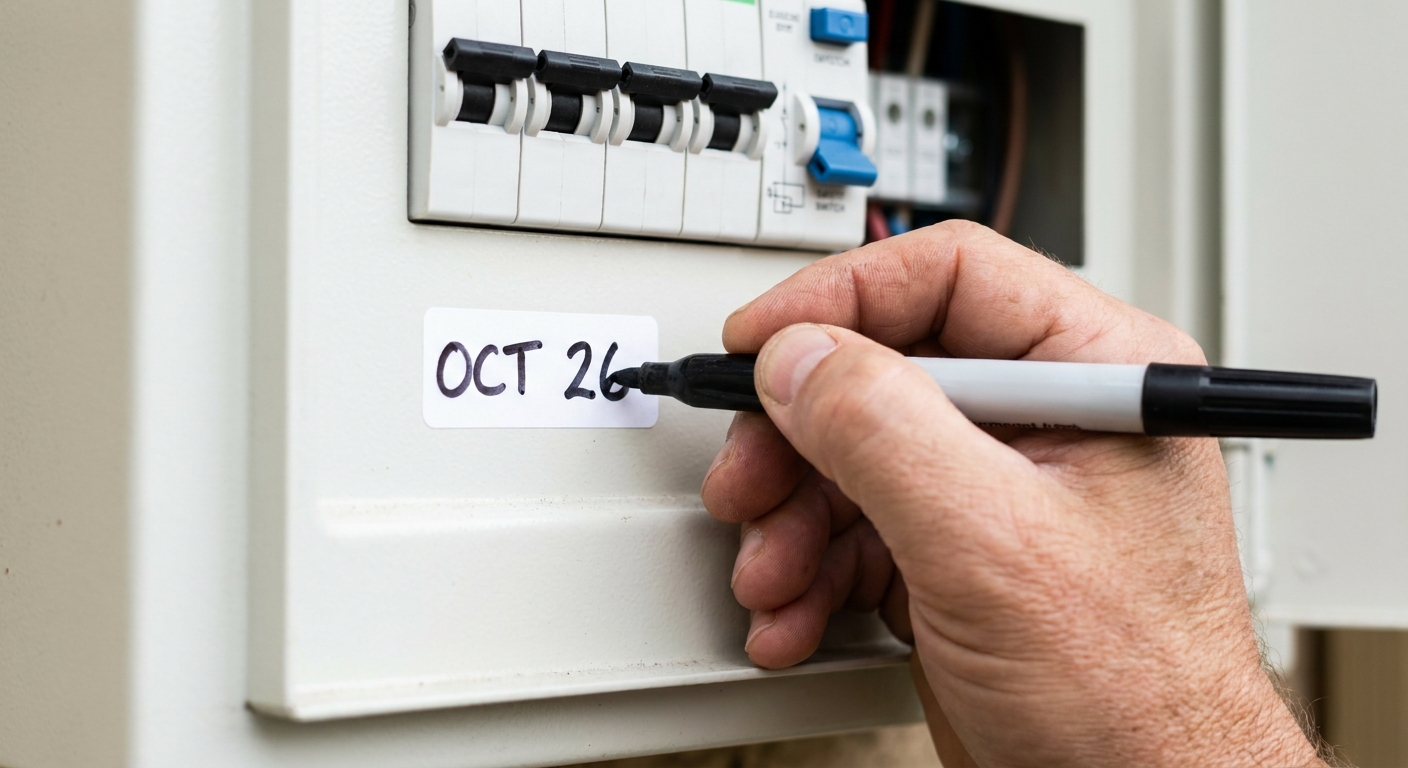
Australian Standard AS/NZS 3760 recommends testing your RCD every three months. Note the date on a sticker on the switchboard, set a calendar reminder, or pick the first Sunday of every quarter.
Frequently asked questions
How often should I test my RCD?
AS/NZS 3760 recommends every three months. Many electricians say once a month is better. Pressing the test button does not wear out the RCD, it just exercises the trip mechanism. The more you test, the more likely a stuck mechanism gets caught before it fails to protect you.
What's the difference between a circuit breaker and an RCD?
A circuit breaker trips when the circuit is overloaded (too much current). An RCD (Residual Current Device) trips when current is leaking to earth, which is what happens when electricity is flowing through a person. Modern Aussie houses should have RCD protection on all power circuits.
My house has no RCD or only one RCD, should I get more?
AS/NZS 3000 requires RCD protection on all final sub-circuits in new installations and major renovations. Older houses may have partial or no RCD coverage. Getting full coverage installed is a few hundred dollars per circuit and is one of the highest-return safety upgrades you can make. Licensed electrician work.
The RCD trips by itself randomly, what's wrong?
Could be: a deteriorating appliance leaking small currents to earth, a damp circuit (water in a power point or light fitting), or a failing RCD. Call an electrician with a clamp meter, they can identify which circuit is leaking in 30 minutes.