
How to safely change a light bulb, the everything-you-need-to-know guide
Sounds obvious, but Australian electrical rules have specific dos and don'ts. Here's how to swap a bulb without electrocuting yourself, plus when the job is actually a sparky's.
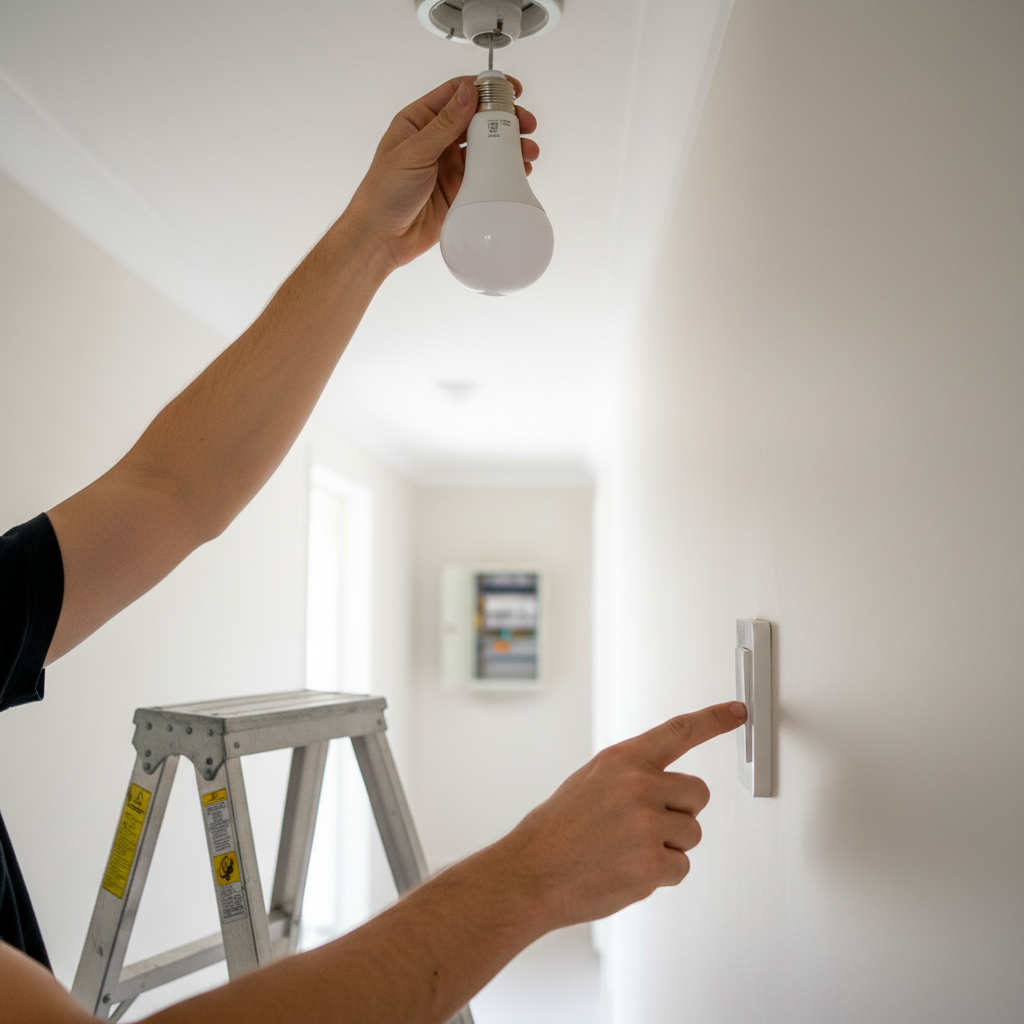
Tools and materials
Tools
- Stable ladder or step (if the light is high)
- Dry cloth (for grease, not for hot bulbs)
Materials
- Replacement bulb (correct base, correct wattage equivalent)
Changing a light bulb is the most common DIY electrical task in the world, and the one Australian state regulations explicitly allow you to do without a sparky. (The only other DIY-safe electrical task in most states is pressing the RCD test button.) It’s not complicated, but a few things go wrong often enough to write down.
What you can’t DIY
If the bulb won’t go in or won’t light despite trying a known-working replacement, the fitting itself has failed. Changing a light fitting is licensed-only work in every Australian state, including the seemingly trivial cases like swapping a pendant cord for a new one. Call a sparky.
Other licensed-only tasks people sometimes think are DIY:
- Replacing a switch plate (even the same model), anything that exposes terminals
- “Just rewiring the lamp shade”, anything past the bulb itself
- Converting halogen downlights to LED downlights (involves the transformer/driver)
- Installing a new light fitting in a position where one wasn’t before
When in doubt, call a sparky. Light fittings are cheap to install ($80–$200 per fitting). House fires from bad DIY wiring are not cheap.
Step by step
-
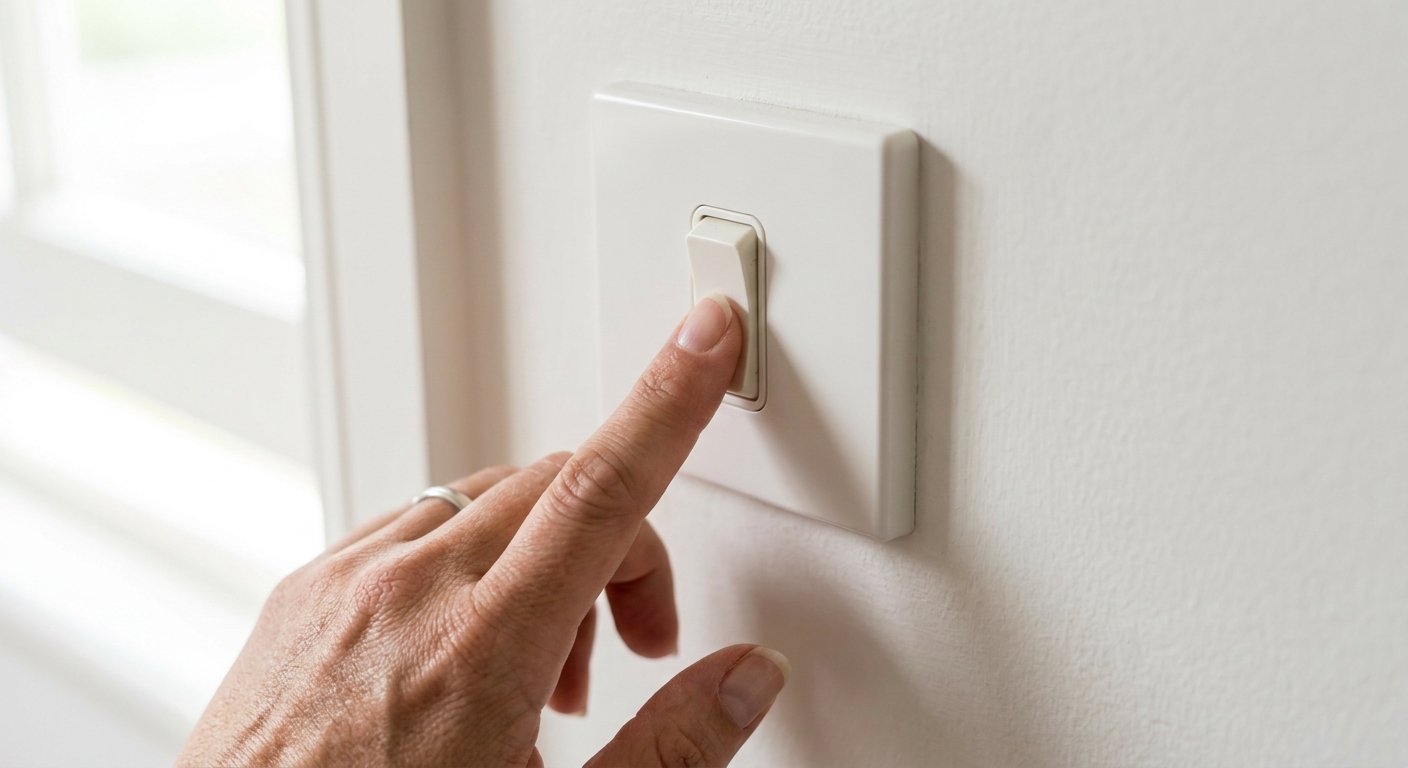
Not just at the bulb, at the wall switch. This drops voltage at the fitting. If the fitting is on a dimmer, switch off and unplug the dimmer if it's a separate module. For pendant lights with a pull-cord, the pull-cord switches the light circuit.
-
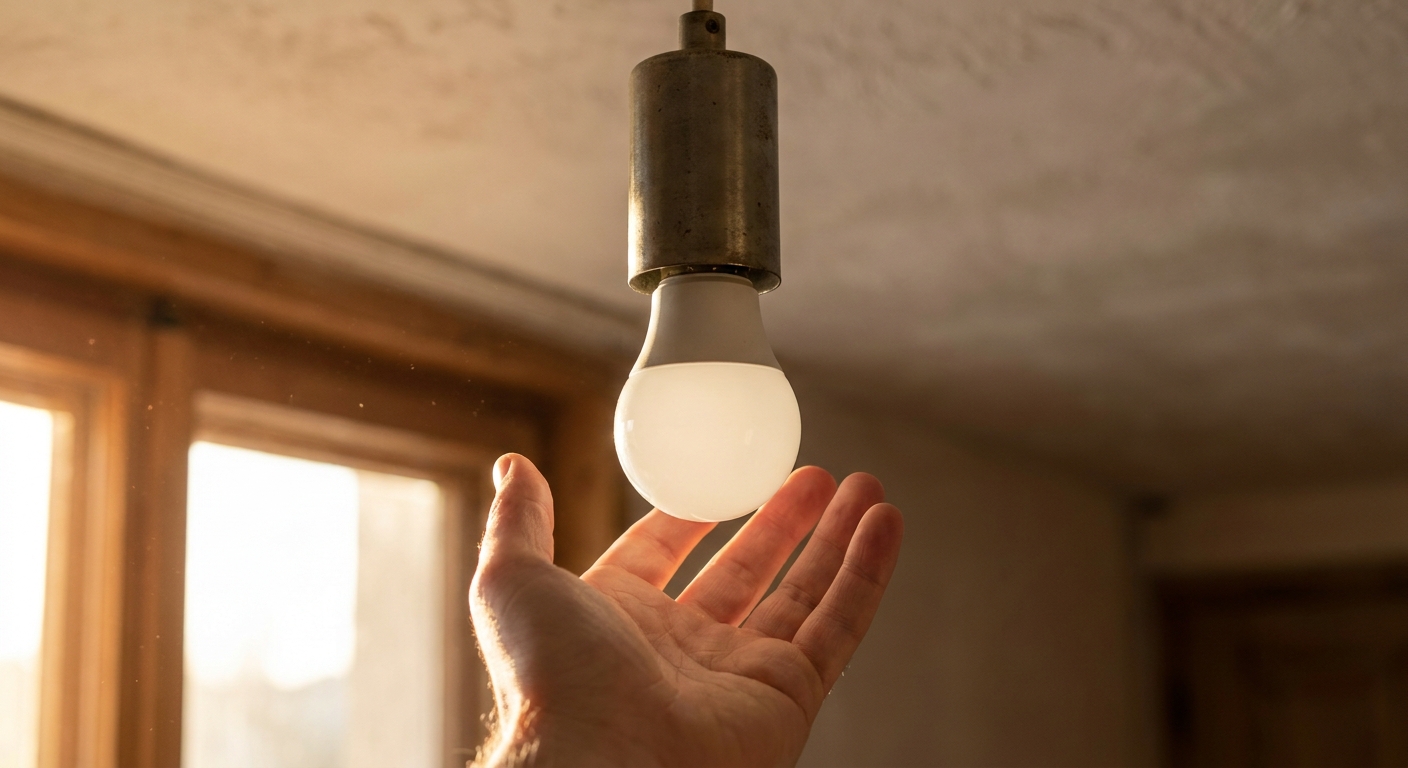
Incandescent and halogen bulbs run at 200–300°C surface temperature. Even LEDs run warm. Give it 5 minutes after switching off. Touching a hot bulb mid-removal causes burns and can shatter the glass.
-
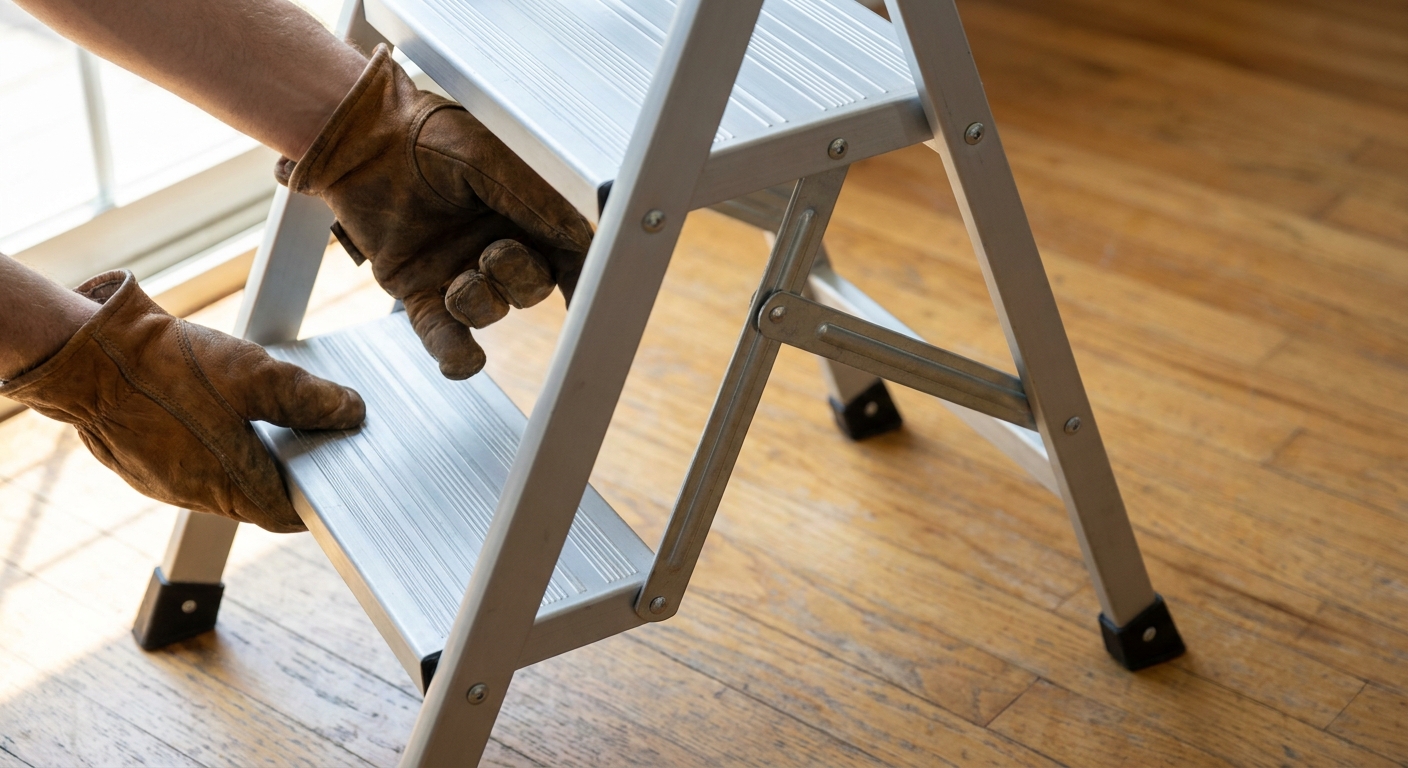
If the light is ceiling-mounted, use a proper ladder, not a chair, not a stool stacked on a table. Place the ladder so the bulb is at chest height when you stand on the second-top rung; never reach above your head. Lock the ladder spreaders. If you can't reach it safely from a domestic step ladder, this is a job for a sparky or handyman with a higher ladder, falls from chairs kill more Australians every year than electrocution.
-
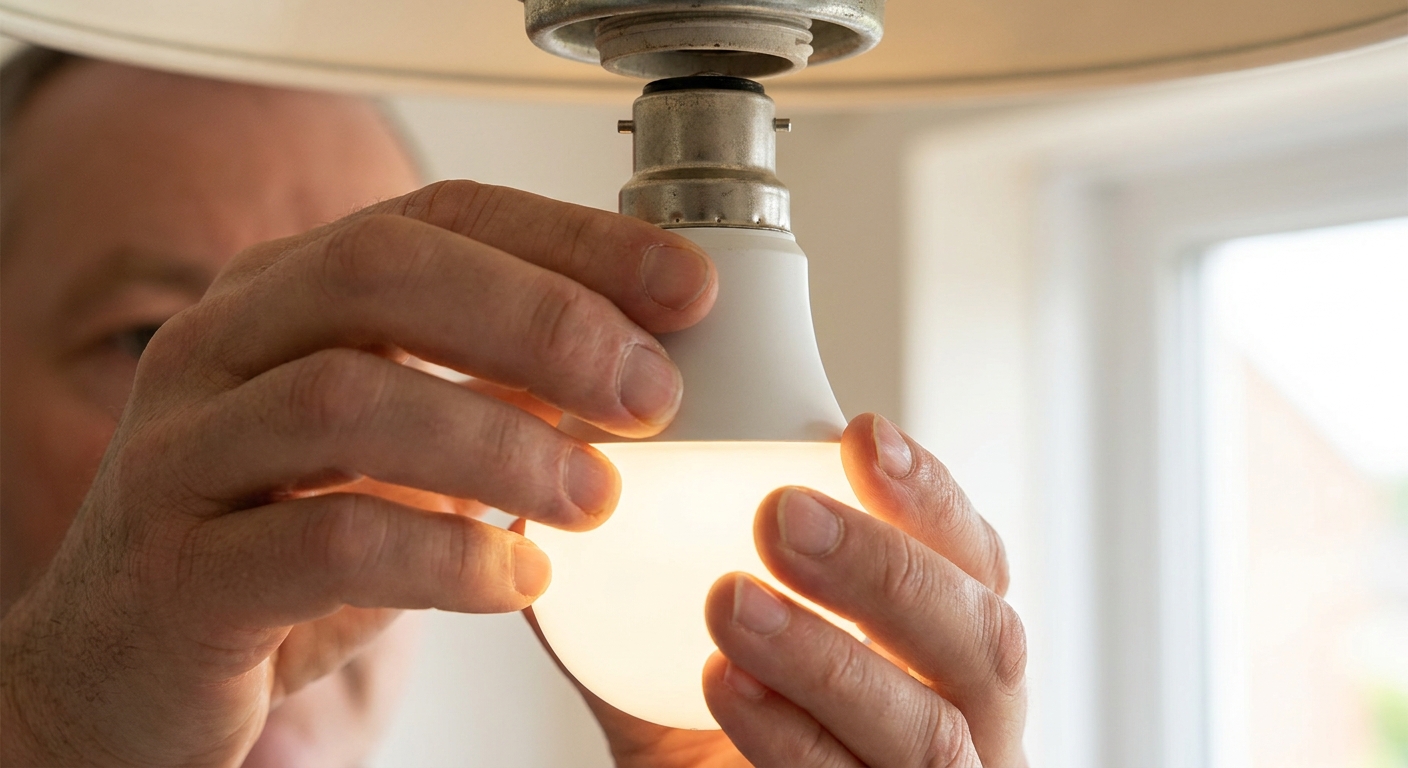
Bayonet cap (most Aussie domestic): push up gently, twist anti-clockwise quarter-turn, the bulb releases. Edison screw (E27, E14): twist anti-clockwise (lefty-loosey) until it screws out. GU10 spotlight (downlights): push up, twist quarter-turn anti-clockwise, pull straight down, be ready to catch.
-
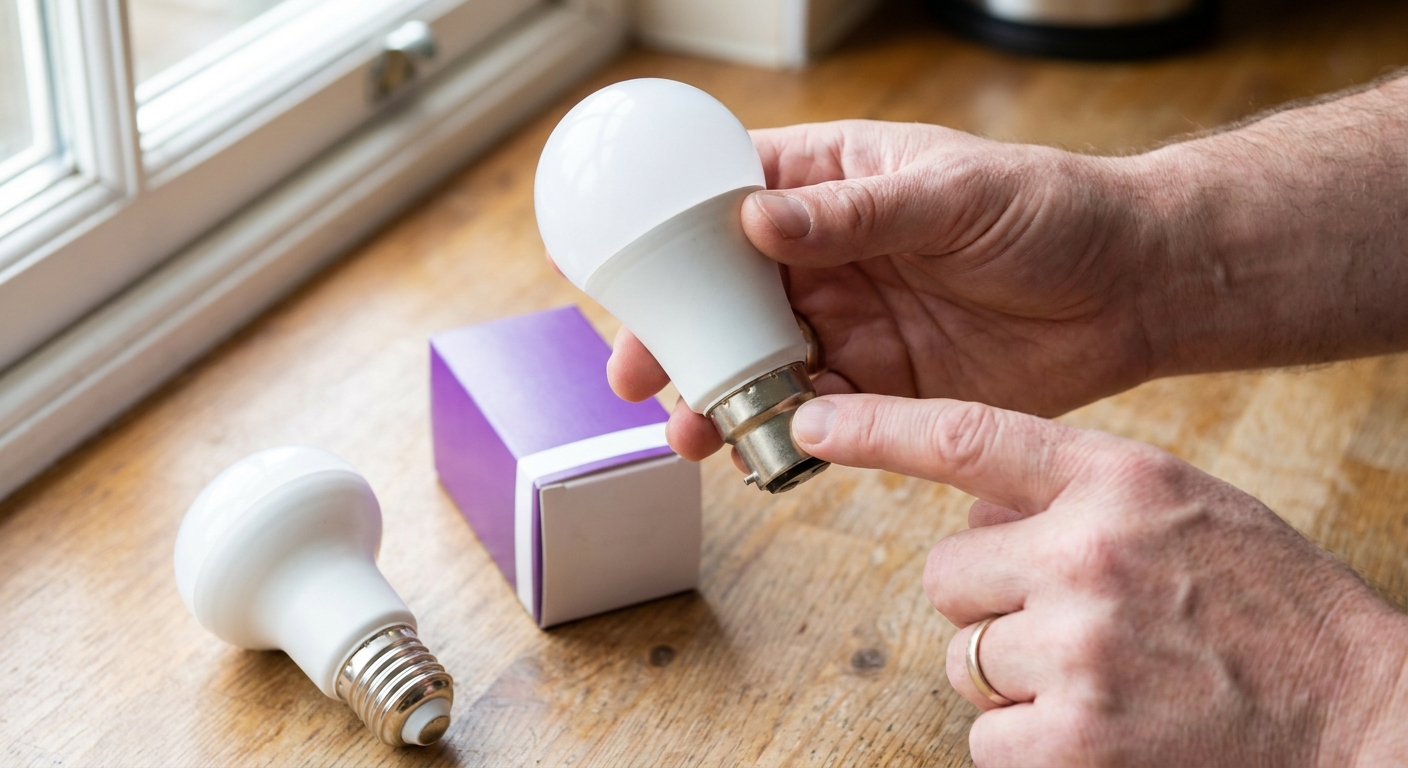
Base must match exactly. B22 to B22, E27 to E27, GU10 to GU10. Wattage equivalent, a 60W incandescent equivalent in LED is around 8–9W actual power. Don't exceed the fitting's wattage rating (usually printed inside). Beam angle matters for spots: narrow for spotlights, wide for general light. Colour temperature: 2700K (warm/yellow, living areas), 4000K (neutral, kitchens), 6000K+ (cool/blue, garages and workshops).
-
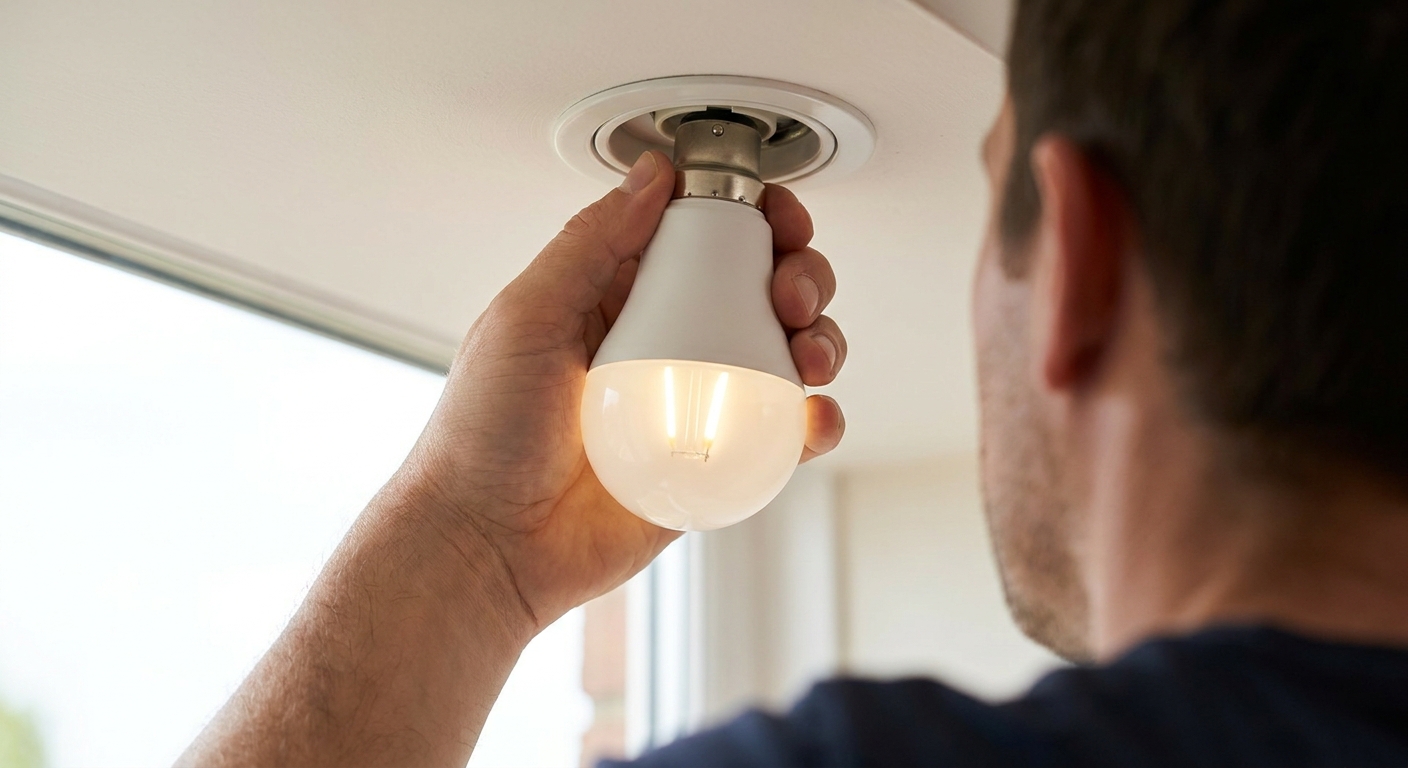
Reverse of removal, push up and twist clockwise for bayonet, screw in clockwise for Edison, push up + twist clockwise for GU10. Hand-tight; never use pliers. Turn the wall switch back on. If the new bulb lights, you're done. If it doesn't, swap with another known-working bulb to rule out a faulty product. If still nothing, the fitting may have failed and that's a sparky job.
Frequently asked questions
My bulb broke in the socket, what do I do?
Turn the wall switch off AND turn off the circuit at the switchboard. Use needle-nose pliers (insulated handle) to grip the remaining base and twist out. Or use a raw potato, push it into the broken base and twist (yes, really, it works). If you can't get it out safely, call a sparky, fishing live conductors out of a broken bulb base is how people get killed.
Can I use a 60W bulb in a 40W-rated fitting?
No. The fitting's wattage rating is the heat limit the wires and fixture can handle safely. Going over melts insulation and causes fires. LED equivalents make this less likely (a 60W-equivalent LED is only 8W actual), but if you're using incandescent or halogen, stay at or below the rating.
Why does my LED bulb flicker?
Three common causes: (1) it's on a dimmer not rated for LEDs (most old dimmers aren't), (2) the LED driver in the bulb is failing, replace under warranty, (3) the circuit is sharing with a high-load appliance (washing machine, AC), that's a sparky diagnosis.
My downlight bulb is hot to touch even when off, why?
Some old halogen downlights run hot for 30+ minutes after switching off. If your downlights stay hot when off for hours, you have a fault, possibly the transformer is still energised. Call a sparky.