
Choosing an electrician in Australia, the 8-step verification checklist
Anyone can call themselves an electrician. Only licensed ones can legally work on your house. Here's the eight-step check that takes ten minutes and prevents the most common rip-offs.
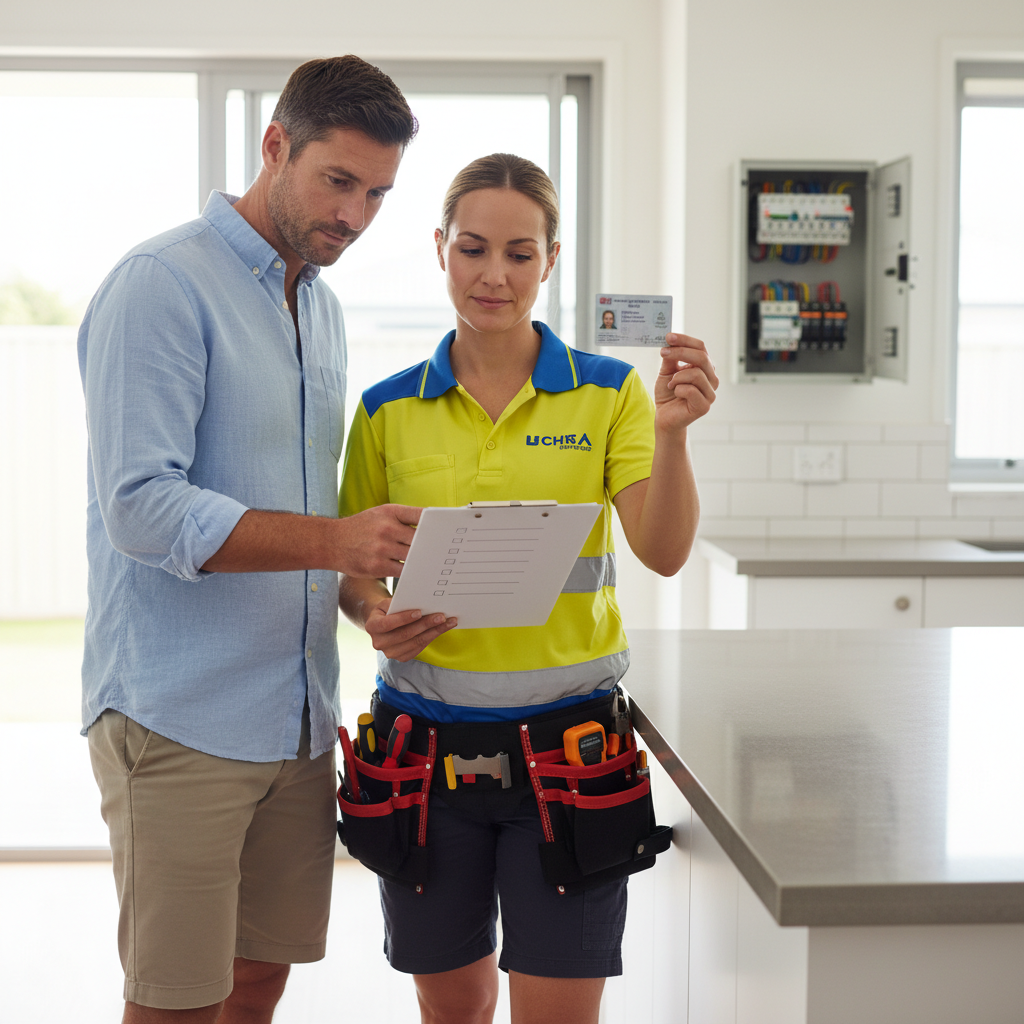
The Australian electrical licensing system exists because bad electrical work kills people. Anyone you let into your house with a screwdriver should be properly licensed, properly insured, and properly accountable. The ten-minute verification check below is the cheapest insurance you’ll ever buy.
The 8-step verification
1. Get three quotes
Not one. Not two. Three. The middle quote is usually the right one. The cheapest is often missing inclusions or proper paperwork. The dearest might be a fair price from a quality operator, or padding.
2. Ask for the electrician’s licence number and state
Every Australian electrician has a licence number issued by their state regulator. They should give it to you on the quote, no hesitation. If they hesitate, walk away.
3. Verify the licence on the state regulator’s online register
Free, takes two minutes:
- NSW, verify.licence.nsw.gov.au
- VIC, ESV licence search
- QLD, ESO licence check
- WA, EnergySafety WA licence register
- SA, CBS licence search
- TAS, CBOS occupational licensing search
- ACT, Access Canberra licence check
- NT, NT licence register
Check: current status (current, expired, suspended, cancelled), licence scope (does it cover the work you need), any disciplinary actions.
4. Verify the contractor licence (if a business)
If you’re hiring a business (Pty Ltd, sole trader trading as), check both the individual worker licence AND the contractor licence. They’re separate. A worker can be licensed; the business they’re trading under may not be licensed to contract directly with you. Without a contractor licence, the business can’t legally invoice you for the work.
5. Confirm public liability insurance
Minimum $10M, ideally $20M. Ask for the insurance certificate (a one-page document from their broker). If they refuse, walk away. Public liability insurance is what pays out if the work damages your house, neighbour’s house, or injures someone.
6. Get the quote in writing with itemised line items
Required by consumer law in most states for work above the relevant threshold. The quote should show:
- Labour hours
- Parts and materials
- Call-out fee
- GST line item
- Total
- Inclusions and exclusions (e.g., does it include disposal of old fittings?)
- Certificate of Compliance promise
7. Pay no more than 10% deposit
For most jobs under $5,000, no deposit at all is reasonable. For larger jobs (rewires, switchboard upgrades), 10% on order, balance on completion. Anyone asking for 50% or more upfront is a major red flag.
8. Get the Certificate of Compliance
Required in NSW, VIC, QLD, ACT, NT after any electrical work. Some states require it for plumbing work too. Get it before paying the final invoice. Keep it for life of the property, you’ll need it at sale time.
Red flags
- Vehicle has no business signage or licence number visible
- Asks to be paid in cash with no receipt
- Won’t provide insurance certificate
- “Cash discount” implies the work won’t be properly invoiced (no GST, no insurance recourse)
- Won’t quote in writing
- Quotes without inspecting the work
- Pressures you to sign on the spot
- Hostile reaction to your verification questions
- Wants you to apply for the council approval, when it’s the contractor’s responsibility under your state’s licensing rules
The risks of hiring badly
- House fire from a bad joint, the #1 outcome of unlicensed or low-quality electrical work
- Voided home insurance, if a claim arises from work not properly certified
- Voided product warranties, manufacturers can refuse warranty on appliances installed without proper compliance
- Property sale complications, buyer’s solicitor finds the unapproved/uncertified work and demands rectification
- Death or injury, the worst case. Bad electrical work kills around 15 to 20 Australians per year on average
When to push back during the job
A licensed sparky should never ask you to:
- Stay out of the room while they work (you’re entitled to watch)
- Sign anything that contradicts the quote
- Buy materials yourself to avoid GST
- Pay extra cash to “speed things up”
Polite firm response: “Please complete the work as quoted, with a Certificate of Compliance and tax invoice on completion.” If they push back, ask them to leave and call another sparky.
Where to find good ones
- Word of mouth from neighbours, the gold standard
- Master Electricians Australia, members have additional code-of-conduct requirements
- NECA (National Electrical and Communications Association), industry body, members tend to be established
- Hipages, ServiceSeeking, Oneflare, online quote services, useful for triangulating prices but always do the 8-step verification on the chosen operator
- Local Facebook community groups, often the most candid feedback
- Bigger appliance retailers’ installer networks, vetted but expect premium pricing
The eight steps above take ten minutes. A bad electrical job takes years to find out about and tens of thousands to fix. Do the check.
Frequently asked questions
How do I verify an electrician's licence?
Every Australian state regulator has a free online licence search. NSW Fair Trading, ESV in Victoria, the ESO in QLD, Building & Energy in WA, CBS in SA, CBOS in TAS, Access Canberra in ACT, NT Licensing in NT. Search by name or licence number, you get current licence status, scope, and any disciplinary actions.
What's the difference between an electrician licence and a contractor licence?
Electrician licence (sometimes called electrical worker, journeyman, or Class A) lets the person do the work. Contractor licence lets the business contract directly with you. Sole traders need both. Employees only need the worker licence.
Do I need to see a Certificate of Compliance?
Yes, in NSW, VIC, QLD, ACT, NT. After any electrical work, the electrician must issue you a Certificate of Compliance (called Certificate of Electrical Safety in VIC, Certificate of Test in some other states). Keep it. Your home insurer can refuse claims without one.
What does CEC accreditation mean?
Clean Energy Council accreditation, required separately from the electrical licence for any solar PV or battery storage installation eligible for STC rebates. A sparky doing solar work without CEC accreditation can't sign off the rebate paperwork.