
A tender is open for the construction of a new water treatment plant at Busselton in Western Australia’s South West, the centrepiece of the jointly funded $59.1 million Busselton Water Supply Improvement Project. The winning contractor will finalise the detailed design and build the plant, along with treated water storage tanks, pumping and electrical systems, control systems and associated infrastructure, then test and commission the lot before it’s folded into Busselton Water’s network.
The tender release was reported by Infrastructure Magazine. The project is funded by the Australian Government through the National Water Grid Fund and by the Western Australian Government, and is pitched at shoring up drinking water security as Busselton’s population climbs.
According to the Western Australian Government, the $59.1 million Busselton Water Supply Improvement Project will enable 7,000 new connections to the community water supply network.
What the winning contractor actually builds
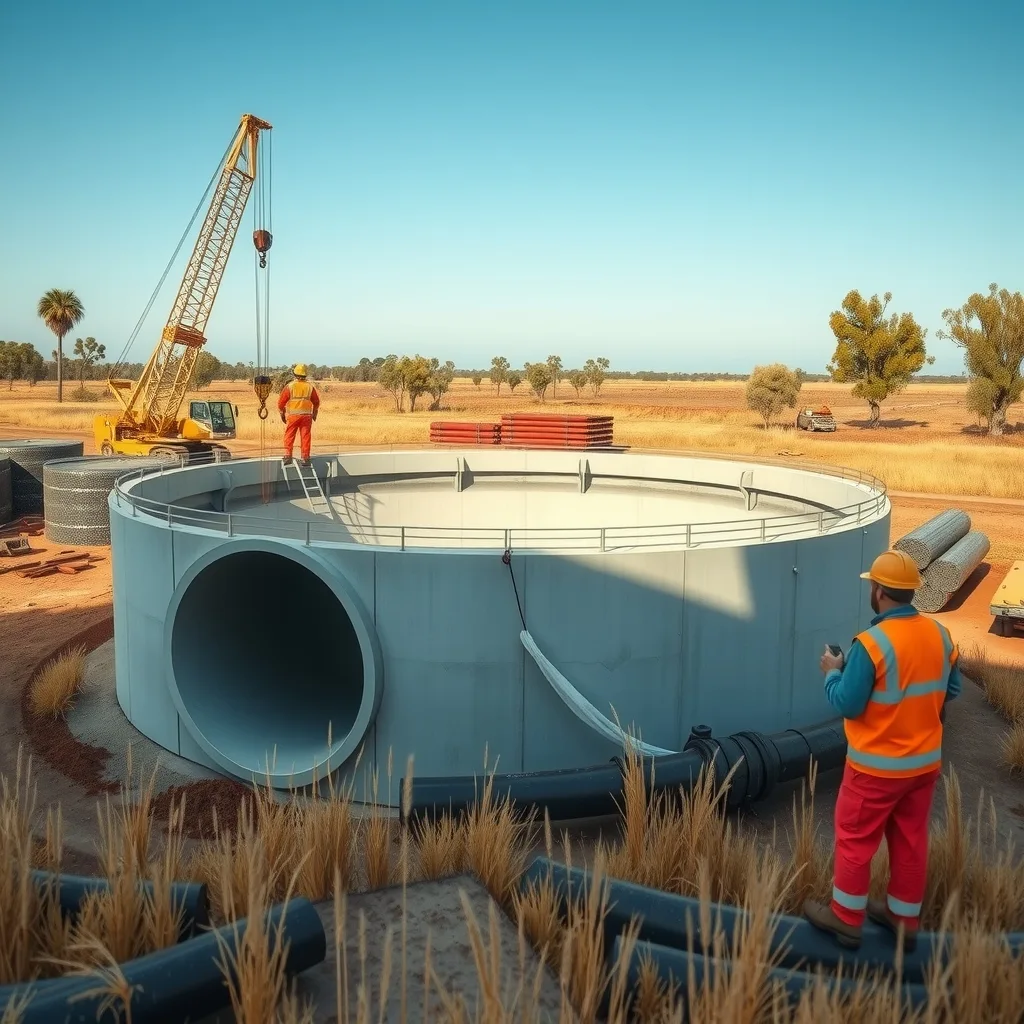
The plant doesn’t stand on its own. It’s backed by a new inland drinking water source and associated infrastructure, including two seven-megalitre treated water storage tanks, a pump station and an expansion of the distribution network.
Two seven-megalitre tanks hold 14 million litres between them. That’s the buffer sitting between a growing town and a bad day on the network.
Groundwork has already started. Installation of a new production bore and an associated monitoring bore is complete, so the successful tenderer inherits a water source rather than having to prove one up.
Because the contract runs from detailed design through to commissioning, the head contractor carries the design risk and the integration risk. That shapes the subcontract packages underneath it: civil and concrete work for the tank bases and structures, mechanical installation for pumps and dosing, electrical and control systems for the switchboards and instrumentation, then the commissioning phase where everything gets proven wet before Busselton Water takes it on. The scope explicitly names testing and commissioning, which is the part that usually pulls electrical and controls people back to site well after the concrete crews have packed up.
Both ministers lead with jobs
Federal Minister for the Environment and Water Murray Watt said the build would pay off over decades.

“The Albanese Government is proud to partner with the Cook Government to invest in water infrastructure that will support Busselton’s growing community for decades to come.”
Watt tied the spend to the federal fund behind it. “Through the National Water Grid Fund, we’re investing in practical projects that strengthen water security and help regional communities prepare for future growth,” he said, adding the project “will provide Busselton with a more resilient and sustainable drinking water supply, while supporting the homes, businesses, and local economy that rely on secure water.”
WA Water Minister Daniel Pastorelli put the local content case more bluntly.
“The project will also provide opportunities for South West contractors, suppliers, and trades, keeping more of the economic benefit in the region. By developing a sustainable inland water source, we’re also reducing pressure on Busselton’s coastal borefields and building a more resilient water network for future generations.”
He also framed it as a housing enabler: “Busselton is growing, and we need to make sure the infrastructure that supports that growth keeps pace. This $60 million project is about securing Busselton’s drinking water supply for the long term, while supporting more homes, local jobs, and continued economic growth.”
Note the two figures. Pastorelli rounds it to $60 million; the project value reported by Infrastructure Magazine is $59.1 million. Neither statement in the source breaks the budget down between the plant, the tanks, the pump station and the network extension.

Why inland, and why it matters to a plumber in the South West
The shift to an inland source is the strategic bit. Pastorelli’s statement puts it plainly: the new bore field takes pressure off Busselton’s coastal borefields. For anyone who works on reticulated water in the South West, that’s the difference between a network running hard at the edge of its supply and one with headroom.
Keep the 7,000 new connections figure in your back pocket. Connections are lots, and lots are houses, and houses are slabs, drainage, rough-ins and fitoffs. A water authority doesn’t announce 7,000 connections’ worth of capacity unless the land is coming. That’s a medium-term signal for anyone weighing up a second ute or an extra apprentice, not a job you can quote next month.
One caution worth stating: this story rests on a single trade-press report, and neither the tender’s closing date nor the contract award timetable is published in it. If you’re chasing a package, the WA Government’s tenders portal and Busselton Water are where the actual documents and dates live, not a news article.
What to watch
The next real milestone is the award. Once a head contractor is named, the subcontract packages start moving, and that’s when local civil, mechanical and electrical outfits find out whether “opportunities for South West contractors” means work on the ground or a Perth-based crew with a South West postcode on the invoice. Watch who wins it, and watch how the packages get carved up.
Frequently asked questions
How much is the Busselton water treatment plant project worth?
The Busselton Water Supply Improvement Project is valued at $59.1 million, jointly funded by the Australian Government’s National Water Grid Fund and the WA Government. WA Water Minister Daniel Pastorelli has rounded it to $60 million in his public comments.
How many new connections will the project enable?
The WA Government says the project will enable 7,000 new connections to Busselton’s community water supply network.
When does the tender close?
The Infrastructure Magazine report that revealed the tender doesn’t publish a closing date or contract award timetable. Those details sit with the WA Government’s tenders portal and Busselton Water, not the news report.
Sourced from Infrastructure Magazine. Original article.