
University of Queensland researchers have developed a powder-like additive for water-based paint that they say patches its own scrapes and slows rusting on steel by more than 600 times compared with existing high-performance coatings. Electrochemical testing put the self-healing coating at 37 nanometres of corrosion a year, against the 0.025mm a year reported for many current top-end rust-protection products.
The work was reported by Manufacturers’ Monthly and comes out of the University of Queensland’s Australian Institute for Bioengineering and Nanotechnology, where nanoarchitect Dr Asep Nugraha and his team engineered particles that can be stirred into ordinary waterborne paint. The researchers say the technology has potential across infrastructure, automotive and defence.
A paint that only patches itself when it’s cut
The trick is what’s inside the particles. The team encased Benzotriazole, a common rust inhibitor, in a nanostructure that reacts to changes in acidity, so the inhibitor sits dormant in the film until damage changes the chemistry around it.
“Each tiny particle is basically a nanocontainer that releases repair molecules only when the conditions demand it,” Dr Nugraha said.
He’s blunt about what it isn’t. “All rust-proof coatings inevitably wear and tear with time, there is no stopping that,” Dr Nugraha said.
“What we have created is a barrier that is constantly sensing if something is wrong so it can patch any scrapes and cracks itself, greatly extending the duration of protection.”
The numbers are worth putting in the same units. A corrosion rate of 0.025mm a year is 25 micrometres, or 25,000 nanometres. The 37 nanometres measured in the lab is where the 600-plus figure comes from.
The $90 billion rust bill
Rust has an annual impact of about $90 billion across Australia’s oil and gas, water and wastewater, infrastructure and defence industries, according to Australasian Corrosion Association figures cited by UQ in the Manufacturers’ Monthly report.
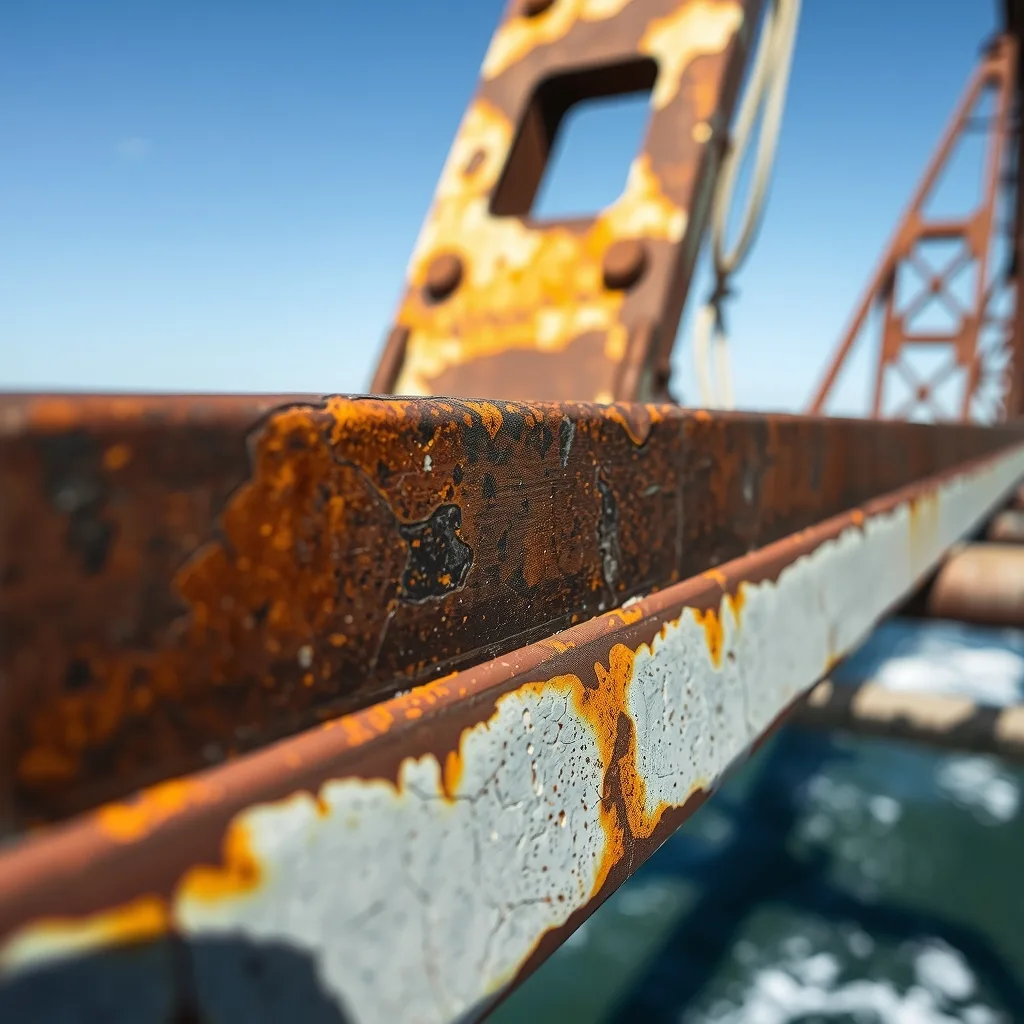
A big slice of that isn’t the steel. It’s the access, the prep and the labour to get a coating back on something that’s already in service, which is why Dr Nugraha keeps pointing at bridges.
“For structures like bridges, applying a rust-proof coating comes at a great effort and cost, often to the public,” he said.
“But imagine, for example, if you only had to put a single coat of paint on the Story Bridge that protected it for more than 100 years.”
What it would actually change for a coatings crew
Start with what it wouldn’t change. This is an additive for waterborne polyurethane coatings, not a new way of working. Steel still has to be prepped, the film still has to go on at the right thickness, and paint over a badly prepared surface still fails no matter what’s suspended in it.
Where it bites is the repeat visit. Maintenance painting on structural steel is a scheduled job: scaffold or elevating work platform, containment, surface prep, then the coats, then pack it all up and come back when the system reaches the end of its life. Stretch that interval out and the expensive part of the work, the access and the prep, gets spread over far more years.
Dr Nugraha isn’t pitching it as permanent. “It is not a coating that will last forever, but coatings that contain our technology will have a greatly expanded lifetime, meaning far less maintenance, and a much longer time between applications,” he said.
For anyone whose order book runs on maintenance repaints of bridges, tanks, wharves or plant steelwork, that’s the part to watch. New-build coating work doesn’t go anywhere. The cyclical repaint is the piece a longer-lived system eats into, and it’s the piece that fills the quiet months between jobs.
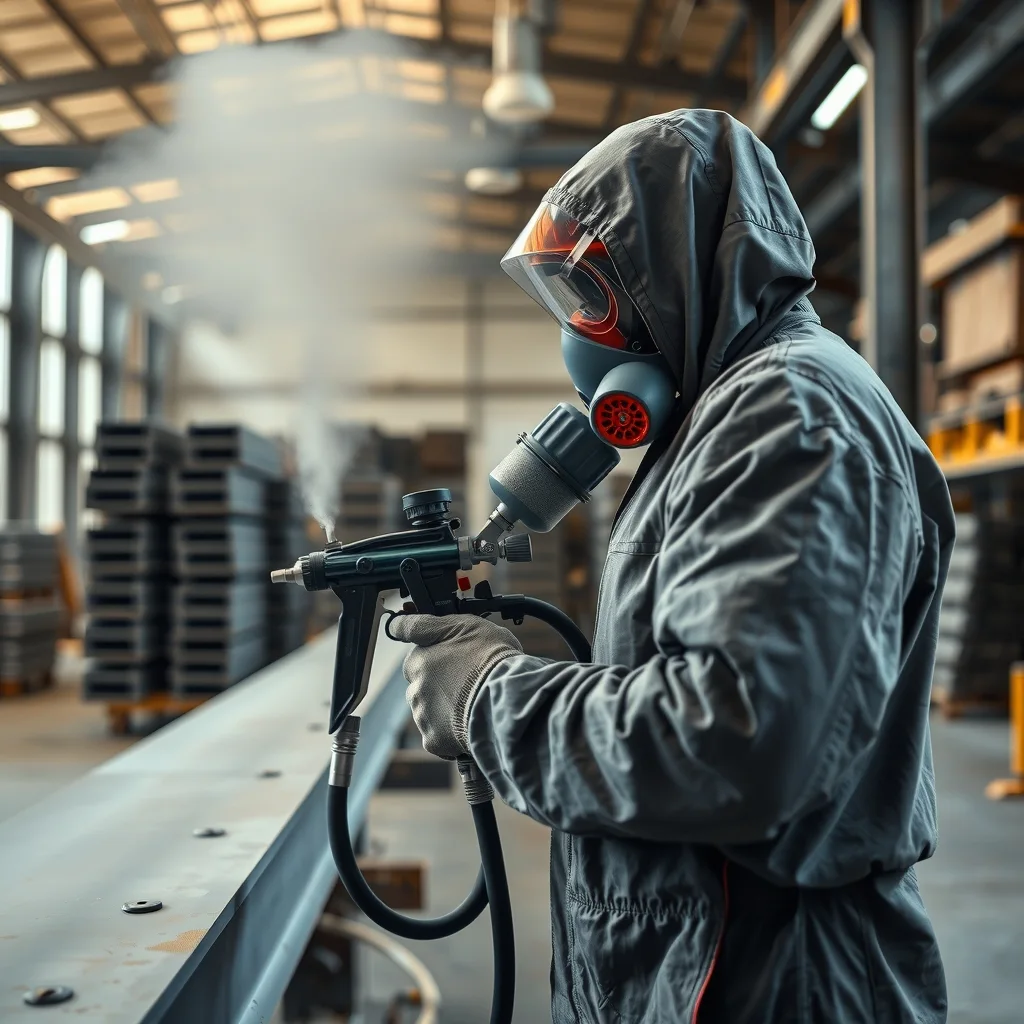
On the fabrication side, a longer-lived shop coat on steelwork heading to a coastal or industrial site is the obvious first use. It’s also the easiest sell, because the additive goes into a paint system a shop is already spraying rather than requiring new gear.
Five years away, at best
Nothing is on a shelf yet. UQ says pilot-scale testing is imminent, with a goal of a commercial product within the next five years. The corrosion figures come from electrochemical testing in a lab, not from years of a bridge sitting in salt air, and the source material doesn’t name a paint manufacturer, a product line, or any asset-owner approvals.
That last point matters on the tools. Major asset owners specify coating systems by approved product and tested performance, so a new additive has to work its way onto those lists before a crew is allowed to spray it on public infrastructure. Pilot testing is the first step in that, not the last.
“Nanoarchitects work at an extremely small scale to build things that often defy what is physically possible,” Dr Nugraha said.
“It is incredible to think that we could soon be telling people they might not have to worry about something rusting for several lifetimes.”
The thing to keep an eye on is which coatings maker picks it up and what a real-world exposure trial says after a couple of summers on the coast. Until then, the prep still does the heavy lifting.
Frequently asked questions
When will UQ’s self-healing rust coating be available?
Not soon. UQ says pilot-scale testing is the next step, with a commercial product the goal within the next five years.
Does the new additive mean steel won’t need surface prep before painting?
No. It’s an additive for existing water-based coatings, and steel still has to be properly prepped and coated at the right thickness for it to work.
How much slower is the corrosion rate compared with current coatings?
In lab electrochemical testing, the coating corroded at 37 nanometres a year, against about 0.025mm (25,000 nanometres) a year for many existing high-performance coatings, over 600 times slower.
How much does rust cost Australian industry each year?
About $90 billion a year across oil and gas, water and wastewater, infrastructure and defence, according to Australasian Corrosion Association figures cited by UQ.
Sourced from Manufacturers’ Monthly, University of Queensland. Original article.