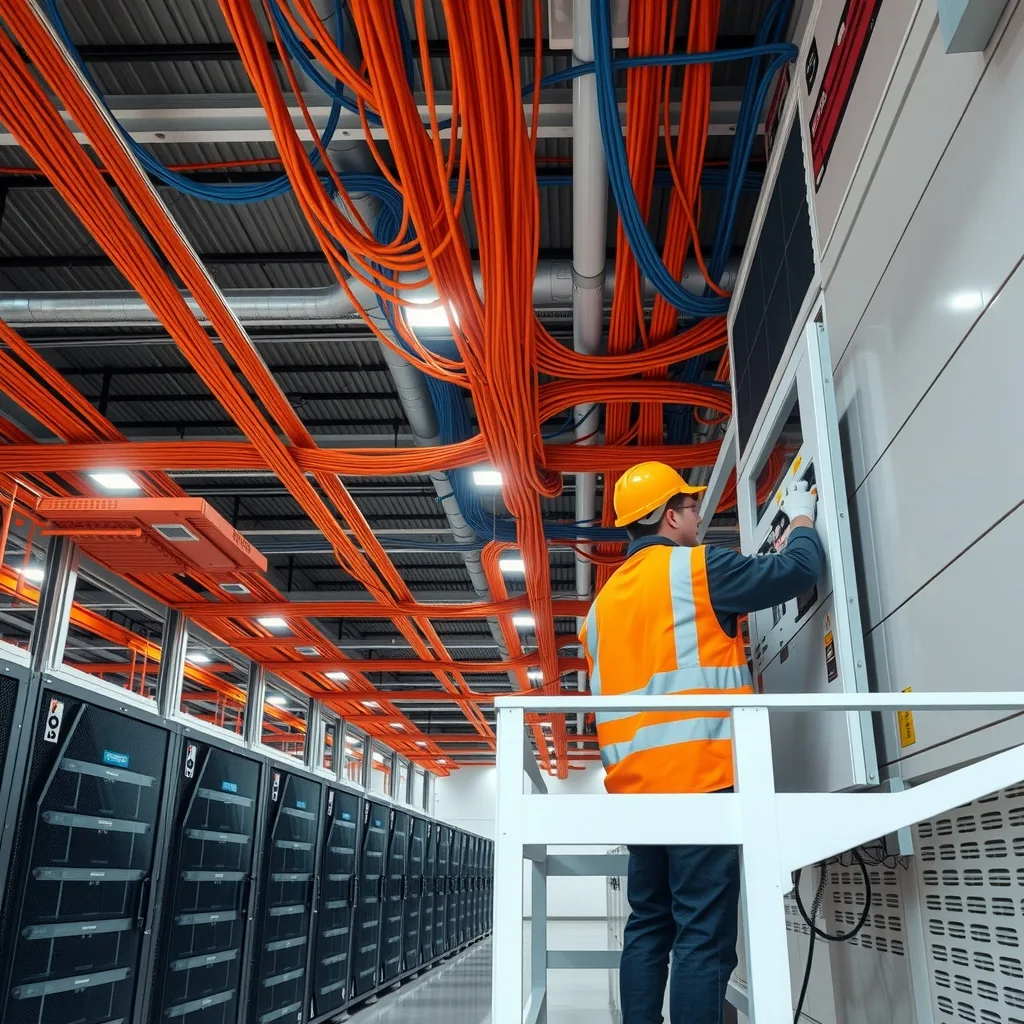

Fortescue has opened a purpose-built electrician training centre in Perth as the mining giant scrambles to find the 1,800 sparkies it will need at the peak of its Pilbara decarbonisation program.
The Power Up Training Centre opened on Tuesday 30 June, built in partnership with South Metropolitan TAFE, which will deliver electrical apprenticeships, and North Metropolitan TAFE, which will run post-trade electric vehicle training. The facility gives apprentices hands-on access to high-voltage battery equipment of the kind they will encounter across Fortescue’s growing network of battery energy storage systems and solar generation.
“We’re going to need about 1,800 electricians at the peak of our decarbonisation program, which is happening in the next few years,” said Dino Otranto, Chief Executive of Fortescue Metals and Operations. “We realised we couldn’t simply hire our way out of the problem.”
Fortescue currently employs 120 electrical apprentices and plans to add a further 48 in the 2027 financial year. The company is pressing ahead with construction of a 690MW solar farm at Turner River and a 650MWh battery energy storage system at its Cloudbreak operation, both part of its Real Zero decarbonisation plan. Electricians are central to building and maintaining that high-voltage network.
Otranto was direct about the alternative: poaching from competitors only shifts the shortage elsewhere. “This centre is really to address the problem as a whole so we’re not continuing to take off others and just pass on the problem,” he said.
The skills squeeze goes well beyond one mining company. Jobs and Skills Australia modelling shows the country will need 32,000 more electricians by 2030, 27 per cent more than previously forecast, and as many as 85,000 extra sparkies by 2050 to service the renewable energy buildout. To hit those numbers, Australia would need 20,500 new apprentice commencements every year from 2024 to 2030, which is 40 per cent above the average pace recorded between 2015 and 2023.
The problem is not just the pipeline. A Powering Skills Organisation study found two in three existing electricians lack the skills needed for new energy roles, and national completion rates for electrotechnology apprenticeships sit at around 60 per cent. Anthea Middleton, Chief Executive of the Powering Skills Organisation, put it plainly: “When businesses cannot access enough skilled workers, projects slow down, costs rise and productivity suffers.”
For electricians already in the trade or coming through an apprenticeship, the message is clear: high-voltage, battery storage and EV post-trade qualifications are where demand is heading, and major employers are now building the training infrastructure to match. Pilbara project work carries strong pay premiums, and with Fortescue alone requiring 1,800 sparkies over the next few years, those who upskill early are well placed.
Frequently asked questions
How many electricians does Fortescue need for its Pilbara projects?
Fortescue says it will need approximately 1,800 electricians at the peak of its Pilbara decarbonisation program over the next few years.
What is the Power Up Training Centre?
The Power Up Training Centre is a purpose-built electrician training facility opened by Fortescue in Perth on 30 June, in partnership with South Metropolitan TAFE for electrical apprenticeships and North Metropolitan TAFE for post-trade electric vehicle training.
How big is Australia’s electrician shortage?
Jobs and Skills Australia modelling projects a shortfall of 32,000 electricians by 2030, which is 27 per cent higher than previously forecast, rising to as many as 85,000 by 2050 due to the renewable energy buildout.
What post-trade qualifications are most in demand for electricians?
High-voltage systems, battery storage and electric vehicle post-trade qualifications are the areas of highest demand, particularly for large-scale mining and renewable energy projects.
Sourced from The West Australian, Fortescue, Jobs and Skills Australia, Powering Skills Organisation. Original article.