
A Boston-based robotics company has won $4.9 million from the Australian Renewable Energy Agency to put a fleet of AI-powered solar installation robots to work on two large-scale Australian solar farms, marking the first full-fleet deployment of the technology outside the United States.
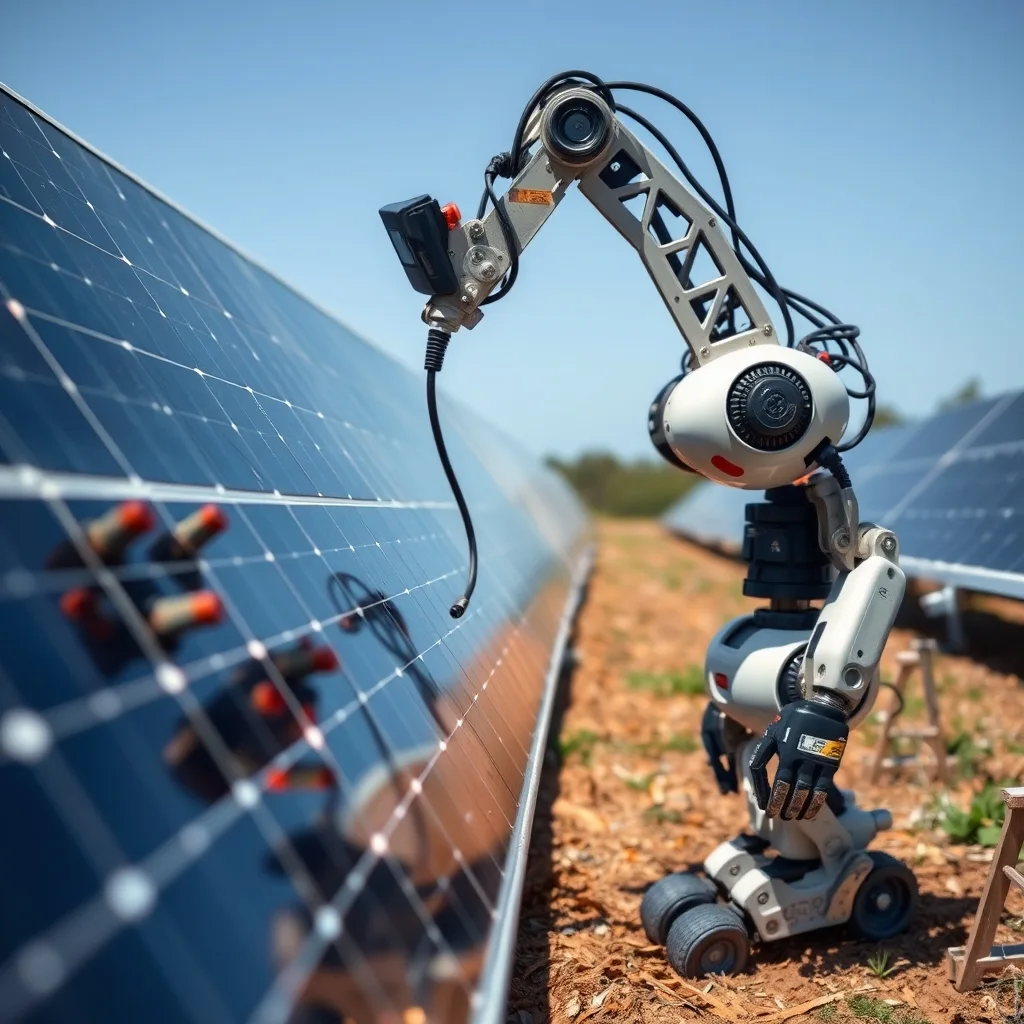
ARENA named Luminous as the inaugural recipient of its $100 million Solar ScaleUp Challenge on 2 July 2025. The company’s LUMI robot autonomously lifts and places solar panels onto racking structures, a task that has traditionally required significant manual labour on large sites. According to ARENA’s official project page, the robot can install panels up to 3.5 times faster than current manual methods and has the potential to cut solar farm costs by around 6.2 per cent.
The five-robot LUMI fleet will be deployed across two sites: Neoen’s 440MW Culcairn Solar Farm in NSW and Engie’s 250MW Goorambat East Solar Farm in Victoria. EPC firm Equans is partnering with Luminous on both deployments. PV Magazine Australia noted that the Culcairn farm has separately trialled a Chinese-made solar mounting robot, pointing to growing competition in the automated installation space.
ARENA CEO Darren Miller said the funding fitted squarely within the agency’s broader cost-reduction ambitions. “Solutions like LUMI are key to reducing costs and maintaining Australia’s leading role in the development and innovation of solar technologies,” he said. ARENA is targeting an installed solar cost of 30 cents per watt and a levelised cost of energy below $20 per megawatt-hour by 2030.
Luminous CEO Jay M. Wong said the project was about more than speed. “With LUMI, we’re not just introducing a robot — we’re setting out to redefine the standard for how solar farms are built and help sites energise faster and safer,” he said. The safety claim centres on reducing heavy lifting, which accounts for a disproportionate share of injuries on solar construction sites.
For tradies working on utility-scale solar builds, the technology is worth watching. LUMI targets the most physically demanding part of the job and is framed as a complement to existing crews rather than a replacement, though the direction of travel is clear. Demand for workers who can operate and maintain automated construction equipment is likely to grow as solar farm construction scales up across both states.
Luminous is the largest single recipient under the Solar ScaleUp Challenge to date. Earlier grants went to Built Robotics Australia ($1.3 million) and PV Lighthouse ($1.97 million). ARENA has invested more than $388 million across more than 200 solar R&D projects since 2009.
Frequently asked questions
What is the LUMI robot and what does it do?
LUMI is an autonomous robot made by US company Luminous that lifts and places solar panels onto racking structures on large solar farms. According to ARENA, it can install panels up to 3.5 times faster than manual methods.
Which Australian solar farms will use the LUMI robots?
The five-robot fleet will work across Neoen’s 440MW Culcairn Solar Farm in NSW and Engie’s 250MW Goorambat East Solar Farm in Victoria.
Does the LUMI robot replace solar construction workers?
Luminous and ARENA frame LUMI as a complement to existing crews rather than a replacement, targeting the most physically demanding lifting tasks. However, industry observers expect demand to grow for workers who can operate and maintain automated construction equipment.
What is ARENA’s Solar ScaleUp Challenge?
It is a $100 million ARENA program funding innovations aimed at reducing the cost of large-scale solar construction in Australia. Luminous is the largest single recipient to date, ahead of Built Robotics Australia ($1.3 million) and PV Lighthouse ($1.97 million).
Sourced from ARENA, PV Magazine Australia, Capital Brief. Original article.