
Victoria’s planning minister has approved a 407-hectare residential precinct on the eastern edge of Warrnambool that is expected to deliver about 4,500 homes, schools, a supermarket and a town centre, adding roughly 15,000 people to the south-west coastal city over 15 to 25 years.
ABC South West Vic reported that Victorian Minister for Planning Sonya Kilkenny approved the East of Aberline precinct structure plan on Friday. A Victorian government spokesperson told the ABC construction would begin in one year and progress gradually over the following two decades.
Victorian Planning Authority documents show the site covers 407 hectares and will take in community facilities, retail shops, parks, new schools, and walking and cycling paths alongside the housing. The Victorian Planning Authority handles precinct structure plans of this type across the state’s growth areas.
”About the size of Colac”
Warrnambool is Victoria’s largest coastal regional city, with about 36,000 residents today and earlier projections putting it at 43,000 by 2031. East of Aberline would be the largest single expansion of the city since it was planned and surveyed in 1845.
Warrnambool City Council welcomed the approval. Mayor Ben Blain said the precinct amounted to roughly a 50 per cent population increase, the equivalent of parking a small town on the city’s edge. “It’s going to be about the size of Colac, on the edge of Warrnambool there,” Cr Blain said.
He said the council had worked closely with the government on the plan and would keep pushing for better council facilities to support the growth. The precinct also makes room for smaller dwellings, including one and two-bedroom homes.
“It’s so important that we can have more housing diversity across Warrnambool, and that’s a really exciting part of this plan,” Cr Blain said.
That housing mix matters on the tools as much as it does in a council chamber. One and two-bedroom dwellings mean smaller slabs, tighter frames, repetitive setouts, and a lot more plumbing and electrical rough-in per hectare than a paddock of four-bedroom detached homes. Repetition is where a small crew makes money, because the second one is always faster than the first.
A rental market at 0.8 per cent
The city has struggled with a housing shortage for years. Warrnambool’s rental vacancy rate sat at 0.8 per cent in 2026, according to Warrnambool City Council, which is about as tight as a regional rental market gets before workers simply stop taking jobs in town.
That’s not an abstract problem for builders. A subbie who can’t house an apprentice, or a second-year who can’t find a room within half an hour of site, is a subbie who runs short-handed.
Growth to date has been steady rather than explosive. Warrnambool’s population grew by 2,250 over the past decade, according to the Australian Bureau of Statistics. East of Aberline proposes to add nearly seven times that, spread across 15 to 25 years.
Dirt and pipes come before anyone swings a hammer
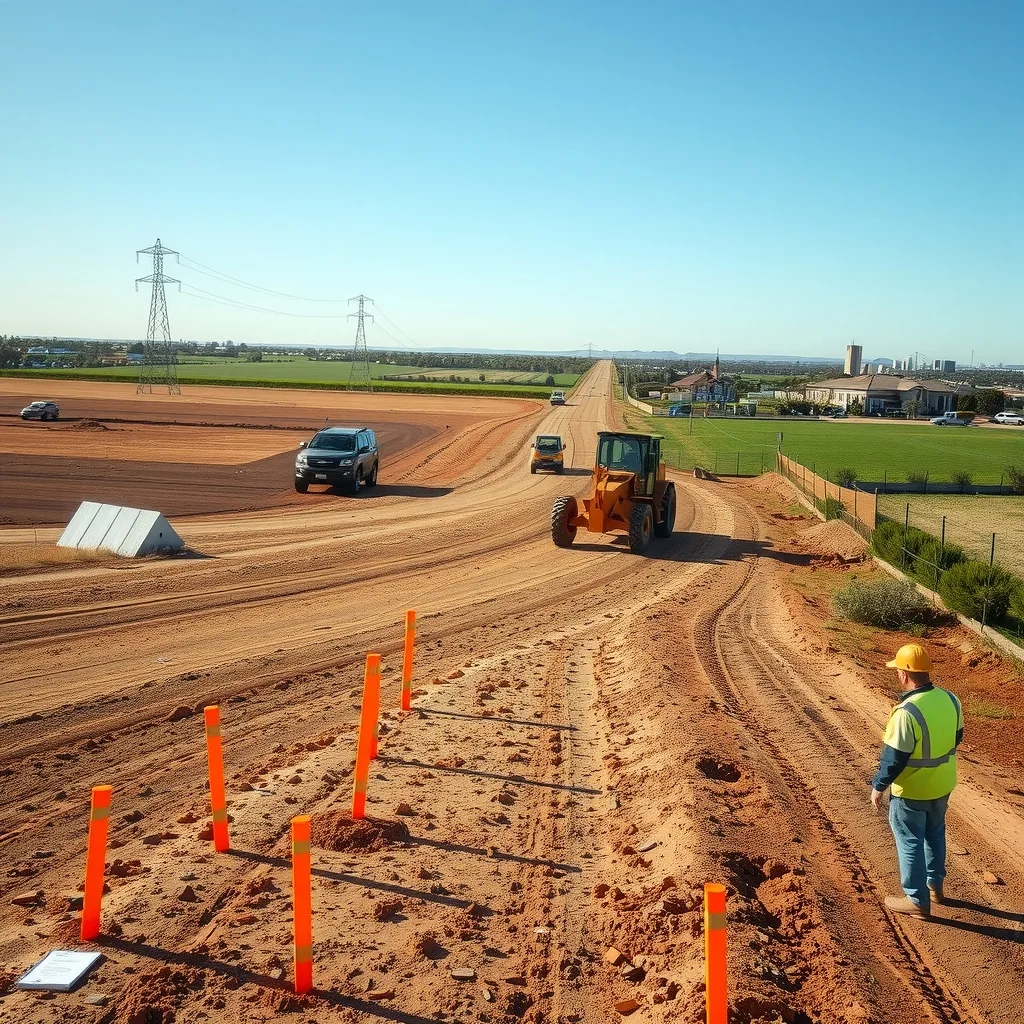
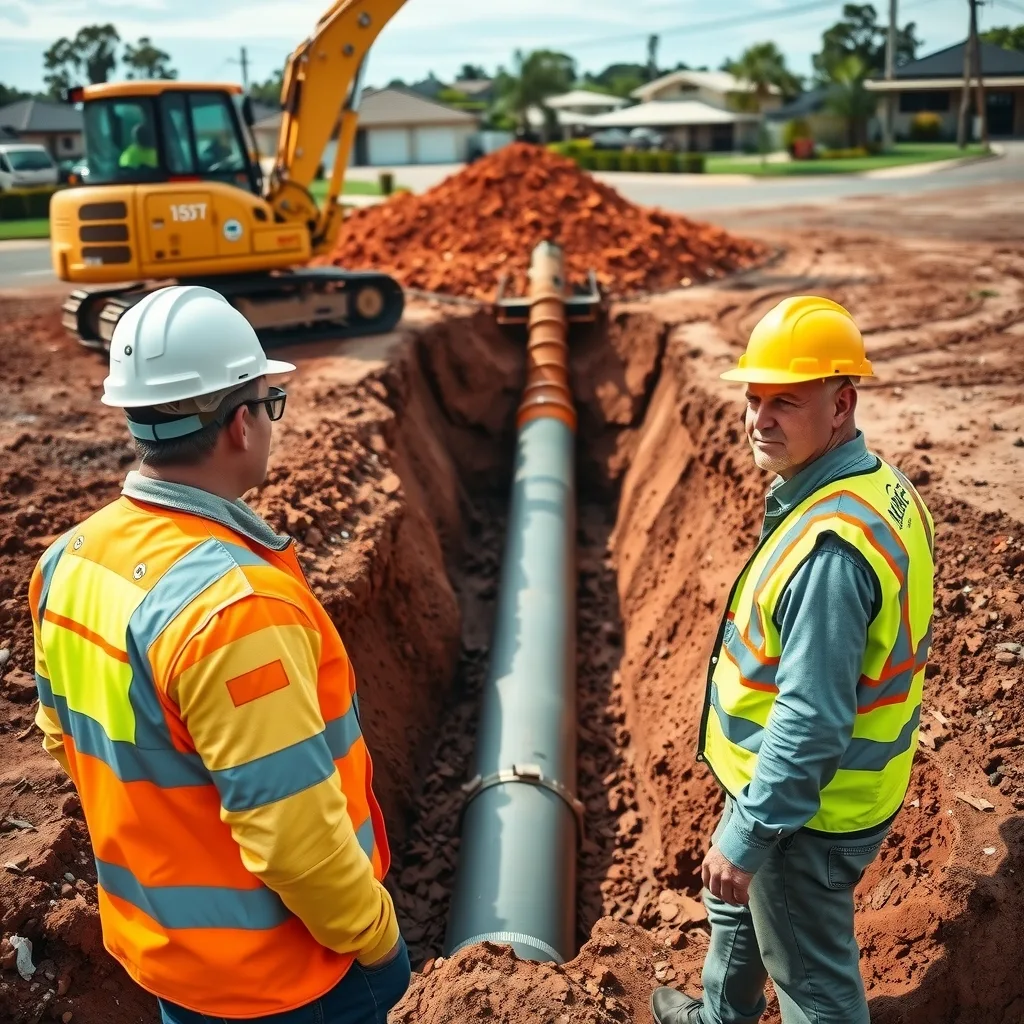
Greenfield precincts don’t start with carpenters. Vacant farmland makes up a chunk of the site, which means the first years belong to civil work: survey and setout, bulk earthworks, road pavement, stormwater and drainage, sewer and water mains, and power and comms reticulation. Plant operators, pipe layers and civil crews get the first call, and they get it in stages as land is released rather than all at once.
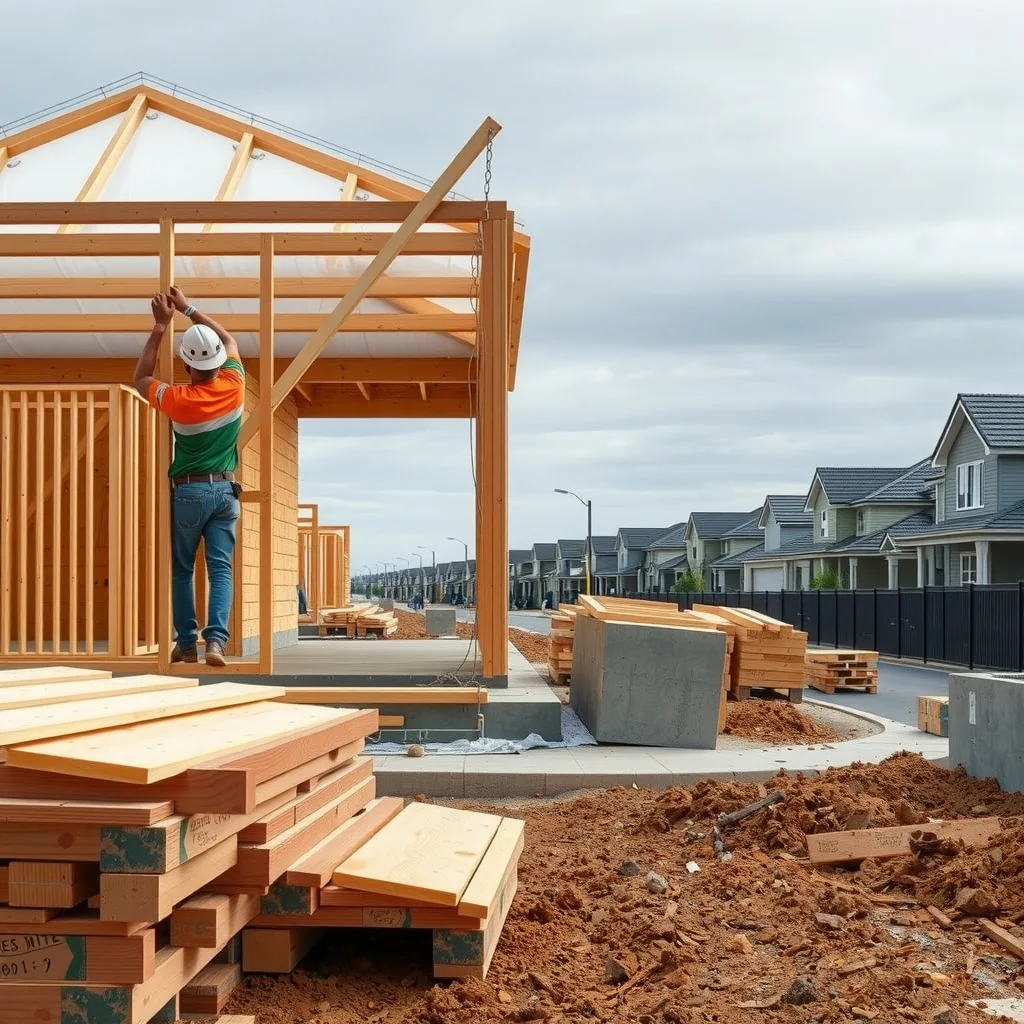
Housing trades follow the titles. Once lots are registered and serviced, the usual sequence runs through footings and slabs, frame and truss, roofing, lockup, then the rough-in and fitout trades behind it. On a staged precinct that cycle repeats street by street for as long as the land release holds up, which is the part that matters for anyone deciding whether to put on a second crew.
The town centre, the supermarket and the schools sit in a different contracting tier to house-and-land work, and they land on a different timeline again. Those jobs tend to come later, once there are enough residents to justify them, and the subcontract packages under them look nothing like a volume housing run.
What to watch
The first thing to watch is the civil tendering and the initial land release, with the government putting the start of construction about a year out. Approval of a structure plan is a planning milestone, not a start date, and nobody should be buying a second ute on the strength of Friday’s announcement.
After that, the question is who does the work. A precinct this size can either lift local civil and housing contractors into steady multi-year pipelines, or pull head contractors and their own subbies down the highway from Geelong and Melbourne. Which way it breaks will show up in the first few stages.
For an apprentice signing on in Warrnambool this year, the maths is simple enough: by the time the precinct is genuinely humming, they’ll be qualified and the town will still be short of trades.
Frequently asked questions
How many homes will the Warrnambool precinct deliver?
The East of Aberline precinct structure plan is expected to deliver about 4,500 homes, along with schools, a supermarket and a town centre, over 15 to 25 years.
When will construction start on East of Aberline?
A Victorian government spokesperson told the ABC that construction would begin about a year from the approval, with work progressing gradually over the following two decades.
How tight is Warrnambool’s rental market?
Warrnambool’s rental vacancy rate sat at 0.8 per cent in 2026, according to Warrnambool City Council, a level tight enough that it can discourage workers from taking jobs in the town.
Sourced from ABC News. Original article.