
The Victorian Civil and Administrative Tribunal has overturned disciplinary findings the Victorian Building Authority made against a building surveyor over combustible cladding approved at three Melbourne projects, setting aside the regulator’s internal review decision, finding none of the remaining disciplinary grounds proven, and imposing no disciplinary action.
The decision was handed down on 18 August 2026 and covers building permits and occupancy permits issued between 2008 and 2016 at sites in Brunswick East, Glen Iris and Prahran. It was reported by Sourceable in an analysis written by the lawyer who acted for the practitioner, and the full reasons, [2026] VCAT 650, are published on AustLII.
What the regulator had to prove
The VBA case ran on three fronts. It alleged the surveyor issued building permits approving combustible cladding when he could not properly have been satisfied the work complied with the Building Act and Building Regulations, that he failed to carry out his work competently and to a professional standard, and that he issued occupancy permits for buildings that weren’t suitable for occupation.
“The allegations were all ultimately rejected by the Tribunal,” the practitioner’s solicitor, a principal lawyer at Meridian Lawyers, wrote in her Sourceable summary of the outcome.
”Satisfied” is a test about what you knew then
The central question was whether the practitioner could genuinely have been satisfied, for the purposes of section 24 of the Building Act, that the permits complied when he issued them. VCAT found the regulator had to prove more than a possible error in interpretation or assessment of compliance.
The Tribunal accepted his evidence that he had considered the relevant issues and honestly believed the projects complied. A mistaken view about a compliance pathway, it held, doesn’t automatically establish that the required state of satisfaction was missing.
That’s the part with legs. The Tribunal assessed the conduct against the professional practices and regulatory environment that existed when the permits were issued, not against the standards that developed after the Lacrosse fire and the cladding reforms that followed it.
Missing paperwork wasn’t enough
The VBA leaned heavily on the absence of records showing how the surveyor reached his compliance conclusions. His corporate employer at the time no longer exists, and not all of that company’s documentation was retained.

VCAT found the building permits at the centre of the case had been issued between 9 and 15 years before it heard the matter, and said in its 18 August 2026 reasons that “documentation practices during the relevant period were not necessarily the same as current expectations”. The gap in the file, on its own, didn’t prove the allegations.
Expert evidence accepted by the Tribunal was that formal documentation of certain assessments, particularly weatherproofing and alternative solution considerations, was often limited in that era.
Among the takeaways listed in the Sourceable analysis: “deficiencies in documentation do not necessarily establish incompetence or misconduct”, “regulators bear the burden of proving that a surveyor could not have reached the required state of satisfaction”, and “the existence of combustible cladding on a building is not, by itself alone, a sufficient basis for a disciplinary finding”.
“the existence of combustible cladding on a building is not, by itself alone, a sufficient basis for a disciplinary finding”
Why it reaches well past one surveyor
Legal commentators who weren’t involved in the case have landed on the same conclusion. Colin Biggers & Paisley assessed it as potentially “the most significant combustible cladding disciplinary decision delivered since the commencement of the State’s post-Lacrosse regulatory response”, and noted it bears on “a number of disciplinary proceedings involving registered building surveyors” running on the same basic issues.
Bugden Allen lawyer Julia Moroz, writing on LinkedIn, pointed to the Tribunal’s rejection of the VBA’s reading of the Building Code’s Low Rise Concession as a finding that “may have consequences well beyond this particular surveyor and these three buildings”.
VCAT worked through the code provisions the regulator relied on, including the concessions for low-rise Class 2 buildings, the attachment provision for ACP products, and weatherproofing and structural performance requirements. It found areas where alternative compliance approaches could have been taken, but wasn’t satisfied the VBA had proven the alleged non-compliance.

That matters to builders, not just certifiers. The Sourceable analysis notes the case may bear on the Victorian Government’s subrogated recovery actions over cladding, many of which turn on the same low-rise concession and attachment provision. Those claims chase the people who built the job.
The lesson lands on the paperwork, not the panel
Strip the law out and this is a record-keeping story. A decision made on a Class 2 job in 2011 got picked apart in a tribunal in 2026, and what saved the practitioner was evidence about what the industry actually did at the time, backed by an expert building surveyor.
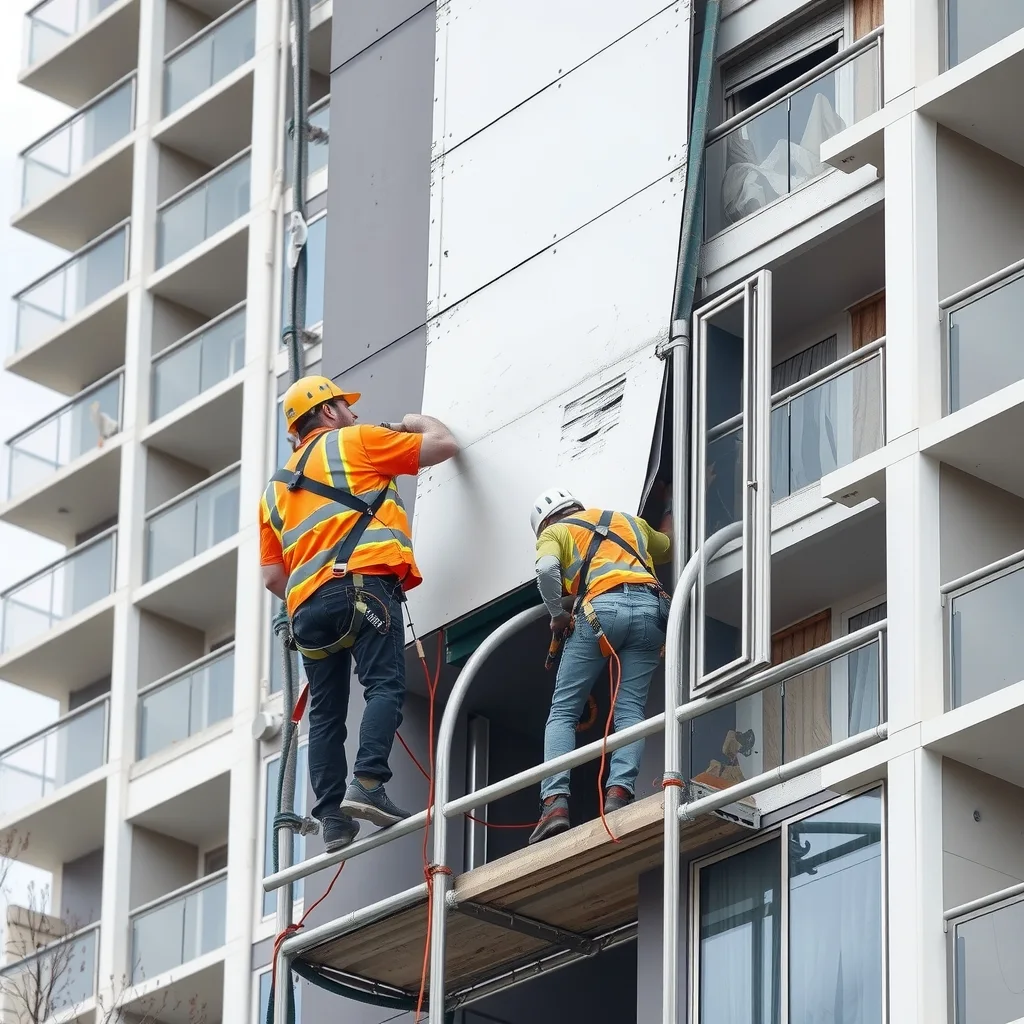
If you’re doing cladding rectification in Victoria right now, you’re generating the file that someone argues over a decade from now. The panel type and batch, the substrate you found when the old sheets came off, the fixing method, the dated photos of the wall before it got closed up, the email where the surveyor accepted the compliance pathway. None of that takes long on the day. All of it is the only version of the job that exists once the scaffold comes down and the company that ran the site has been deregistered.
The Tribunal made clear that contemporaneous records aren’t essential to showing a surveyor was satisfied. It also made clear how much easier the argument is when they exist.
What to watch now is whether the VBA takes the decision further, and how the disciplinary matters still in the system, along with the state’s cladding recovery claims, respond to a ruling that says old work gets judged by old rules.
Frequently asked questions
What did VCAT decide in the Victorian cladding disciplinary case?
VCAT overturned the VBA’s disciplinary findings against a building surveyor, set aside the regulator’s internal review decision, and found none of the remaining allegations proven over permits issued between 2008 and 2016 at three Melbourne sites.
Why did the missing documentation not sink the surveyor’s case?
VCAT found the gap in records alone didn’t prove the allegations, accepting expert evidence that formal documentation of assessments like weatherproofing was often limited during that era, and noting the permits were 9 to 15 years old by the time of the hearing.
Could this VCAT decision affect other cladding cases in Victoria?
Legal commentators, including Colin Biggers & Paisley and Bugden Allen, say the ruling may bear on other disciplinary proceedings against registered building surveyors and on the state’s subrogated cladding recovery claims, which rely on the same code provisions.
Sourced from Sourceable, AustLII, Colin Biggers & Paisley. Original article.