
Victorian road crews have repaired more than 100,000 potholes across the state since July under a $1.4 billion maintenance program, with work now running over 6.8 million square metres of pavement at more than 1000 separate projects.
The figures come from the Victorian Government via Roads & Infrastructure, which reports the state is on track to fill more than 500,000 potholes by the end of June 2027.
Premier Ben Carroll said:
“Our road repair blitz is doubling the number of potholes filled and doubling the length of road repaired.”
The highways carrying the work
In regional Victoria the named targets are the Western Highway, Glenelg Highway, Princes Highway, Calder Highway and Hume Freeway. That’s the spine of the freight network, and the roads most owner-drivers and regional subbies are already on five days a week.
Around Melbourne, crews are working the West Gate Freeway, Princes Highway, Ballarto Road and the Mornington Peninsula Freeway.
It isn’t only patching. The state says crews are also clearing rubbish, cleaning off graffiti and mowing tens of thousands of kilometres of roadside grass as part of the same program.
6.8 million square metres is a surface, not a sprint
A pothole repair sounds like a bloke with a shovel and a bag of cold mix. On a freeway it isn’t.
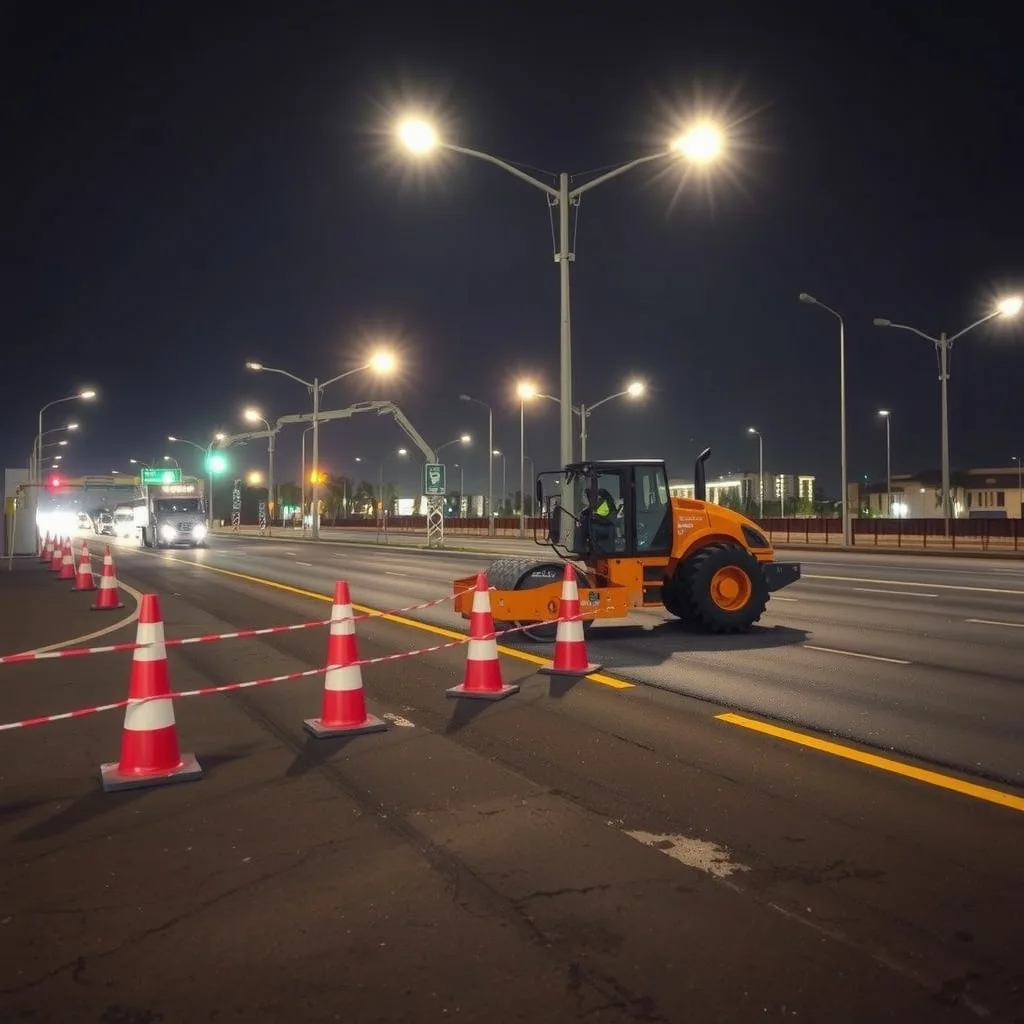
Before anyone touches the pavement, traffic management goes in: a plan, signage, speed reductions, often lane closures and a crew of controllers who are on site before the paving gear turns up and still there after it leaves. On high-volume roads like the West Gate, that usually pushes the actual repair into night shift, which changes rosters, lighting, and what you can and can’t get delivered.
Then comes the repair itself. Permanent patching means squaring up and cutting out the failed section, carting the spoil, tacking the edges, laying hot mix and compacting it so the joint doesn’t ravel out by next winter. Spray sealing and resealing work, which is what stops the next 100,000 potholes forming, is weather dependent, so regional programs lean on the warmer months and the window closes fast.
That’s the honest reason a figure like 6.8 million square metres matters more than the pothole count. The square metres are the resurfacing and rehabilitation work. The potholes are the symptom.
What it means for the order book
The useful part of this announcement for anyone running a crew isn’t the headline number, it’s the date on the end of it. A target of 500,000 potholes by the end of June 2027 is a program with visible runway past the next financial year, and that’s the kind of horizon that makes a difference when you’re deciding whether to sign a second-year apprentice, finance another tipper, or keep chasing one-off private jobs.
More than 1000 projects also means the work is spread, not stacked into one mega-contract. Profiling, line marking, guardrail, drainage, traffic control and plant hire all hang off a maintenance blitz of this size, and a lot of it is the sort of package a small regional outfit can actually win.
Worth keeping in perspective, though: maintenance programs are counted in square metres patched, not in jobs created, and the state hasn’t put a workforce figure against this one. Treat the pothole tally as a measure of activity, not a promise of a contract.
The thing to watch now is whether the halfway mark holds through winter, when water gets into cracked pavement and the repair list refills itself. If the state is still tracking toward 500,000 by this time next year, the resurfacing side of the program is doing its job. If pothole numbers keep climbing while square metres stall, it’s patch-and-repeat, and that’s a different kind of workload.
Frequently asked questions
How many potholes has Victoria fixed so far?
More than 100,000 since July, under a $1.4 billion road maintenance program, according to the Victorian Government.
When does Victoria expect to hit its pothole target?
The state says it’s on track to fill more than 500,000 potholes by the end of June 2027.
Which highways are covered by the program?
In regional Victoria the named targets are the Western, Glenelg, Princes, Calder and Hume highways/freeway. Around Melbourne it covers the West Gate Freeway, Princes Highway, Ballarto Road and the Mornington Peninsula Freeway.
Sourced from Roads & Infrastructure. Original article.