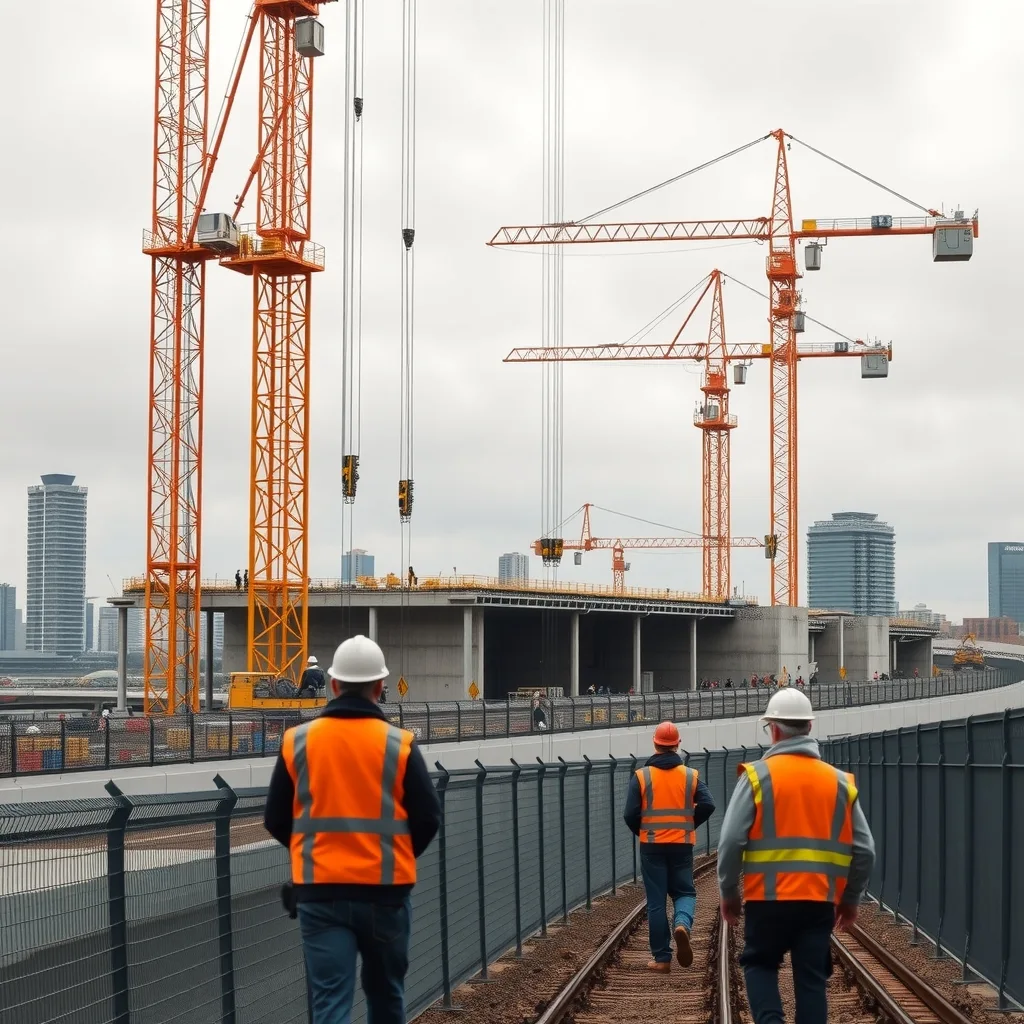

Australia’s two major parties are campaigning on very different migration numbers, and both of them land on a construction industry that Master Builders Australia says is already short around 141,000 skilled workers. The Coalition’s plan would cut net overseas migration to 100,000 a year for the first two years, before levelling out at about 160,000 in year four. Labor is working to its budget forecast of net overseas migration falling to 225,000 by mid-2028.
The party-by-party breakdown was published by NewsWire in The West Australian on 6 October 2026. ABC News reported the Coalition’s package the same day, framing it as a three-way contest with Labor and One Nation heading into the next campaign.
First, what the number actually counts
Net overseas migration, or NOM, is the figure every one of these promises is pegged to. It’s arrivals minus departures over a 12-month period. It isn’t a cap on visas handed out, and it isn’t the permanent migration program, which is a separate annual planning number.
That distinction matters on a job site. A big share of NOM is students and temporary workers coming and going, so a government can move the headline figure without ever touching the visa a builder actually uses to bring in a formwork crew. The opposite is also true: the headline number can hold steady while processing for a specific trade occupation slows to a crawl.
What the Coalition is proposing
Under the Coalition’s plan, NOM drops to 100,000 a year for two years, then climbs to roughly 160,000 by year four. Humanitarian places would be halved to 10,000. ABC News reported the temporary migration intake would be cut by about 650,000 across the four years, against a current population of close to three million temporary visa holders in Australia.
Opposition Leader Angus Taylor has described it as the “biggest cut to immigration in this country’s history”.
“biggest cut to immigration in this country’s history”
The Nightly has pushed back on that framing, noting the Whitlam government cut net overseas migration by 85 per cent in a single year, from 87,248 in 1974 to 13,515 in 1975, a steeper fall than a two-thirds reduction spread over four years.
At 100,000 a year, it would be the lowest NOM outside the pandemic years since 2004. ABC News also reported the Coalition had not released economic modelling with the announcement, with costings to come later.

Where Labor sits
Labor isn’t promising a hard cut. It’s pointing at a budget forecast of 225,000 by mid-2028 and arguing the system is being reshaped rather than shrunk.
The practical change for employers has already happened. The old Temporary Skill Shortage visa was replaced with the Skills in Demand visa, which lets highly paid specialists secure a four-year visa in as little as seven days. In September 2026, Ministerial Direction 119 was updated so the skilled migration program gives priority processing to construction occupations.
Master Builders Australia called that change “good news for home builds”, while warning the real test would be in the implementation rather than the announcement.
The number builders keep putting on the table
Master Builders Australia’s Workforce Blueprint projects the construction industry will be short more than 900,000 workers by 2035. That’s the figure the industry body keeps dragging back into the migration argument, because it doesn’t move much whichever party is doing the talking.
The near-term picture is tighter again. MBA modelling from September 2026 put the shortfall at about 141,000 skilled workers, and the body’s commentary on February 2026 ABS labour data described a construction labour shortage of more than 100,000.
MBA chief executive Denita Wawn has argued housing targets, Olympic infrastructure and the major project pipeline all depend on having enough skilled workers on the ground, and that whatever aggregate migration number a party lands on has to line up with that demand. The body has welcomed the Coalition’s focus on construction skills, specifically the commitment to clear the backlog of skilled construction visa applications and the idea of tying migration settings to named projects, while keeping its reservations about the overall numbers.

Not everyone buys the housing link
The political case for cutting migration leans heavily on housing pressure. That link is contested. The Conversation has argued the Coalition’s migration policy “rests on a series of false premises” and is “built on shaky foundations”, including its claims about migration and housing demand.
Both things can be true at once: fewer arrivals means less competition for rentals, and fewer arrivals also means a smaller pool of people available to frame, wire and plumb the homes that are meant to relieve the pressure.
What it means on the tools
For a small builder or a subcontractor, the question isn’t the headline number. It’s whether a visa application for a carpenter, a concreter or a crane operator gets looked at this quarter or next year, and that’s a processing-priority question, not a NOM question.
It also changes the maths on apprentices. Sponsoring a qualified tradesperson from overseas fills a gap on a current job; an apprentice signed on this year won’t be carrying a licence or working unsupervised for years yet. Migration settings are the lever that moves in months. The apprentice pipeline is the one that pays off at the back end of the decade, which is exactly where that 900,000 projection sits.
Three things are worth watching. Whether the Coalition releases modelling and costings that put a dollar figure on the cut. Whether the September priority-processing change actually clears the construction visa backlog, or just reorders the queue. And whether either party publishes an occupation list that tells a builder, in plain terms, which trades they can still bring in.
Frequently asked questions
What does net overseas migration (NOM) actually measure?
NOM is arrivals minus departures over a 12-month period. It isn’t a visa cap and isn’t the same as the permanent migration program, which is set separately.
How big is the construction industry’s worker shortage?
Master Builders Australia modelling from September 2026 put the near-term shortfall at about 141,000 skilled workers, with its Workforce Blueprint projecting a shortage of more than 900,000 by 2035.
What has changed for employers sponsoring skilled tradespeople?
The old Temporary Skill Shortage visa was replaced with the Skills in Demand visa, and in September 2026 Ministerial Direction 119 was updated to give priority processing to construction occupations.
Will the Coalition’s migration cut fix the housing shortage?
That link is contested. The Conversation has argued the Coalition’s housing-demand claims rest on false premises, while the article notes fewer arrivals also means fewer workers available to build homes.
Sourced from The West Australian, NewsWire, ABC News, Master Builders Australia, The Nightly, The Conversation. Original article.