
The peak body for women in Australian construction says Victoria’s Royal Commission into major public and civil infrastructure projects should treat the grift, thuggery, misogyny and violence found on taxpayer-funded sites as one failure rather than four: workers couldn’t raise a concern and be heard. National Association of Women in Construction chief executive Cathryn Greville put the argument in an opinion column published on 6 October 2026, with the Commission due to report to the Victorian Government by 20 August 2027.
Greville, a lawyer with two decades across construction law, regulation and public policy in Australia and the UK, wrote the piece for The Fifth Estate’s Spinifex opinion column. Her case is that the Commission’s money trail and the industry’s culture problem are the same investigation.
”Zero tolerance”, and the bit the money trail misses
The column opens on the Premier’s own words. “It is clear … that there was grift, there was thuggery, there was misogyny, and there was violence on taxpayer-funded construction sites. I have zero tolerance for that,” Premier Ben Carroll told reporters, crediting investigative journalism and whistleblowers for bringing it to light.
That credit is the part Greville picks up. The Commission was set up to follow the money, she wrote, but it should also follow “why it took outsiders, not the system itself, to surface what was happening on site”.
Her argument is that harassment and discrimination aren’t a separate soft-skills file sitting next to the hard stuff. They’re a reading on whether people can raise anything at all without wearing it afterwards. A site where a worker can’t speak up about a bloke, she wrote, is a site where nobody is going to speak up about an invoice either.
The retention numbers behind the argument
Women make up 13 per cent of Australia’s construction workforce, down from 17 per cent two decades ago, according to figures cited in Greville’s column. The same piece puts the typical construction employer’s total remuneration gap at 23.8 per cent in favour of men, against an industry staring down a shortfall of up to 300,000 workers by 2027.
That decline is the whole point. Participation targets and apprenticeship funding are necessary but not sufficient on their own, Greville wrote. “The harder question is whether construction can build a workplace women actually stay in.”
She is blunter a line later:

“Recruiting more women into an industry that doesn’t retain, develop or promote them isn’t a fix; it’s a leak.”
Anyone who has tried to keep a crew together on a long job knows the maths. Churn costs more than recruitment ever saves. Every walk-off is a re-induction, a re-training, a fortnight of someone learning where the gear lives, and on a staged infrastructure package that lands straight on the program.
What’s already written into the contract
Victoria isn’t starting from a blank page here, and that’s central to the column. The Building Equality Policy uses public procurement to set women’s participation targets, fund training and employment pathways, require Gender Equality Action Plans, and embed contractual obligations on major publicly funded projects, including sexual harassment reporting and a staged response to non-compliance. It sits inside a broader Social Procurement Framework that already treats Victorian Government purchasing as a lever for social outcomes.
“The policy exists. The next step is making sure it delivers outcomes on site, not just compliance on paper,” Greville wrote.
Her message to the Commission comes down to four tests: “reporting pathways that the entire supply chain can demonstrably trust”, protection from retaliation that’s “explicit and enforceable, not implied”, measuring retention and promotion rather than a head-count target, and transparent, proportionate consequences when commitments aren’t met.
What that looks like on a state-funded package
For a subcontractor, this stuff doesn’t arrive as a poster in the crib hut. It arrives as clauses in the package you’ve tendered for, flowing down from the head contract, with a staged response attached if you don’t meet them.
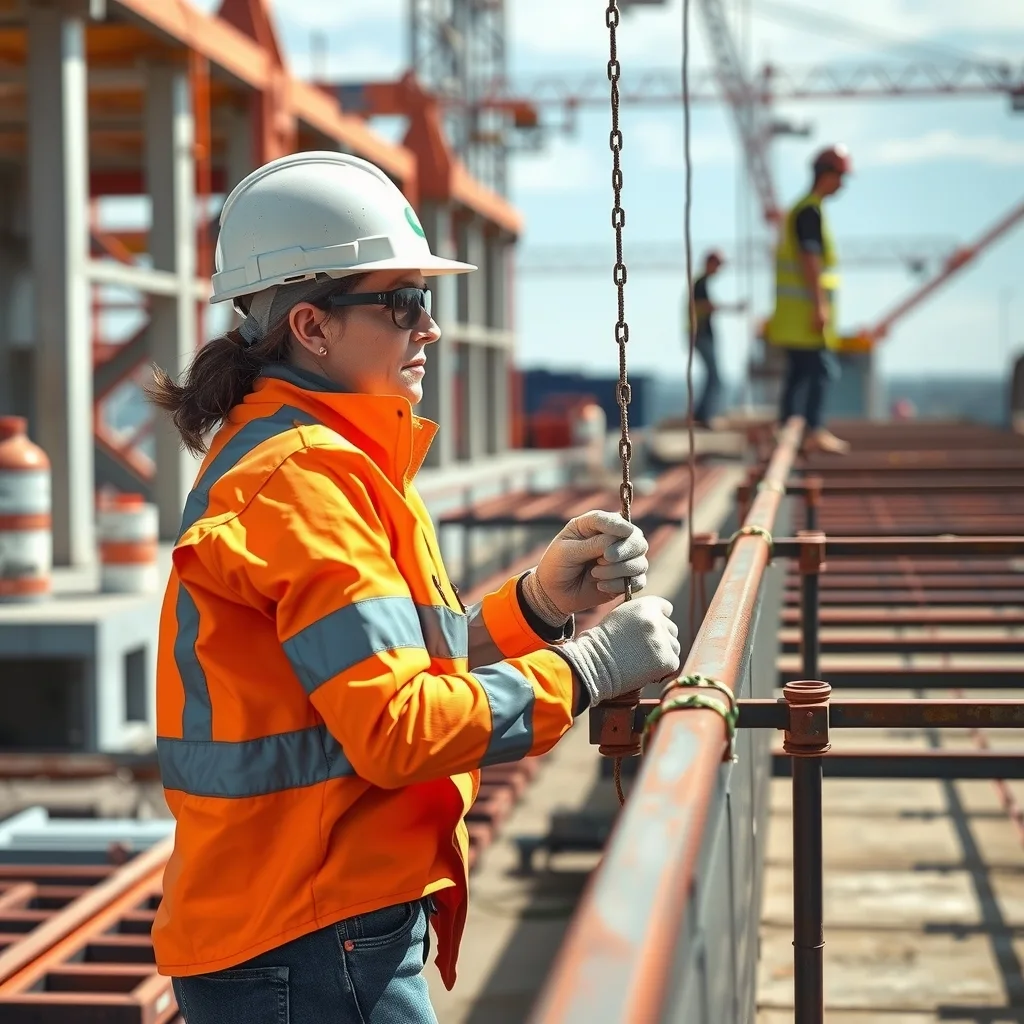
The supply-chain line in Greville’s four tests is the one that bites hardest down the tiers. On a big civil job the reporting path is easy enough to draw on an org chart and hard to walk in real life: a second-year apprentice working for a fourth-tier subbie has to decide whether to report a problem to the same leading hand who signs the timesheet, or go up a chain into a company that doesn’t employ them. Most say nothing and finish the week.
Safety concerns can always go to WorkSafe Victoria as the state regulator, but the column’s point is the gap before that: whether the internal pathway is credible enough that anyone uses it, and whether anything visibly happens after they do.
For anyone pricing state infrastructure work over the next couple of years, the practical question is whether the Commission’s findings turn those obligations into something audited at the package level rather than attested once at contract award. That changes what a tender submission has to carry.
What to watch
The Commission reports by 20 August 2027, which is a long runway in an industry where crews turn over in months. The thing worth tracking before then is whether the Building Equality Policy’s contractual machinery gets tested in evidence, and whether head contractors start writing reporting and anti-retaliation obligations into subcontracts instead of inductions.
As Greville put it: “That’s the difference between a report that gets read once and a policy that changes what happens on site.”
Frequently asked questions
When does Victoria’s Royal Commission into the Big Build report?
It is due to report to the Victorian Government by 20 August 2027.
What is the Building Equality Policy?
It’s a Victorian Government policy that uses public procurement to set women’s participation targets on major publicly funded projects, requiring Gender Equality Action Plans, sexual harassment reporting obligations and a staged response to non-compliance.
What percentage of Australia’s construction workforce are women?
Women make up 13 per cent of the construction workforce, down from 17 per cent two decades ago, according to figures cited in Cathryn Greville’s column.
Who is Cathryn Greville?
She is the chief executive of the National Association of Women in Construction (NAWIC) and a lawyer with two decades of experience in construction law, regulation and public policy in Australia and the UK.
Sourced from The Fifth Estate. Original article.