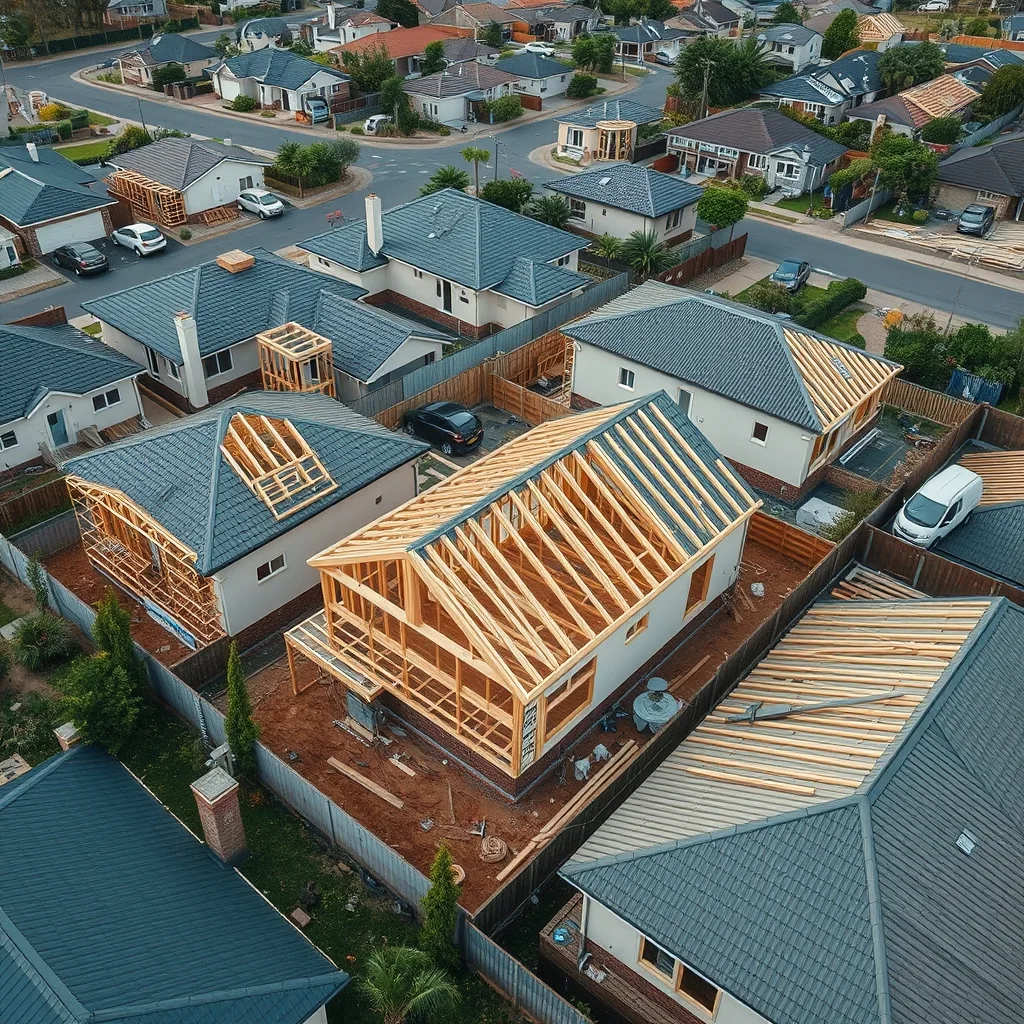

Detached house approvals across Australia rose 2.8 per cent in May to their highest point since September 2021, giving builders and tradies a solid signal that the new home pipeline is holding up.
Australian Bureau of Statistics data, reported by Sourceable, shows total seasonally adjusted dwelling approvals eased 1.1 per cent to 17,019 for the month. The overall dip was driven entirely by a 10.4 per cent fall in multi-residential approvals, a sector the ABS flags as statistically volatile from month to month.
Over the three months to May, total approvals were still 8.5 per cent higher than the same period a year earlier, putting the underlying trend well above where it sat through most of 2023 and 2024.
Housing Industry Association chief economist Tim Reardon said the numbers reflect solid momentum heading into the second half of 2026. He acknowledged that sentiment has taken a hit from the Iran conflict, the May budget changes to negative gearing and capital gains tax, and a 0.25 per cent rate rise on 6 May. Even so, Reardon expects confidence to return once that short-term noise settles, with a growing pipeline of not-yet-commenced projects keeping builders busy in the meantime. The Reserve Bank of Australia left the cash rate on hold at its 18 June meeting.
The recovery in new home construction over the past two years has been driven largely by Queensland, Western Australia and South Australia, supported by population growth and low unemployment. Multi-residential projects joined the recovery last year, though approvals in that segment have softened in 2026 while detached house momentum has continued to build.
Separately, property data firm Cotality reported that national dwelling prices fell 0.4 per cent in June, the steepest monthly drop since December 2022. Sydney and Melbourne led the falls at 1.2 per cent and 1.0 per cent respectively, though prices nationally are still 7.4 per cent higher over the past year, underpinned by strong gains in Perth, Brisbane and Adelaide.
For tradies working the residential new-build market, the detached house figures are the number to watch. A pipeline running at four-year highs on that segment means framing, fit-out and finishing work should stay in reasonable supply through the back half of the year, even if the apartment and townhouse sector cools.
Frequently asked questions
What are dwelling approvals and why do they matter?
Dwelling approvals are government permits issued for new homes before construction begins. They are a leading indicator of future building activity, which affects demand for tradies, materials and related services.
Why did total approvals fall if detached house approvals hit a four-year high?
Total approvals dipped 1.1 per cent because multi-residential approvals, apartments and townhouses, fell 10.4 per cent in May. The ABS notes this segment is statistically volatile from month to month, so a single-month fall does not necessarily signal a trend reversal.
Which states have been driving the housing construction recovery?
Queensland, Western Australia and South Australia have led the recovery over the past two years, supported by strong population growth and low unemployment.
What does a four-year high in detached approvals mean for tradies?
A pipeline at four-year highs in detached housing means framing, fit-out and finishing work should remain in reasonable supply through the second half of 2026, according to HIA chief economist Tim Reardon.
Sourced from Sourceable, Australian Bureau of Statistics, Housing Industry Association, Cotality. Original article.