From 1 October, Australian businesses will no longer be able to add a surcharge to card payments, a Reserve Bank reform the RBA estimates will save businesses $910 million a year in transaction fees, landing in a year when one in eight of the country’s cafes and restaurants have already closed. Some small operators are responding by going “cash only” or lifting prices on selected items instead.
The ABC’s South East SA newsroom reported the change alongside two regional businesses counting the cost of staying open, in Keith in South Australia’s Tatiara district and in Ballarat, one of Victoria’s biggest regional centres.
CreditorWatch’s Business Risk Index for August 2026 found one in eight Australian cafes and restaurants have closed in the past year, with payment defaults rising nationally for the third month in a row. That second number is the one subbies should read twice, because a business defaulting on its payments is the same business that owes you for the last callout.
A 50 per cent off sale and not a single cent
Keith sits on the Dukes Highway, the natural halfway point between Melbourne and Adelaide, with a population of about 1,400. On the Sunday the ABC visited, clothing shop owner Francene Martin flipped the sign on her store Retail Therapy to “Closed” without having made a sale.
“I’ve been in the town 16 years, and even with a 50 per cent off sale, I didn’t make a single cent,” Martin said.
She told the ABC she feels “constant pressure” from the offshore giants discounting into her market, and that her answer is the thing a website can’t copy.
“Obviously, I can’t compete with those businesses, but I have things they don’t have. I’ve built up a rapport with my customers, I know their names, their stories, their size and style. It’s a partnership,” she said.
Her pitch to her own town was blunter. “My message is that people need to stop and think about the town they live in. We’re a town on the highway with quite a lot of shops, but if we want those shops to be there in years to come, then we need to support them.”
Less than 10 cents in a cup of coffee
In Ballarat, Prey cafe operations and social media manager Frazer Wyley put a post online about what the books actually look like behind the counter. The cafe, run by father-and-son operators Eddie and Remi van den Akker, has been trading just under 100 days. The post drew thousands of comments and shares.

“When I made the post, I was originally thinking about all our beautiful friends in hospitality and retail who are closing their doors or thinking about closing. I think it’s been a conversation that a lot of people don’t have in the open,” Wyley said.
“Locals will walk down the street and see a closed sign where there used to be a storefront and they probably don’t know some of the reasons why.”
Wyley pointed to “insidious cost creep”, which he expects the EFTPOS changes to sharpen, and to margins that are already paper thin.
“Right now, thousands of operators are sitting up after close, staring at the week’s takings and asking the same question, ‘How do I make this work?’”
Wyley said.
He then pulled apart the cafe trade’s signature product. “Inside that cup of coffee are so many expenses; the cup, the lid, the water, the wages, the super, EFTPOS fees, the ingredients, when you break it down … the margins are so slim,” he said in the post. “We’re talking less than 10 cents.”
Price rises, he said, are a last resort. His ask of customers was to make regulars of the places they want to keep: “We need to share the love around and keep these communities strong together.”

What it looks like on a ute tailgate
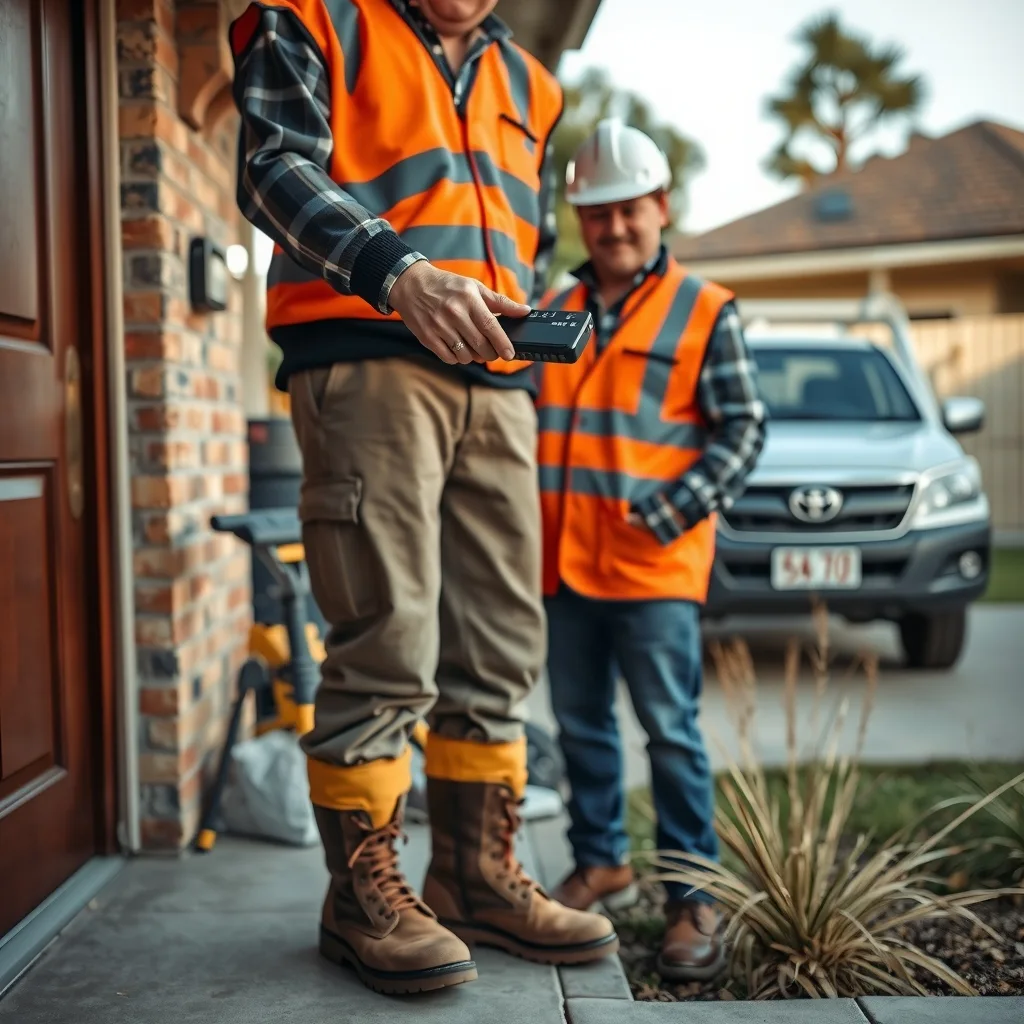
Here’s where it bites for anyone running a tools-and-terminal operation. Plenty of sole traders now take tap-and-go on a mobile reader on the job, and plenty add the card fee as its own line on the invoice so the customer wears it. From 1 October, on the rules as the ABC describes them, that line disappears. The fee doesn’t.
That means the cost has to be inside the number you quote, because you can’t bolt it on once the customer taps. Two practical jobs before October: get your quote template and your invoicing app checked so they’re not still auto-adding a surcharge, and work out whether your hourly rate or your standard callout price still covers the merchant fee once you’re absorbing it. The RBA publishes its payments reform material at rba.gov.au, and excessive-surcharge complaints have long been handled by the ACCC.
The hospitality closure rate matters for order books too. Cafe and restaurant churn is shopfit churn: counters, cool-room work, exhaust canopies, grease traps, three-phase runs, shopfront glazing and the endless maintenance callouts that come with a commercial kitchen. One in eight closing is fitout work that stops mid-stream, and tenancies that sit empty until someone else signs a lease.
”Mounting shocks” and slower price rises, not lower prices
CreditorWatch chief economist Ivan Colhoun described 2026 as a year of mounting shocks for small business, driven by e-commerce shifts, inflation and higher interest rates, and said a cost-of-living squeeze on consumers had become a cost-of-doing-business squeeze on the people serving them.
“The cost of things is much higher than it was five years ago so even if inflation slows it doesn’t mean prices are going down and these costs have reversed, it just means they’re going up at a slower rate,” he said.
That’s the bit worth carrying into your own pricing conversation. Easing inflation doesn’t claw back the last five years of input costs, and from October there’s one less way to pass a cost along. Watch whether the RBA’s promised $910 million actually shows up as lower merchant fees on your monthly statement, or whether it gets absorbed somewhere between the bank and the terminal, and tighten your payment terms now while the small clients on your books are still trading.
Frequently asked questions
When does the card surcharge ban start in Australia?
The ban starts 1 October, after which businesses can no longer add a separate surcharge line for card payments, according to the ABC’s report on the RBA reform.
Does the surcharge ban mean businesses stop paying card fees?
No. The RBA estimates the reform will save businesses $910 million a year in transaction fees, but the fee itself doesn’t disappear, it just can no longer be passed to the customer as a separate charge.
How does the surcharge ban affect tradies who take card payments on-site?
Sole traders who add a card fee as its own line on an invoice will need to build that cost into their quoted price instead, since the separate surcharge line disappears from 1 October.
How many cafes and restaurants have closed in Australia recently?
CreditorWatch’s Business Risk Index for August 2026 found one in eight Australian cafes and restaurants closed in the past year, with payment defaults rising nationally for the third straight month.
Sourced from ABC News, CreditorWatch, Reserve Bank of Australia. Original article.