
The Bureau of Meteorology has warned of severe thunderstorms, heavy rain and flash flooding across South Australia, Victoria, NSW and Tasmania this weekend, with nine flood warnings already in place for south Queensland on Saturday morning after a week of downpours that closed schools and triggered hundreds of SES callouts in the state’s south-east.
Guardian Australia reported the forecast after speaking to Bureau of Meteorology senior meteorologist David Crock about where the worst of it lands and when.
Crock said severe storms and heavy rain were forecast on Saturday across central and eastern Queensland, including Rockhampton, Gladstone, Bundaberg, the Sunshine Coast hinterlands and Roma. Parts of Victoria were also in the firing line, including Melbourne’s eastern suburbs, along with central and eastern South Australia. Heavy rain was expected to build in Tasmania overnight into Sunday morning.
“There’s plenty of rain across the south-east, as well as plenty of showers and storms and rain across much of Queensland as well, after what’s already been a really wet week,” Crock said.
The cold front then swings into NSW on Sunday, taking severe thunderstorms to the west of the state, north-eastern Victoria, Sydney and Brisbane.
“Tomorrow is a threat for thunderstorms right across eastern Australia, with severe thunderstorms likely through a wide part of inland eastern Australia,” he said.
A week that behaved like February
This is landing on ground that has nothing left to give. Several parts of Queensland copped more than twice their average October rainfall in a matter of days.
The Sunshine Coast hinterlands and Caboolture recorded seven-day rainfall totals of 300mm to 400mm in October 2026, with some areas reaching 450mm, according to Bureau of Meteorology figures reported by Guardian Australia. For context on the week that produced them, Thursday’s falls stretched from Caboolture down to the Border Ranges, with some places well over 200mm.
“It was an incredibly wet week in Queensland. Much more typical of summer or January or February than this time of year,”
Crock said.
Queensland’s fire department carried out more than 16 swift-water rescues during the event, including using a raft to pull an elderly man off the roof of his vehicle at Caboolture.
Crock said the pattern itself was the unusual part. “It’s been notable how persistent this weather pattern has been, how much moisture has pumped in … then how those rainfall totals have accumulated across seven to 10 days through Queensland and northern New South Wales,” he said.
What a saturated site actually costs you
Rain days are one thing. Rain on top of 400mm is another, and anyone running a residential job in south-east Queensland or northern NSW already knows the difference.
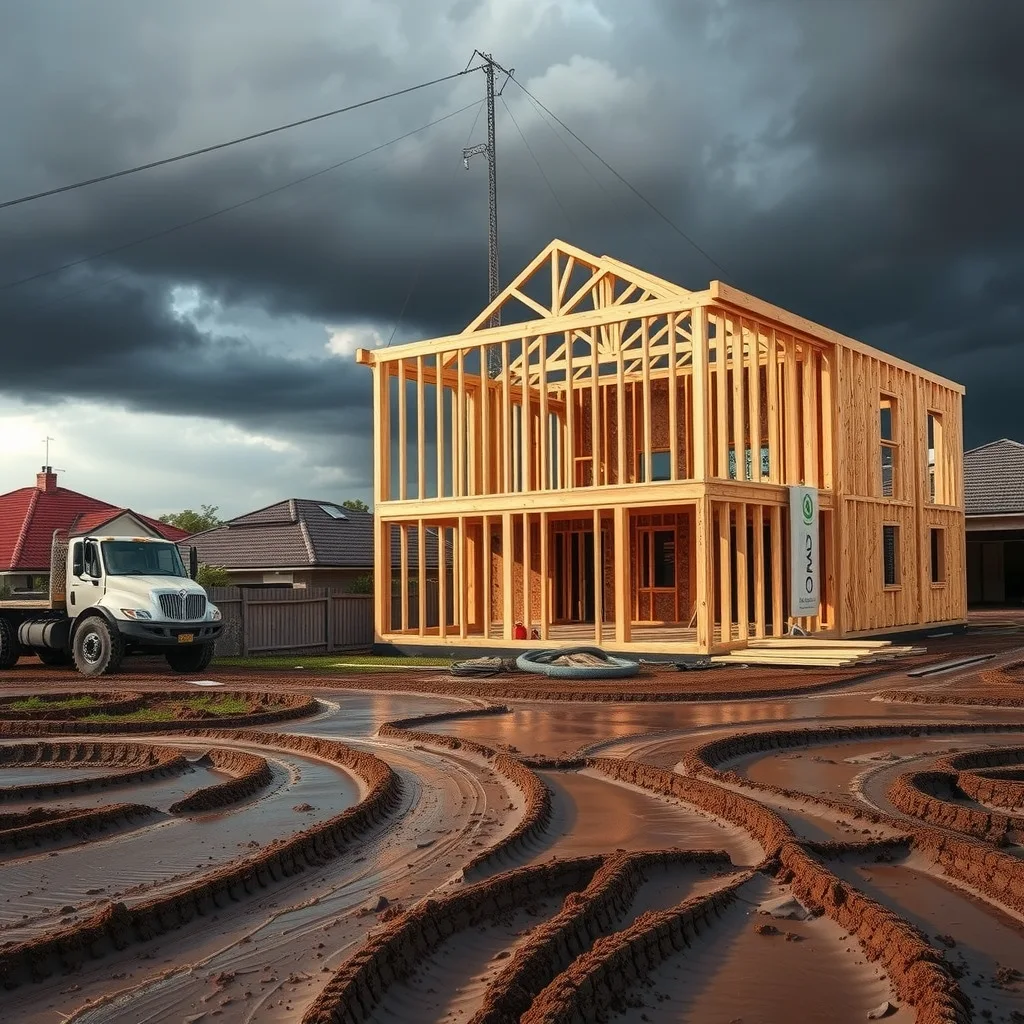
Unsealed lots and freshly cut pads are the first casualty. Once the subgrade goes to soup, the concrete truck isn’t getting up the driveway, the frame delivery isn’t coming off the back of a semi, and the crane truck stays on the road. A pour that misses its booking slot doesn’t just move to Monday, it moves to whenever the plant has capacity, which in a region-wide wet spell is a queue.
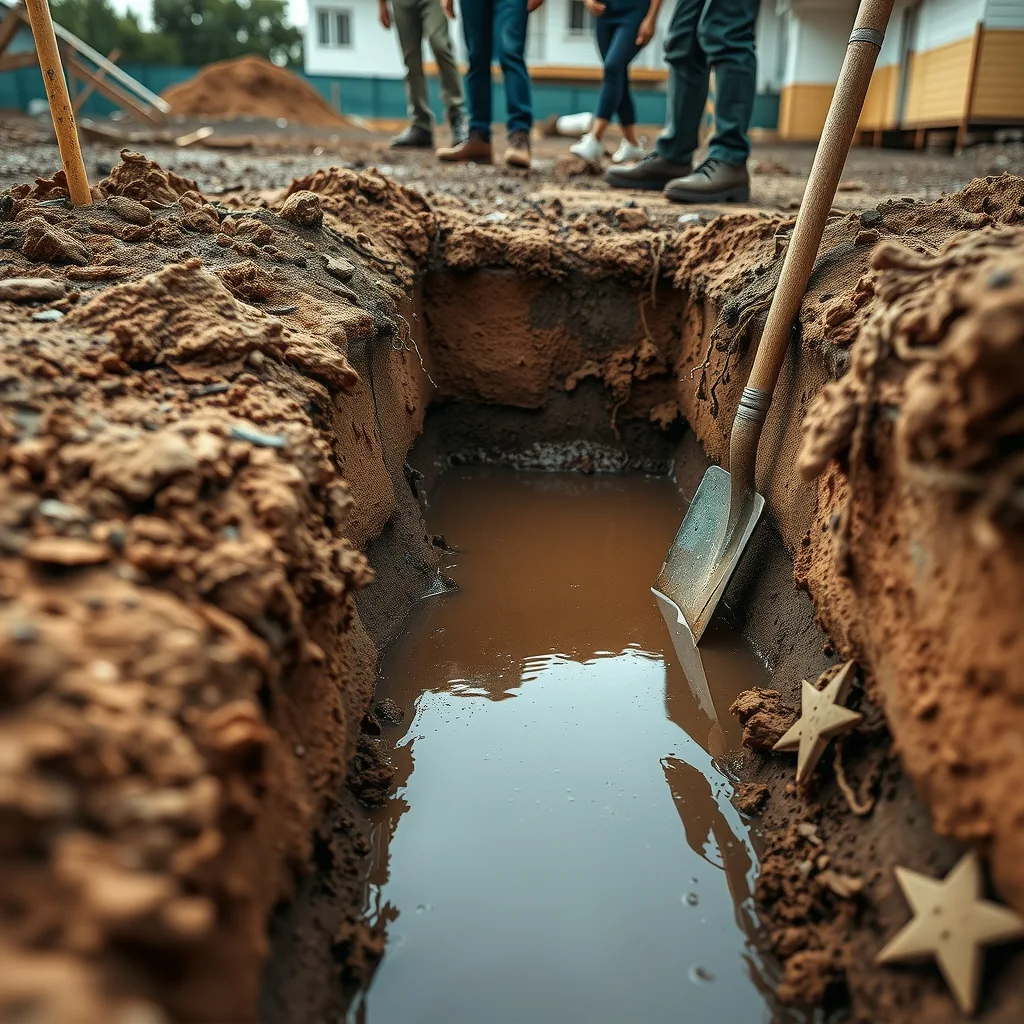
Footings and service trenches that were open on Friday are the next problem. Water fills them, sides slump, and the hole you dug has to be cleaned out or re-dug before anyone goes near it. Trench work after heavy rain is squarely a regulator question, not a judgement call on the day, so check your state’s rules through Safe Work Australia and your local authority before anyone steps in.

Frames at lock-up stage wear it too, and if you’re double-checking what’s load-bearing before you cover it, a quick refresher on reading timber framing plans helps you work out what gets tarped first. Exposed timber, particleboard flooring and plasterboard stacked on a slab all take on water, and the fitout trades behind you inherit whatever’s left once it dries. Tarps and temporary roofing bought on a Friday afternoon are cheaper than a replacement floor sheet.
Then there’s the gear. Leads, boards and power tools sitting in standing water are a sparkie’s call before anyone flicks a switch, and lightning within storm range puts an end to scaffold, roof and elevated work platform jobs regardless of what the program says. Follow the manufacturer’s limits and your state work health and safety regulator, not the bloke who reckons it’ll pass over.
One piece of admin worth doing while it’s fresh: log the rain days, with dates, rainfall figures and photos of the site. Weather delays only translate into an extension of time if the record exists when the claim is written, and the Bureau’s own observations at bom.gov.au are the easiest evidence to point at.
Sunday’s front is the one to watch
For crews in western NSW, north-eastern Victoria, Sydney and Brisbane, Sunday is the day the front arrives, which means Monday morning is when the state of your site gets decided. If you’ve got an open excavation, loose sheeting, stacked frames or anything light enough to move in a severe storm gust, Saturday afternoon is the time to deal with it.
Crews further afield should watch the flood warnings rather than the rain forecast. Catchments that have taken 450mm in a week respond to the next 30mm the way dry ground responds to 200mm, and road closures will decide whether your crew gets to the job long before the weather does.
Frequently asked questions
Do rain delays automatically entitle a builder to an extension of time?
No. Weather delays only translate into an extension of time if there’s a record of the rain days, with dates, rainfall figures and site photos logged when the claim is written. The Bureau of Meteorology’s own observations at bom.gov.au are the easiest supporting evidence.
Is it safe to work near an open trench after heavy rain?
Trench work after heavy rain is a regulator question, not a site judgement call. Check your state’s work health and safety rules through Safe Work Australia and your local authority before anyone enters a flooded or slumped trench.
Should elevated work stop during a storm warning?
Lightning within storm range should end scaffold, roof and elevated work platform jobs regardless of the program, following the manufacturer’s limits and your state WHS regulator rather than waiting to see if it passes over.
Which areas does the BoM’s weekend severe weather warning cover?
The Bureau flagged central and eastern Queensland, including Rockhampton, Gladstone, Bundaberg and the Sunshine Coast hinterlands, for Saturday, with Sunday’s cold front bringing severe storms to western NSW, north-eastern Victoria, Sydney and Brisbane.
Sourced from Guardian Australia, Bureau of Meteorology. Original article.