
Master Builders Australia has told the Australian Trade Remedies Commission that proposed tariffs on aluminium windows and doors imported from China could lift the cost of those products by as much as 75 per cent, and has asked the Federal Government not to impose them. The commission’s investigation is now heading towards a final decision by the Minister for Industry.
The warning is set out in a submission published by Master Builders Australia on 14 November 2026. The case covers aluminium windows and doors from China whether fully or partially assembled, including frames, panels and sashes, and it’s the first time anti-dumping measures have been aimed at finished window and door products rather than the aluminium extrusion that goes into them.
Building material costs have risen 43.7 per cent since 2019, with aluminium window and door products up 45.4 per cent over the same period, Master Builders Australia told the commission in November 2026, citing ABS figures.
”Mums and Dads building a home pay the price”
The submission argues the hit lands twice: once on jobs already signed, and once on everything priced after that.
“We are talking about cost increases worth tens of thousands, and in some cases hundreds of thousands or millions of dollars, on construction projects across Australia, depending on their size,” the submission says.
For anyone holding a fixed-price contract, there is nowhere to put that money. Master Builders says builders on fixed-price work “will be unable to pass these costs on, leaving them to absorb the hit themselves or face difficult decisions about whether projects remain viable”.
On future work, the body points overseas.
“As we’ve seen in the United States, tariffs flow through to the customer. Mums and Dads building a home pay the price,” the submission says.
Its alternative is to go after input costs instead of import prices. “Domestic manufacturing is better supported through policies that don’t push up the cost of materials, but tackle local input costs, including energy prices, transport costs, regulation and taxes,” Master Builders told the commission.
The other side: a $2.72 billion local sector says it’s being undercut
The case wasn’t brought by importers’ critics in the abstract. It was lodged jointly by domestic manufacturer Ventora Group and the Australian Glass and Window Association, and the applicants want duties precisely because they say local makers are being injured by dumped and subsidised product.
AGWA puts the Australian aluminium window manufacturing sector at $2.72 billion in revenue with more than 9,000 direct employees, sitting inside an $8.85 billion supply chain of glass processing, extrusion, glazing, installation and hardware that it says supports more than 26,000 jobs across metro and regional areas. The association also says Chinese imports of these products climbed by a further 30 per cent after the investigation began, on top of a rise of more than two-thirds over the three years to November 2025.
Both sets of numbers come from interested parties on opposite sides of the same case, so read them that way.
In its preliminary report, the commission found all Chinese exporters except one had dumped the goods between 1 July 2024 and 30 June 2025, ABC News reported in October 2026. UNSW international economic law professor Zhou Weihuan told the ABC duties were likely because it was “hard to change” the findings in a preliminary report, and said the price impact would push up construction costs for commercial and residential premises.
Why you can’t just swap the windows out
This is the part that matters on site. Windows aren’t a line item you re-shop when the price moves. They get locked in early and everything downstream is detailed around them.
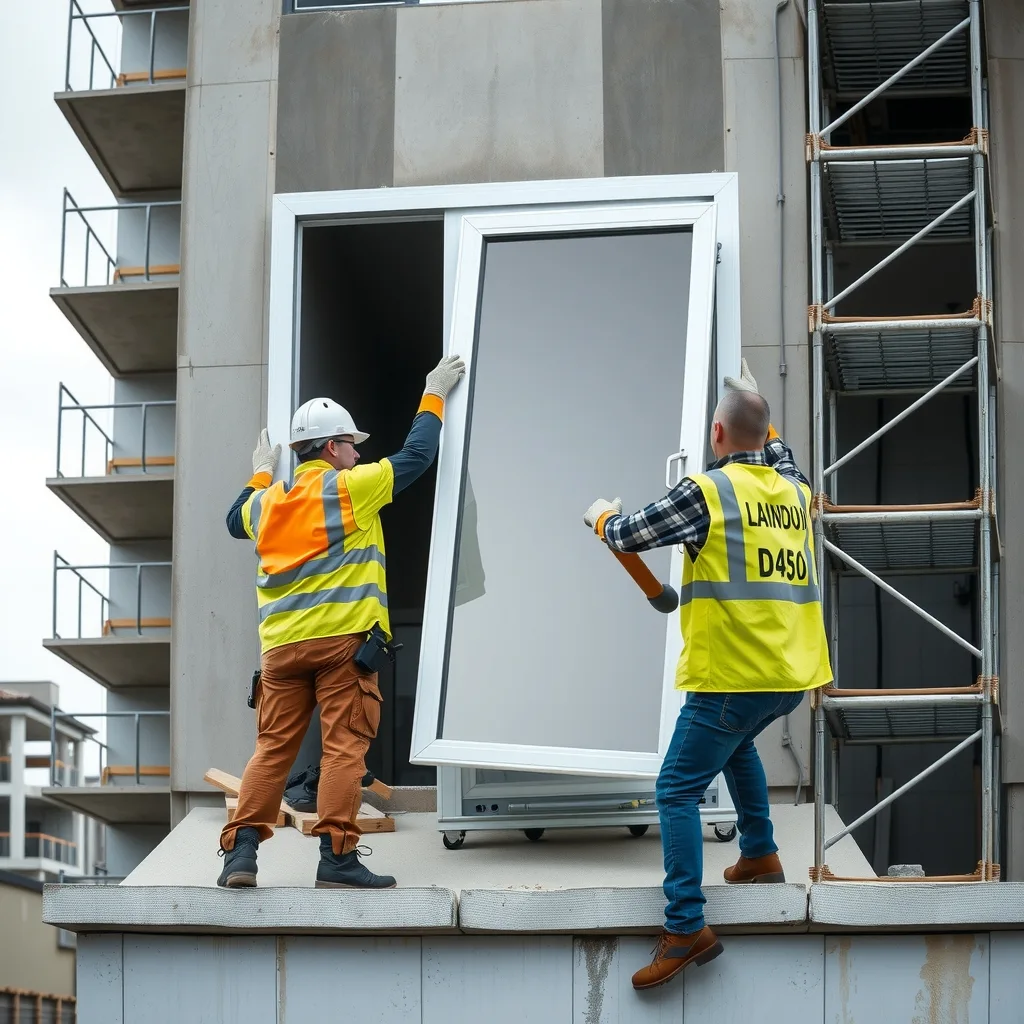
“Window types are often locked in during the design stage and become embedded in a building’s architectural, engineering and façade,” the submission says. “Changing products halfway through a project is rarely a simple substitution. It can trigger redesigns, additional compliance work, delays and significant extra costs.”
On a house, the window schedule drives the frame. Opening sizes, head heights, trimmer and lintel setout, sill flashings and the wrap detail are all cut to suit a specific product before anyone orders glass.
Swap supplier mid-job and the carpenter is re-setting openings, the glazier is working to different reveal and fixing details, and the thermal performance the designer signed off on has to be re-checked against the new unit before the job gets through lock-up.
That sequencing risk is what Master Builders is putting in front of the commission: not just a higher invoice, but a stalled lock-up date on a contract that was priced months ago.
The carve-out they’re asking for
If the tariffs go ahead anyway, Master Builders wants a minimum concession: an exemption for Class 2 residential apartment projects, where it says demand for high-performance aluminium window and door systems more often exceeds what local manufacturers can supply.
The body warns that without it, builders delivering apartments and other high-density housing “risk facing higher costs, project delays and reduced feasibility at a time when Australia is already struggling to build the homes it needs”, including social and affordable housing being delivered through the Housing Australia Future Fund.
For anyone quoting apartment or townhouse work into next year, the thing to watch is the Minister for Industry’s final call and whether any exemption for Class 2 survives into it. Until that lands, it’s worth checking how your window supply is priced in contracts you’re signing now, and whether a rise-and-fall or material-cost clause covers a duty that didn’t exist when you quoted.
Frequently asked questions
What products would the proposed tariffs cover?
The case covers aluminium windows and doors imported from China, whether fully or partially assembled, including frames, panels and sashes. It’s the first time anti-dumping measures have targeted finished window and door products rather than the raw aluminium extrusion.
Who is asking for the tariffs, and why?
The case was lodged jointly by domestic manufacturer Ventora Group and the Australian Glass and Window Association, which says the $2.72 billion local sector and more than 9,000 direct jobs are being hurt by dumped and subsidised Chinese imports.
What exemption is Master Builders asking for?
If the tariffs go ahead, Master Builders wants Class 2 residential apartment projects exempted, arguing demand for high-performance aluminium window and door systems there often exceeds what local manufacturers can supply.
Why can’t builders just switch to a different window supplier if prices rise?
Window types are locked in during design and embedded in a building’s architecture and engineering, Master Builders says, so changing products mid-project can trigger redesigns, extra compliance work, delays and significant added costs.
Sourced from Master Builders Australia, ABC News, Australian Glass and Window Association. Original article.