
The real artificial intelligence story in construction isn’t robot bricklayers or drones over site, it’s the document pile: the contracts, cost plans, programs, variations, minutes and reports a major job throws off by the tens of thousands. That’s the argument from James Garner, senior director and head of AI and data at global consultancy Gleeds, in an opinion column published on 8 October 2026.
Writing in The Fifth Estate, Garner says the flashy stuff has been sucking up the oxygen. “They make good conference slides, but they are not, for the most part, where the change is happening,” he writes. “The less glamorous truth is that the real shift is taking place in the paperwork, and it matters more than the hype suggests.”
His point is simple enough. Most professional effort in construction goes into reading, reconciling and rewriting documents. That’s exactly the job large language models are decent at, which is why adoption has run hard in the back office while the site itself looks much the same as it did five years ago.
The 28 per cent that cuts both ways
Research by the Association for Project Management and polling firm Censuswide, published at the end of March 2026 and cited in Garner’s column, found 28 per cent of UK construction project professionals now describe AI as “fully embedded” in their workflows, the highest of any sector reported.
The twist: only months earlier, an APM survey of business leaders ranked construction last among ten sectors for productivity gains, also on 28 per cent. Fastest to pick up the tools, last to get anything out of them.
Garner’s explanation is that firms bolted the technology onto the way they already worked. “An assistant that summarises a contract in thirty seconds saves time for the individual, but it does not change the process, the fee model or the outcome for the client,” he writes. “The productivity dividend only arrives when firms redesign the workflow around the technology rather than the other way round.”
Scale that down to a five-person building company and it reads the same. If you’re using a chatbot to tidy up the covering email on a quote, but you’re still pricing off memory, still hand-keying the progress claim, still chasing the variation approval by phone, nothing structural has moved. You’ve just typed less.
From asking questions to handing over tasks
The first of three trends Garner nominates is the shift from chat to agents. The early wave was conversational: you ask, it answers. The next wave, he argues, is systems that run multi-step jobs, drafting a monthly cost report off live data, checking a contractor’s program for logic errors, putting a tender comparison together, “with the professional reviewing rather than producing”.
That last bit is where it bites for anyone who subcontracts. A program logic check is the kind of grind nobody does properly until it’s already cost someone money. Every subbie has worn the version of it where the head contract program has your trade starting before the preceding trade has finished, and you’re the one carrying the standby time while the argument gets had.
Same with tender comparison. Lining up four quotes that have each scoped the job differently, spotting the one that’s quietly excluded the scaffold or the temporary power, is slow, boring and exactly where margin leaks.
Your last 40 jobs are the asset you’re ignoring
Garner’s second trend is that the models are no longer the limiting factor, the data is. He points to Network Rail’s data-first approach, documented in an APM case study, as an example of an organisation that got on the front foot.
“Organisations that neglected their data for decades are discovering that it is their most valuable asset, and that it is in poor shape,” he writes.
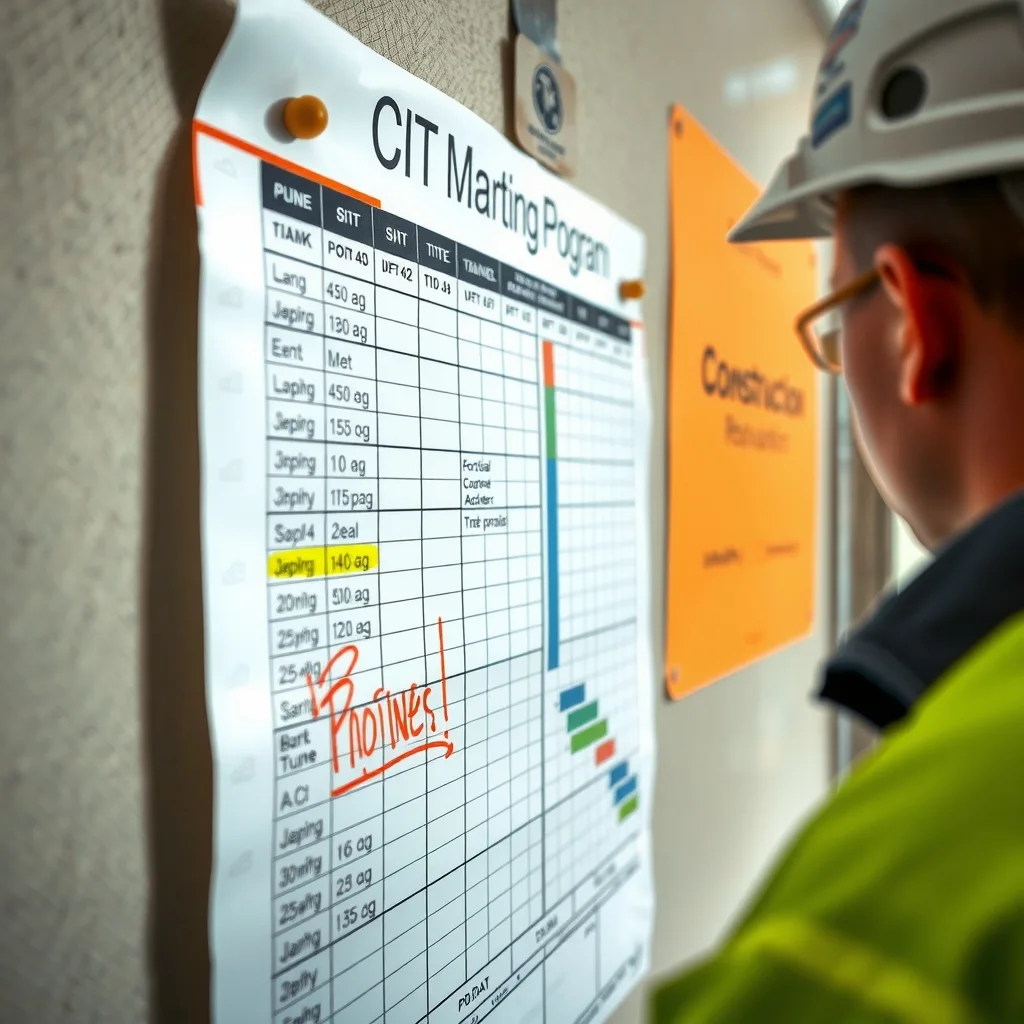
For a builder, historic cost data isn’t a corporate archive. It’s the actual labour hours against the quoted hours on the last 40 jobs, the real cost of the last six bathroom fitouts, the variation that blew out on the job you’d rather forget. Plenty of outfits have all of it, scattered across a job-management app, an accounting package and a drawer of dockets, and have never once queried it.
Feed a tool generic market rates and it prices like a stranger who’s never met your crew. Feed it your own actuals and at least it’s arguing from your numbers. Getting that history into a form you can search is unglamorous work, and it’s the work Garner says separates the firms that get value from the ones that don’t.
The tools carry their own footprint
The third trend is sustainability, and Garner takes it both ways. He sees genuine upside in estimating embodied carbon at concept stage, when design decisions are still cheap to change, and in making sense of the ESG reporting load now attached to every project.
But the tools themselves burn energy and water. “An industry that asks clients to account for whole life carbon should apply the same discipline to its own tools, using AI where it earns its keep rather than everywhere by default,” he writes.
He also floats the bigger bet: that these systems eventually help crack low-carbon cement and steel, grid-scale storage and city-wide climate risk modelling. If that lands, he says, today’s energy spend may prove a sound investment. He adds it would be unwise to count on it.

Judgement gets dearer, not cheaper
The part worth pinning above the desk is about skills. Garner, who sits on the RICS and APM AI working groups, argues the premium on professional judgement goes up, not down.
“When a machine can produce a plausible cost plan in minutes, the value lies in knowing whether it is right, what it has missed and what the client should do about it,” he writes.
And the danger he names isn’t redundancy. “The risk is not that AI replaces the quantity surveyor, the engineer or the project manager,” he writes. “It is that we are training a generation to accept outputs they are no longer equipped to question.”
“It is that we are training a generation to accept outputs they are no longer equipped to question.”
APM’s latest research, he notes, has professionals ranking ethical decision-making and professional judgement at the top of the critical future skills list, alongside data literacy.
Worth keeping the frame honest: this is an opinion column, the survey numbers are British, and there’s no equivalent Australian adoption figure in the piece. The question it raises still travels. If a tool reads a spec clause wrong and you price off it, the tool doesn’t wear the loss.
So the thing to watch over the next year isn’t whether your software vendor bolts an AI button onto the quoting screen. They all will. It’s whether anyone in the business can still pick the moment that button is wrong, and whether your own job history is in good enough shape to check it against. “The robots may come in time, but the transformation already under way is quieter and closer to the desk,” Garner writes.
Frequently asked questions
Why is construction last for productivity despite leading on AI adoption?
Research cited by Gleeds’ James Garner found 28 per cent of UK construction professionals have AI fully embedded, the highest of any sector, but a separate APM survey ranked construction last among 10 sectors for productivity gains, also at 28 per cent. Garner argues firms bolted AI onto existing workflows without redesigning them.
What should a small building company do differently with AI?
Garner says the productivity gain only comes when firms rebuild their workflow around the technology, not when they use a chatbot to speed up emails while still pricing from memory and chasing variations by phone.
Does this UK research apply to Australian building firms?
The article doesn’t include Australian adoption figures. The 28 per cent statistics come from UK research by the Association for Project Management and Censuswide, cited in Garner’s opinion column for The Fifth Estate.
Sourced from The Fifth Estate, Association for Project Management. Original article.