
How to unblock a toilet, and when to stop and call a plumber
A blocked toilet is one of the few plumbing problems an Aussie homeowner can legally tackle. Here's how to do it safely, what not to do, and when to give up and dial a plumber.
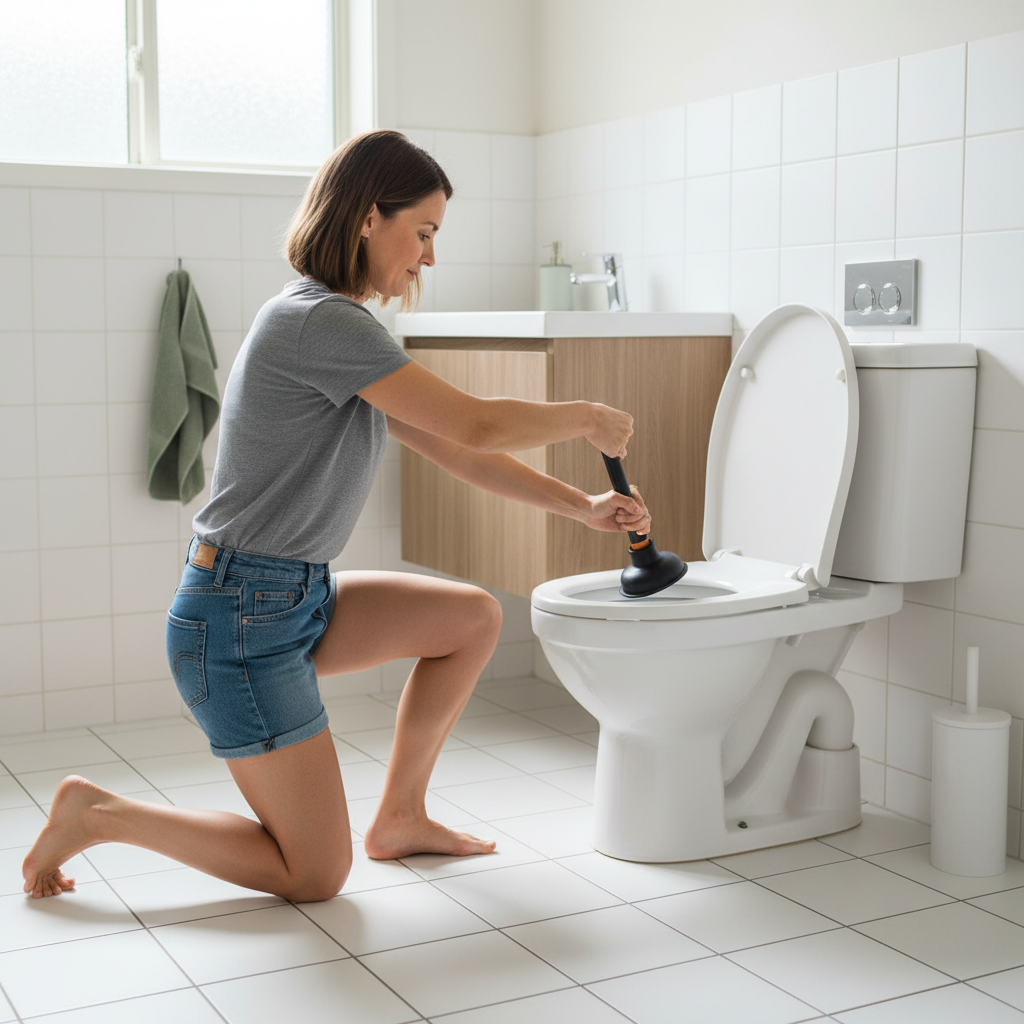
Tools and materials
Tools
- Toilet plunger (the flange type, not the cup type)
- Rubber gloves
- Old towels
- Bucket
Materials
- Hot (not boiling) water
- Dish soap (optional)
A blocked toilet at the wrong moment is an emergency. The good news is that most simple blocks clear with a plunger and ten minutes. The bad news is that the wrong technique turns a small problem into a bathroom flood.
What’s actually blocking the toilet
In order of likelihood:
- Toilet paper buildup, 80% of household blocks. Yields to plunging.
- Wet wipes, labelled “flushable” but aren’t, even now. Yield reluctantly. Sometimes need a plumber’s snake.
- Foreign object, kid’s toy, phone, sanitary product. Often needs a plumber to retrieve.
- Drain-line block beyond the toilet, tree roots, broken pipe, fat buildup. Plunger won’t fix this. Plumber + CCTV.
Plunging works for #1 and sometimes #2. It won’t fix #3 or #4. If two plunge attempts fail, you’re probably dealing with the latter, stop and call.
What never to do
- Don’t flush again to “see what happens”
- Don’t pour boiling water, cracks the bowl
- Don’t use chemical unblocker, designed for sinks, damages toilet seals, and makes the plumber’s later job a hazmat one
- Don’t use a wire coathanger, scratches the porcelain and rarely clears anything
When the toilet block is actually a bigger problem
If you flush the toilet and water comes up in the shower, the kitchen sink, or anywhere else in the house, the block isn’t in the toilet. It’s in the main drain line. Stop, don’t flush anything else in the house, and call a licensed plumber. A main drain block is a sewer overflow waiting to happen.
Step by step
-
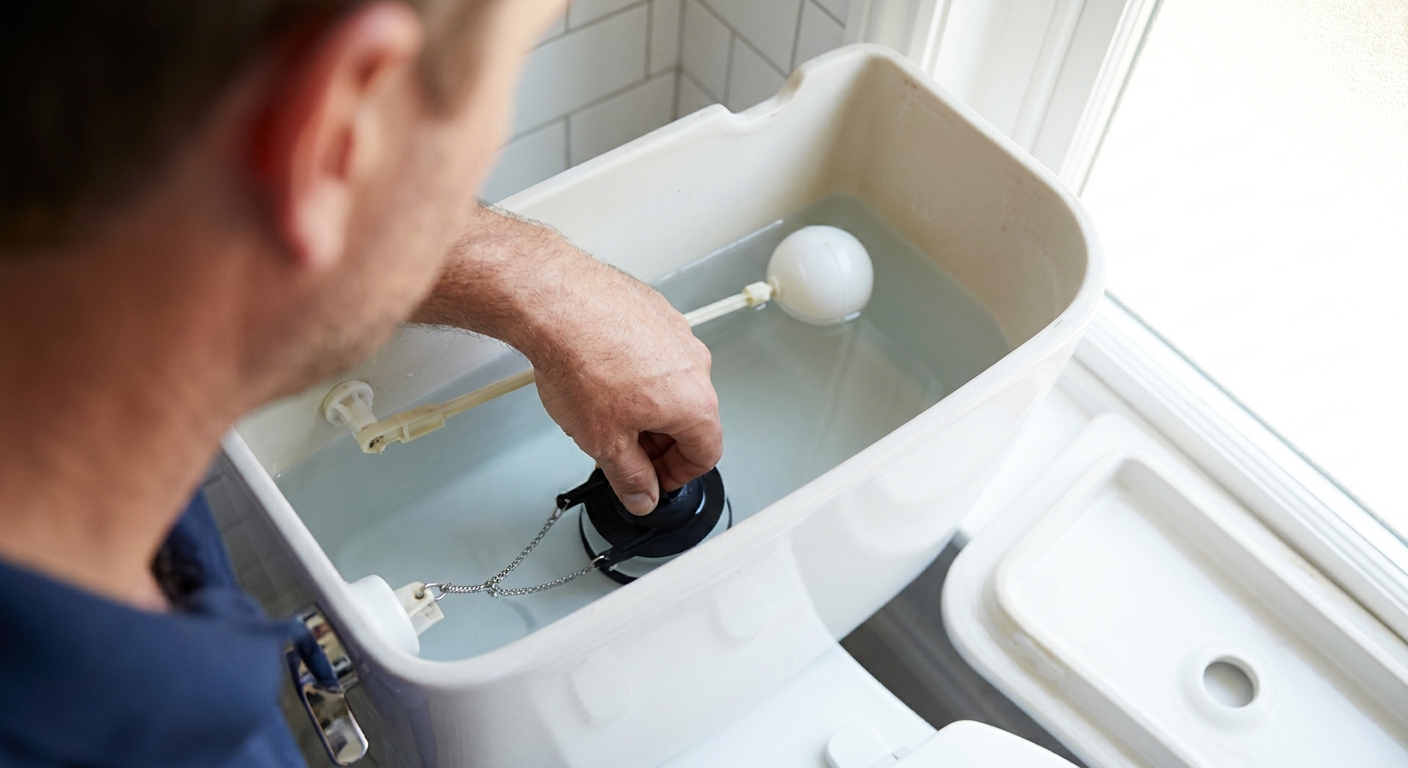
Don't flush a second time, that's how bathrooms flood. If the bowl looks like it's about to overflow, lift the cistern lid and push the flapper down to stop water entering the bowl. Most stops are obvious; some have a chain. If you can't see what's going on, turn off the toilet's isolation valve (a small tap behind the toilet) or the bathroom stop.
-
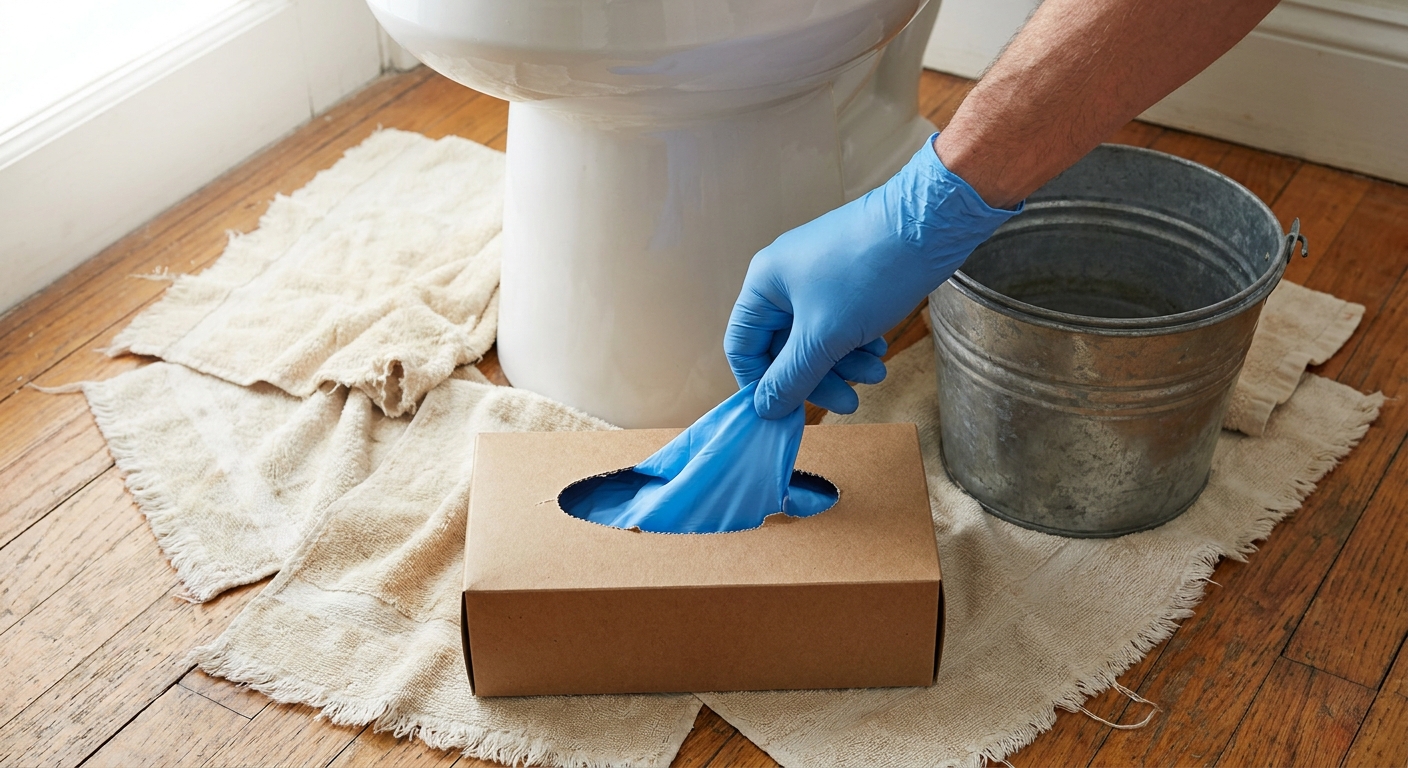
Lay old towels around the base of the toilet. Put on rubber gloves. Open a window if you can, water displacement can push smells back up the bowl. Have a bucket nearby for any water that needs to come out of the bowl.
-
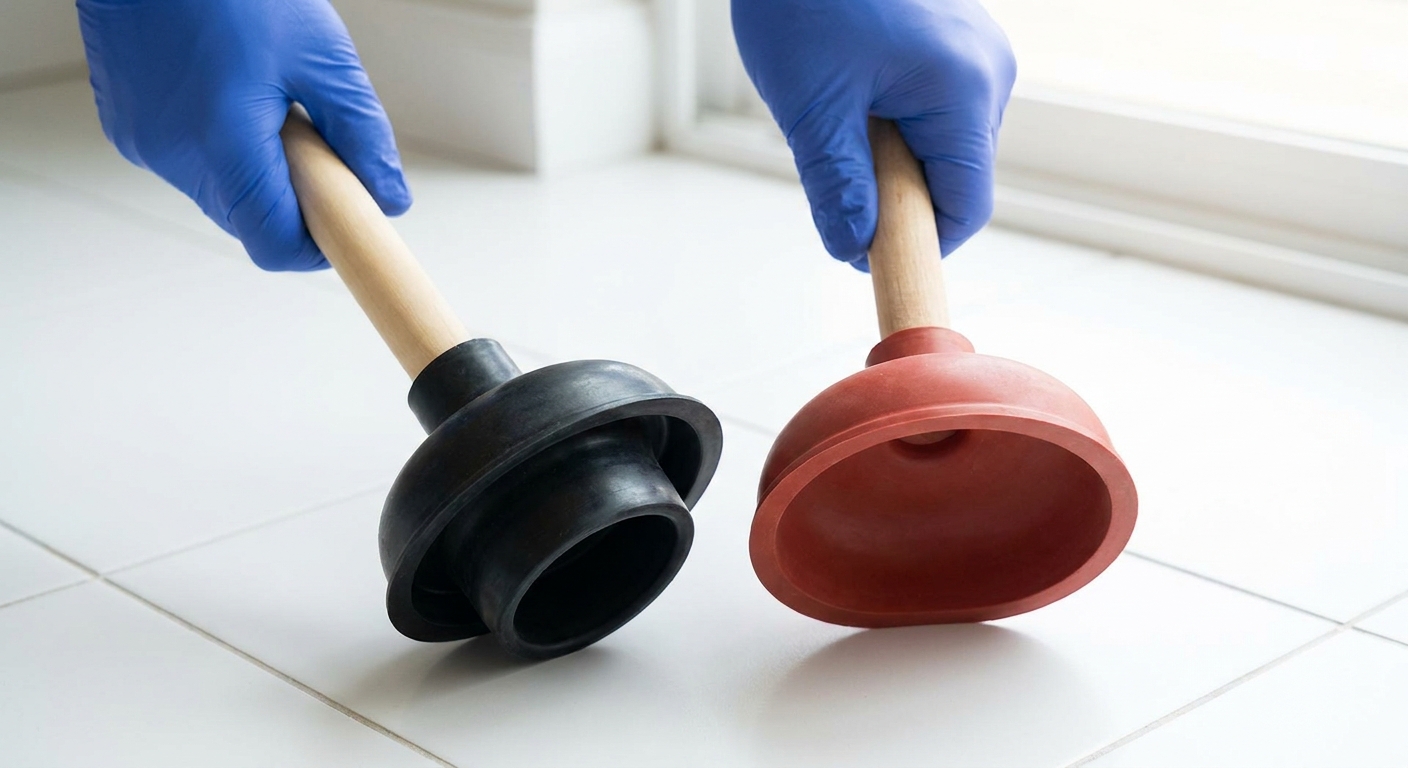
A flange plunger (with the extra rubber flap that folds out) is for toilets. A cup plunger is for sinks and won't seal the toilet trap. If all you have is a cup plunger, this job will be slow and messy.
-
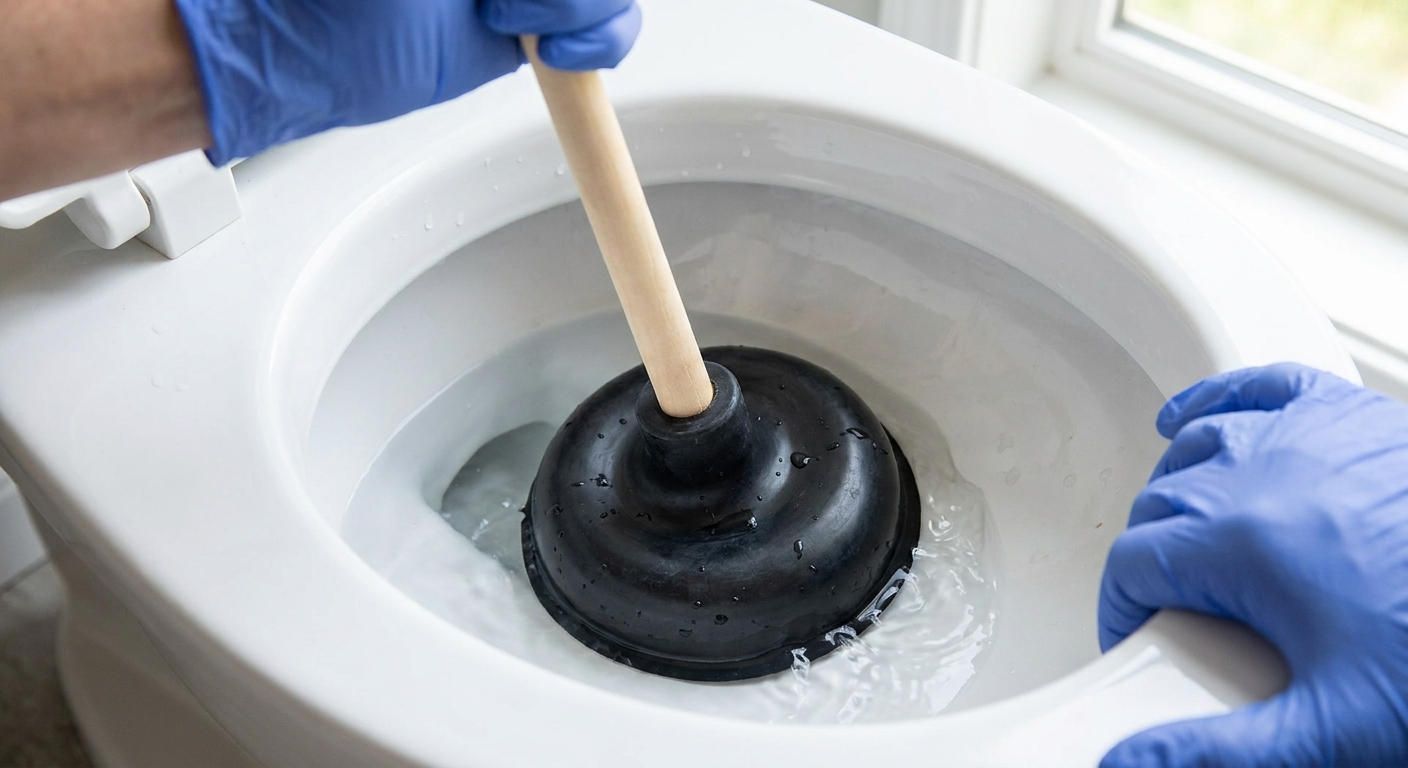
Tuck the flange so it extends into the toilet trap. Push the plunger straight down into the trap, slowly, so air escapes rather than splashing. The plunger should sit covering the drain opening with the rim touching the bowl.
-
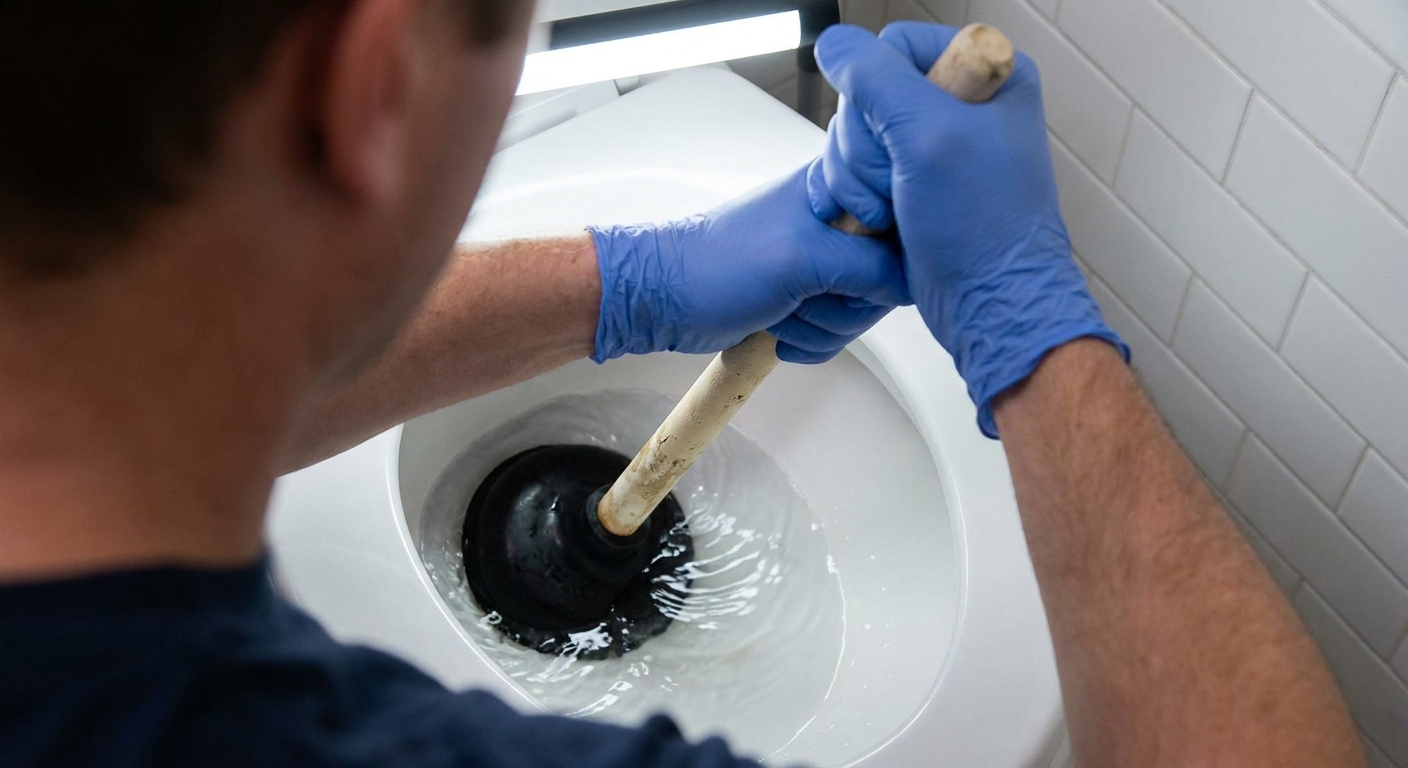
Push down and pull up firmly but not violently. The first push should be slow to push trapped air out. After that, plunge in a steady rhythm of about one push per second, maintaining the seal. 15–20 plunges is usually enough. If the water level drops suddenly, the block has cleared. If it doesn't move after 30 plunges, the block isn't yielding to suction.
-
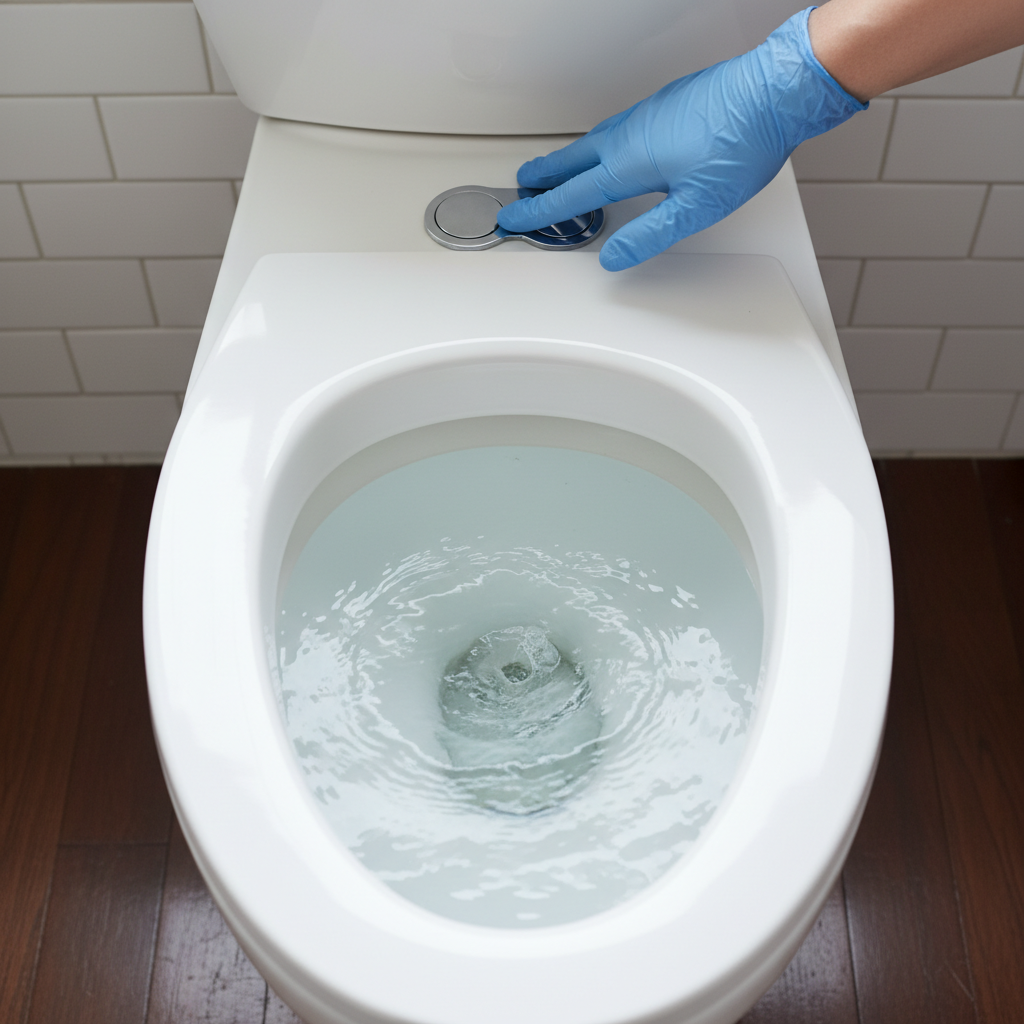
Once the water level drops, flush the toilet once. Watch the bowl carefully. If the water drains normally, you're done. If it rises, stop the flush at the cistern lid and try plunging again. Two failed flushes = stop and call a plumber. Three failed flushes = bathroom floods.
Frequently asked questions
Should I pour boiling water down a blocked toilet?
No. Boiling water can crack the porcelain bowl. Hot (not boiling) water with a squirt of dish soap can help loosen a simple block while you wait for the plunger, but boiling water is a hard no.
Can I use drain unblocker / chemical cleaner?
Not recommended for toilets. The active chemicals in most products are designed for sink/shower trap blocks (hair, soap scum). In a toilet they sit in the trap and corrode the seal. Worse, if you have to call a plumber afterwards, you've turned a $150 unblock into a hazmat job, many won't work on chemical-treated drains.
When should I call a plumber?
Call after two failed plunge attempts. Call immediately if water is backing up into the shower or sink at the same time (that's a main-drain block, not a toilet block). Call immediately if the bowl overflows, turn off the water at the cistern first.
How much does a plumber cost to unblock a toilet?
$150–$400 typically. After-hours emergency: $300–$600+. CCTV inspection if it's a recurring block: $300–$800 on top.