
How to unblock a kitchen or bathroom sink, without a plumber
Slow-draining sinks are usually a five-minute fix. Here's the order of attack, from cheapest to most aggressive, and when to give up and call a plumber.
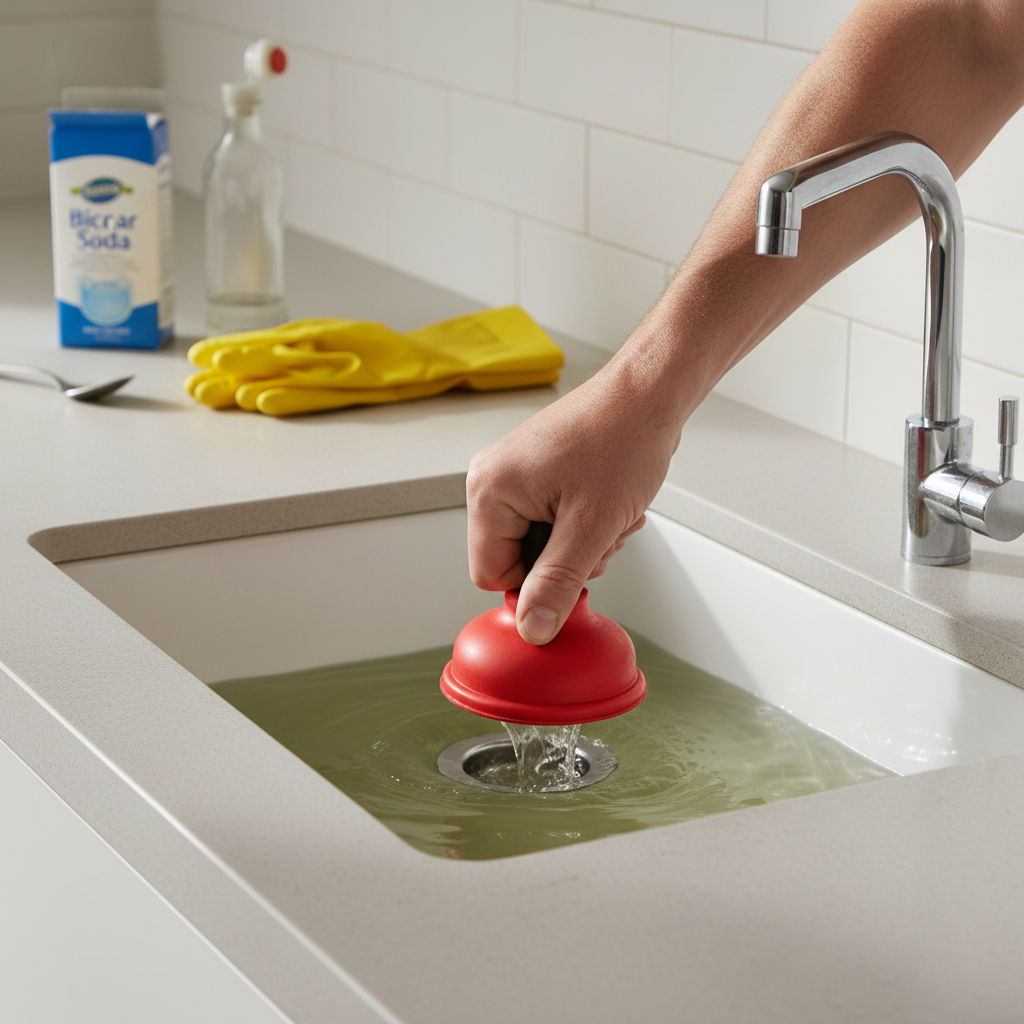
Tools and materials
Tools
- Plunger (cup type for sinks, not flange)
- Bucket (for water under the trap if you remove it)
- Rubber gloves
- Old toothbrush or pipe brush
Materials
- Boiling water (kitchen sinks only, never on porcelain)
- Bicarb soda
- White vinegar
A slow-draining sink is annoying. It’s also one of the easiest plumbing problems to fix yourself, and one of the few that every Australian state allows a homeowner to attempt. The trick is going in order, from cheapest to most aggressive, rather than reaching straight for chemical unblocker.
The five-attack order
- Clear visible debris (free, 1 minute)
- Boiling/hot water flush (free, 2 minutes)
- Bicarb + vinegar (cents, 15 minutes)
- Plunger (~$10, 5 minutes)
- Remove and clean the P-trap (free, 20 minutes, requires nothing but a bucket and rubber gloves)
If none of those work, the block is past where you can reach. Call a licensed plumber. Anything you DIY beyond the P-trap risks damaging the pipework, and any damage caused by unlicensed plumbing voids your insurance.
Stopping it happening again
Kitchen sinks:
- Don’t pour fat, oil, or grease down the drain, into the bin
- Run hot water for 30 seconds after washing greasy dishes
- Once a month, run a kettle of boiling water down the drain
- Use a sink strainer
Bathroom sinks:
- Use a hair catcher in the drain
- Once a month, do the bicarb-vinegar flush as prevention
These two habits prevent 80% of sink blocks.
Step by step
-
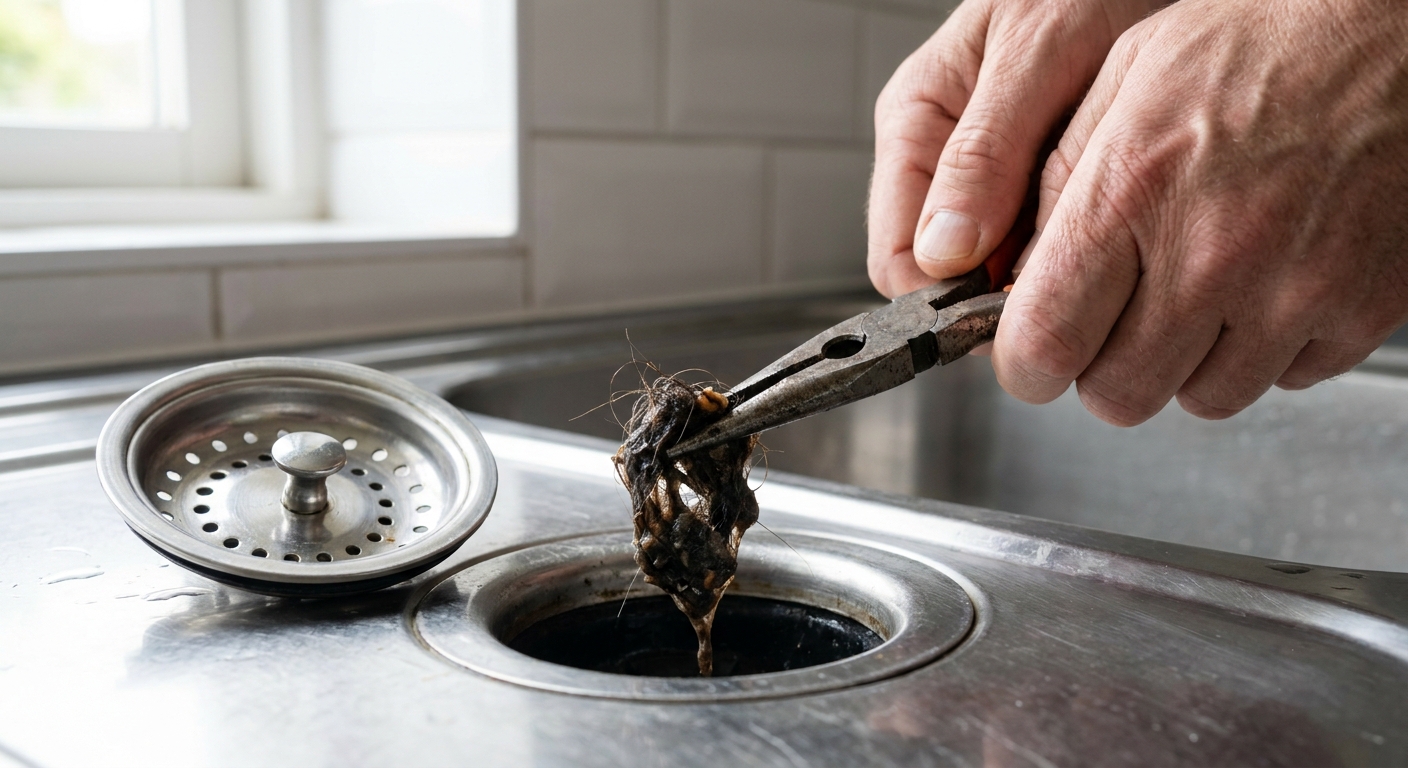
Pull up the basket waste (kitchen) or pop-out drain (bathroom). Clear hair, food bits, and gunge. In a bathroom basin, hair is the cause of 70% of slow drains. A pair of long-nose pliers or a $5 drain hair-removal tool does the job.
-
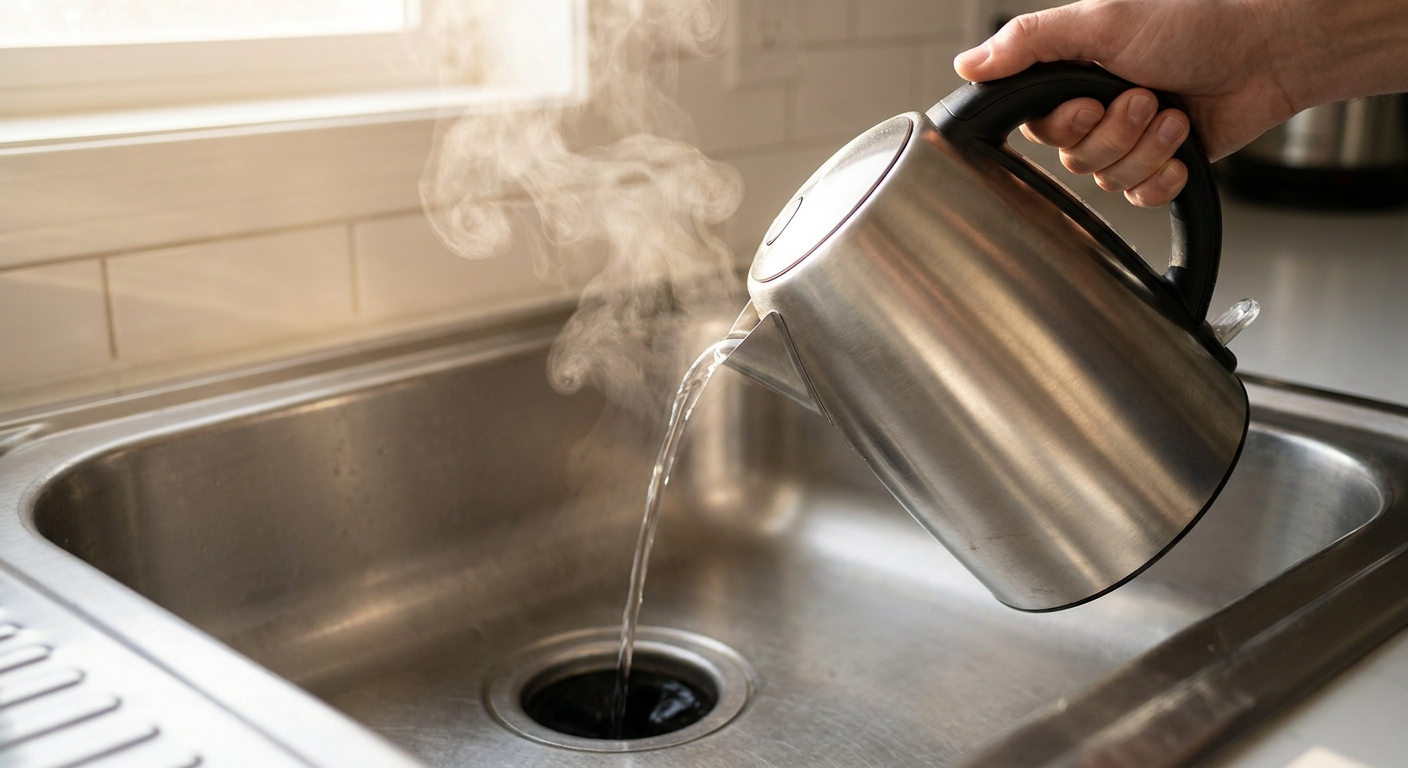
Boil a full kettle. Pour straight down the drain in a slow, steady stream. Wait 60 seconds. Try the tap. This dissolves fat and grease, the most common kitchen-sink culprit. Do not use boiling water on porcelain bathroom basins, it can crack the glaze. Use hot, not boiling, for bathrooms.
-
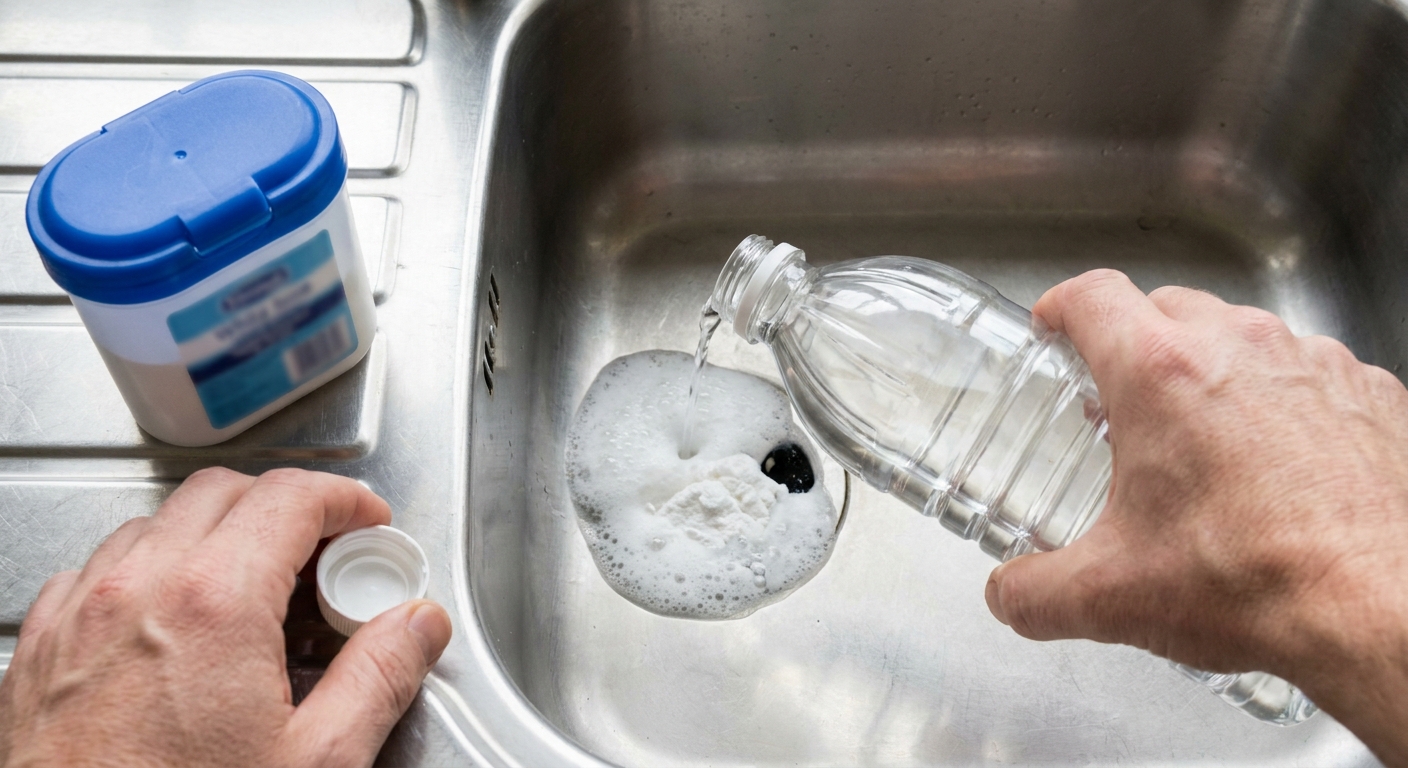
Pour a half cup of bicarb soda down the drain, then a half cup of white vinegar. The reaction foams, that's the active phase. Cover the drain with a wet cloth to direct the action downward. Wait 15 minutes. Flush with hot water (boiling for kitchen, hot for bathroom).
-
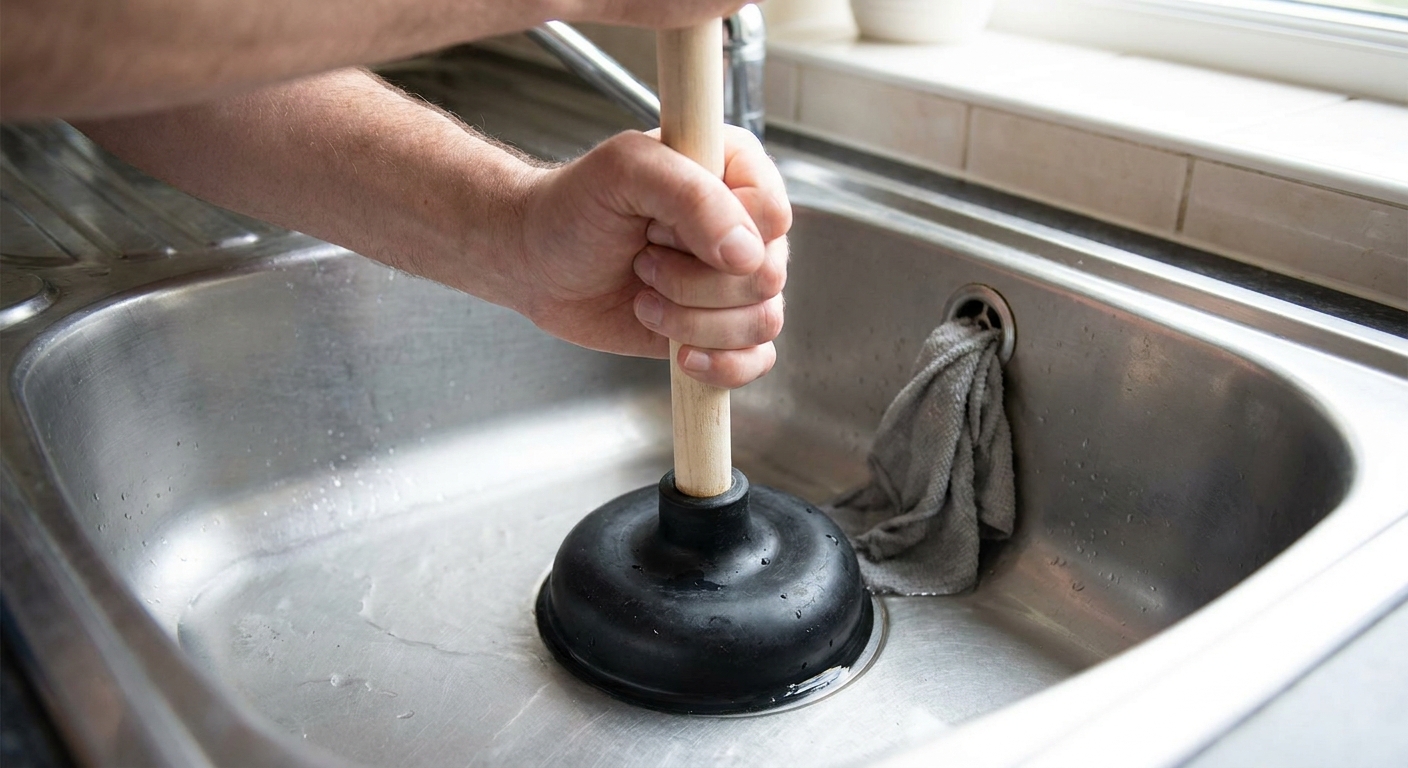
Use a cup plunger (not the flanged toilet one). Run a small amount of water in the sink to cover the plunger rim. Plug any overflow holes with a wet cloth (otherwise the plunger loses suction). Plunge with steady, vertical strokes, 15–20 should do it. Pull straight up sharply on the last stroke.
-
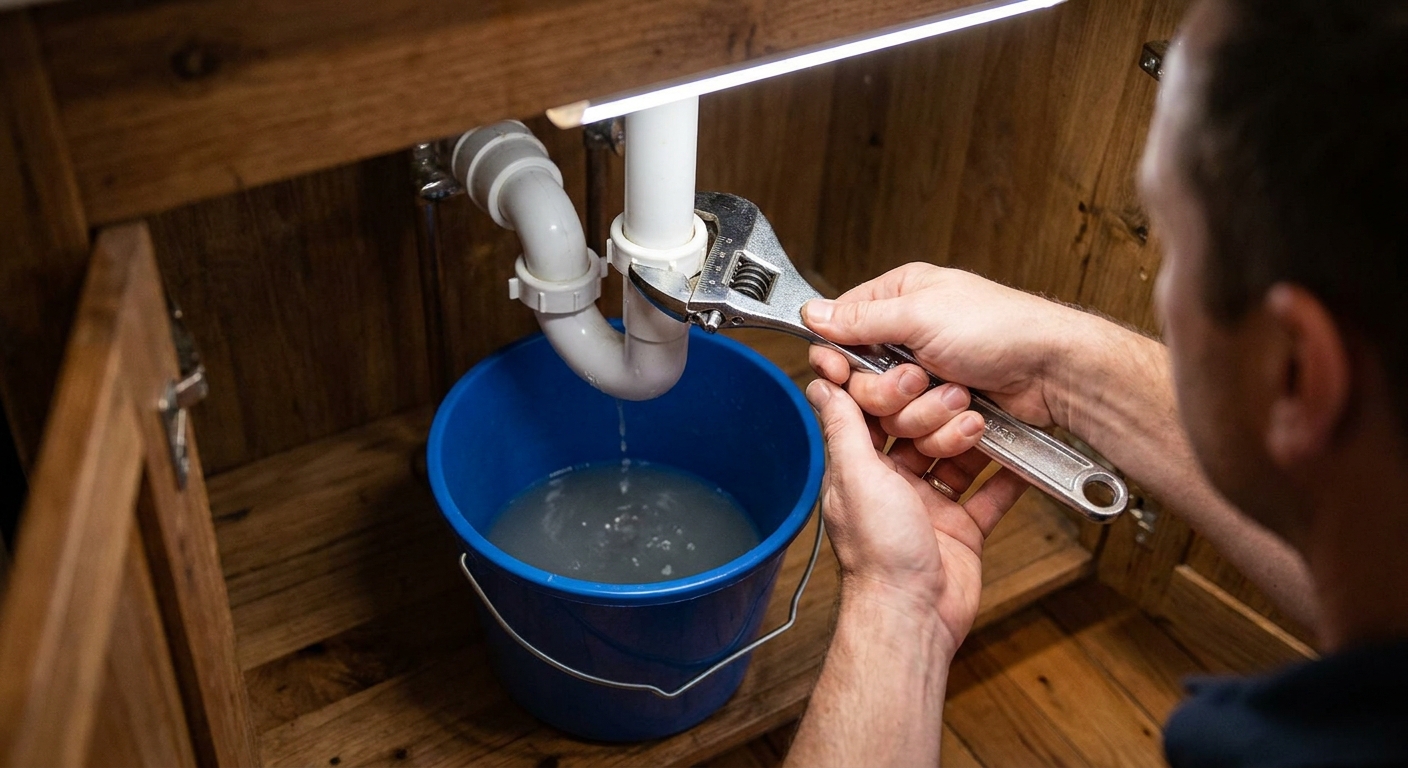
If plunging fails, the block is in the trap. Put a bucket under the U-bend. Loosen the two slip nuts at each end by hand (or with channel-lock pliers if tight). Lower the trap into the bucket, there will be water. Pour the contents into a second bucket so you can inspect the contents (rings, jewellery, anything you've lost in there). Clean the trap with hot water and the pipe brush. Reassemble in reverse, hand-tight, then a quarter-turn with pliers. Run water and check for leaks.
-
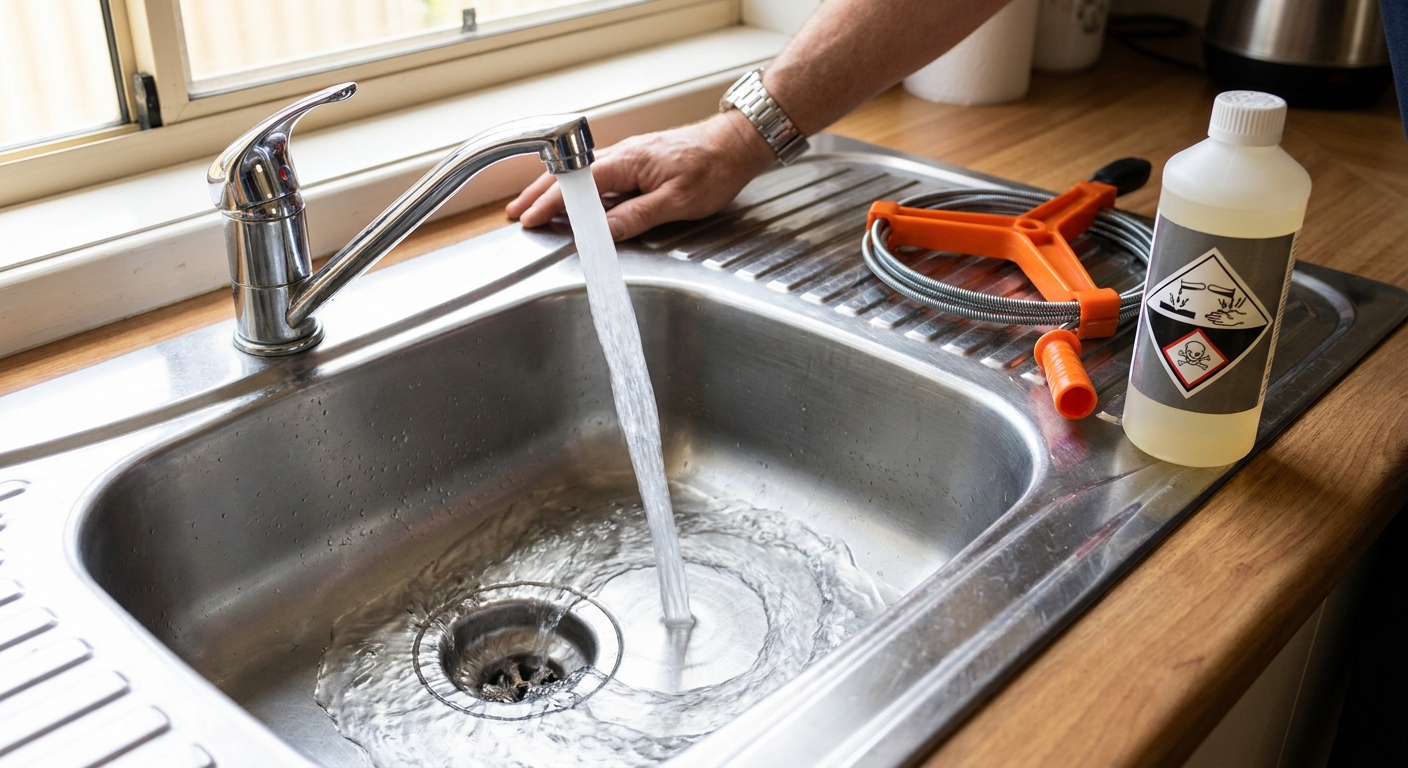
Run the tap full bore for 30 seconds. If water drains freely, you're done. If it still drains slowly, the block is downstream of the P-trap, in the wall pipe or the main stack. That's licensed plumber territory.
Frequently asked questions
Can I use chemical drain cleaner?
Sparingly. Caustic-based unblockers (Drano, etc.) work on hair and grease in soft blocks. They damage chrome traps, can corrode older pipes, and turn any subsequent plumber visit into a hazmat job. Try bicarb + vinegar first. If you must use a chemical, follow the label exactly and ventilate.
What about a plumber's snake?
A hand-cranked sink snake (~$15) reaches 5 metres into the pipe and clears blocks beyond the trap. Useful if your P-trap is clean but the drain is still slow. Don't force it, gentle rotation feeds it past bends.
When should I just call a plumber?
If two sinks or a sink + shower are slow at the same time, the block is in the main drain, plumber. If unblocking causes water to back up at another fixture, plumber. If you've cleared the P-trap and it's still slow, plumber, possibly with a CCTV inspection ($300–$800).
How much does a plumber charge to unblock a sink?
$150–$350 for a routine sink unblock during business hours. After-hours: $300–$500+. CCTV inspection for recurring blocks: $300–$800. If tree roots are the cause, full repair can run thousands.