
What causes water hammer in Aussie houses and how to fix it
That bang in the pipes when you shut a tap is water hammer. Here's what causes it, the cheap fixes you can try, and when it needs a plumber.
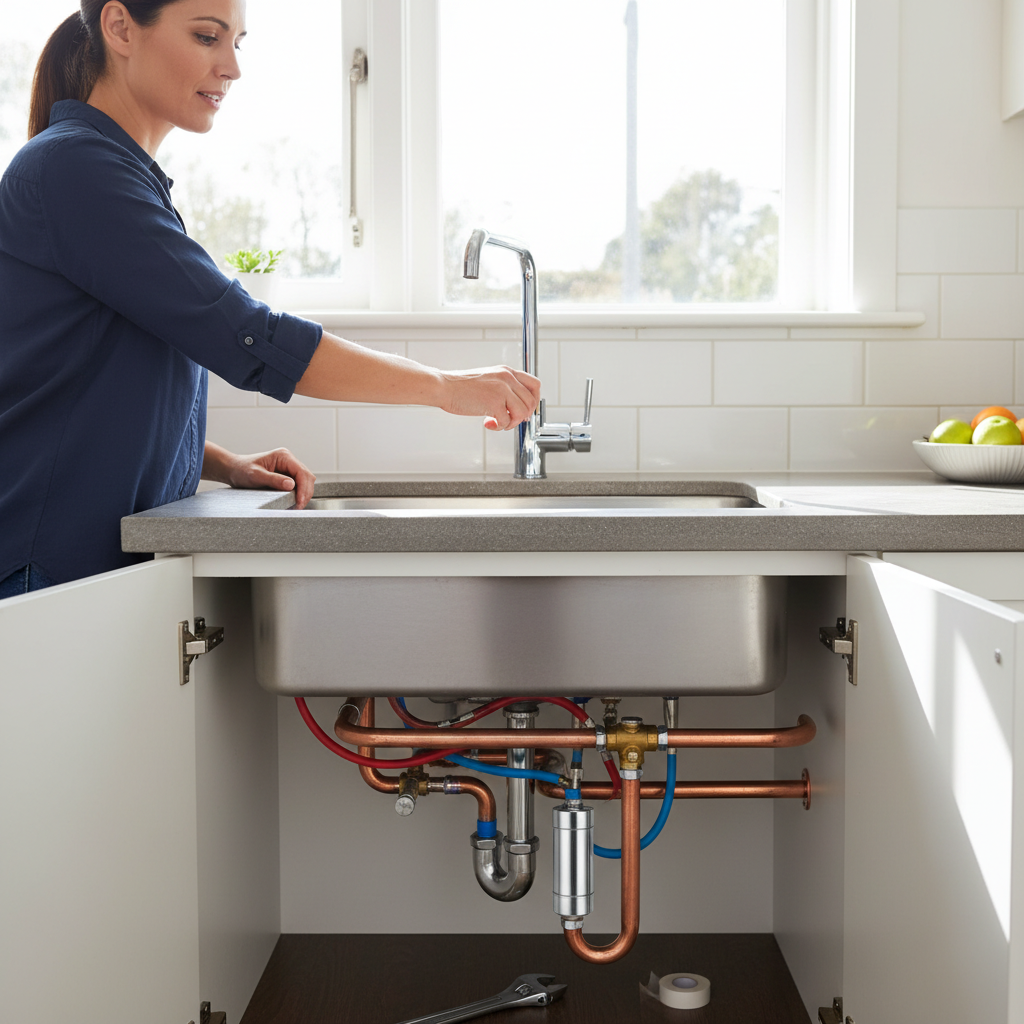
That bang when the washing machine shuts off or someone closes a tap fast is water hammer. The pressure wave in the pipe slams against something solid (usually a stud, joist, or another pipe). Annoying for everyone, eventually damaging to the plumbing.
The four common causes
- Fast-closing valves: solenoid valves on washing machines and dishwashers slam shut in milliseconds, creating the strongest hammer
- Worn tap washers: a flapping washer that closes erratically generates shock waves
- Loose pipes: pipes not properly clipped to framing have room to move; the pressure wave pushes them into the framing
- Too-high mains pressure: Australian mains often runs 500 to 800 kPa; pressure above 500 kPa amplifies hammer
What you can do without a plumber
- Check that visible pipes (under-sink, in the laundry, in the roof if accessible) are firmly clipped to framing. Loose clips, tighten them
- Add a mini hammer arrestor (sold at hardware stores, $20 to $40) to the washing machine cold-water line; screws on at the tap
- Replace worn washer-style taps with ceramic-disc mixers (still licensed work, but a single mixer replacement is cheap)
- Drain the system: shut the main, open every tap, let air into the lines, close the lowest tap, slowly reopen the main. This can refresh air chambers in some house plumbing designs
What needs a plumber
- Fitting a pressure-reducing valve (PRV) at the meter to drop mains pressure to 350 to 450 kPa
- Replacing failed air chambers
- Re-routing pipes that are clattering inside walls (often the cause in 1970s and 1980s Aussie houses)
- Diagnosing intermittent hammer that comes and goes
How a plumber fixes the worst cases
For persistent hammer in older houses, the standard fix is:
- Inspect mains pressure with a gauge at an outdoor tap
- Fit a pressure-reducing valve if mains is over 500 kPa
- Add hammer arrestors at the closest fixture to the source of the noise
- Strap loose pipes in accessible roof or floor space
Total cost typically $300 to $700 for a thorough fix. PRVs alone (a common fix in newer estates with mains over 600 kPa) run $250 to $500 installed.
When water hammer becomes a leak
If you start hearing dripping from the wall, seeing water stains, or finding moisture in the ceiling, the hammer has cracked a joint. Stop using fixtures in that line and get an emergency plumber. Internal water leaks left untreated cause mould, rot, and structural damage costing thousands.
Frequently asked questions
What causes water hammer in Australian homes?
Sudden valve closure (especially fast-shutting lever taps and washing machine solenoid valves) sends a pressure wave back along the pipe. If the pipe isn't restrained, the wave makes it bang against framing or other pipes.
Can I fix water hammer myself?
Some causes yes. Tightening pipe clips, replacing washer-style tap valves with slow-close mixers, fitting a mini hammer arrestor to a washing machine line. Anything inside the wall or involving pressure-reducing valves is licensed plumber work.
How much does a plumber charge to fix water hammer?
$200 to $600 for the typical fixes: hammer arrestor install, fitting a pressure-reducing valve, or refastening loose pipes through accessible roof or floor space.
Will water hammer damage my plumbing?
Over time, yes. Repeated pressure spikes loosen joints, eventually causing leaks at solder joints or compression fittings. The noise is the symptom; the damage is cumulative. Fix it early.