
How to clean grout properly, the order to attack mould and stains
Mouldy grout makes a clean bathroom look filthy. Here's the realistic order to clean it, what works on mould, and when to regrout instead.
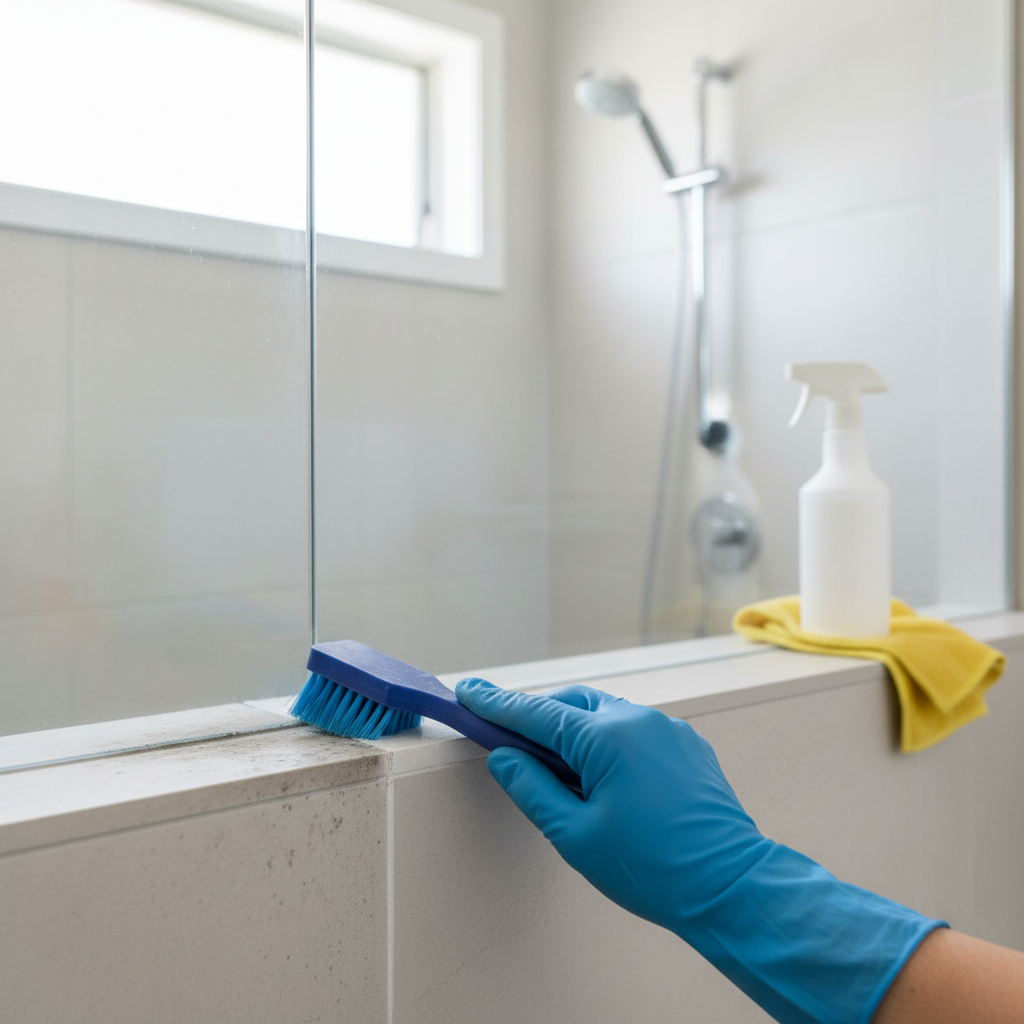
Tools and materials
Tools
- Old toothbrush or grout brush
- Spray bottle
- Rubber gloves
- Bucket of warm water
- Clean rags
Materials
- Bicarb soda
- White vinegar OR commercial grout cleaner (e.g. Selleys Grout Cleaner)
- Bleach (for severe mould only, last resort)
- Grout sealer (after cleaning)
Mouldy grout is the difference between a clean bathroom and a grotty-looking one. The good news is grout cleaning is one of the easiest, cheapest DIY jobs in the house, $5 of bicarb and 30 minutes for most bathrooms.
This is genuine DIY work in every Australian state. No plumbing or structural involvement.
The mould question
Black or grey staining in grout is mould. Black mould (Stachybotrys, Aspergillus) is a health concern in Aussie homes, especially for asthma sufferers and young children. Get it out, don’t paint over it.
If mould keeps coming back within weeks of cleaning, the cause is moisture trapped in the grout or behind the tile:
- Run the bathroom extractor fan during showers and for 30 minutes after
- Open the bathroom window after showering if possible
- Re-seal grout every 12 to 24 months
- Check waterproofing if it persists, a tiler or plumber can inspect
Recurring mould despite cleaning + ventilation usually means the membrane behind the tile has failed and moisture is wicking up through the substrate. That’s a re-tiling job, not a cleaning job.
Cleaning costs comparison
| Method | Cost | Time | Works on |
|---|---|---|---|
| Bicarb + vinegar | $3 to $5 | 30 minutes | Light to moderate stains, surface mould |
| Selleys Grout Cleaner | $15 | 20 minutes | Moderate stains, light mould |
| Bleach (diluted) | $4 | 30 minutes | Severe mould (last resort) |
| Steam cleaner | $100 to $400 (one-off cost) | Faster | Everything, no chemicals |
| Hire a cleaner | $80 to $200 | They do it | Everything |
| Regrout | $300 to $1,500 | Half day to two days | Beyond rescue grout |
Sealing grout (the step everyone skips)
After deep cleaning, apply a grout sealer. Two types:
- Penetrating sealer (Aqua-Mix, Mapei UltraCare): soaks into the grout, becomes invisible. Best for narrow grout lines.
- Surface sealer (water-based polymer): forms a thin film on top of the grout. Easier to apply but wears off faster.
A small bottle ($15 to $30) does a typical bathroom twice. Re-seal every 12 to 24 months. Costs you 30 minutes a year and the grout stays cleaner for far longer between deep cleans.
Step by step
-
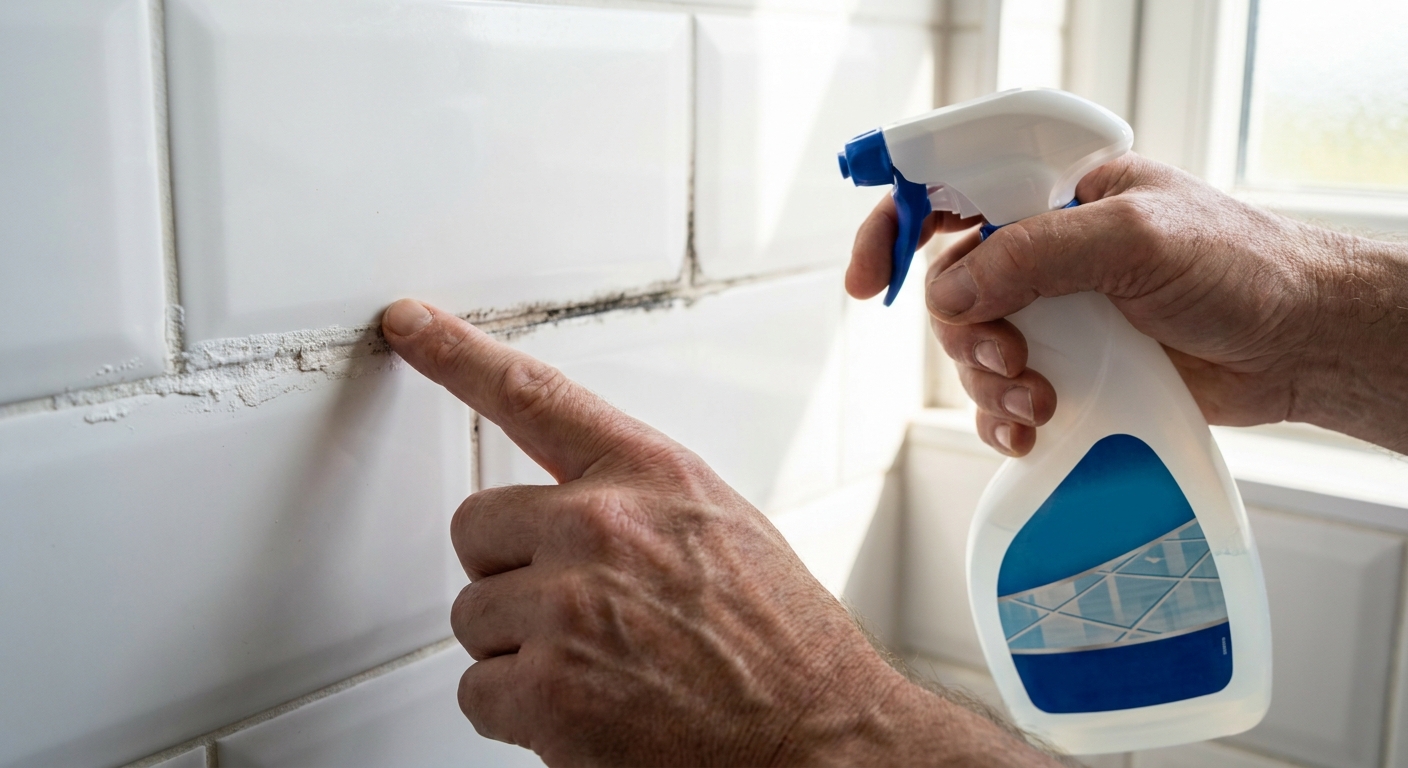
Surface dirt and soap scum wipe off with warm water. Stains that need scrubbing are usually mould (black or grey) or mineral build-up (white, chalky). Mould is biological and needs killing. Mineral build-up is chemical and needs dissolving. Different approaches.
-
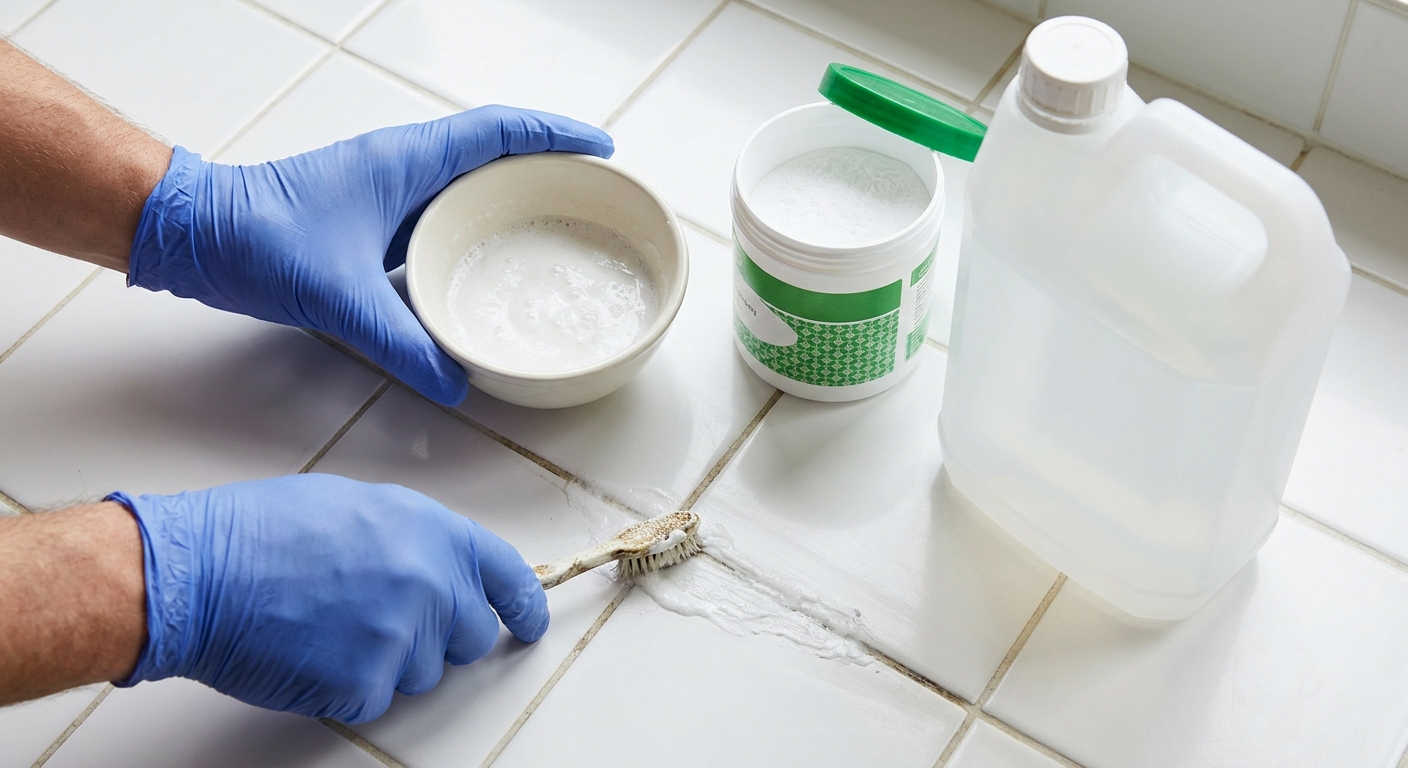
Mix half a cup of bicarb with enough white vinegar to make a thick paste. The reaction foams, that's fine. Apply to the grout lines with an old toothbrush. Leave for 10 to 15 minutes. The paste lifts most light to moderate stains and kills surface mould.
-
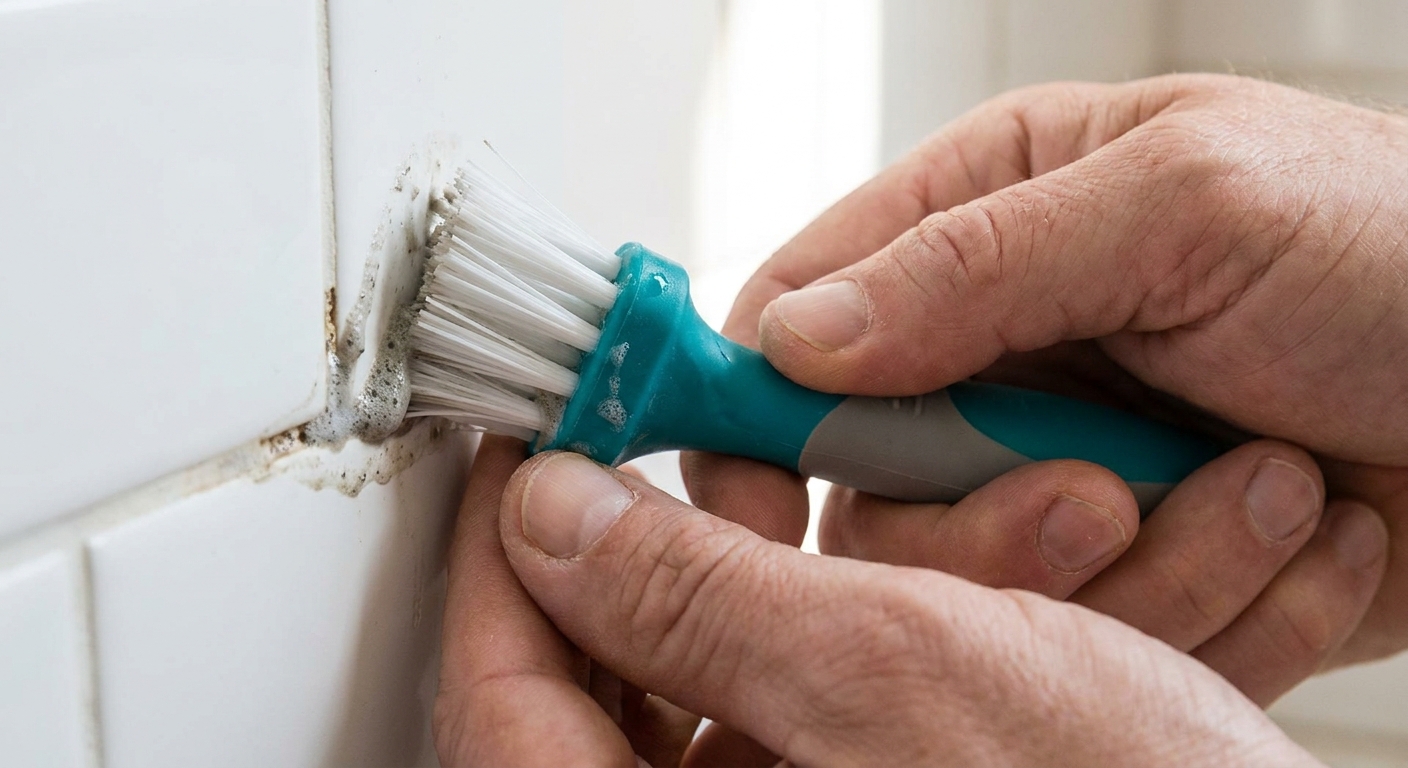
Work the bicarb paste into the grout with the toothbrush. Brush along the line, not across it. Apply firm pressure but don't dig, you're trying to lift stains, not dig grooves. Refresh paste as it dries out.
-
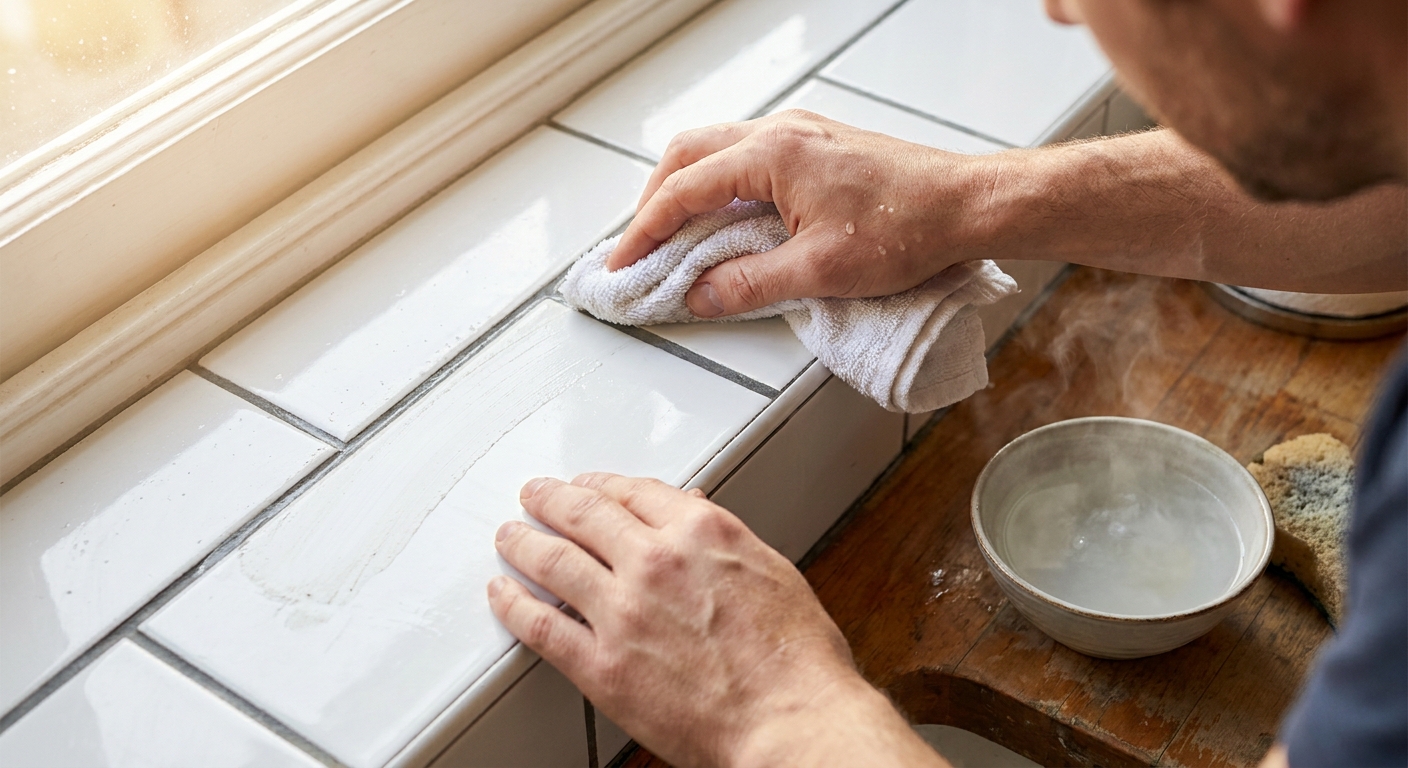
Wipe with warm water and a clean rag. Repeat the cleaning if you can still see staining. Dry the grout properly, wet grout is what allows mould to come back.
-
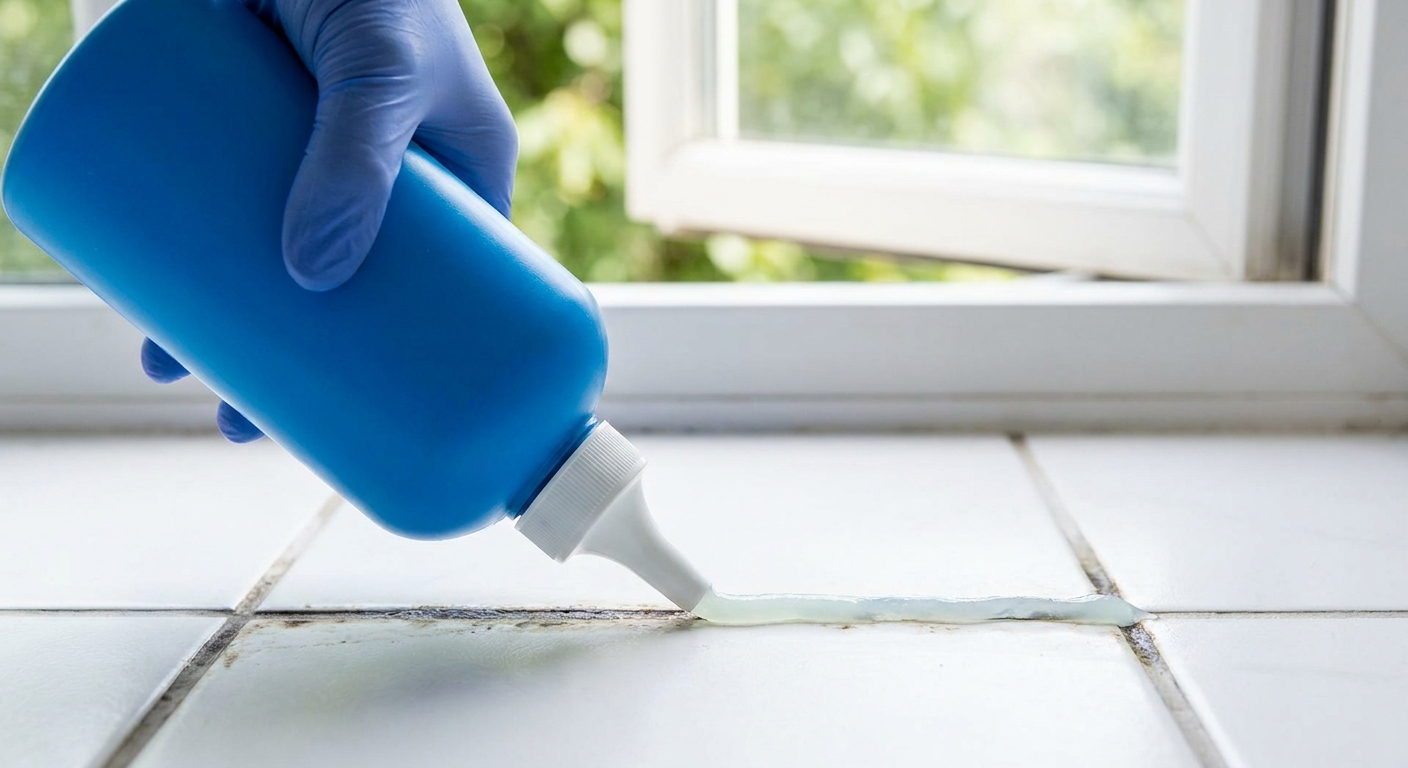
Dilute bleach 1 part to 4 parts water, apply to the grout lines, leave for 10 minutes, rinse thoroughly with clean water. Open windows; bleach fumes are nasty. Don't combine with vinegar or any other cleaner, the chemical reaction can release toxic gases.
-
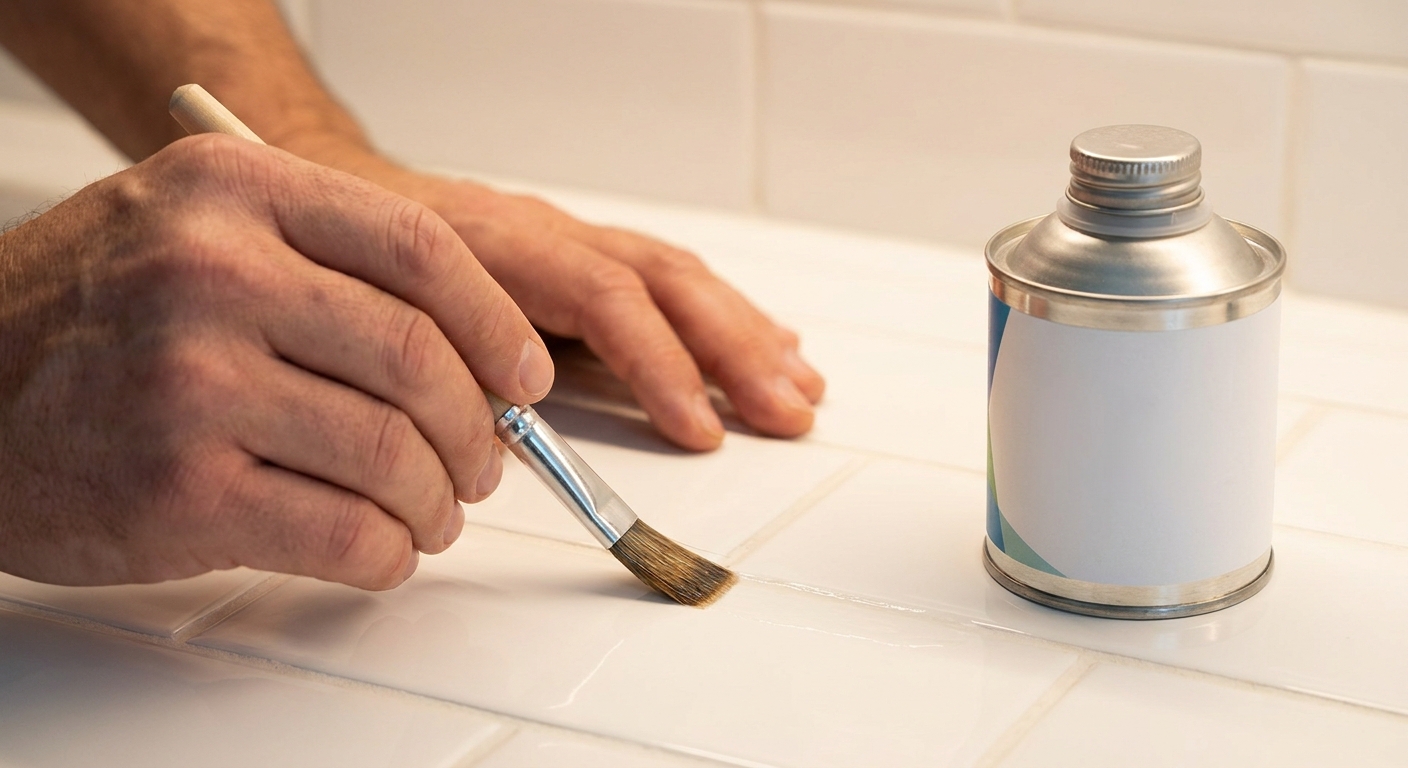
Once dry (24 hours after a deep clean), apply grout sealer with a small applicator brush. Sealer ($15 to $30) penetrates the grout and creates a water-resistant barrier. Re-seal every 12 to 24 months in a bathroom for best results.
Frequently asked questions
What's the best grout cleaner in Australia?
For light stains, bicarb and vinegar is hard to beat for cost. For tougher stains, commercial cleaners like Selleys Grout Cleaner, OzKleen Grout Cleaner, or Gumption work well. For mould specifically, Selleys Rapid Mould Killer or 30 Seconds Outdoor Cleaner (works indoors too).
Should I use a steam cleaner on grout?
Steam cleaners (Karcher, Bissell) work well for cleaning grout without chemicals. They kill mould with heat and lift dirt with pressure. Worth it if you have a lot of grout in your house, otherwise the bicarb method is cheaper.
Why does my grout keep going black?
Mould. Three causes: poor ventilation in the bathroom (extractor fan not used long enough after showers), unsealed grout absorbing water, or a waterproofing failure behind the tile letting moisture into the substrate. Address ventilation first.
When should I regrout instead of cleaning?
Regrout when the grout is cracked, missing in patches, or so deeply stained that cleaning doesn't help. Regrouting a small shower is $300 to $600 from a tiler. Full bathroom regrout $600 to $1,500. Beyond cosmetic, regrout if you suspect the existing grout is letting water through to the substrate.