
How to descale and clean a showerhead, restore the flow in 30 minutes
Mineral build-up cuts your shower flow long before the head fails. A 30-minute descale restores pressure and adds years of life. Here's the right way, with vinegar or commercial descaler.
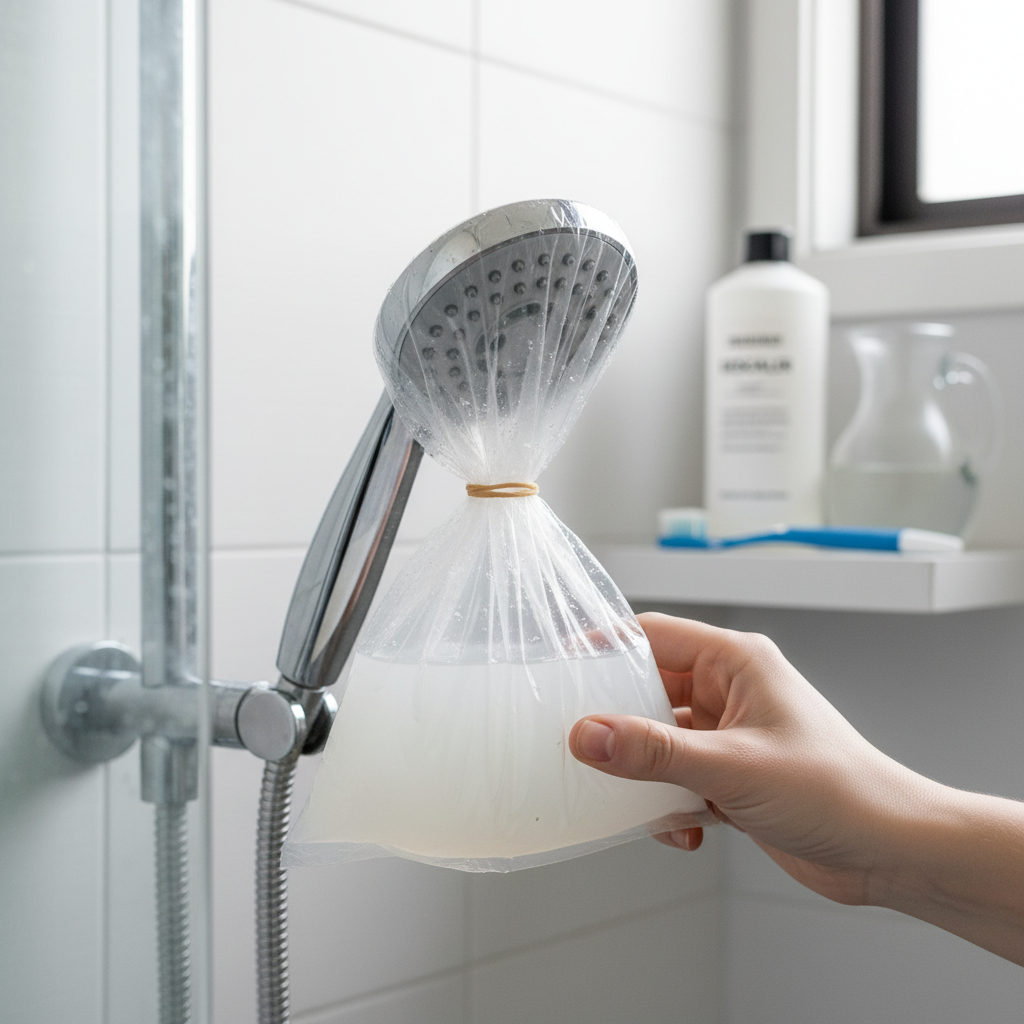
Tools and materials
Tools
- Plastic bag or container large enough to submerge the showerhead
- Rubber band or zip-tie
- Old toothbrush
- Soft cloth
Materials
- White vinegar (1L), OR commercial descaler
- Bicarb soda (optional)
A weak shower is rarely a pressure problem. 90% of the time it’s mineral scale in the head, the flow regulator, or the small filter at the inlet. Vinegar and 30 minutes fixes it.
This is one of the few plumbing jobs every Australian state lets a homeowner do without a licence, removing and replacing the head itself is generally treated as a fixture maintenance task. Anything beyond the head (the arm, the breech, the supply) is licensed plumber work.
Why your shower has scale in the first place
Australian water hardness varies dramatically by city:
- Hard water (over 200 mg/L CaCO₃): Perth, Adelaide, parts of regional VIC/NSW/QLD
- Moderate (60–200 mg/L): Brisbane, parts of Sydney
- Soft (under 60 mg/L): Sydney metro (Warragamba), Melbourne, Hobart
Hard-water areas need more frequent descaling. If you’re in Perth or Adelaide, plan for every 3–6 months. In Sydney metro, you can probably stretch to 12+.
When cleaning won’t fix it
If after descaling the head, cleaning the regulator, and clearing the filter the flow is still weak, the problem isn’t the head:
- The wall arm or breech is partially blocked → licensed plumber
- The mains pressure is low → check at another tap; if low everywhere, contact your water provider
- The pressure-reducing valve in your home is faulty → licensed plumber
- A new flow regulator is forcing the lower legal limit → some 3-star heads run at 9L/min minimum
If you’re consistently getting under 30 kPa or under 5L/min after descaling, get a plumber to inspect.
Step by step
-
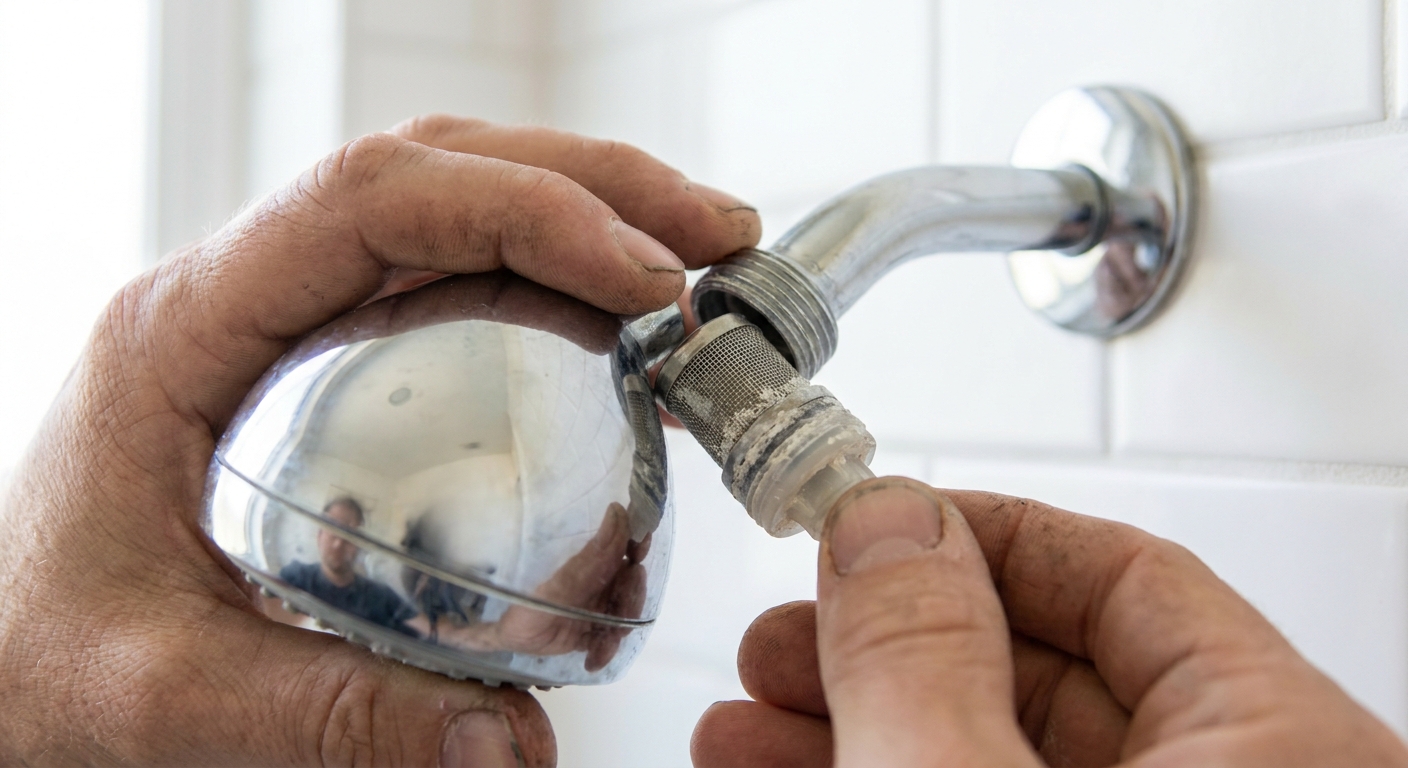
Unscrew the showerhead from the wall arm. Most new heads have a small mesh filter and a flow-regulator cartridge inside the inlet. Pull these out, if they're clogged with mineral build-up, cleaning these alone may restore pressure. Often the head itself isn't the problem.
-
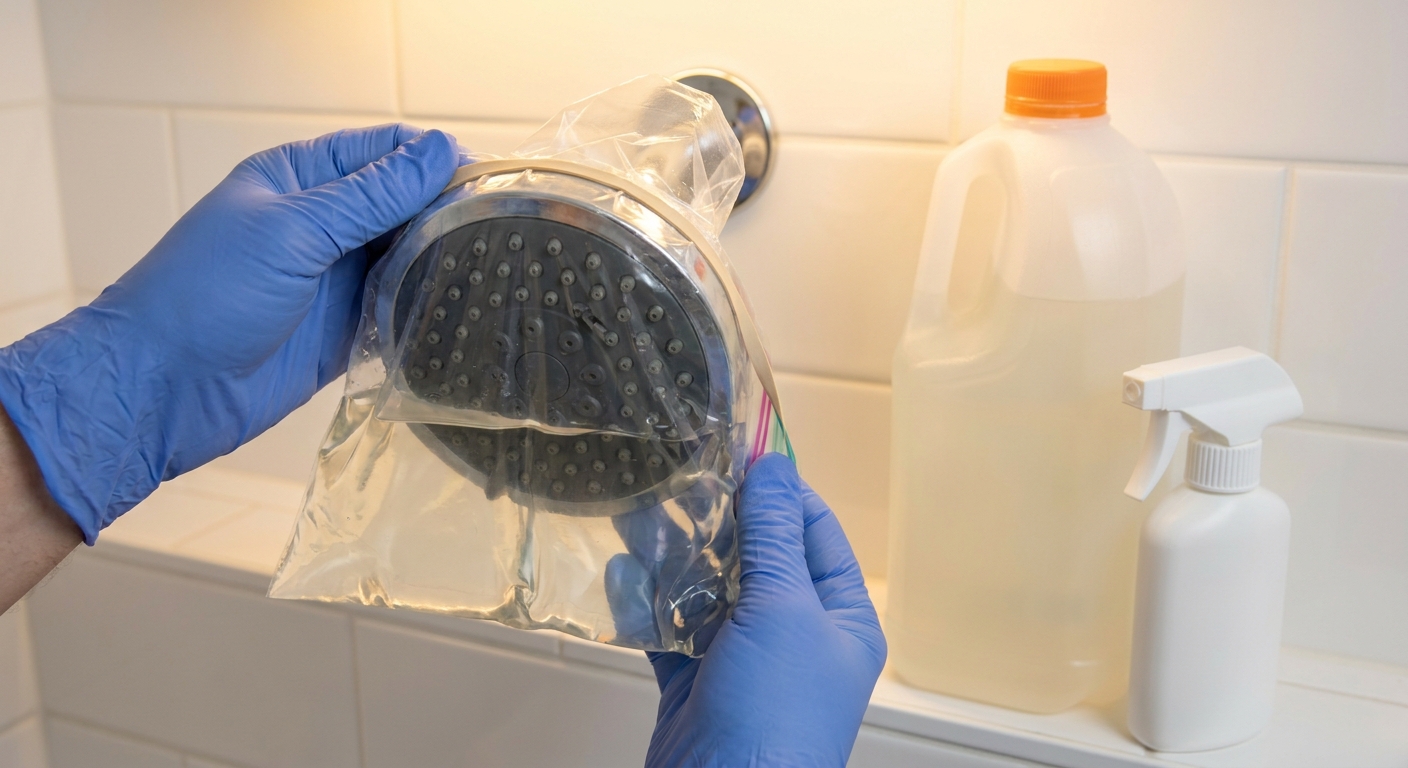
Fill a plastic bag with white vinegar (enough to submerge the nozzles when the bag is wrapped around the head). Wrap the bag around the head, secure with a rubber band. Leave for 30 minutes for light scale, up to 4 hours for heavy build-up. Commercial descaler (CLR, Selleys Limescale Remover) is faster, follow the label.
-
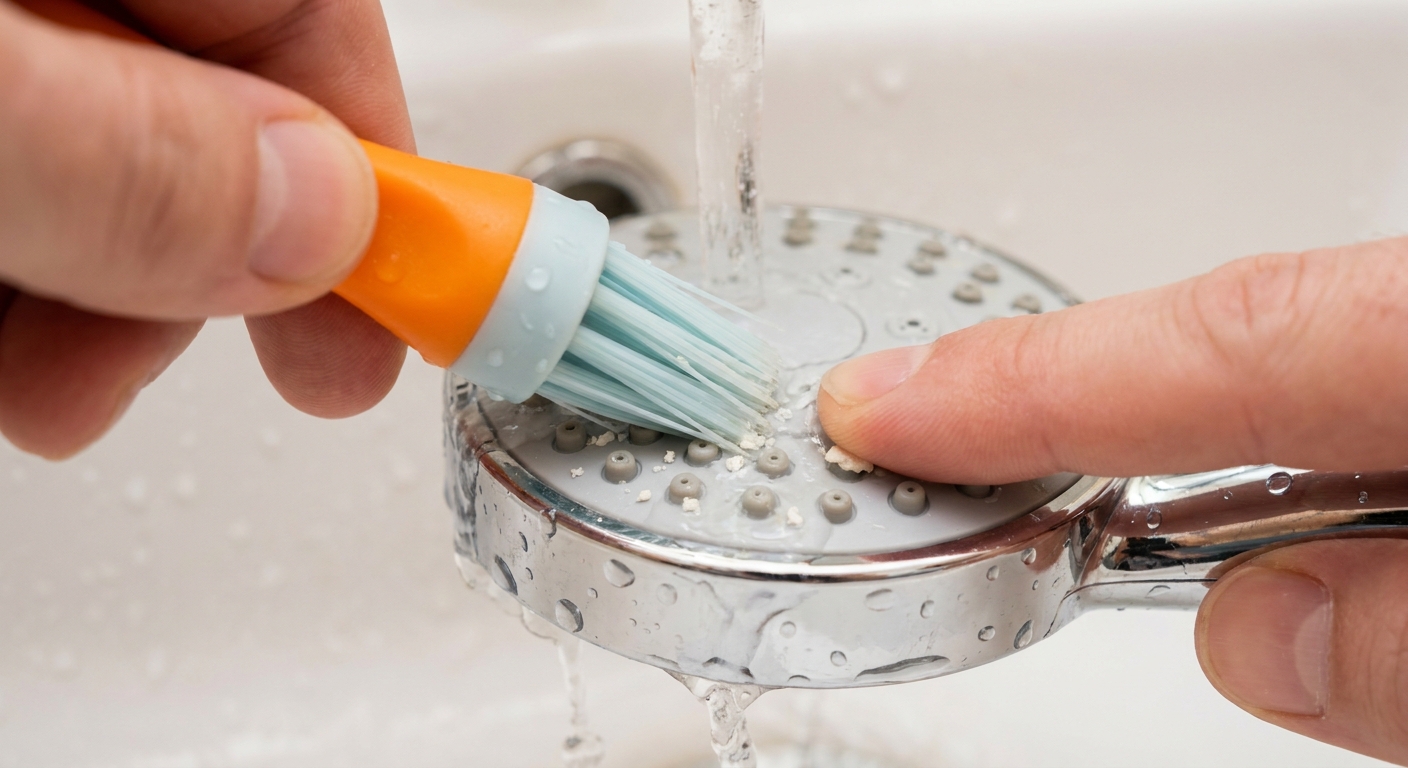
Remove the bag. Run the head under warm water. Use an old toothbrush to scrub the nozzles. For silicone-tipped nozzles, rubbing them with a finger usually pops the deposits out. For metal nozzles, the toothbrush works.
-
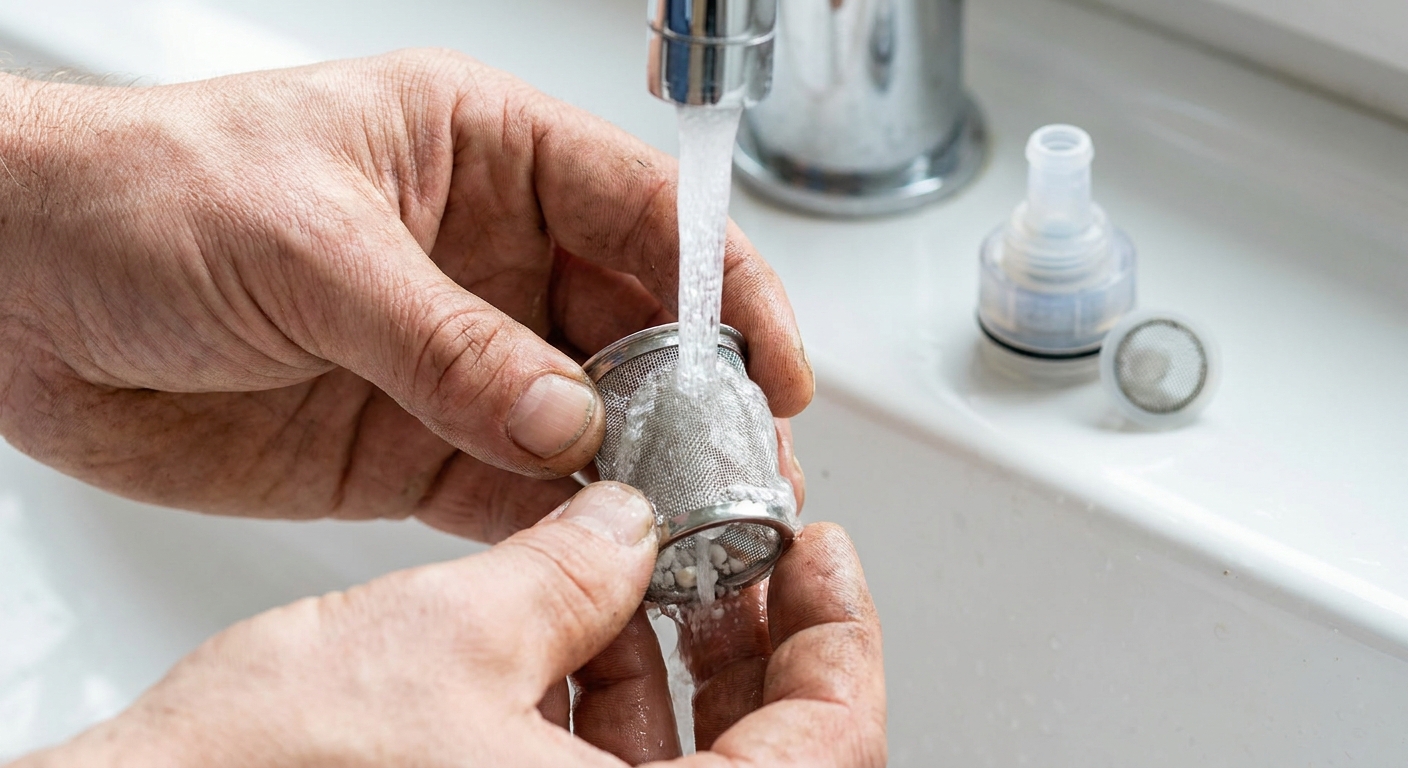
If the small mesh filter is clogged, rinse it backwards under the tap. Soak it in vinegar for 10 minutes if needed. The flow regulator cartridge sometimes has its own little filter, same treatment.
-
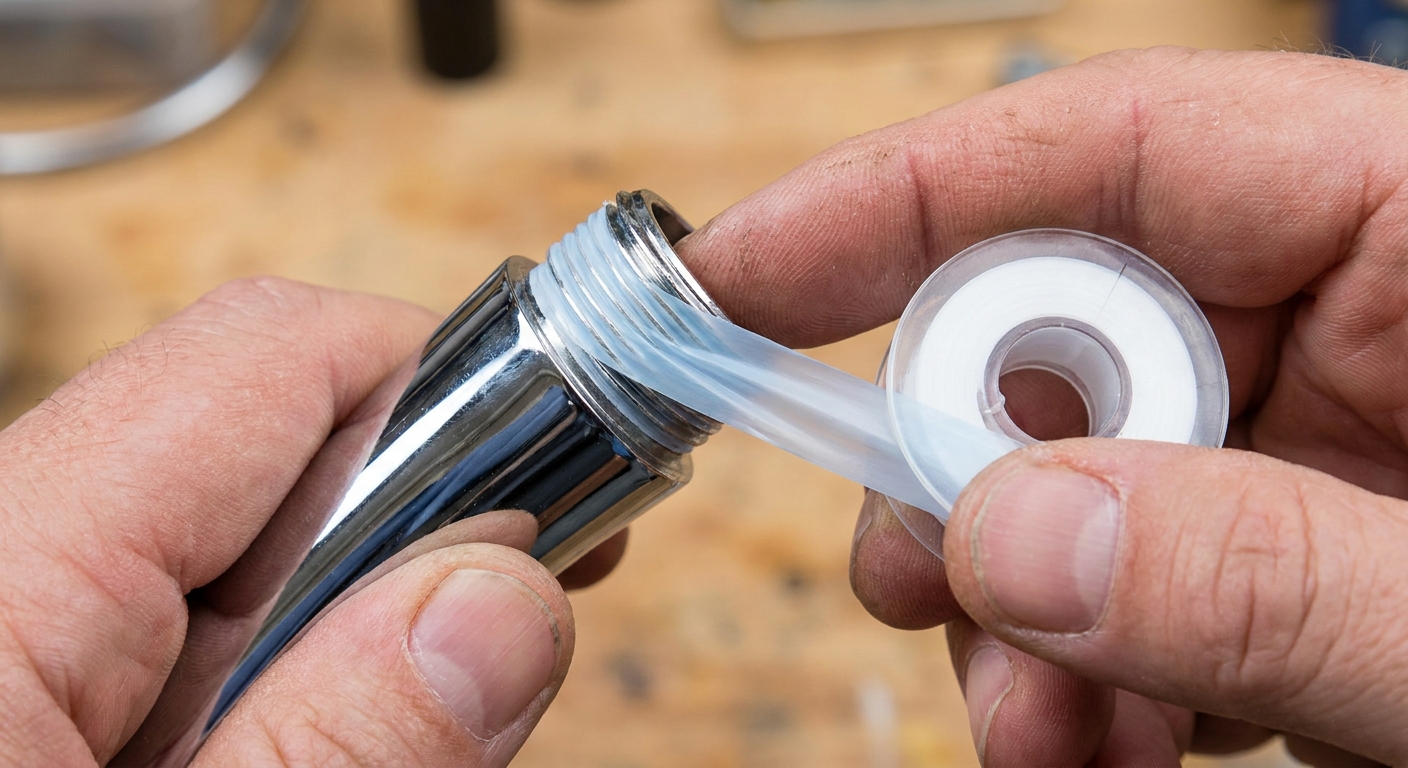
Before reinstalling, wrap fresh PTFE plumber's tape (5–7 wraps, clockwise as you look at the thread) around the head's inlet thread. This is the only seal, old tape is the #1 cause of post-clean leaks.
-
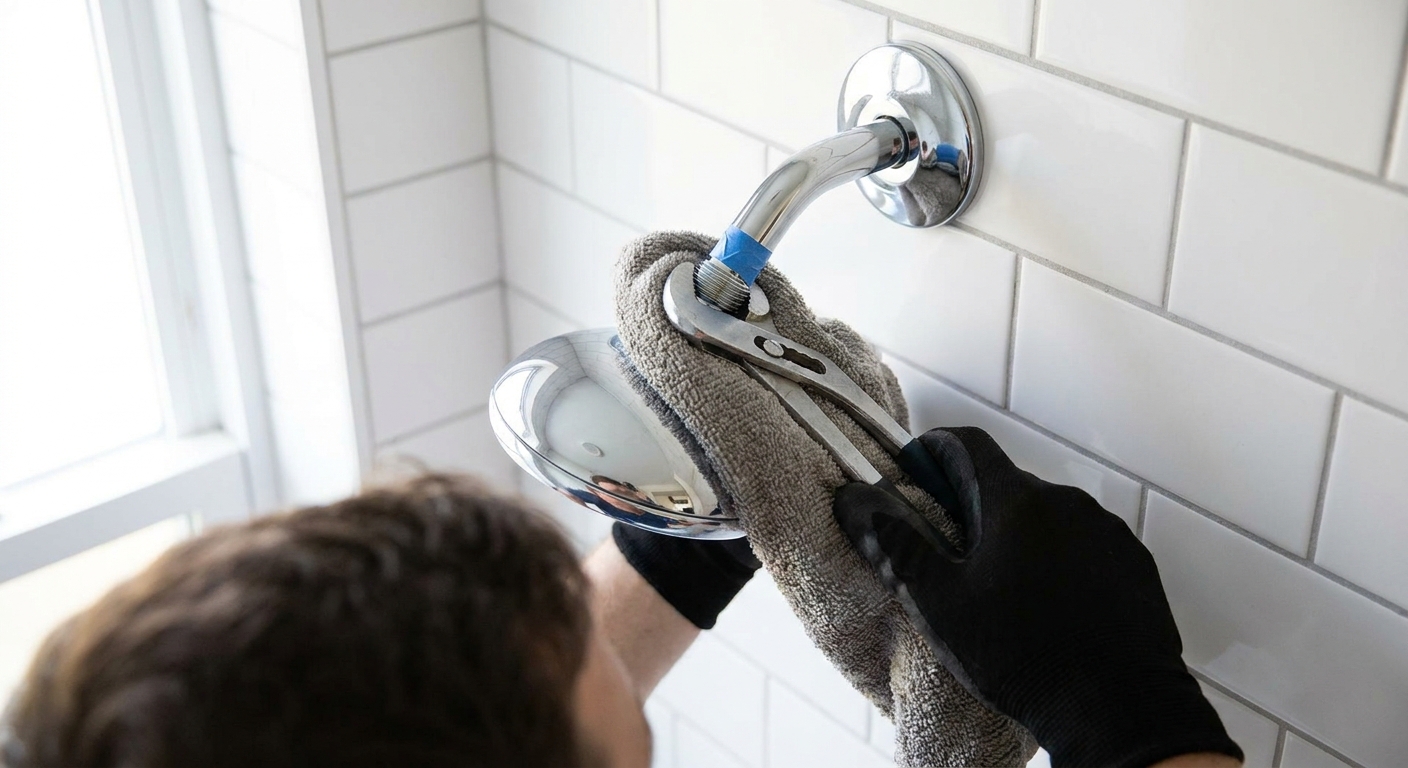
Screw the head back onto the wall arm. Tighten by hand first, then a quarter-turn with pliers (using a cloth to avoid scratching). Turn on the water. Check for leaks around the thread; if it drips, give it another quarter-turn. Run the shower for 30 seconds to flush any descaler residue.
Frequently asked questions
How often should I descale my showerhead?
Every 3–6 months in hard-water areas (Perth, Adelaide, parts of regional QLD/NSW). Every 12 months in soft-water areas (Sydney, Melbourne, Brisbane). If pressure drops noticeably, descale immediately, the longer scale sits, the harder it is to remove.
Vinegar vs commercial descaler, which is better?
Vinegar (5% acetic acid) handles light to moderate scale and is cheap. Commercial descalers are faster and stronger but more expensive and need rinsing well. For monthly maintenance, vinegar is fine. For neglect of 2+ years, commercial.
My showerhead is plastic, is vinegar safe?
Yes for most plastics. Avoid prolonged contact (over 4 hours) with rubber gaskets, they can swell. If your head has a brass body with a chrome finish, the vinegar is fine but don't leave it soaking for days.
The flow is still weak after descaling, what now?
Three options: (1) the wall-arm has its own filter that needs cleaning, turn off the water and remove the arm to check (licensed plumber territory in most states), (2) the building's water pressure is low, common in upper-floor apartments, fixable with a booster pump, (3) the showerhead's flow regulator is set lower than you want, newer Aussie regs cap most new heads at 9L/min.