
How to paint a door without brush marks or runs
Painting a door looks easy until you see the runs and brush marks two weeks later. Here's the trade-grade approach with the right paint, the right roller, and the right order.
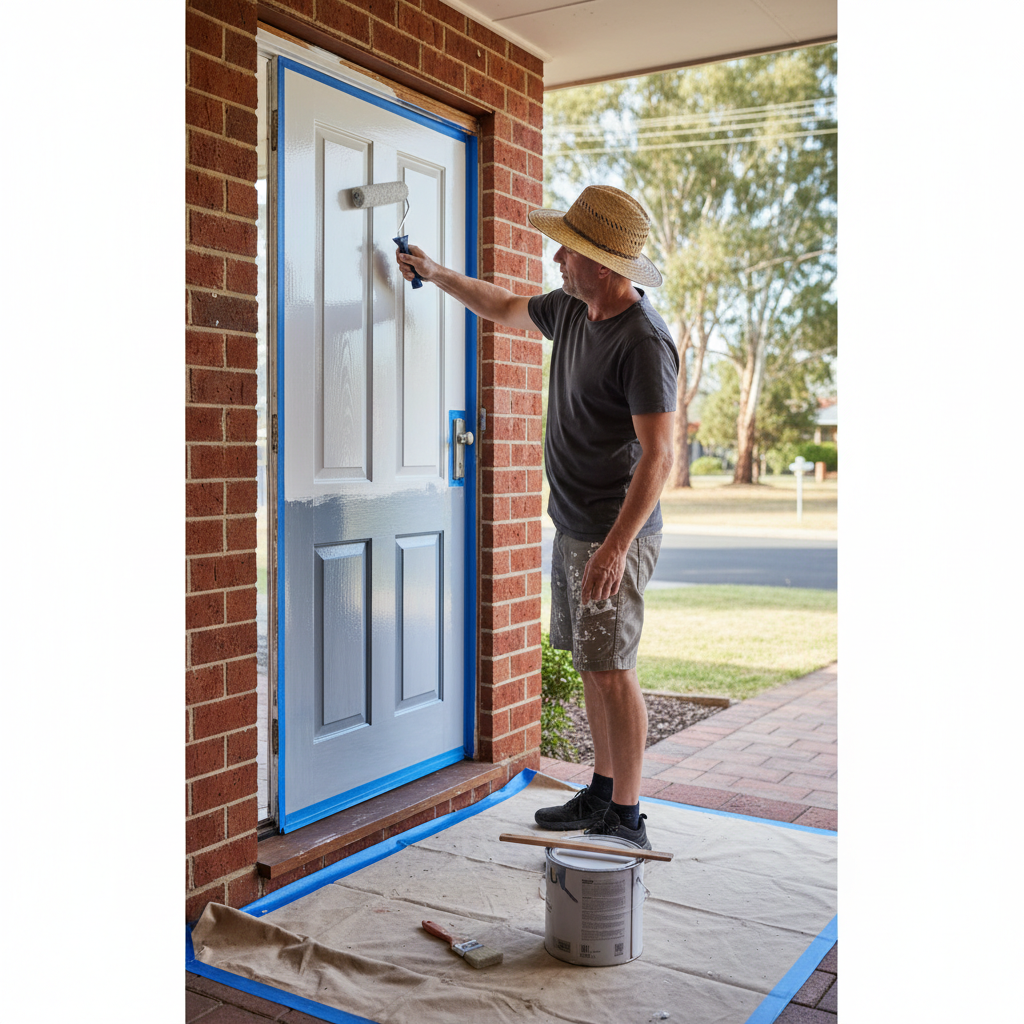
Tools and materials
Tools
- Mini foam roller (100mm)
- Quality angled brush (50mm)
- Painter's tape
- Drop sheet
- 120 and 240 grit sandpaper
- Tack cloth
- Screwdriver (to remove hardware)
Materials
- Water-based enamel paint (Dulux Aquanamel, Wattyl Solagard Enamel, Taubmans Endure)
- Primer/undercoat (if changing colour significantly)
- Mineral turpentine or methylated spirits (for cleanup)
A freshly painted door transforms a room. A badly painted door looks worse than the old one. The difference is patience and the right kit, $50 worth of tools and an afternoon.
The kit that decides the finish
- Mini foam roller: 100mm, low-nap. Leaves a perfectly smooth surface. The single most important tool for door painting
- Angled brush: 50mm, quality brand (Wooster Pro, Purdy XL). Cheap brushes shed bristles into your finish
- Water-based enamel: Dulux Aquanamel, Wattyl Solagard Enamel, Taubmans Endure Interior or Doors and Trim. ~$60 for a litre, does 2 to 3 doors
- 120 + 240 grit sandpaper: $5 total
- Tack cloth: $3, picks up sanding dust the brush can’t
That’s the kit. $80 to $100 for a doorful-quality job that lasts a decade.
When to call a painter
Paying a painter for a single internal door is rarely worth it ($150 to $250). Worth calling one when:
- The whole house needs repainting and they’re already on site
- Heritage doors with complex profiles where you want a sprayed finish
- Doors in stained timber where you want to keep the grain visible (different process, harder)
- High doors above 2.4m where ladder work makes it slow
- Exterior front doors with high UV exposure (oil-based or specialist exterior products)
Step by step
-
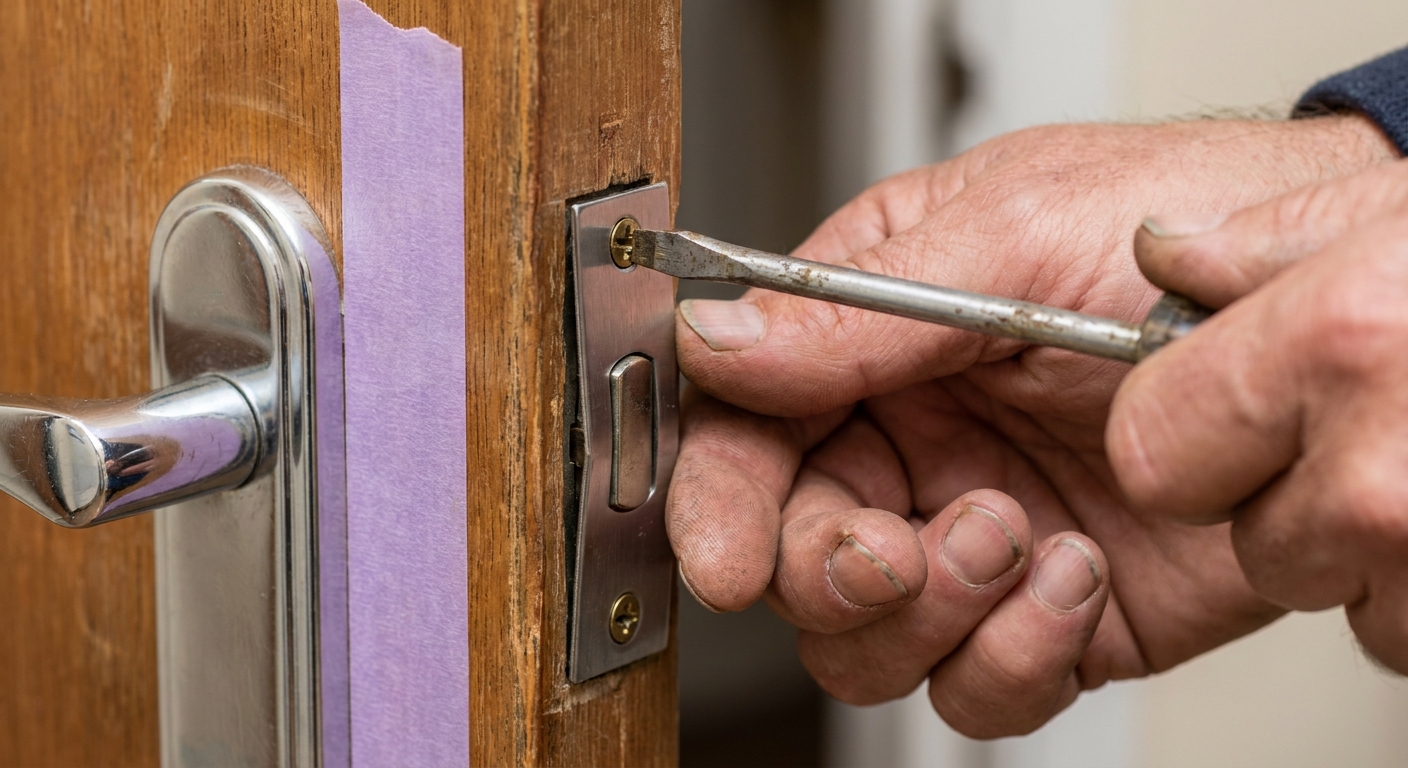
Remove the handle, latch face plate, hinges if you can. If you can't, mask them with painter's tape. Removing is cleaner; the hour you spend taking off and refitting hardware shows in the finish.
-
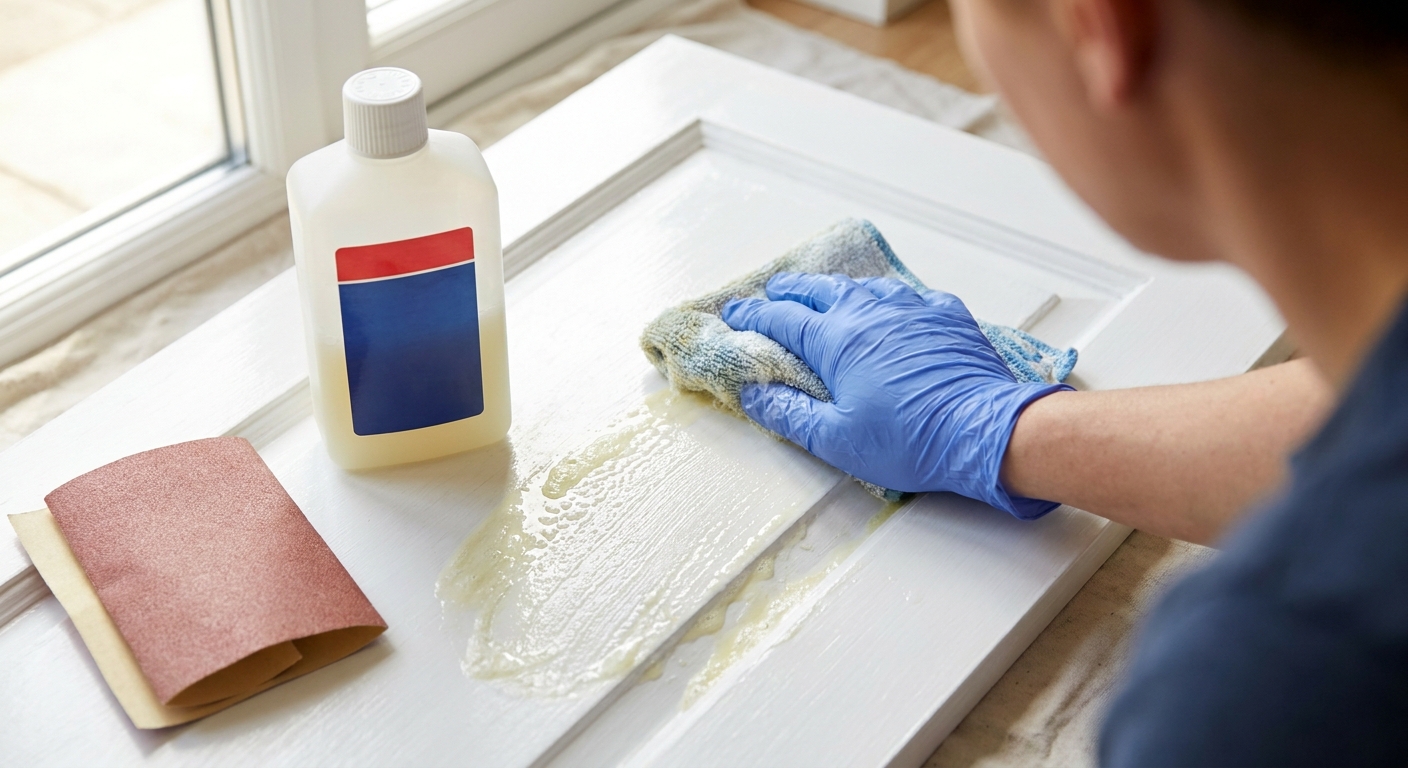
Wash the door with sugar soap to remove finger grease and grime. Let dry. Sand the whole surface lightly with 120 grit, then 240 grit. Sanding gives the new paint a key to bond to. Skip this step and your paint flakes within a year. Wipe with a tack cloth.
-
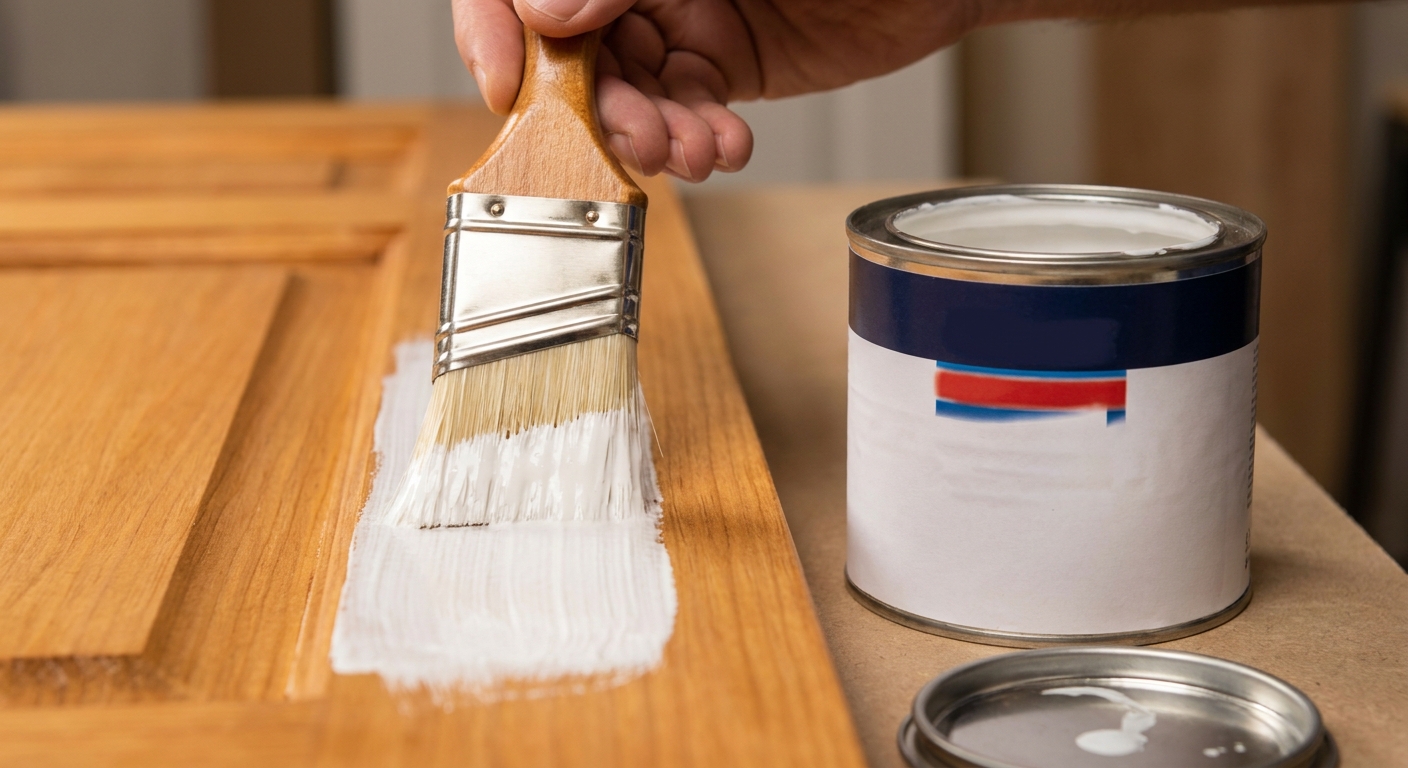
Going from dark to light, or onto bare timber, requires a coat of primer (Dulux 1-Step Prep, Zinsser BIN). Going light-to-light usually skips primer. Primer dries in 1 to 2 hours, then sand lightly before topcoat.
-
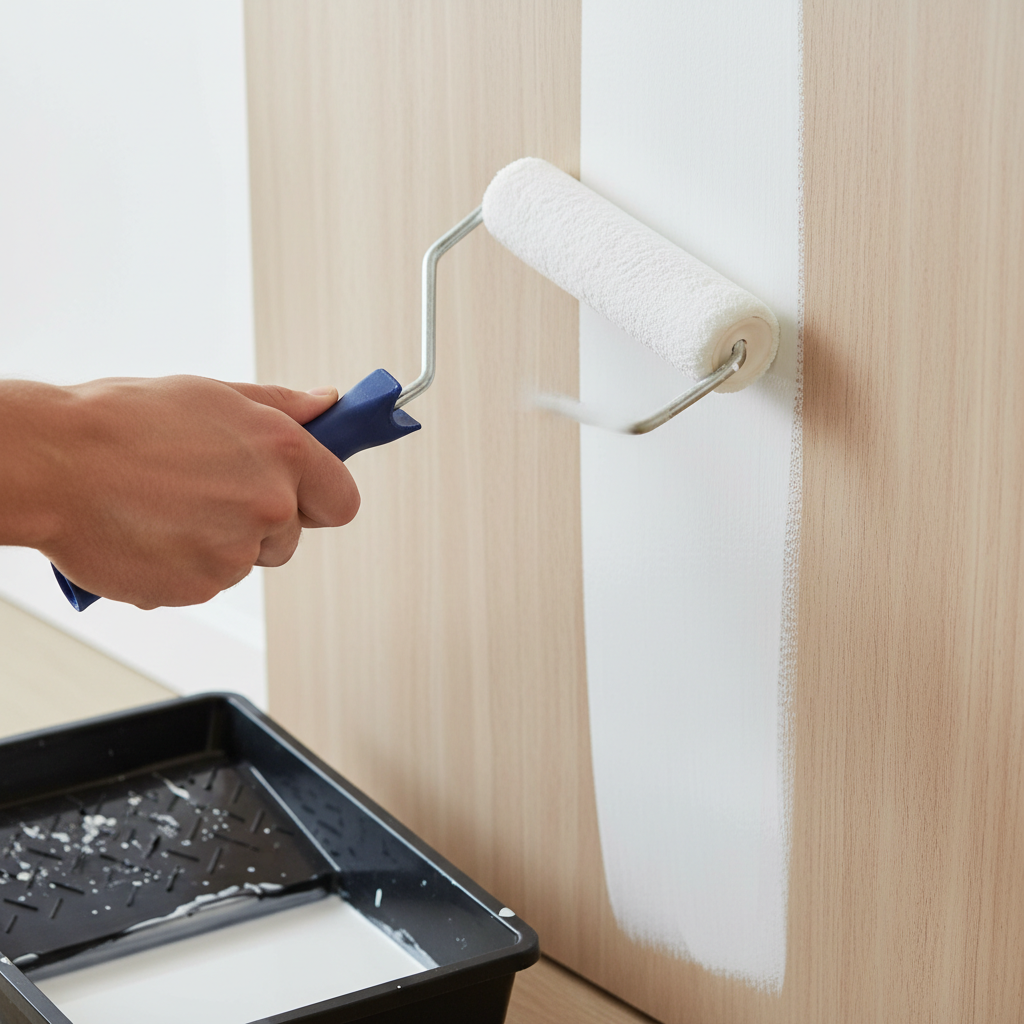
Use a mini foam roller for flat sections of the door. Roll on a thin even coat, going with the grain (vertical strokes on a vertical-grain door). Don't reload the roller too heavily, thin coats over multiple passes is better than one thick coat that runs.
-
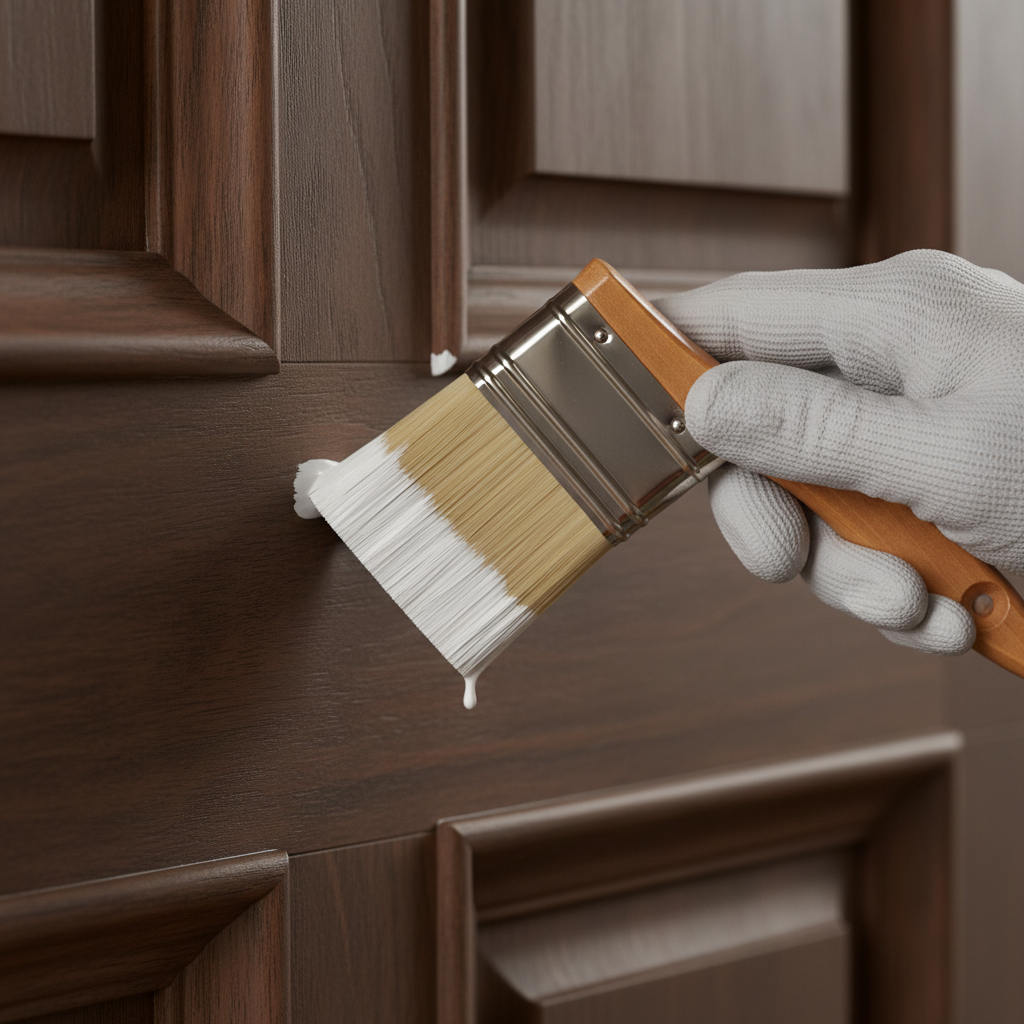
Use the angled brush for door mouldings, panels, and the edges where the roller can't reach. Work in the direction of the grain. Pick up drips and runs as you go, paint that's still wet smooths out, paint that's started to skin will leave marks.
-
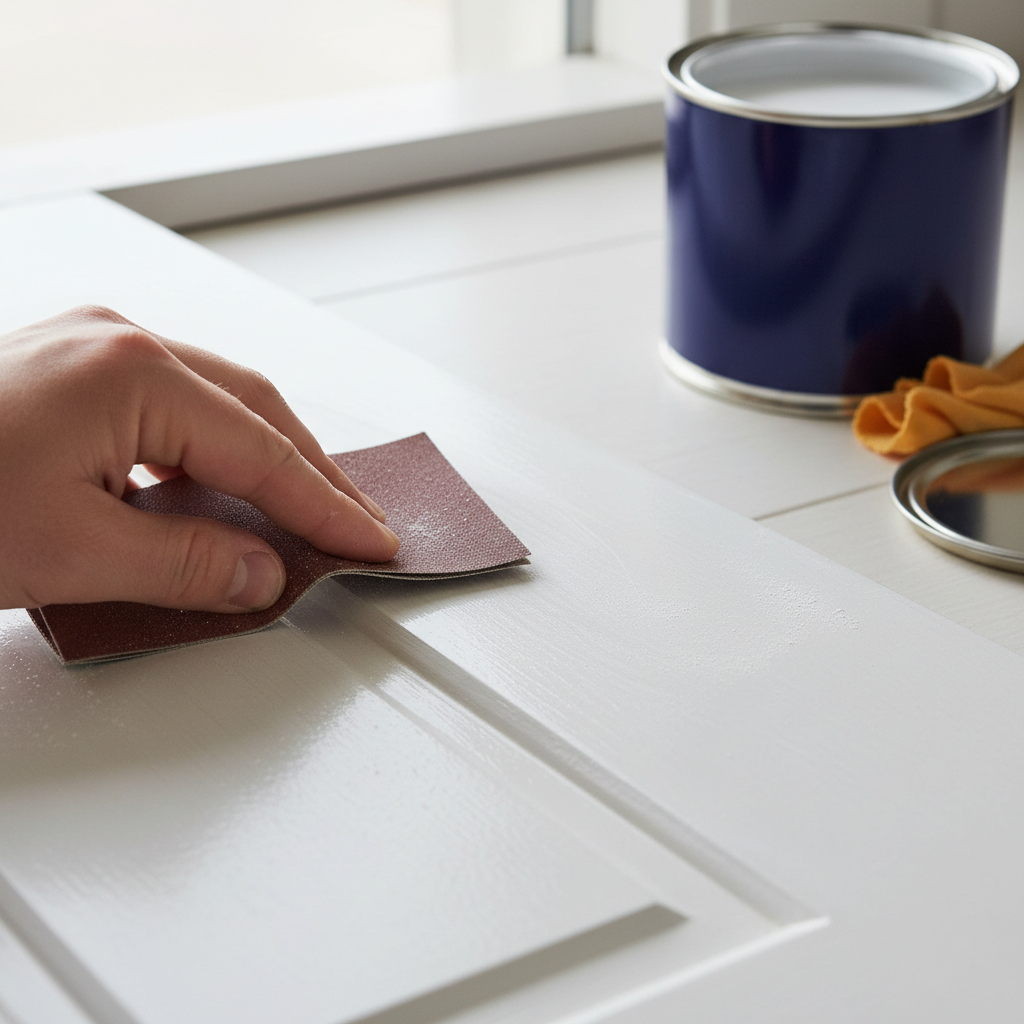
Most water-based enamels need 4 hours between coats (read the can). Lightly sand with 240 grit before the second coat, then a tack-cloth wipe. Second coat goes on cleaner because you're working over a smoother surface. Full cure takes 24 hours; don't refit hardware before then, or the paint sticks to it.
Frequently asked questions
Water-based vs oil-based paint for doors?
Water-based enamel (acrylic) is now the Aussie standard for internal doors. Better than oil for: easy cleanup, no yellowing, low odour, faster recoat times. Worse than oil for: very slightly less hard-wearing on doors that take a lot of knocks (front doors, kid's bedrooms). For 95% of doors, water-based wins.
How many coats does a door need?
Two coats is standard for like-colour repaints. Three coats for a big colour change (going to white from a dark colour, or vice versa). Never skip the second coat: water-based enamel doesn't hide brush marks until coat two.
Can I paint a door without removing it?
Yes, but it's harder. The bottom edge is a pain to paint, the latch side and hinge side both need separate steps, and drying without the door touching anything requires careful planning. If you have the option to remove the door and paint on sawhorses, do it.
What sheen for doors?
Semi-gloss is the Aussie standard. Hides hand prints best, easy to clean, has the slight sheen that says 'painted door'. Gloss is too shiny for most modern interiors. Matte stains badly with finger marks.