
Identifying asbestos in an Aussie home, what to look for and never touch
One in three Australian homes built before 1990 contains asbestos. Here's where it hides, how to identify it, and what to do (and never do) if you find it.
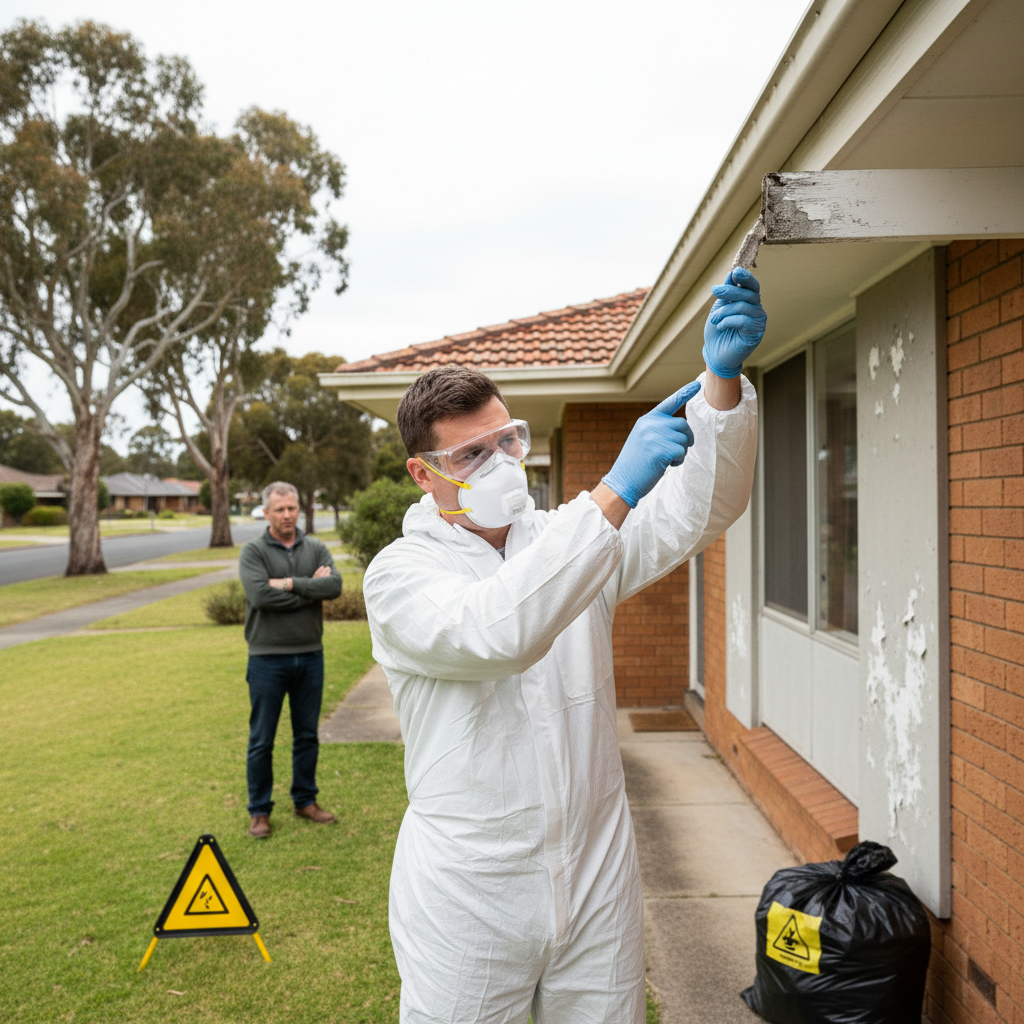
Asbestos is in roughly one in three Australian houses built before 1990. It killed over 4,000 Australians a year at the peak and continues to cause lung cancer, mesothelioma, and asbestosis decades after exposure. Identifying it correctly is the first step in keeping yourself and your family safe.
This is the most important DIY-adjacent topic for any Australian homeowner with a pre-2003 house. The article explains what to look for. It is NOT a guide to handling, removing, or disturbing asbestos. That requires a licensed assessor.
Where asbestos hides in Aussie homes
Most likely locations in houses built 1940s to 1990:
- Wall sheeting (especially “fibro” houses in the 1950s to 1980s)
- Eaves (the underside of the roof overhang)
- Roof tiles (corrugated cement, sometimes called “Super Six”)
- Vinyl floor tiles (especially 1960s to 1980s, 9-inch square or 12-inch square tiles)
- Carpet underlay in some older homes
- Behind kitchen splashbacks and around stoves (heat protection)
- Around hot water pipes as lagging
- Inside electric stove backings and switchboard mounts
- Backing on wall vinyl in bathrooms and kitchens
- Outside walls of garages and sheds (often sheet asbestos)
- Boundary fences between Aussie houses 1950s to 1980s
- Garden bed edging in some yards (the long thin cement-look strips)
- Drainpipes (old grey cement drainpipes)
The total list is far longer. If your house is pre-1990, assume any cement-look sheet material is asbestos until tested.
Visual cues (not definitive, but suspicious)
- Grey cement-look sheet board with subtle linear grain
- Slightly fibrous edge when broken (don’t break it deliberately to check)
- Often painted over, the asbestos is the substrate under the paint
- Heritage 1950s and 1960s houses with the “fibro” exterior cladding
- Outdoor sheds and garages with corrugated cement roofing
- Around old hot water systems with white or grey wrapping that looks like fabric or cardboard
- 9-inch square vinyl floor tiles (the size is the clue, 9 inches was a 1960s to 1970s standard)
Visual identification alone is unreliable. Only lab testing confirms.
What never to do
- Never drill, cut, sand, grind, or break suspected asbestos material
- Never high-pressure clean asbestos-roofed garages or fences
- Never burn any material that might contain asbestos
- Never compost asbestos garden edging in a worm farm or veggie bed
- Never DIY-remove asbestos without checking your state’s homeowner limits and using full PPE
- Never put asbestos in normal council bin pickup, every state has dedicated disposal sites
How testing works
- Engage a licensed asbestos assessor (search your state’s regulator register)
- Assessor takes small samples from suspected materials (uses PPE, wets the material first)
- Samples sent to a NATA-accredited laboratory
- Result in 3 to 7 business days
- Cost: $50 to $150 per sample, often $300 to $500 for a whole-house assessment of likely materials
If you’re buying or renovating an older Aussie home, a pre-purchase asbestos survey is some of the cheapest insurance money you can buy ($400 to $1,500 depending on house size).
Homeowner legal removal limits
| State | Homeowner DIY removal limit |
|---|---|
| NSW | Up to 10 m² of bonded asbestos, no friable |
| VIC | Up to 10 m² of bonded, must use licensed for any friable |
| QLD | Up to 10 m² of bonded |
| WA | Limited DIY allowed, registration with WorkSafe WA |
| SA | Up to 10 m² with safety controls |
| TAS | Up to 10 m² |
| NT | Up to 10 m² |
| ACT | All asbestos removal must be by licensed Class A or B removalist, NO homeowner DIY |
Above these limits, only Class A (friable) or Class B (bonded) licensed removalists.
What a licensed removalist costs
| Material | Cost (AUD) |
|---|---|
| Bonded asbestos sheeting (wall, ceiling, eaves) | $30 to $80 per m² removed |
| Roofing | $50 to $120 per m² removed |
| Pipe lagging (friable) | Class A removalist only, $1,000+ per linear metre |
| Floor tiles (where asbestos confirmed) | $40 to $100 per m² |
| Asbestos disposal (per tonne) | $300 to $800 |
The cost is real but the alternative is mesothelioma risk that may show up 30 years later. Don’t compromise on this.
Renovating an older home
If you’re renovating or extending an Aussie house built before 2003:
- Get an asbestos survey before any demolition
- Plan removal of identified asbestos before any other trades start
- Use a Class A or B licensed removalist
- Keep the removal certificate, your insurance will need it
- Inform any tradies on site about the asbestos status
Many home insurance policies refuse cover for damage related to disturbed asbestos. The survey + proper removal protects your insurance.
If you suspect asbestos exposure
If you’ve already disturbed material that turned out to be asbestos:
- Move out of the area
- Wet the material, don’t sweep or vacuum
- Cover with plastic sheeting and tape
- Call a licensed asbestos removalist for cleanup
- See your GP. Australian Mesothelioma Registry tracks exposures. Get on the register for any future monitoring
Exposure to asbestos is not a death sentence. The risk depends on dose, fibre type (white chrysotile vs blue crocidolite, etc.), and duration. But every avoided exposure reduces risk.
Government resources
- Asbestos Safety and Eradication Agency: national, plain-language guides
- State health departments: testing and removalist registers
- WorkSafe in each state: handling rules for tradies and homeowners
When in doubt, leave it alone and get it tested.
Frequently asked questions
How do I know if my house has asbestos?
Houses built or renovated before December 2003 (the national ban date) can contain asbestos. Pre-1990 houses are very likely to contain it somewhere. The only definitive way to know is laboratory testing of a small sample, taken safely by a licensed asbestos assessor.
Is asbestos safe if it's not disturbed?
Generally yes. Asbestos becomes dangerous when the fibres are released into the air, which happens when material is drilled, sanded, cut, broken, or weathered. Asbestos sheeting in good condition behind paint, intact and not crumbling, is low risk. The risk is in the disturbance.
What does asbestos look like?
It doesn't look distinctive. Asbestos cement sheeting (the most common form in Aussie houses) looks like grey cement board. Wall and ceiling lining, eaves, fences, garage walls. Vinyl floor tiles up to the 1980s often contained asbestos. Pipe lagging looks like cardboard or fabric wrapping. Only lab testing confirms it.
Can I remove a small amount of asbestos myself?
In most states, homeowners can legally remove up to 10 m² of bonded asbestos at their own home. But: full PPE required, sealed disposal in approved bags, and disposed only at licensed asbestos receival sites. The risk and disposal hassle usually make it cheaper and safer to hire a licensed asbestos removalist ($30 to $80 per m²).