
How to hang a picture so it stays straight and the wall stays clean
The ten-minute job that goes wrong in five different ways. Aussie-grade guide to picture hanging on plaster, brick, and concrete, with the right fixings for each.
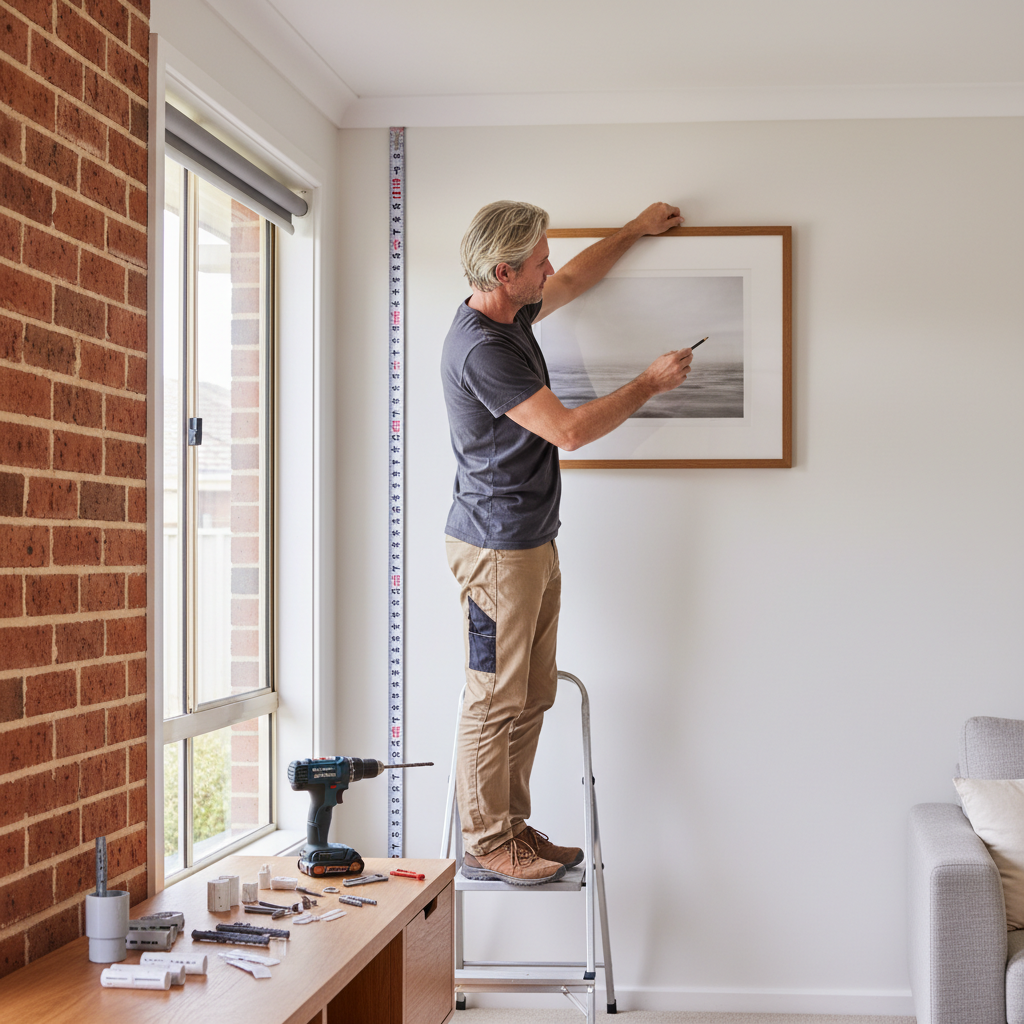
Tools and materials
Tools
- Spirit level (or a phone level app)
- Pencil
- Tape measure
- Hammer (for picture hooks)
- Drill with masonry bit (for brick or concrete)
- Stud finder (for heavy pictures on plaster)
Materials
- Picture hook rated for the weight
- Wall plug + screw (for masonry)
- Toggle bolts (for hollow plaster on heavy frames)
Picture hanging is the lowest-stakes DIY task in the house and the one most often done badly. The wrong fixing pulls out of the wall in a week. The right one holds for decades. The difference is ninety seconds of planning.
This is genuine DIY work in every Australian state. The wall stays the wall; nothing touches plumbing, electrical, or load-bearing structure.
The five fixings that cover 95% of pictures
- 3M Command strip, frames under 2kg on flat painted plaster
- Single-pin picture hook, frames 2 to 5kg on plaster
- Double-pin picture hook, frames 5 to 15kg on plaster
- Toggle bolt, frames 5 to 25kg on plaster where no stud is behind
- Wall plug and hook screw, brick or concrete walls, any weight up to 30kg
Pick the right one and the job’s done before the kettle boils.
When to bring in a chippy
Almost never for picture hanging. The exceptions:
- A wall of gallery frames where alignment matters, a chippy with a laser level does it faster
- Very heavy mirrors (over 30kg), a French cleat needs proper measuring
- A pre-1900s lath-and-plaster wall, brittle and tricky
- Drilling into a wall you’re not sure of (asbestos sheeting is common pre-1980s, get a professional sampler in first before drilling)
Otherwise, kettle, pencil, hook, ten minutes.
Step by step
-
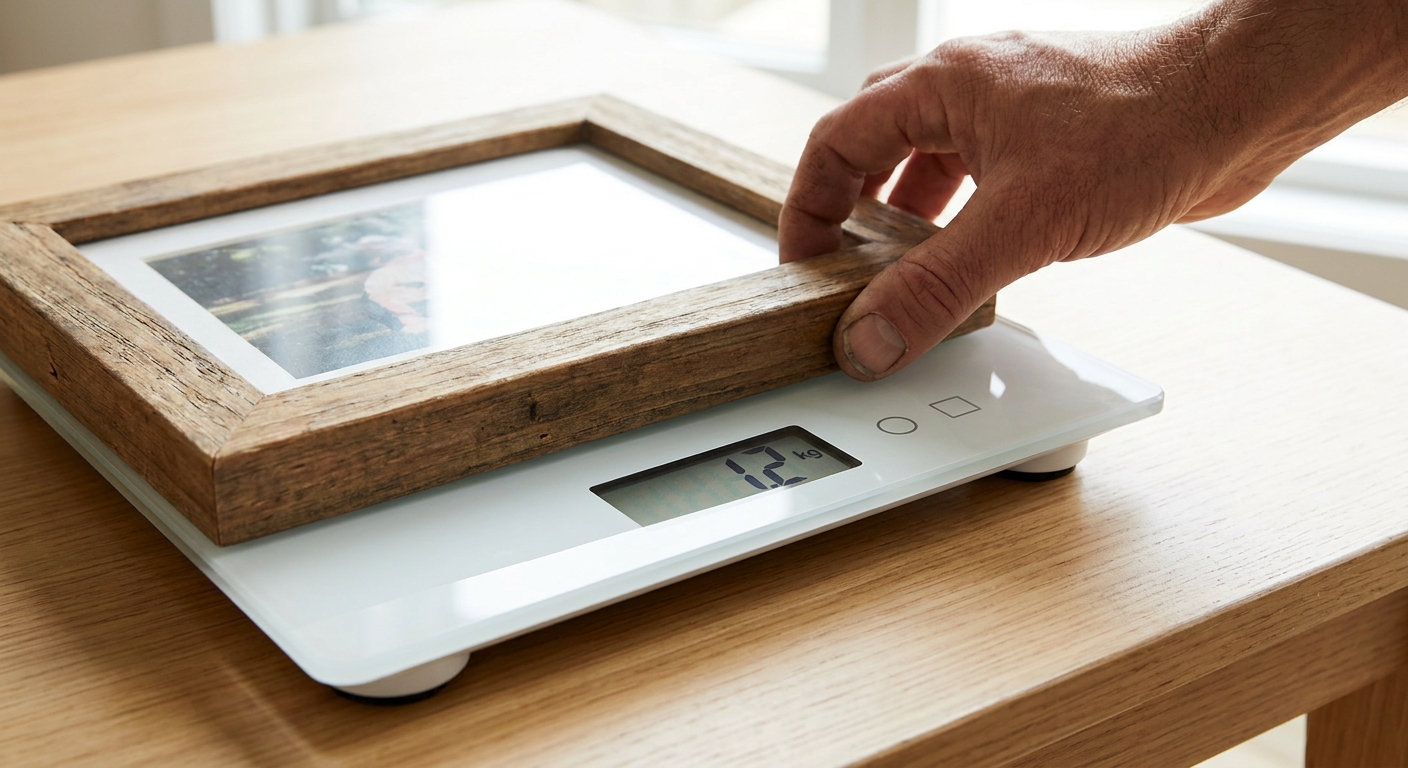
Bathroom scales work fine. Most domestic frames are under 5kg and take a single hook. Heavier frames (mirrors, art prints in heavy timber) need 2 hooks or a French cleat. Going over the hook's rated weight is how walls get damaged.
-
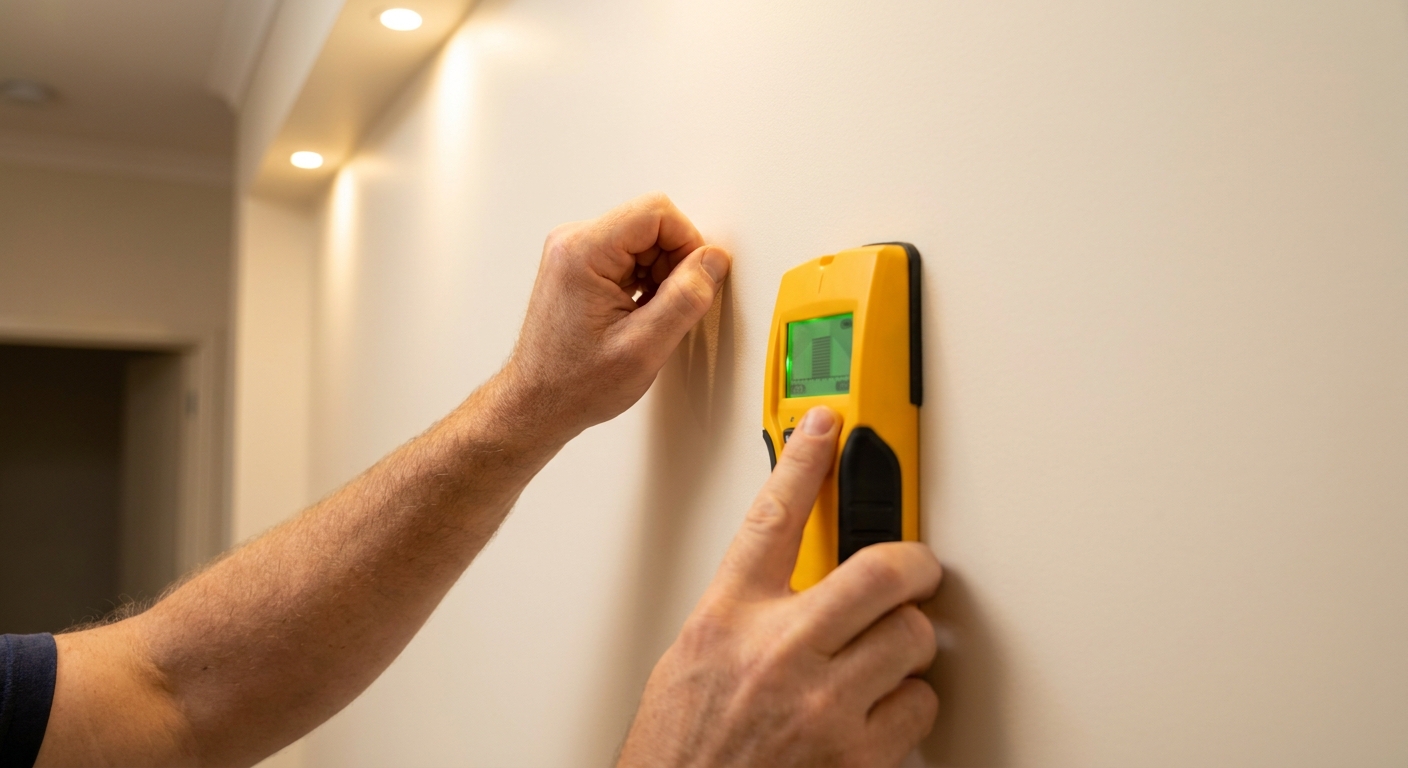
Knock on the wall. A hollow sound means plasterboard with a stud cavity behind. A solid thud means brick or concrete. Older Aussie houses are usually solid brick interior walls; newer ones (post-1980s) are typically plasterboard on stud frames. Each wall type needs a different fixing.
-
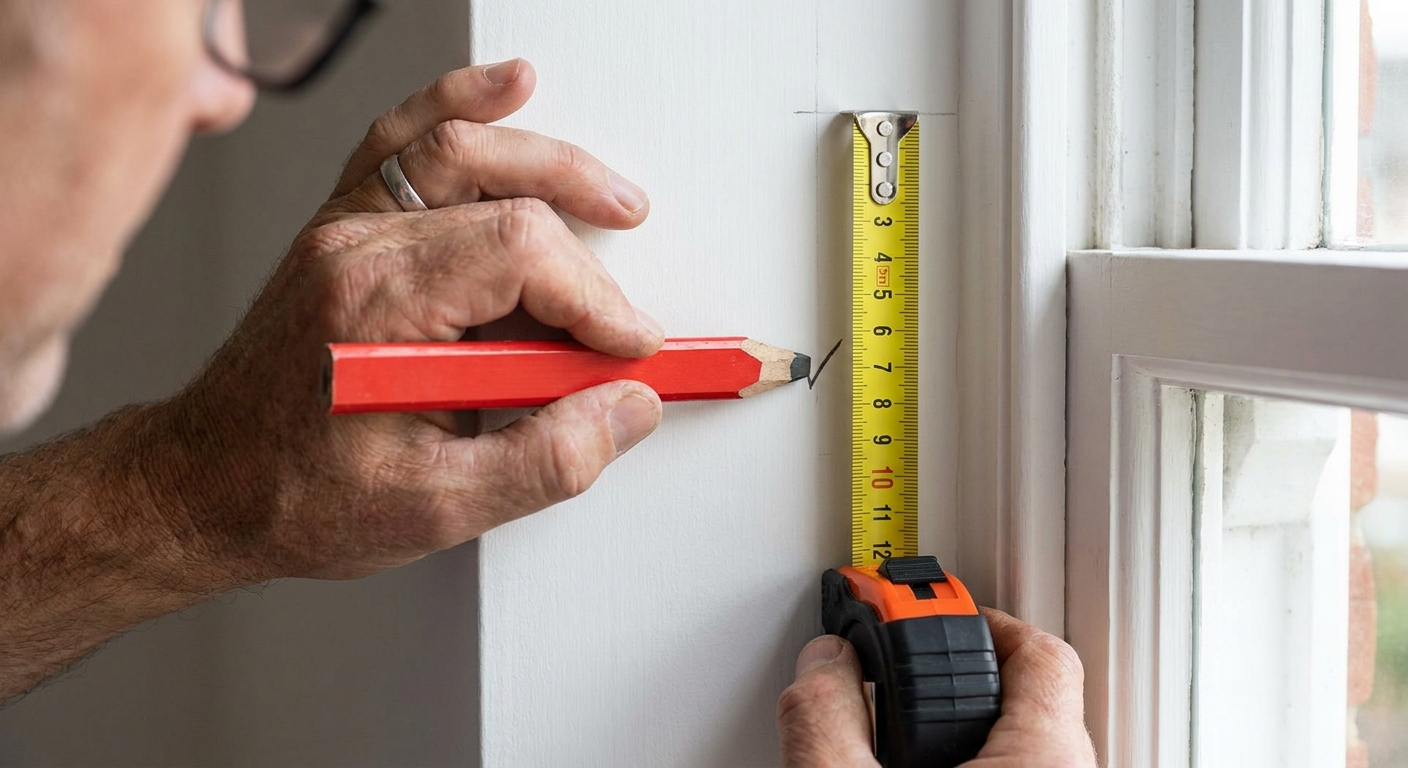
Hold the picture against the wall where you want it. Step back. Adjust. Mark the top edge with a light pencil line. Measure from the top of the frame down to where the hanging wire sits when you lift it (taut). Subtract that from your line. That's where the hook goes.
-
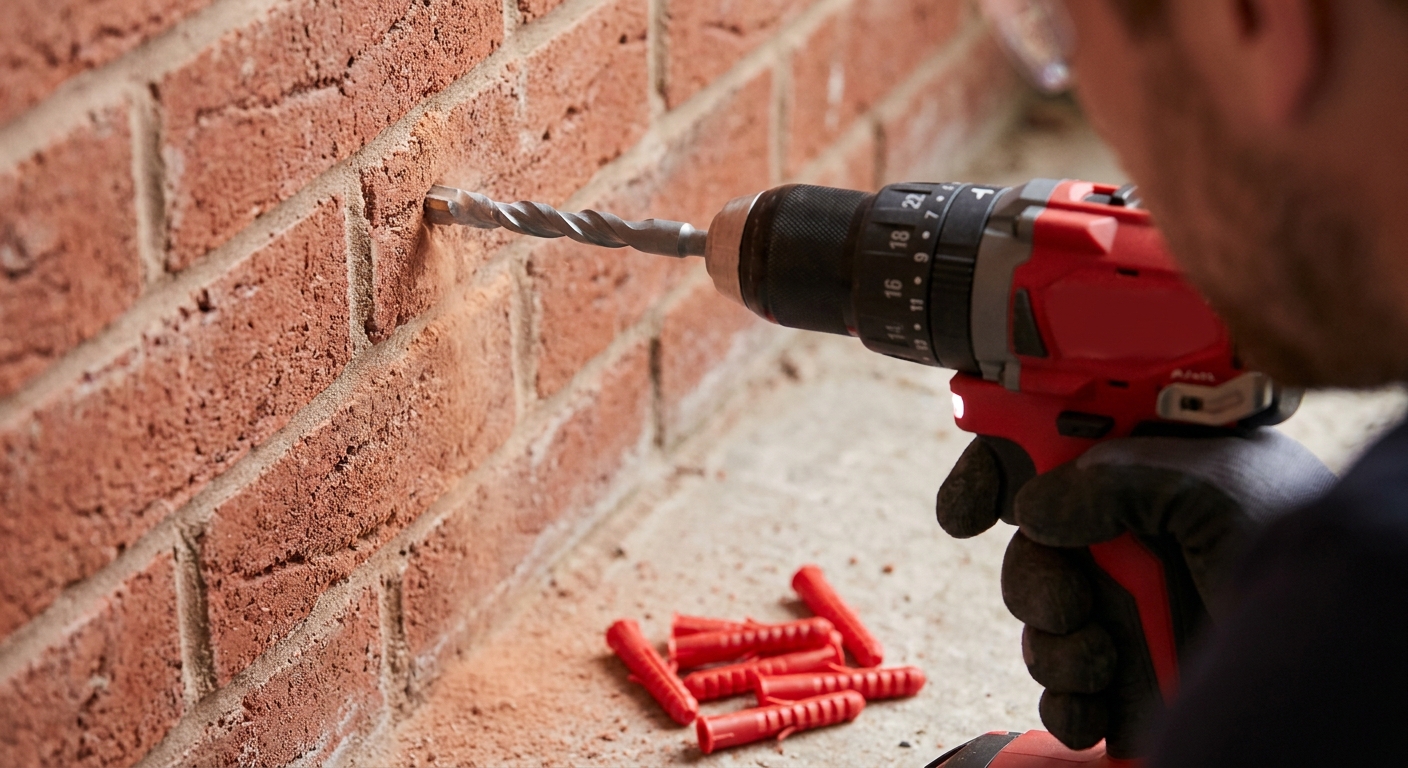
Plasterboard, light picture: push or hammer in a picture hook with its tiny pin. Plasterboard, heavy picture: use a stud finder, drill into the stud with a wood-screw, or use a toggle bolt for hollow cavity. Brick or concrete: drill with a masonry bit, push in a wall plug, screw in a hook screw. Don't overdrill the hole, plugs need to grip.
-
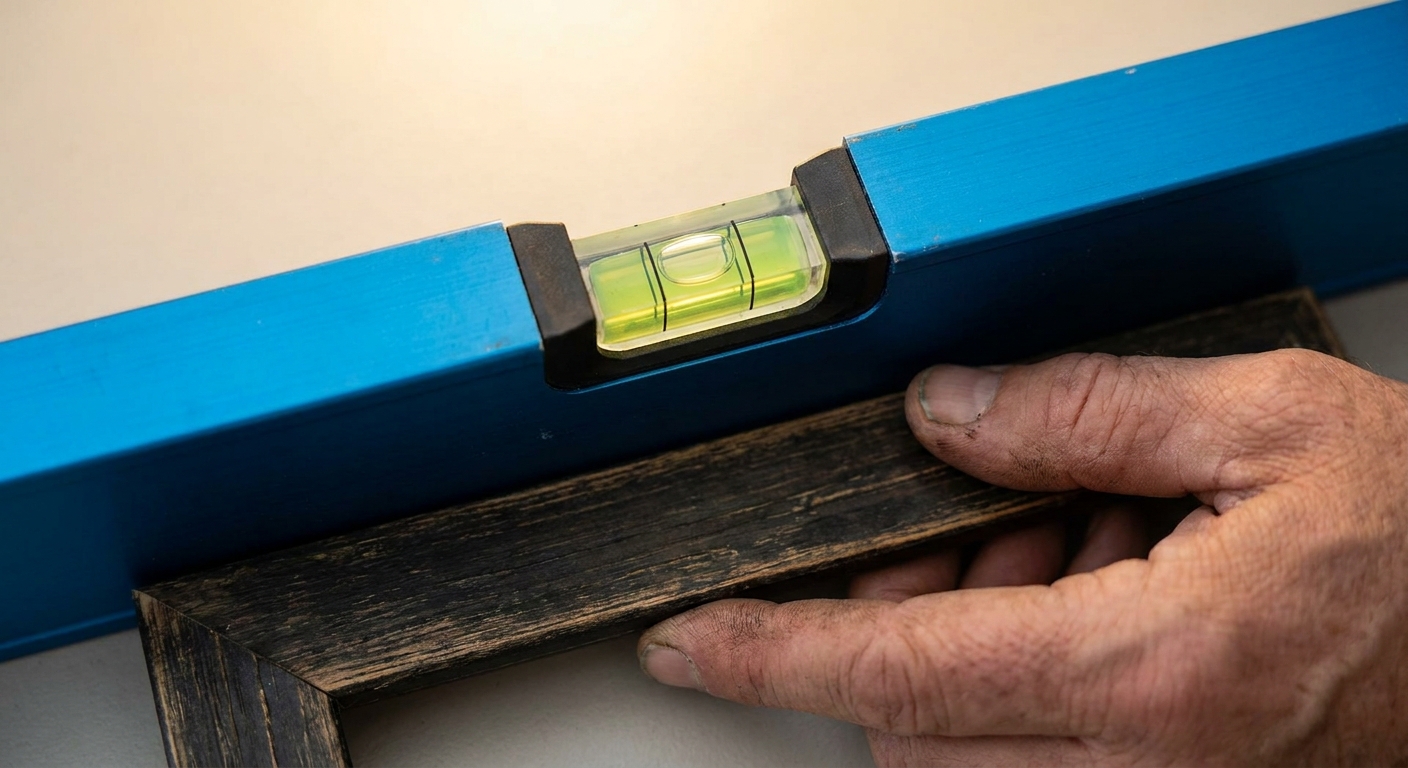
Hang the picture. Step back. Use a spirit level (or your phone's level app) across the top of the frame. Adjust the wire on the back if needed, never crowbar the hook to fix a wonky frame, that's how holes get bigger.
-
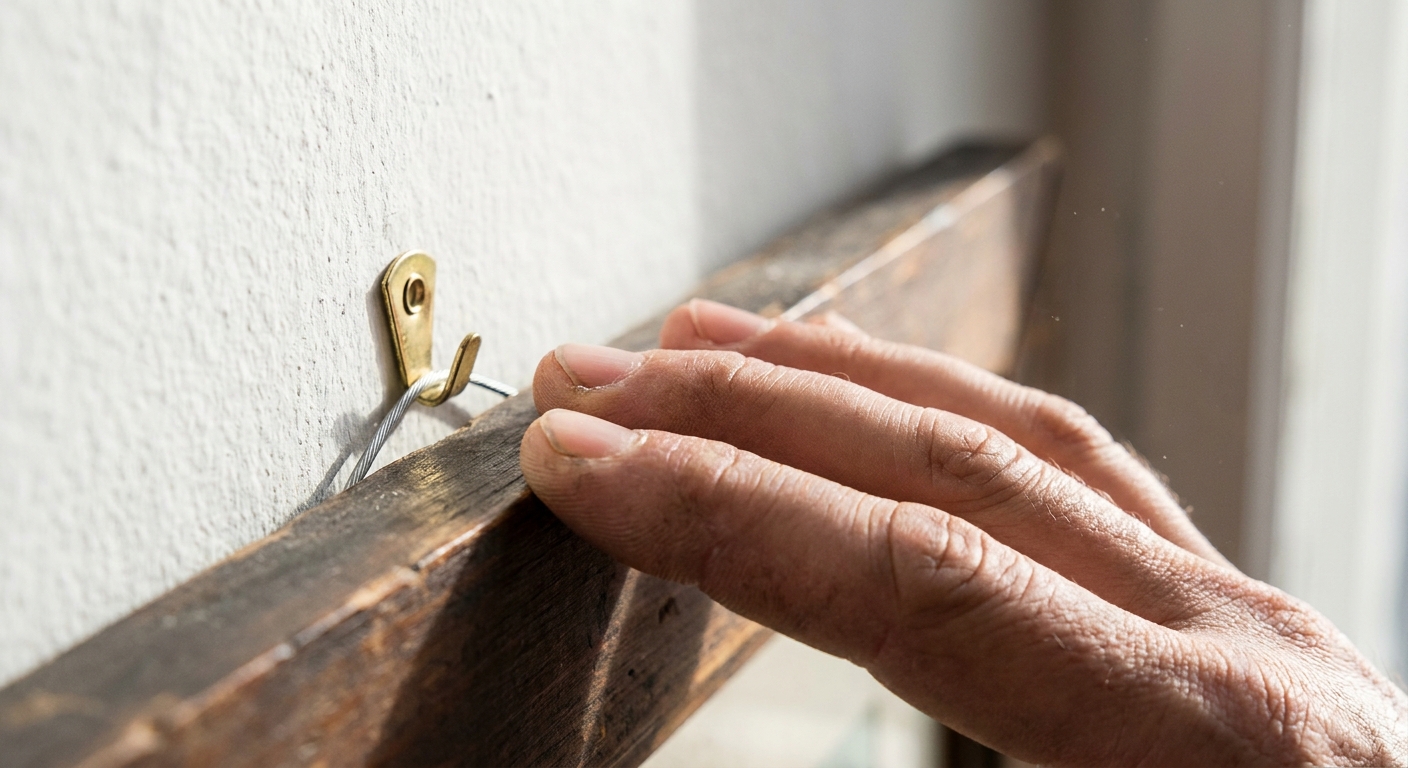
Press down gently on the top of the frame. If anything moves, the fixing's not seated. Pull the picture off, check the hook is fully into the wall, and rehang. For valuable or breakable pieces, leave them off the wall for 24 hours after hanging to make sure the fixing holds, especially with toggle bolts.
Frequently asked questions
What weight can a picture hook hold?
Standard single-pin picture hooks hold 5–10kg. Double-pin hooks hold 15–20kg. Triple-pin hooks hold up to 30kg. The packaging tells you. Going over the rated weight, even by a little, is the #1 cause of pictures falling off walls.
How do I hang a picture on a brick wall?
Drill with a masonry bit at the same diameter as your wall plug (usually 6mm for a #8 plug). Push the plug flush with the wall. Screw a hook screw into the plug. The plug expands as the screw goes in, locking everything in place. Without the plug, the screw just spins.
My plaster wall keeps cracking around picture holes, what's wrong?
Either you're using too much force with the hammer, or the plaster's old and brittle. Switch to self-adhesive hooks (3M Command) for light frames. For heavier ones, use a stud finder and screw into timber, that's stronger than any plaster fixing.
How high should I hang a picture?
Standard gallery rule: centre of the picture at eye level, around 145–155cm from the floor for the average Australian. Above furniture (sofa, sideboard) leave a hand's gap between the furniture top and the bottom of the frame.