
How to hang an internal door, the right way
Hanging a door looks simple. Doing it so the door closes flush, latches first time, and doesn't bind is harder. Here's the trade-grade approach for an Aussie internal door.
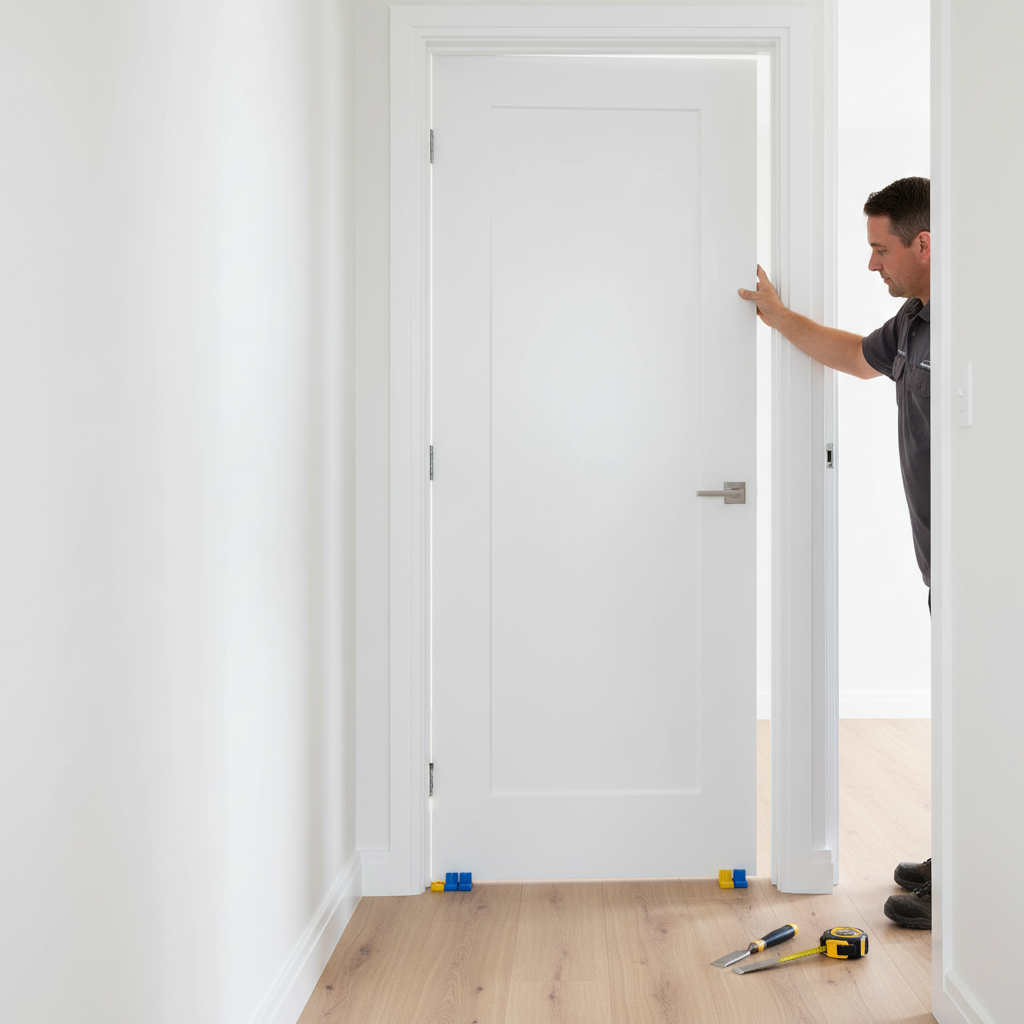
Tools and materials
Tools
- Drill with bits
- Chisel set
- Hammer
- Pencil
- Spirit level
- Tape measure
- Combination square
- Cordless drill / impact
- Door wedges
- Sandpaper
Materials
- Internal door (standard Aussie 2040 x 820mm, hollow-core or solid)
- Hinges (3 per door for internal, butt hinges 75mm or 100mm)
- Door handle / lever set with latch
- Strike plate
- Wood screws to match hinges
Hanging a door is one of the most common carpentry jobs and one of the easiest to do badly. A door hung wrong sticks in summer, latches on the third try, swings open on its own, or won’t shut at all. A door hung right closes flush, latches first time, and stays where you put it.
This is genuine DIY work in every Australian state. No structural change, no electrical or plumbing involvement.
The setup decides the job
Three scenarios, decreasing difficulty:
- Replacing a door in an existing frame (easiest), order a standard-size door, transfer the hinge and latch positions across, hang it. 2 hours.
- Pre-hung door kit into a new opening (medium), set the kit into the rough opening, level and shim, fix to studs, hang the door (which is pre-machined). 3 hours.
- Door from scratch into an existing frame (hardest), cut hinge mortises, drill latch, machine the strike. 4 to 6 hours.
Most DIYers should buy a pre-hung kit or replace an existing door, not machine from scratch.
The 12 minutes that decide the job
Before any cutting, do this checklist:
- Measure the frame opening at top, middle, bottom. Aussie standard internal is 2040 x 820mm. Older houses are often 2040 x 762mm.
- Check the frame is plumb (vertical) and square. Most aren’t, exactly. A spirit level on the hinge jamb tells you.
- Note the side the existing hinges sit, and the handing (left or right)
- Note the floor finish: bare timber, carpet, tiles? Affects the bottom clearance you cut to
Buy the door slightly oversized if you have to plane it down. Buying undersized means new door.
Common problems and fixes
Door sticks at the top after a few months, hinges loosening. Replace top hinge’s longest screw with a 65mm structural screw that reaches the stud behind the jamb lining.
Door binds in summer, timber swelled with humidity. Mark the binding edge with chalk, close the door against it, the chalk transfers to where it’s tight. Plane down lightly.
Latch won’t catch first time, strike plate is misaligned. Loosen the strike plate, close the door, mark where the latch actually hits, re-fix. Usually 1 to 2mm of adjustment.
Door swings open or shut on its own, hinges not vertical. Loosen one hinge, check with a long spirit level along the hinge jamb, re-fix.
Squeaky hinge, drop of oil on the hinge pin. WD-40 if loud; sewing machine oil for long-term silence.
When to bring in a chippy
- The frame is so far out of square that even with shimming the door doesn’t close right (frame replacement)
- Heritage rebated doors with complex mouldings (specialist work)
- Heavy solid timber or steel-clad security doors (different hardware, structural fixing)
- Sliding cavity doors (different system entirely)
- Door sets being matched across a house for a renovation (skill premium for consistency)
For standard hollow-core internal doors in modern frames, this is genuine weekend DIY.
Frequently asked questions
How long does it take to hang a door?
2 to 3 hours for a confident DIYer hanging a pre-machined door into an existing frame. 4 to 6 hours if you're cutting hinges from scratch, planing for fit, or working with a frame that's not square. A pro chippy does the same job in 60 to 90 minutes.
Can I hang the door from any side?
Yes, but the handing matters. Stand on the side the door opens towards you. If the hinges are on your left, it's left-handed. If right, right-handed. Latches come pre-set for one handing but can be flipped. Many pre-hung door kits sell as 'reversible'.
My door sticks at the top, why?
Either the door has dropped (hinges loosening), or the frame has moved (settlement or moisture). For loose hinges, replace one or two screws with longer ones that reach the framing stud behind the lining. For a moved frame, plane the top edge down by 1 to 2mm carefully.
What's the right gap around an internal door?
3mm at the top, 3mm at each side, 8 to 10mm at the bottom (or 5mm if there's no carpet, 12mm if there's thick carpet). Tight gaps look better but bind in summer when timber swells. 3mm is the Goldilocks number.