
Cleaning a Colorbond roof safely, the DIY method and when to call a roofer
A clean Colorbond roof lasts 30+ years. A neglected one loses 30% of its life to dirt and oxidation. Here's the right way to clean yours, safely.
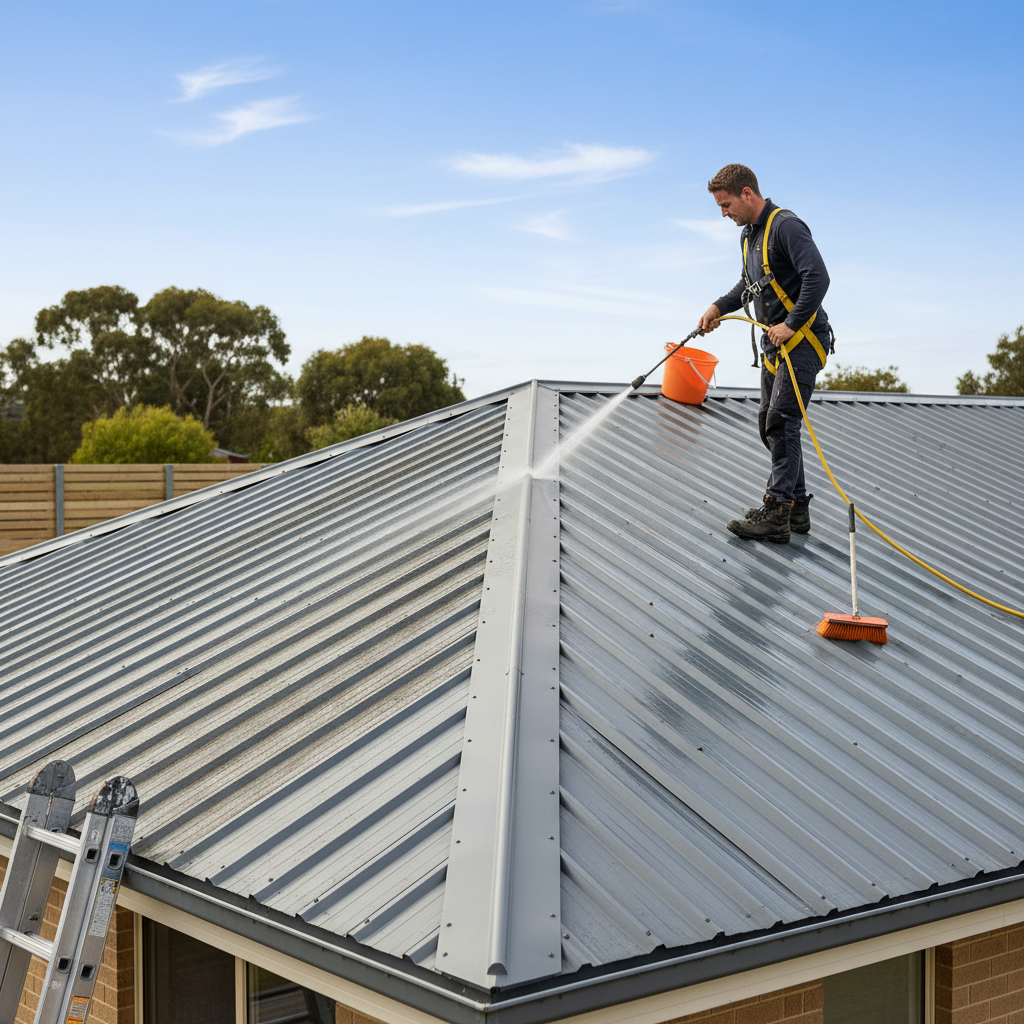
Tools and materials
Tools
- Garden hose with adjustable nozzle
- Soft-bristle long-handled brush
- Ladder (with stabiliser bar)
- Roof harness and roof anchor (for safety)
- Bucket
Materials
- Sugar soap or mild detergent
- Citric acid (for stubborn marks)
- Clean water
A clean Colorbond roof is one of the highest-return maintenance jobs you can do. Dirt traps moisture, salt, and pollutants against the paint film, accelerating oxidation and rust. Neglected, a 30-year roof becomes a 20-year roof. Cleaned annually, it lasts 35+.
Safety first
Working on a roof kills more Australian homeowners every year than electrical or plumbing DIY combined. Before you start:
- Single-storey only for DIY: two-storey roofs need scaffolding and fall arrest
- Use a roof anchor and harness for any roof work above 2m, even single-storey
- Don’t work on a wet roof: water on Colorbond is slick
- Don’t work in wind: even mild breeze affects balance on a roof
- Soft-soled shoes only, dust-free
- Tell someone you’re up there, with a phone in reach
- Don’t reach beyond the safe footing, move the ladder, don’t stretch
If any of these conditions can’t be met, call a roofer. The $300 to $500 for a single-storey clean is much cheaper than a fall.
The DIY method
- Wait for a dry, still day with overnight rain on the forecast to rinse off later
- Clear visible leaves and debris from the gutters first (a leaf blower from ground level helps)
- Wet the entire roof with the garden hose to soften dirt
- Mix sugar soap or mild detergent with water in a bucket
- Brush the roof with the soft-bristle brush, working in 2 to 3m sections from the ridge down to the gutter
- Rinse each section before moving on (dried soap residue stains)
- Treat stubborn marks (lichen, mineral deposits) with diluted citric acid on a sponge
- Final rinse the entire roof
- Let dry before walking off
A typical 200 m² roof takes one person 4 to 6 hours. With a helper, 2 to 3 hours.
What NOT to use
- High-pressure washers: damage the paint film, void manufacturer warranty
- Stiff brushes or metal scrubbers: scratch the paint
- Bleach in concentrated form: damages the paint and is harmful runoff
- Chemical strippers or acidic cleaners (HF, concentrated muriatic): dissolve the paint
- Petroleum-based solvents: damage the paint
Sugar soap or mild detergent with water is what BlueScope (the Colorbond manufacturer) actually recommends.
Special cleaning challenges
- Lichen and moss: usually on south-facing roofs in shaded areas. Brushing usually clears it. For persistent growth, a copper-sulfate-based moss treatment (sold at hardware stores) applied with a sprayer kills it. Rinse thoroughly after.
- Bird droppings: acidic, etch the paint if left. Treat promptly with warm soapy water, scrub gently, rinse.
- Sap from overhanging trees: warm soapy water and a soft brush. For stubborn sap, mineral turpentine on a rag, then rinse thoroughly.
- Rust spots: indicate paint damage. Touch up with manufacturer-matched Colorbond paint after cleaning. Don’t ignore; rust spreads.
- Coastal salt buildup: requires more frequent cleaning (every 6 months). Salt corrodes Colorbond Ultra (the coastal-grade) more slowly but still corrodes it.
When to call a roofer
- Two-storey or higher houses
- Steeply pitched roofs (over 25°)
- Damaged or loose sheets
- Major rust patches that need replacement, not painting
- Solar panels installed (touching panels voids many solar warranties)
- Roof access is difficult or unsafe
Professional roof cleaning runs $300 to $600 for a single-storey 200 m² house, $600 to $1,200 for two-storey. Worth every dollar for the safety and access.
Maintenance schedule
| Frequency | Task |
|---|---|
| Twice a year | Clear gutters of leaves |
| Once a year | Hose down the roof |
| Every 12 to 24 months | Full clean as above |
| Every 5 years | Full inspection including under the eaves |
| Touch up rust spots immediately | When spotted |
A clean roof reflects more solar heat (up to 5 to 10% reduction in summer cooling costs), looks better, and lasts longer. One of those rare maintenance jobs where every hour of effort pays back in years of service life.
Frequently asked questions
Can I pressure wash a Colorbond roof?
Not recommended. High-pressure cleaning damages the paint film, especially around joints and fixings, accelerating rust. Use a garden hose at normal pressure. The standard hose flow is enough for routine cleaning.
How often should I clean my Colorbond roof?
Every 12 to 24 months for most Australian homes. More often (every 6 months) if you have overhanging trees, are coastal, or in a high-dust area. Annual cleaning extends roof life from 25 years to 35+.
Can I walk on a Colorbond roof?
Yes if you know how. Walk on the supported parts (over the battens or trusses, not on the long unsupported spans between). Stand on the ribs of the corrugations, never in the pans. Soft-soled shoes only. Wet roofs are extremely slippery, only clean dry roofs and only when the surface is dry to the touch.
When should I call a roofer for cleaning?
Two-storey homes (scaffolding and fall arrest required). Steep pitches (over 25°). Houses with terracotta tile roofs (different cleaning approach). Any roof with damaged or rusted sheets that need replacement during the clean. After major events (hail, severe storms) when a structural inspection is also needed.