
The Aussie bushfire preparation checklist, what every homeowner in a fire-prone area needs
Half of Australian homes sit in a bushfire-prone area. Here's the seasonal checklist that survives the fire season, plus the BAL rating system explained.
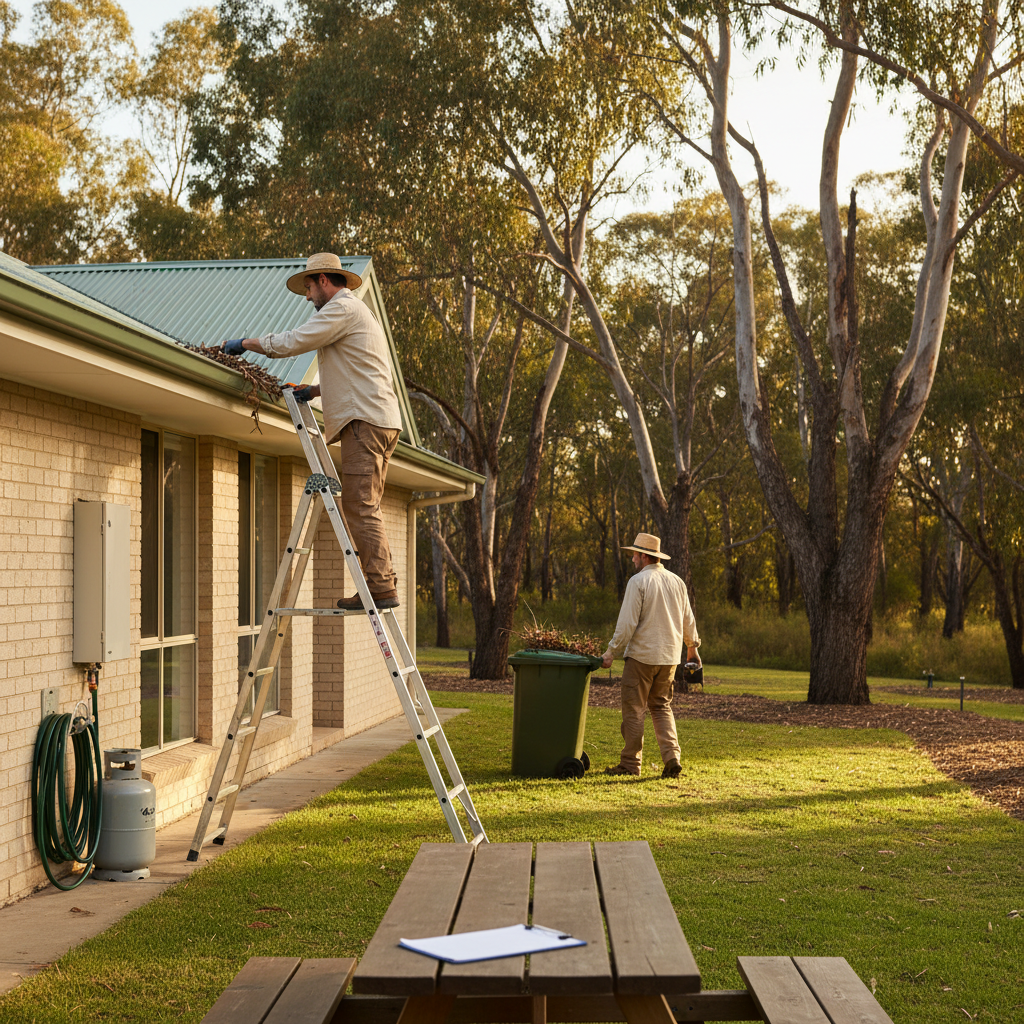
The Australian fire season is getting longer, hotter, and more dangerous. Black Summer (2019 to 2020) killed 33 people and destroyed over 3,000 homes. Bushfire preparation isn’t optional for anyone living in fire-prone areas; it’s the difference between losing the house and saving it.
This guide is the prep checklist every Australian homeowner in a fire-prone area should run through every spring. The work is mostly DIY (clearing leaves, trimming branches, watering, checking systems) but specific upgrades (sprinkler systems, fire-rated shutters) need a builder or specialist.
The BAL rating system
Every property in a bushfire-prone area has a Bushfire Attack Level rating set by an accredited bushfire consultant under AS 3959:
| BAL | Radiant heat | Risk | Building requirements |
|---|---|---|---|
| BAL-LOW | Under 12.5 kW/m² | Negligible | Standard construction |
| BAL-12.5 | Up to 12.5 kW/m² | Moderate | Some material restrictions |
| BAL-19 | Up to 19 kW/m² | High | Heat-resistant glass, gap sealing |
| BAL-29 | Up to 29 kW/m² | Very high | Non-combustible cladding |
| BAL-40 | Up to 40 kW/m² | Severe | Steel construction, no exposed timber |
| BAL-FZ | Direct flame contact | Extreme | Highest standard, fully fire-rated |
When you build, extend, or renovate in a bushfire-prone area, AS 3959 sets the construction standard to match your BAL. Check the rating before designing.
The seasonal preparation checklist
Spring (September to November)
- Clear all leaves and debris from gutters
- Clear leaves from downpipes and outlets
- Trim tree branches overhanging the house (away from the roof line)
- Remove leaf litter from roof valleys
- Mow grass to 100mm or less within 20m of the house
- Remove fallen branches and dead vegetation from the yard
- Inspect the roof for missing or damaged tiles
- Test rooftop sprinkler systems (if installed)
- Inspect eaves for gaps where embers could enter
- Check the bushfire pump fuel and start the engine
- Restock the bushfire kit (water, first aid, woollen blankets, torches, batteries)
- Review the Bushfire Survival Plan with the family
- Confirm meeting points and emergency contacts
Summer (December to February)
- Weekly: water the garden, mow grass, clear new fallen debris
- Monthly: check sprinkler system and pump
- Before a Fire Danger Rating “Extreme” day: top up water tanks, charge phones, prepare to leave early
- On Catastrophic days: leave early (the only safe choice)
Autumn (March to May)
- Clear final summer debris from gutters
- Inspect any fire damage to the property
- Order any specialist upgrades for next season (shutters, sprinkler systems)
Winter (June to August)
- Major maintenance (replacing damaged elements)
- Major upgrades (sprinkler installation, ember screens, fire-rated shutters)
- Review insurance: is the sum insured enough to rebuild at current 2026 prices?
The five highest-impact upgrades
- Ember screens on all vents ($300 to $1,200 fitted): embers entering the roof cavity through unprotected vents cause 70% of bushfire-lost homes. Cheap, effective.
- Steel gutter guards ($1,500 to $4,000): stops leaves accumulating in gutters where embers ignite them
- Rooftop sprinkler system ($3,000 to $12,000): wets the roof and surrounding vegetation before the fire arrives
- Bushfire pump ($1,500 to $6,000): independent of mains power, runs a sprinkler system or hand-held hose
- Fire-rated shutters or screens ($2,000 to $15,000 per window): closes window openings to embers and radiant heat. Premium upgrade, suits BAL-29+ properties
What you can do today (free)
- Clear gutters of leaves
- Trim back overhanging branches
- Mow long grass within 20m of the house
- Remove flammable materials (firewood stacks, gas bottles) from beside the house
- Sign up for emergency text alerts from your state’s fire service
- Download the state fire service app
When the fire is approaching
If your Bushfire Survival Plan says “leave early”:
- Leave on the morning of an extreme or catastrophic day, BEFORE the fire arrives
- Take essential documents, medications, the bushfire kit
- Close all windows and doors (slows the spread inside the house)
- Move flammable items away from the house
- Disconnect gas at the bottle if possible
- Don’t take the dog by foot, drive
If your plan says “stay and defend”:
- This requires a fully prepared property AND fit, capable adults willing to fight
- Most Australians who try this without preparation die
- Re-read the plan carefully. If anything’s missing, leave instead.
In the Black Summer fires, the homes that survived almost always had: (a) clean gutters, (b) trimmed trees within 20m, (c) ember screens on vents. Three simple, free actions saved hundreds of homes.
Insurance and rebuild costs
After Black Summer, Australian rebuild costs jumped 25 to 40%. Many homeowners discovered their insurance was underinsured. Check your sum insured against current 2026 build costs in your area:
- Sydney/Melbourne/Brisbane metropolitan: $2,500 to $4,500 per m² to rebuild
- Coastal NSW/VIC: $2,800 to $4,800 per m²
- Regional and rural: $2,200 to $3,800 per m²
- Bushfire BAL-rated rebuilds: add 10 to 30% over standard
A 200 m² house in a BAL-29 area now costs $600,000 to $1,000,000 to rebuild. Make sure your policy covers it.
Frequently asked questions
How do I know if my home is in a bushfire-prone area?
Your local council's planning portal lists Bushfire Prone Land. Most state RFS or fire service websites also have a property look-up. Properties with a Bushfire Attack Level (BAL) rating are formally classified as bushfire-prone.
What does BAL rating mean?
BAL (Bushfire Attack Level) measures the radiant heat and ember attack a home faces in a worst-case fire. BAL-12.5 is moderate. BAL-19 is high. BAL-29 is very high. BAL-40 is severe. BAL-FZ is flame zone (highest). Higher BALs require stricter building materials and construction under AS 3959.
When should I do bushfire preparation?
Start in spring (September to November in most of Australia). Major maintenance done by 31 October before the fire season peaks. Light maintenance (clearing gutters, watering) continues weekly through summer.
Do I need a bushfire plan?
Yes if you live in a bushfire-prone area. Every state fire service has a free template (RFS Bush Fire Survival Plan, CFA Fire Ready Kit). It covers: stay or go decision triggers, evacuation route, meeting point, what to take, who to contact.