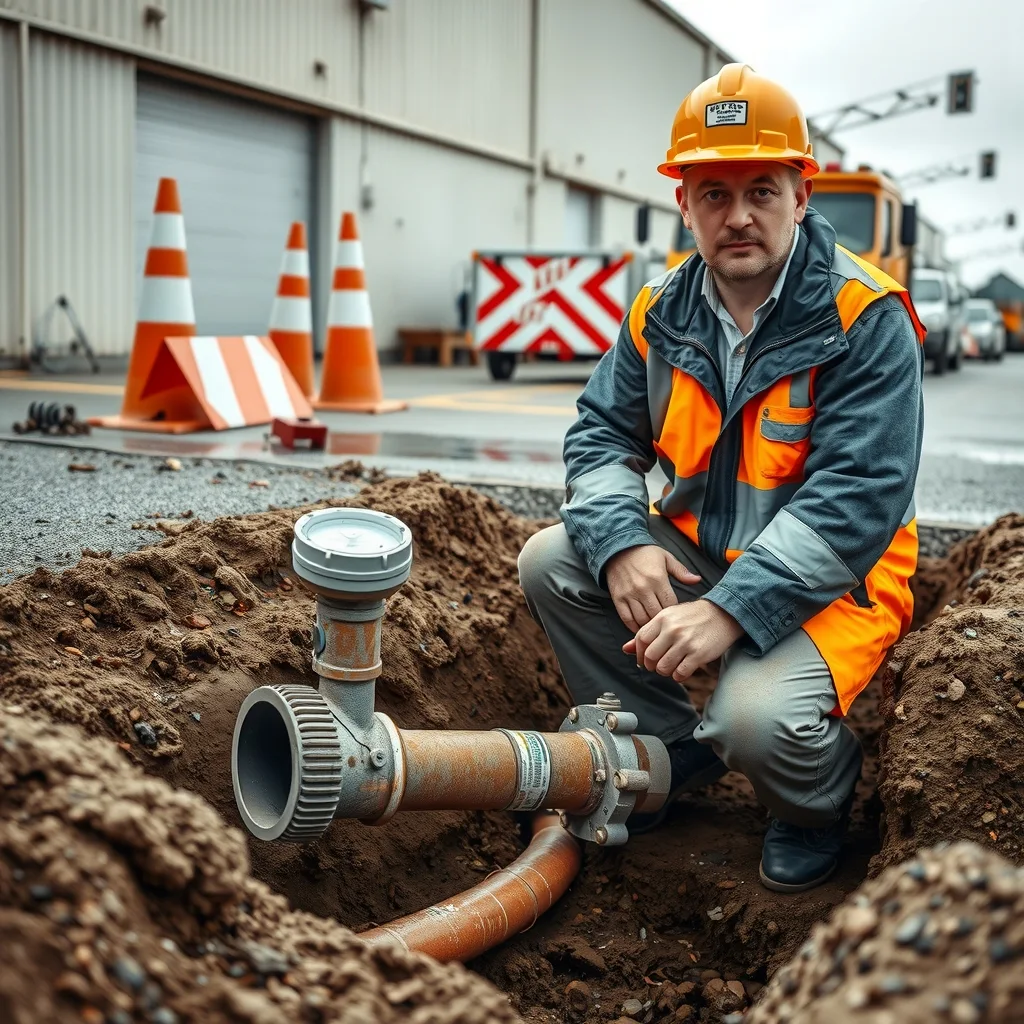

Tasmania’s water utility has told non-residential customers stung by fixed water charge rises of as much as 500 per cent that one way to bring the bill down is to cut their water meter connection back to 20 millimetres. The suggestion came from TasWater representatives at a parliamentary inquiry into the utility’s financial and operational performance on Thursday, and a steel fabricator at Rocherlea, north of Launceston, says doing the work on his site could cost up to $100,000.
ABC News reported that water bills for Tasmanian households and small businesses will rise by an average of 5.7 per cent a year for the next four years, with the new fixed water and sewerage fees kicking in at the start of July. Businesses and sports clubs say it’s the fixed component doing the damage, not the water they actually use.
”It’s money that’s just not there”
HP Engineering, a steel fabricating business at Rocherlea, was paying $625 a month for water in June, about $7,500 a year. Co-director Stuart Boyd said that bill jumped by more than 500 per cent after the changes, to $3,800 a month, or more than $45,000 a year.
The site draws through 150-millimetre inward pipes. Getting those down to 20 millimetres, Mr Boyd said, could run to $100,000.
“We’d have to get engineers and more consultants to design and do a study,” he said.
“There’d be business disruptions to dig up from the road in and change pipe sizes. You’re talking labour, materials, the cost of your building surveyor, there’d be design work involved.”
He said the fabrication business would have to lift its prices to cover the increase.
“All of a sudden I’ve got to find money of that amount to continue doing what we were doing anyway. It’s money that’s just not there,”
“We don’t survive or operate in a way that we have contracts in place. We’ve got to compete, we’ve got to tender and we have to win work. So that would jeopardise, make it harder for us to win work,” he said.
Anyone who tenders fixed-price work will recognise that squeeze. An extra $37,500 a year landing mid-financial-year doesn’t sit inside a margin that was priced months ago, and you can’t go back and re-rate jobs already won.
Why the meter sets the bill, not the tap
TasWater Customer and Community General Manager Callan Paske said the fixed charge reflects the capacity the network has to hold in reserve, saying that “a larger water meter connection lets a property draw more water at any time than a standard home”.
“Our pipes, pumps, treatment plants and storages have to be built and maintained to meet that potential demand, whether it’s used on a given day or not,” he said.
Fixed charges recover the cost of holding that capacity available, he said.
TasWater told the inquiry it recognised the scale of the rise for some non-residential customers and was consulting the state’s economic regulator on other ways to soften the blow. The utility applied to that regulator last year for an average 11.5 per cent annual increase to fixed water and sewerage fees and was knocked back earlier this year. It has said the increases fund upgrades to ageing water and sewerage infrastructure.
That infrastructure argument has a number behind it. In the 2023-24 financial year, TasWater lost 24.5 per cent of its treated water before it reached a customer, ABC News reported. Roughly one litre in four, treated and pumped, never got billed.
On the cost of downsizing, Mr Paske said the figure varies with the property and the work involved.
“We’d encourage businesses to talk to us rather than assume a figure,” he said.
“It would need to be determined that a smaller connection can meet the property’s ongoing water needs and applicable requirements. This involves a development application to TasWater and supporting information prepared by a suitably qualified surveyor or engineer,” he said.
The job hiding inside that sentence
Read Mr Paske’s second answer as a scope of works, because that’s what it is. Before anyone touches a shovel, a suitably qualified engineer or surveyor has to work out the site’s peak demand and put their name to a document saying a smaller connection still covers it. That goes in as a development application to TasWater, and it can come back no.
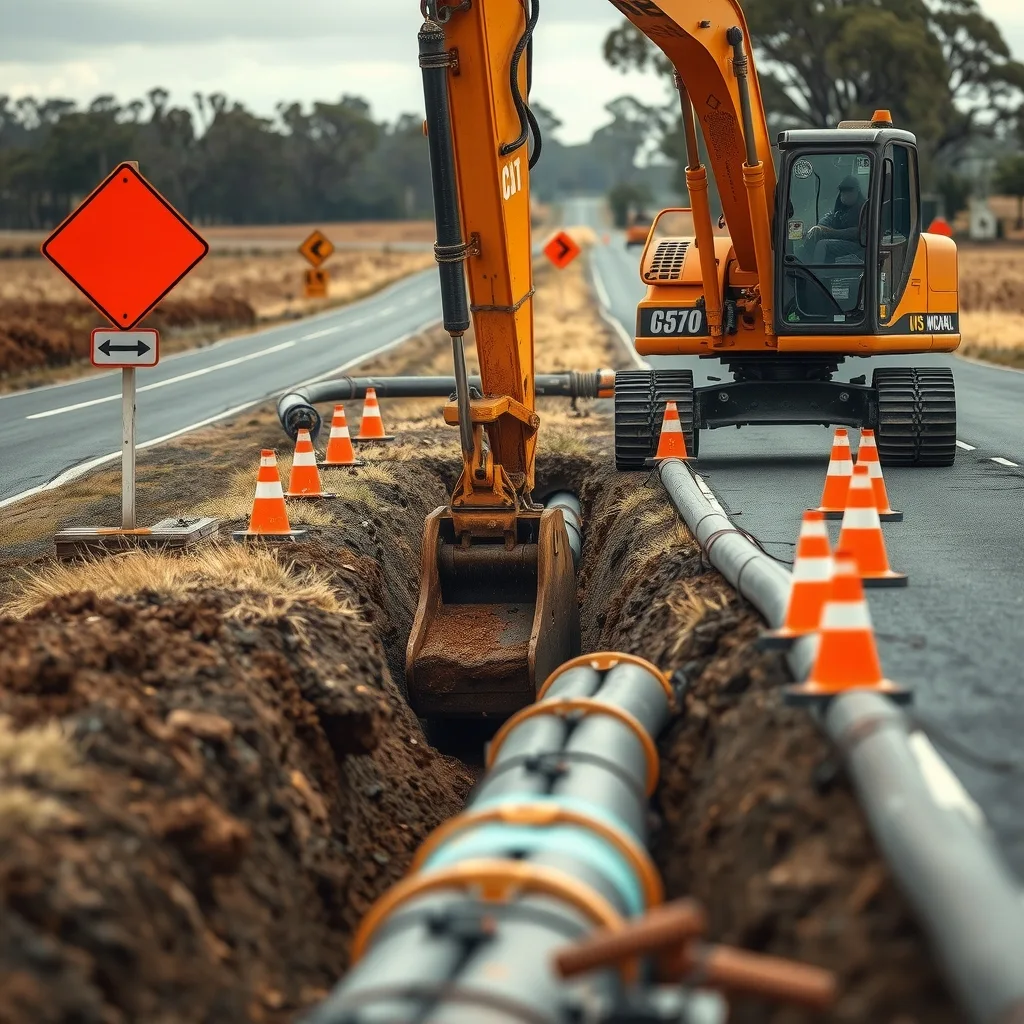
Only then does the physical work start: excavating from the road boundary in to the meter, which on a commercial site usually means traffic management at the verge, breaking and reinstating whatever driveway, hardstand or yard slab sits over the line, and a changeover window with the water off. Water supply plumbing work requires a licensed plumber in every state and territory, so none of it is a weekend fix with a mate and a hired excavator.
For a fabrication shop or a transport yard, the trench usually runs straight through the only vehicle access. That’s the business disruption Mr Boyd was talking about, and it doesn’t show up on any pipe quote.
Hydrants and sprinklers: when the pipe can’t shrink
Haylee Sheehan’s furniture transport business at Youngtown, on the edge of Launceston, saw its fixed water bill rise 172 per cent between June and July. Just $9.60 of that bill covered water and sewage usage. The rest was fixed charges.
Her inward pipes are 100 millimetres, and she’s not sure smaller ones would do the job.
“I really think it’s up to TasWater to come to the party and try to help us work out whether we can reduce the size of our pipe,” she said.
“Maybe somebody should have actually come out and seen us and said, ‘Right, if we don’t do something about this, your bill is going to absolutely skyrocket. Let’s get a plan in place’.”
Fire hydrants on the property complicate it further. Fire service feeds are sized for firefighting flow, not for washing down a yard, which is why a downsizing assessment on a site with hydrants often ends before it starts.
“[Surveyors] might turn around and say, ‘Actually no, because you’ve got firefighting equipment here … we can’t actually reduce the size of your pipes’,” Ms Sheehan said.
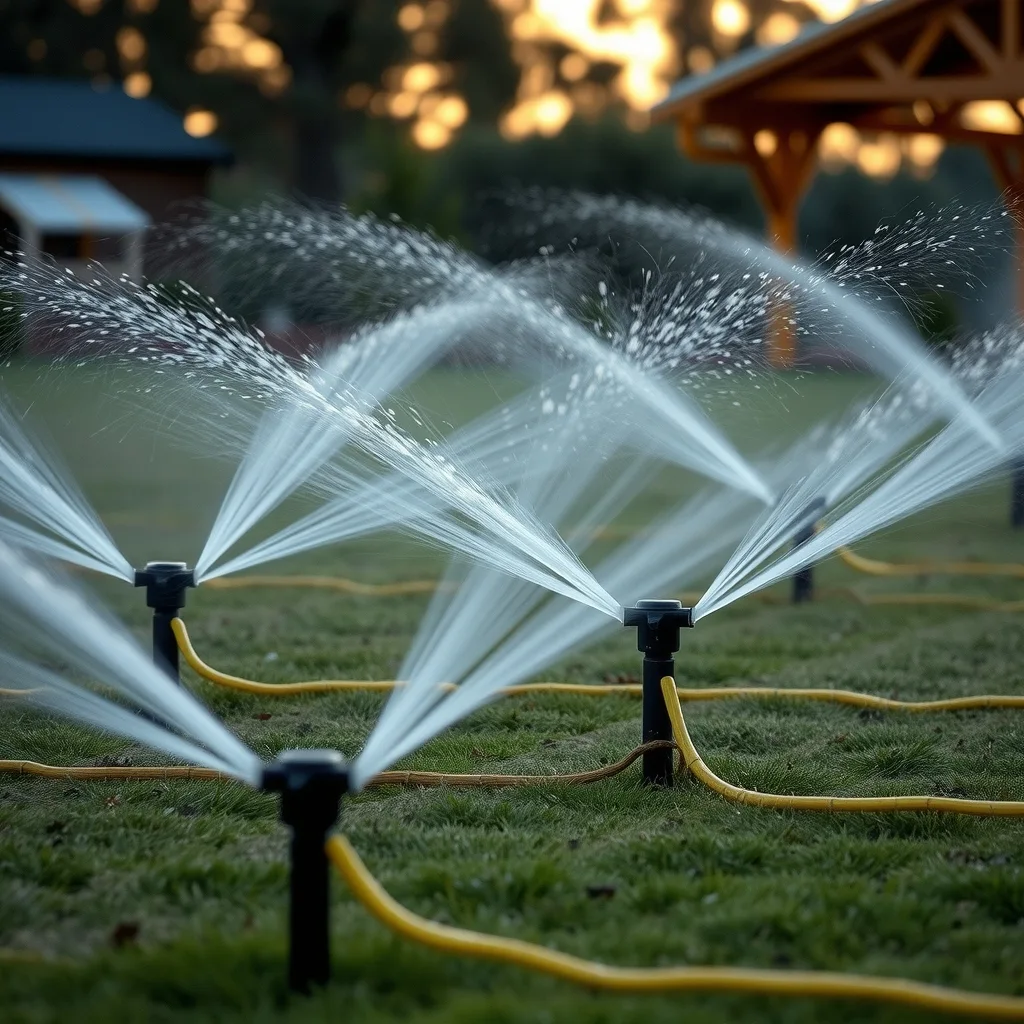
Pressure is the other limit. Trevallyn Parks and Improvement Association president Collin Burns said the Launceston park runs on two 50-millimetre pipes and a 25-millimetre pipe.
“We put in an automatic watering system, which uses a 50-millimetre pipe for the water pressure,” he said.
Ten pop-up sprinklers hang off it. Shrink the supply and they stop working as designed.
“[The sprinklers] wouldn’t come out of the ground sufficiently to operate, and even if they did come out, you wouldn’t get the coverage of the water. It would be like turning a tap on halfway,” Mr Burns said.
If the price rises aren’t reviewed, he said, “It’ll be a matter of fundraising or cancelling programs,”.
What to watch
The parliamentary inquiry into TasWater’s financial and operational performance is the place this gets tested next, alongside whatever the utility works out with the state’s economic regulator on easing the hit to non-residential customers.
For plumbers and hydraulic consultants in the north of the state, the practical read is that the phone is about to ring with commercial clients asking whether their connection can come down a size. The honest first question back is what fire service and peak demand the site has to hold, because on plenty of yards the answer settles it before anyone quotes the trench.
Business owners facing that assessment can start by comparing quotes from local plumbers before committing to a redesign.
Frequently asked questions
Why did TasWater’s fixed water charges rise so much for businesses?
TasWater says fixed charges reflect the capacity the network must hold in reserve for a property’s meter size, not how much water is actually used. The utility applied for an average 11.5 per cent annual fee increase to fund ageing infrastructure but was knocked back by the state regulator.
How much does it cost to downsize a commercial water meter connection?
TasWater says the cost varies by property, but one Rocherlea steel fabricator was told the work could run to $100,000, covering an engineering assessment, a development application and excavation by a licensed plumber.
Can any business reduce its water pipe size to save money?
Not necessarily. A smaller connection must still meet the property’s peak water needs, and sites with fire hydrants or automatic sprinkler systems may be blocked from downsizing because those systems rely on higher pressure and flow.
Sourced from ABC News. Original article.