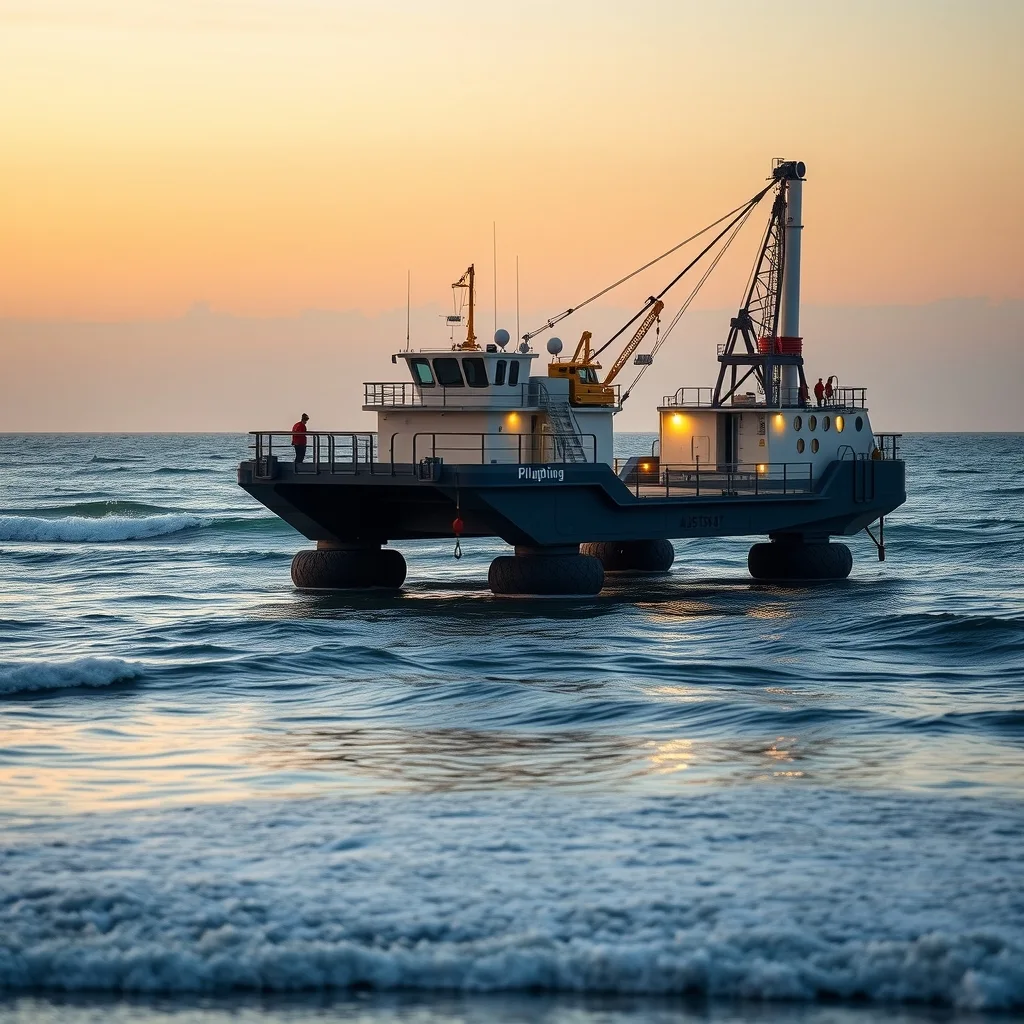

Hunter Water has finished all major marine construction on the Belmont Desalination Plant, and the specialist jack-up barge used for the offshore work has left Belmont and returned to the CTB Yard at the Port of Newcastle. The completed marine package includes the project’s 830 metre seawater intake tunnel, the offshore intake dome and the recovery of the tunnel boring machine from the ocean floor.
The milestone was reported by Utility Magazine, which said Hunter Water had told the community earlier that the vessel would leave once marine construction activities were complete. Construction is still running at the Belmont site, with work continuing on the treatment plant and associated infrastructure.
The hardest part of this job happened under the seabed
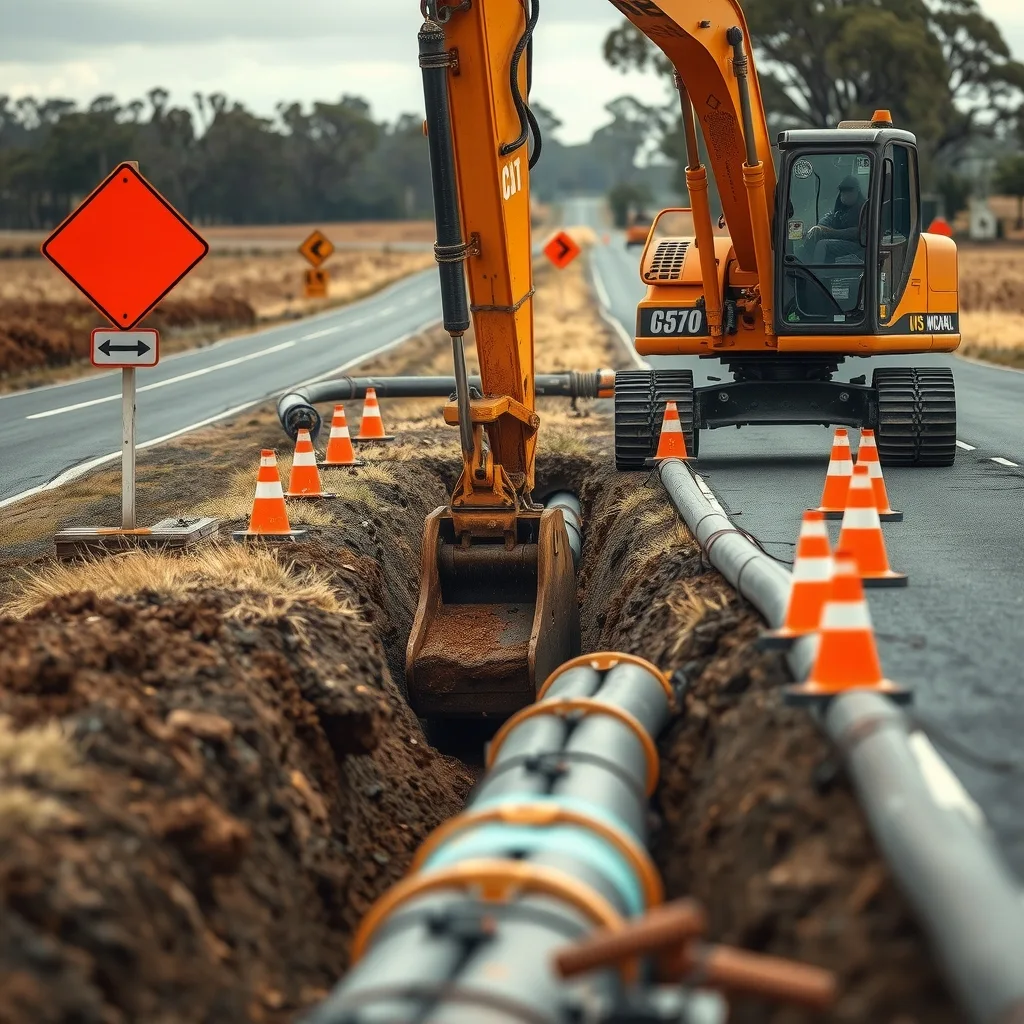
The tunnel is what lets the plant work at all. Seawater gets drawn in through the offshore intake structure, travels the 830 metres back under the seabed, and is transferred to the plant for treatment. Sitting above that intake structure is the dome, installed to protect the intake while still letting seawater through.
Hunter Water Executive Manager Infrastructure Delivery Justin Watts said the marine package was the toughest part of the build so far.
“These works involved some of the most technically complex construction activities undertaken on the project, including offshore tunnelling beneath the seabed, installation of the intake dome and the successful recovery of the tunnel boring machine from the ocean,” Watts said.
“These works involved some of the most technically complex construction activities undertaken on the project, including offshore tunnelling beneath the seabed, installation of the intake dome and the successful recovery of the tunnel boring machine from the ocean.”
That last bit is the one that tends to get glossed over. The machine, named ‘Rhiannan’, was recovered from the offshore intake structure rather than backed out the way it came in, which is why the barge had to hold station offshore until the retrieval was done. Every one of those operations is weather-dependent in a way a land job never is. A crew on a slab can work through a bit of wind. A jack-up barge sitting off a Newcastle-region beach works to the sea state, and the program moves with it.
The work that’s left is onshore, and that’s where the labour sits now
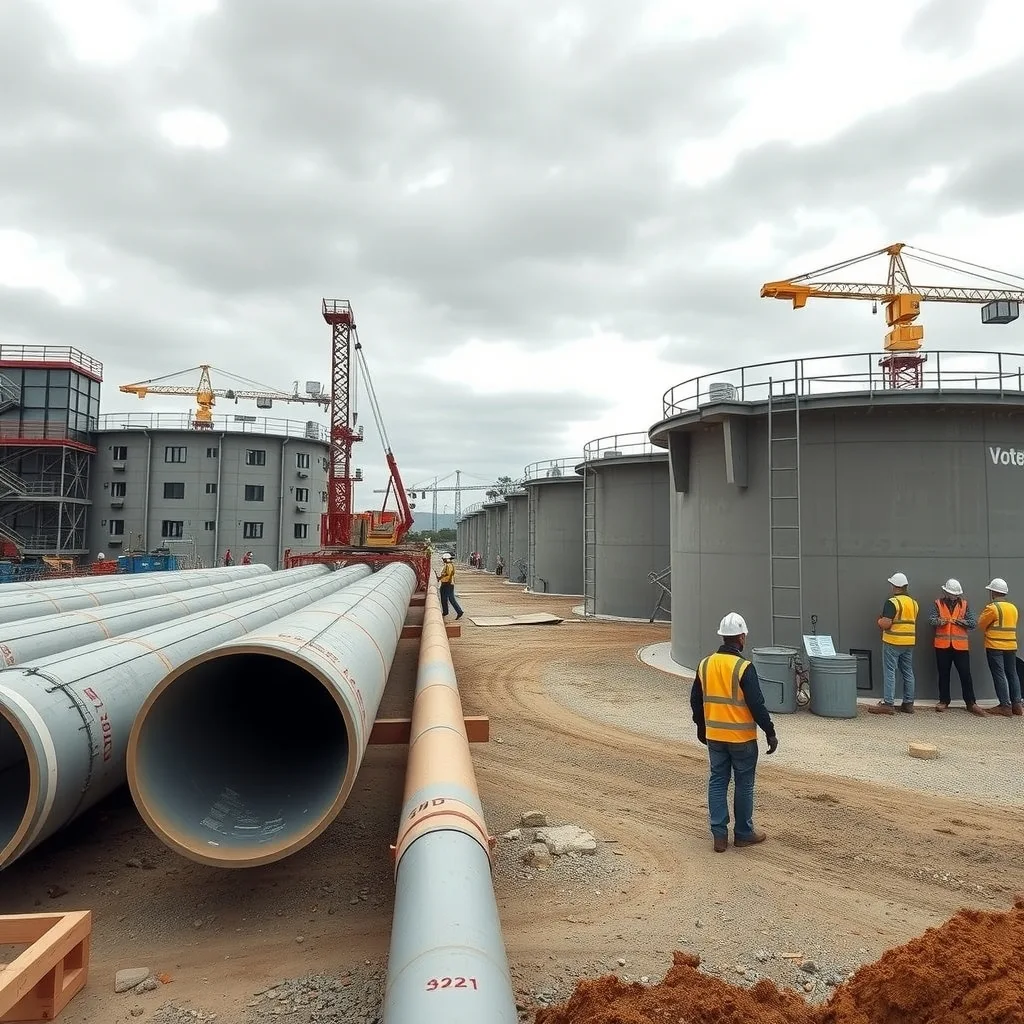
With the offshore scope closed out, the remaining build is the plant itself and the pipework and infrastructure needed to tie it into the existing network.
“With marine works now complete and the jack-up barge having departed, our focus remains on constructing the desalination plant and associated infrastructure needed to connect it to the wider water network,” Watts said.
For anyone chasing work on this one, that shift matters. The marine phase was a small, highly specialised crew on a barge, most of them brought in for the tunnelling and the lift. The onshore phase is a conventional process-plant build with connection works running off it, which is where the volume of mechanical, pipework, civil and electrical hours normally lands on a water job of this size. It’s also the phase that runs longest and hires locally.
Hunter Water hasn’t put a completion date on the remaining works in this update, so treat any timing you hear on site as talk until the utility confirms it.
Why the Lower Hunter is building it
Once it’s running, the plant will be capable of producing up to 30 million litres of drinking water a day, around 15 per cent of the Lower Hunter’s average daily water demand, according to Hunter Water. That’s the citable number on this project, and it’s the reason the thing exists.
The plant is a key action under the Lower Hunter Water Security Plan. Unlike a dam, its output doesn’t care whether it rained. The point is a rainfall-independent supply the region can lean on during drought, taking pressure off existing storages through extended dry periods.
It’s worth keeping the scale honest. Fifteen per cent isn’t the whole show, and it was never meant to be. It’s the buffer that keeps restrictions off and keeps water in the mains when the storages are dropping, which for anyone running a wet trade in the Hunter is the difference between a normal year and a year of level-three restrictions dictating what you can and can’t do on site.
The next thing to watch at Belmont is the treatment plant build and the connection works. Marine specialists are off the job. From here, it’s a land-based program, and the hours on it are the kind Hunter-based contractors can actually bid for.
Frequently asked questions
How much water will the Belmont Desalination Plant produce?
Once complete, it will be capable of producing up to 30 million litres of drinking water a day, around 15 per cent of the Lower Hunter’s average daily demand, according to Hunter Water.
When will the Belmont Desalination Plant be finished?
Hunter Water hasn’t given a completion date for the remaining works. Marine construction is done, but the treatment plant and connection infrastructure are still being built.
What happened to the tunnel boring machine used at Belmont?
The machine, named ‘Rhiannan’, was recovered from the offshore intake structure rather than backed out through the tunnel it bored.
Sourced from Utility Magazine, Hunter Water. Original article.