Private investment in the Western Sydney Aerotropolis has reached $34.6 billion, three times the figure of 18 months ago and ahead of the $29 billion committed to public infrastructure in the precinct. The figures come as a second building rises at Bradfield City, due to open in 2028, with expressions of interest now open for manufacturing and office tenancies inside it.
The numbers were reported by Manufacturers’ Monthly, which says the shift lands as Western Sydney International Airport starts connecting the region to overseas markets on freight flights and prepares to take passenger services this month.
Private money has overtaken the government cheque book
For most of this precinct’s life, the public purse has been doing the heavy lifting. That balance has now tipped.
Private investment in the Western Sydney Aerotropolis tripled over 18 months to $34.6 billion, surpassing the $29 billion committed to public infrastructure, Manufacturers’ Monthly reported in October 2026.
It’s a distinction worth understanding if you’re pricing work out that way. Government work arrives on a budget cycle and a published pipeline. Private work arrives when a tenant signs, which is less predictable but tends to come in clusters once the first big names are on the board. Amazon and ALDI have already set up inside the broader Aerotropolis, and the NSW Government is pitching Bradfield as the next landing spot.
What’s actually going up at Bradfield City
The second building at Bradfield City is under construction now, with opening scheduled for 2028. Inside, the proposed space splits three ways, with expressions of interest open for businesses chasing space, aimed at strategic anchor tenants, start-ups and scale-ups in scientific, innovative and complex technology sectors.
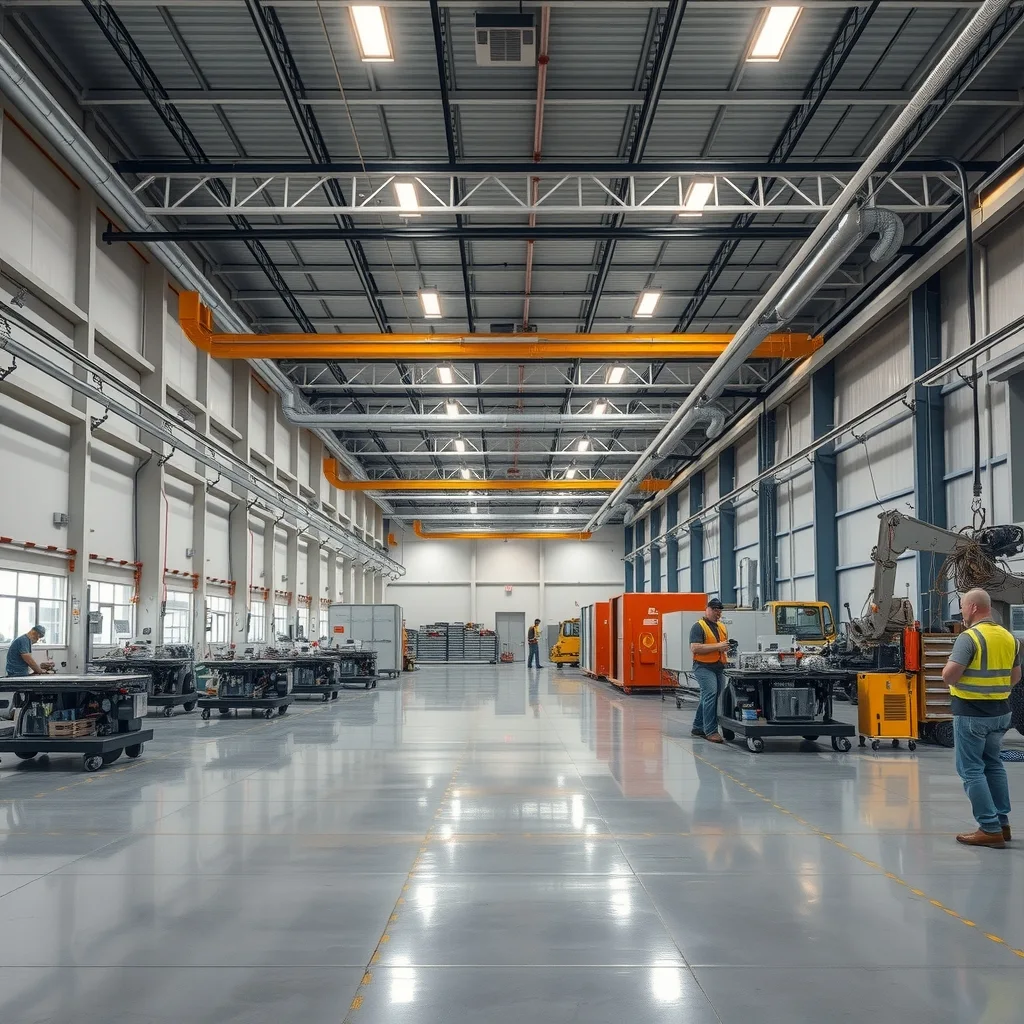
A 380-square-metre Manufacturing Hall will provide serviced advanced manufacturing facilities for research, prototyping and manufacturing at scale. A separate 280-square-metre Manufacturing Area is set aside for product development, research translation and advanced manufacturing work. Above and around that sits 1,150 square metres of flexible commercial office space for technology companies, researchers and industry partners.
Businesses can apply for one tenancy or all three, so a single occupier could run manufacturing, R&D and the commercial side under one roof. Tenants will also sit alongside the Advanced Manufacturing Research Facility and the Semiconductor Advanced Packaging Facility already at Bradfield.
Three ministers, three arguments for the same building
Deputy Premier and Minister for Western Sydney Prue Car framed it as a commute problem first.
“For too long, Western Sydney residents have had to travel long distances to access jobs and employment opportunities,” Car said.
“Bradfield and the Aerotropolis are changing that, with the Minns Labor Government continuing its work to bring industries, skills and careers into the region, closer to home.”
Minister for Planning and Public Spaces Paul Scully put the case in manufacturing terms, saying the government had committed to accelerating the Aerotropolis and delivering jobs for Western Sydney.
“Too often great ideas are developed in Australia but commercialised and manufactured elsewhere. Bradfield is changing that developing into a new global hub for innovative industries and advanced manufacturing.”
Minister for Finance, Domestic Manufacturing and Government Procurement Courtney Houssos tied the investment to keeping production onshore.
“Australia’s economic future depends on our ability to develop, make and commercialise more products here at home. We are focused on creating the conditions for manufacturers to invest with confidence, expand their operations and employ more people.”
“Too often great ideas are developed in Australia but commercialised and manufactured elsewhere. Bradfield is changing that developing into a new global hub for innovative industries and advanced manufacturing.”
A manufacturing hall and an office floor are two different jobs
That tenancy split is the part worth a second read if you run a fitout crew.
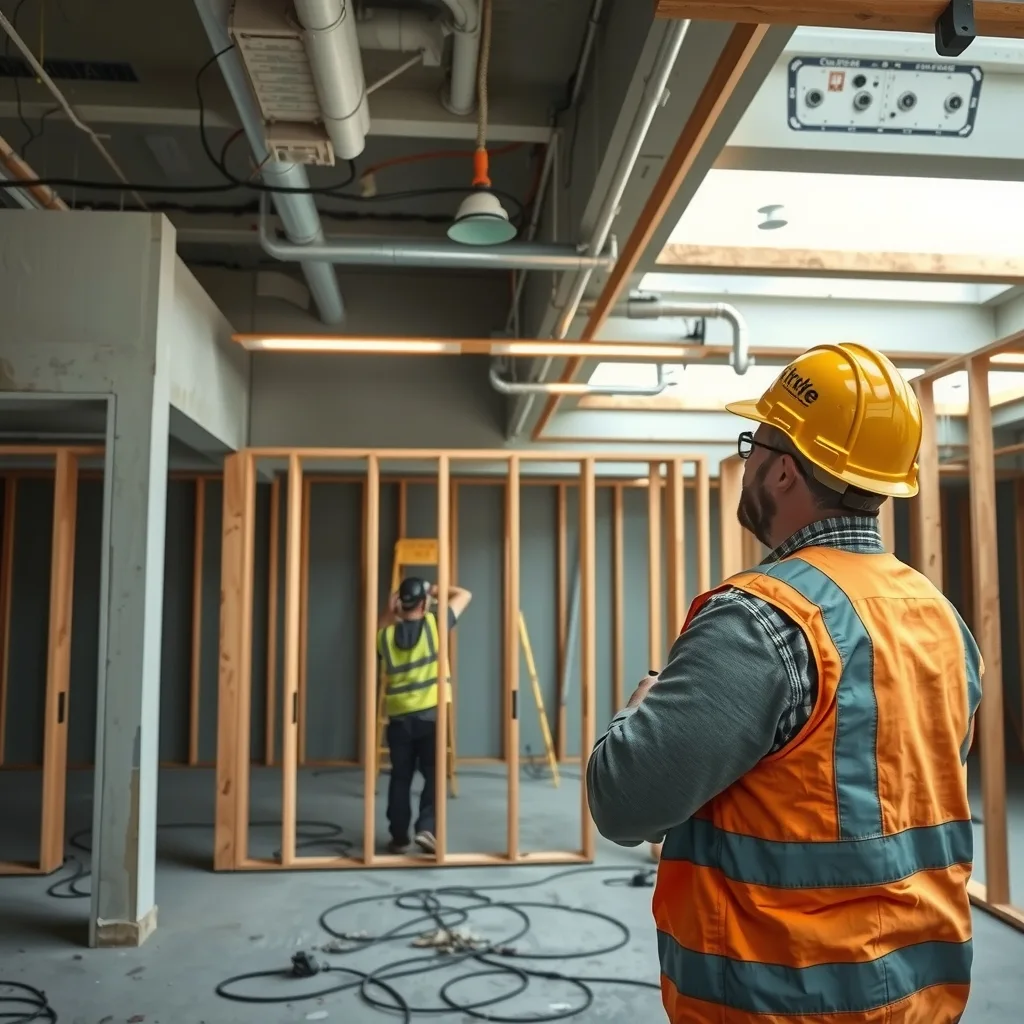
The 1,150 square metres of commercial office is familiar ground: stud partitions, ceiling grid, data and comms, lighting, mechanical registers, joinery. Known sequence, known trades, and the sort of work a decent crew can program with confidence once the base build hands over.
Across the Manufacturing Hall and Manufacturing Area, the 660 square metres is a different animal. The source describes the hall as “serviced”, meaning the heavy services are built into the base offering rather than left for every tenant to retrofit. For subcontractors, that usually shifts the work from first-fit to tenant-specific connection: machine bases, power and data runs to plant positions, extraction and compressed air takeoffs, and the make-good when a tenant moves out and the next one wants the floor laid out differently. All fixed electrical work on that, as everywhere in Australia, has to be done by a licensed electrician.
It’s also a reminder that research-and-prototyping floor space churns faster than a warehouse. A shed tenant stays ten years. A scale-up that outgrows a prototyping bay reconfigures it, and that’s repeat work for the same local trades rather than one hit and out.
What to watch
Two dates matter. Passenger services at Western Sydney International are due to start this month, which changes who can realistically fly in to inspect a site. And the second Bradfield building opens in 2028, which means the fitout packages behind it get priced and let well before then, not after.
If you’re deciding whether to put on another apprentice or chase work further west, the useful signal isn’t the $34.6 billion headline. It’s whether the anchor tenants sign off those expressions of interest, because that’s when the fitout money actually moves.
Frequently asked questions
When will the second Bradfield City building open?
It’s under construction now and due to open in 2028, with expressions of interest already open for manufacturing and office tenancies inside it.
How much private investment has gone into the Western Sydney Aerotropolis?
Private investment has reached $34.6 billion, three times the figure of 18 months ago, according to Manufacturers’ Monthly. That’s ahead of the $29 billion committed to public infrastructure in the precinct.
What kind of businesses can apply for space at Bradfield City?
The second building offers a 380 square metre Manufacturing Hall, a 280 square metre Manufacturing Area and 1,150 square metres of commercial office space, aimed at strategic anchor tenants, start-ups and scale-ups in scientific, innovative and complex technology sectors. Businesses can apply for one tenancy or all three.
Sourced from Manufacturers’ Monthly. Original article.