
Western Australia remains the last holdout alongside NSW on accessible housing design, and pressure on the Cook Government to fall into line is intensifying.
All other states and territories have committed to the Livable Housing Design Silver Standard under the National Construction Code 2022, which sets minimum accessibility requirements for new homes. The West Australian reports that a coalition of more than 80 peak bodies, disability advocates, and federal commissioners is now calling on the Cook Government to reverse its position.
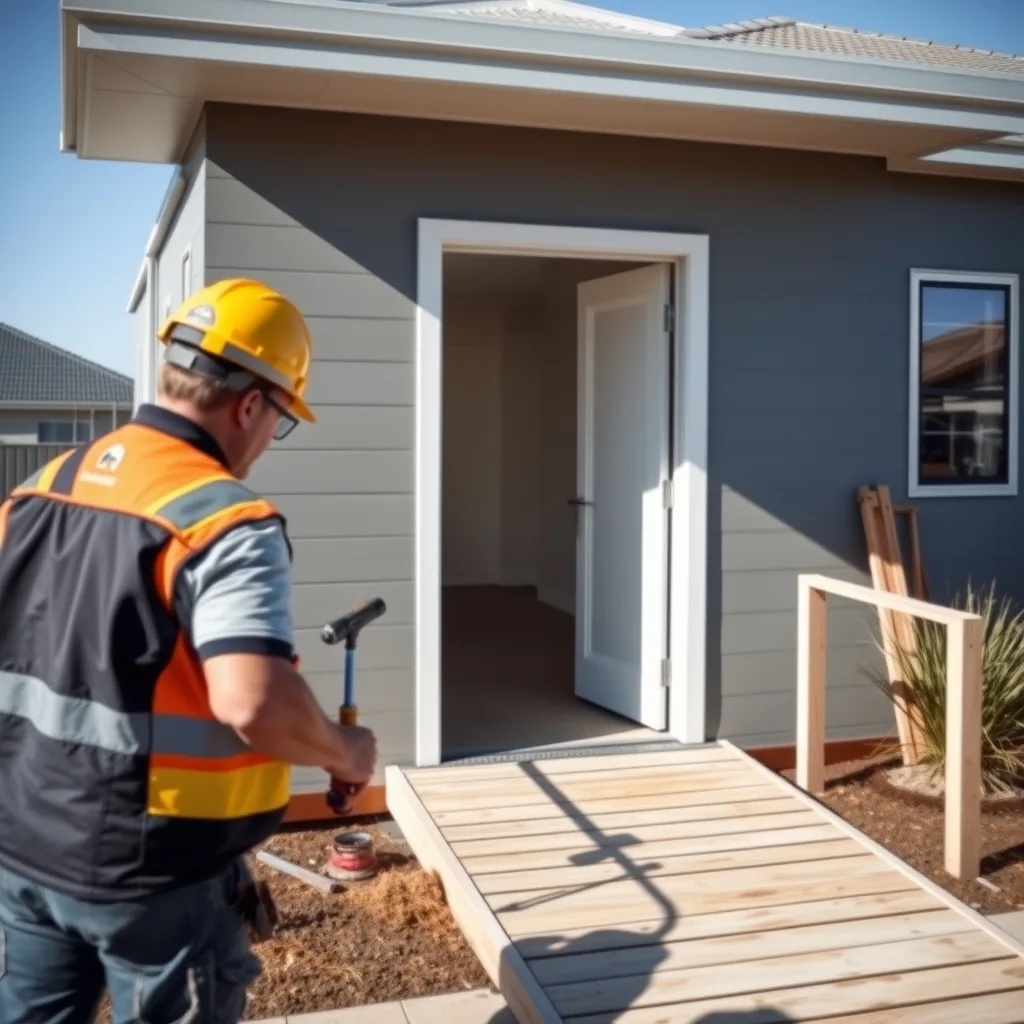
The Silver Standard requires seven core design elements in every new dwelling: a step-free entrance, a ground-floor toilet, a hobless shower, and wider doorways with a minimum 820mm clear opening, among others. The Australian Building Codes Board models the additional cost at roughly 1% per new home, a figure advocates say is hard to justify withholding when nearly three million Australians currently live with a mobility limitation, a number projected to reach 5.75 million by 2060.
Disability Discrimination Commissioner Rosemary Kayess put it plainly. “NSW and WA can’t keep ignoring the need for accessible housing,” she said in a joint media release from the Australian Human Rights Commission in March 2025, which labelled the two states’ inaction “shameful”. Building Better Homes Campaign director Alistair Webster added that “nearly three quarters of people with mobility limitations cannot get access to appropriate housing” right now. The campaign counts more than 80 peak bodies as signatories.
The WA Government’s position looks contradictory on its face. It told the Disability Royal Commission it had “not adopted this standard at this point” due to housing affordability concerns and industry feedback, yet it’s funding a 50-apartment Fremantle social housing project through a $10.5 million capital grant to Bethanie Community Housing, and that project is being built to the Silver Standard. Both the Disability Royal Commission and the NDIS Independent Review have since recommended WA and NSW sign up immediately. Shelter WA has published an open letter to Minister Cook signed by housing and disability organisations urging adoption, and National Disability Services notes WA’s omission means more than 36% of social housing households that include a person with a disability are in jurisdictions that don’t mandate accessible design.
For residential builders, carpenters, and certifiers across WA, adoption would make accessible design a line item on every new home and apartment. Builders already operating in other states comply as a matter of course; WA’s holdout creates inconsistency for firms working across state lines. The ABCB’s 1% cost estimate suggests the practical build impact is modest, the bigger shift would be in default specifications, documentation, and certifier sign-off on each job. If the Cook Government moves, the volume of accessible-standard residential work across the state would increase substantially overnight.
Builders and certifiers wanting to understand how licensing obligations vary across jurisdictions can refer to the carpentry licence by state guide for a state-by-state breakdown.
Frequently asked questions
What is the Livable Housing Design Silver Standard?
It’s a set of minimum accessibility requirements under the National Construction Code 2022. Every new dwelling must include seven core design features, including a step-free entrance, a ground-floor toilet, a hobless shower, and doorways with at least 820mm clear opening.
How much does meeting the Silver Standard add to a new home’s cost?
The Australian Building Codes Board models the additional cost at roughly 1% per new home.
Which states have adopted the Silver Standard?
All states and territories except WA and NSW have committed to the standard. Both the Disability Royal Commission and the NDIS Independent Review have recommended the two remaining holdouts sign up immediately.
What would adoption mean for WA builders?
Accessible design features would become a required line item on every new home and apartment. The main practical changes would be in default specifications, documentation, and certifier sign-off requirements on each job.
Sourced from The West Australian, Australian Human Rights Commission, Building Better Homes Campaign, Shelter WA, National Disability Services, Australian Building Codes Board. Original article.