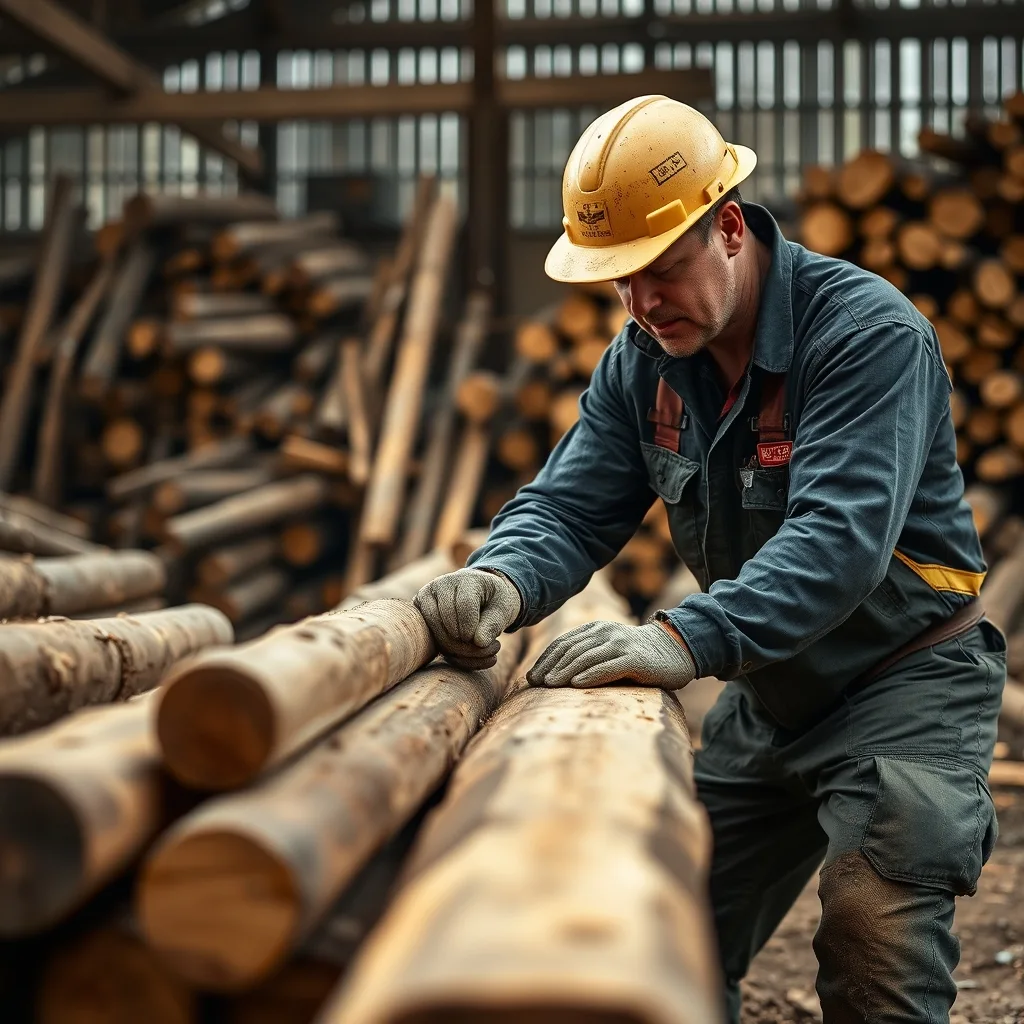

Victoria banned native forest logging at the start of 2024. Two years on, a Four Corners investigation has found several Victorian sawmills have shifted their timber supply to Tasmania, with at least some of those operations receiving Victorian taxpayer money.
The ABC investigation tracked log trucks from Melbourne Port to sawmills in the Yarra Valley, including the mill at Powelltown. Investigators documented logs carrying white stickers used to identify timber from Tasmanian state forests. The Tasmanian government told Four Corners the truckloads documented at the Devonport ferry terminal came from privately owned forests, not the public estate.
The biggest native hardwood sawmill remaining in Victoria, Australian Sustainable Hardwoods (ASH) at Heyfield, now runs on half plantation timber and half native Tasmanian forest timber. The company received more than $49 million from Victoria’s $1.5 billion native logging transition fund over three years. Forensic accountant Daniela Juric, who reviewed eight years of ASH’s financial records for Four Corners, said the government money has effectively enabled the company to buy timber from Tasmania. “It looks like an entity that’s struggling to stay afloat without the additional compensation from the Victorian state government,” she said.
ASH managing director Vince Hurley rejected that framing. He said most of the money was a contractually obliged penalty payment the company was legally entitled to when Victoria cut off its log supply. “You need to ask the Victorian government why they banned native logging and therefore were liable for failure-to-supply payments,” Hurley said. He added that ASH has reinvested the funds to expand manufacturing, converting low-grade Tasmanian wood into benchtops and mass-engineered timber beams, and that the mill supports around 200 jobs.
Powelltown Sawmills, which also received Tasmanian logs, was paid $9 million in Victorian government compensation.
The Victorian government separately bought a 49 per cent stake in ASH for $61 million in 2017. Since then, ASH’s controlling shareholders borrowed money from the company to buy a Tasmanian sawmill that gives ASH access to native forest timber there. Four Corners reported the Victorian government approved that move.
Victorian Premier Jacinta Allan rejected the idea the state was shifting its logging pressure to Tasmania, saying the focus was on backing workers in regional communities. Nicola Rivers of Environmental Justice Australia argued the transition money should have been directed toward plantation timber rather than interstate native logging.
For carpenters and builders relying on hardwood, the situation highlights how constrained domestic native timber supply has become. With Victorian state forests off limits and Tasmanian supply under scrutiny, pressure on hardwood availability and pricing is unlikely to ease in the near term.
Frequently asked questions
Why did Victoria ban native forest logging?
Victoria ended native forest logging on 1 January 2024 to protect biodiversity and old-growth forests, establishing a $1.5 billion transition fund to compensate affected workers and businesses.
Is sourcing Tasmanian timber legal?
Yes. There is no law preventing Victorian mills from purchasing timber from Tasmania. The controversy concerns whether Victorian taxpayer compensation money intended for transition away from native logging is instead funding access to interstate native forests.
What did Australian Sustainable Hardwoods say about the Victorian government funding?
ASH managing director Vince Hurley said the payments were contractually obliged penalty payments the company was legally entitled to after Victoria cut off its log supply, and that the funds have been reinvested to expand manufacturing and support around 200 jobs.
What does this mean for hardwood supply in Australia?
With Victorian state forests closed to logging and Tasmanian supply under increased scrutiny, domestic native hardwood availability is likely to remain tight, putting upward pressure on prices for carpenters and builders.
Sourced from ABC News, Four Corners. Original article.