
The Victorian Government is putting an extra $352 million into pothole repairs, enough to double the number fixed on the state road network, with crews targeting the Geelong Ring Road, Western Highway, Calder Highway and Princes Highway through the rest of 2026 and into January.
The funding was reported by Roads & Infrastructure, which named the four arterial routes as the priority targets for the extra crews.
Premier of Victoria Ben Carroll didn’t sugar-coat the state of the network. “The condition of our roads is not good enough,” he said.
“The condition of our roads is not good enough,”
Carroll said, “This is absolutely where Victorians want to see their money spent,” and added, “it is my priority.”
The money comes out of the rail budget
The pothole cash is being carved out of savings elsewhere in the state’s transport program.
Victoria has been working through a program to remove 110 level crossings, 92 of which are already gone. Three of the remaining removals, at Highett Road and Wickham Road in Highett and Latrobe Street in Mentone, have been pushed back by a year, which the government says saves $112 million across the budget forward estimates.
That sits alongside other savings the government has flagged, including $2 billion on the Suburban Rail Loop and $70 million on consultants.
For anyone who works in civil, that’s a shift in the kind of work being funded, not just the amount. A level crossing removal is a multi-year job with piling, structures, signalling, rail possessions and a small city of traffic management around it. Pothole patching is short-cycle work, the sort a small crew with a tipper, a saw, a compactor and a traffic control setup can knock over in a shift and move on. Different gear, different tickets, different order books.
What it means on the drive to site
The four named routes are the ones plenty of tradies and plant operators use every week. The Western and Calder highways feed Melbourne’s west and north-west, the Princes runs both ways along the coast, and the Geelong Ring Road carries the freight and commuter run between Geelong and the city.

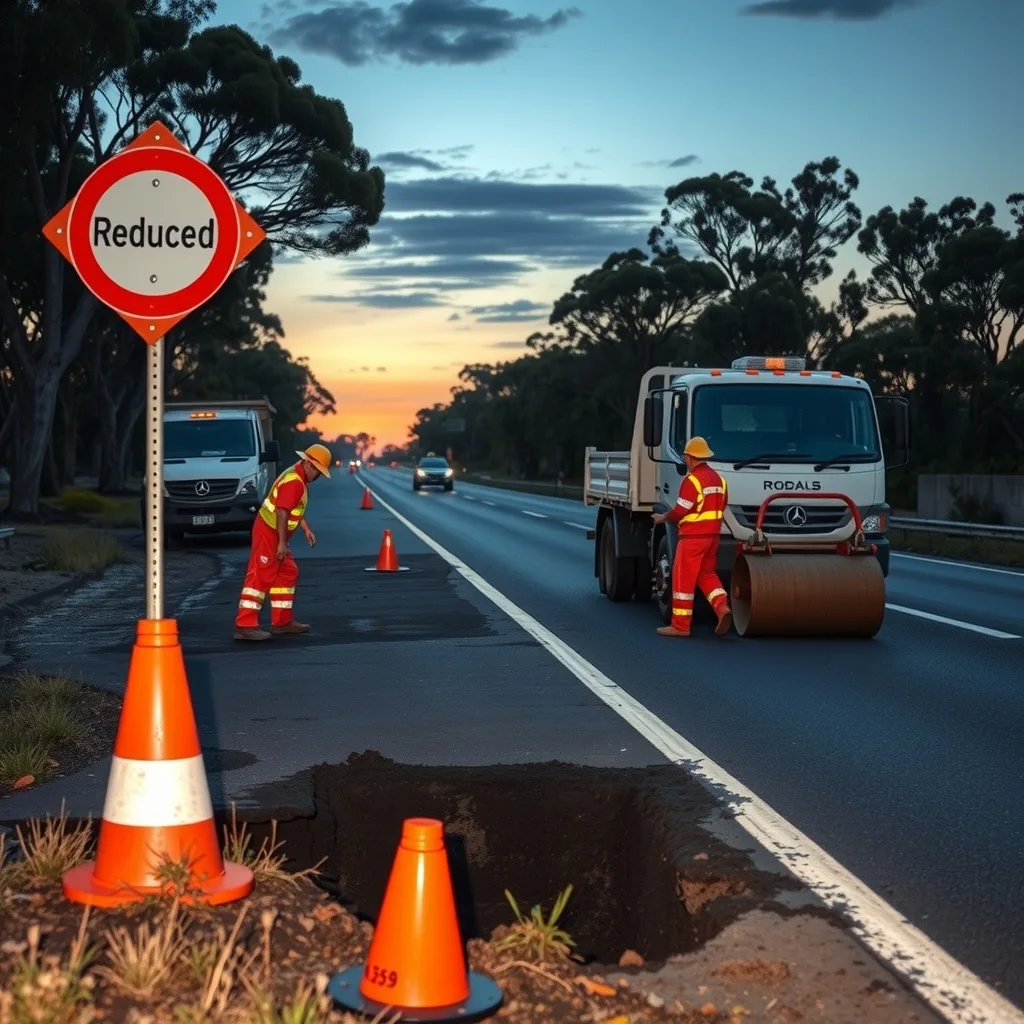
Doubling the patching rate on those roads means more lane closures, more reduced speed zones and more night shifts between now and the end of January. If you’re towing a float, carting plant, or booking a concrete pour with a delivery window, build the delay in rather than discovering it at a lollipop stand at 6am.
The flip side is the thing every ute owner already knows: a chewed-up arterial costs money in tyres, rims, suspension and the odd cracked trailer weld, and none of that shows up on a job invoice.
The number worth keeping
The Victorian Government has committed an extra $352 million to double the number of potholes repaired on the state’s road network, Roads & Infrastructure reported in August 2026. That’s the figure to hold onto when the next round of road funding gets argued about, because it’s the one attached to a stated doubling of output rather than a vague commitment to maintenance.
What the announcement doesn’t spell out is how the work is packaged. Patching programs at this scale are usually delivered through a mix of in-house road maintenance crews and contracted civil outfits, and the split matters if you’re a subbie deciding whether to chase the work, put on another operator, or leave your gear where it is.
What to watch
Two things worth keeping an eye on. First, whether the patching money turns into a longer rehabilitation program, because a spray patch buys time and a full pavement rebuild buys years. Second, whether the deferred Highett and Mentone crossing removals stay at a one-year delay or drift further, which is the difference between a crew planning for 2027 and a crew looking for other work.
Before you plan a run on the Western, Calder or Princes highways over summer, check current closures and works through Victoria’s transport department at vic.gov.au.
Frequently asked questions
Which Victorian roads are getting extra pothole repairs?
The Geelong Ring Road, Western Highway, Calder Highway and Princes Highway have been named as priority routes for the extra crews through the rest of 2026 and into January.
How is Victoria paying for the extra pothole funding?
The $352 million comes from savings elsewhere in the transport budget, including delaying three level crossing removals at Highett and Mentone by a year, which saves $112 million, plus flagged savings of $2 billion on the Suburban Rail Loop and $70 million on consultants.
Will there be more road closures because of the pothole works?
Yes. Doubling the patching rate on these routes means more lane closures, reduced speed zones and night shifts on the Geelong Ring Road, Western, Calder and Princes highways between now and the end of January.
Sourced from Roads & Infrastructure. Original article.