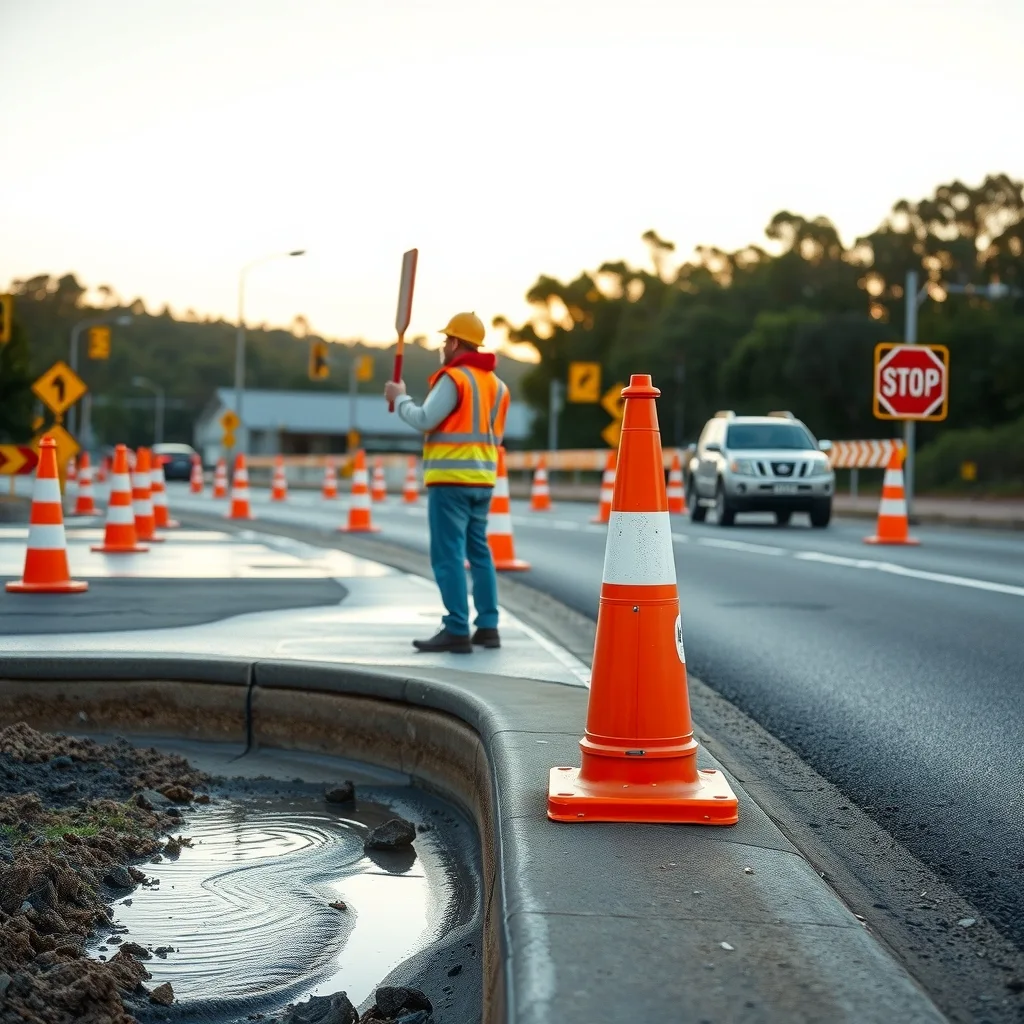

Construction is about to start on the Forest Road Intersection Upgrades project at Trevallyn, on Launceston’s western edge, adding traffic and pedestrian signals, a left-turn lane, a bicycle lane, a pedestrian refuge and shared path connections where Forest Road south meets the West Tamar Highway. The job is due to be finished by late October 2026.
The works were reported by Roads & Infrastructure, which says the intersection sits inside a $22.5 million Federal and Tasmanian government commitment to targeted upgrades along the West Tamar Highway between Exeter and Launceston.
State Minister for Infrastructure and Transport Kerry Vincent said the government was “very pleased to begin the next stage of targeted upgrades to the West Tamar Highway”, which carries traffic between Launceston, Riverside, Legana and the wider West Tamar region.
What’s going in at Forest Road south
Forest Road south is a local access road linking nearby residential streets to the highway, and the upgrade treats it as a full signalised intersection rather than a patch-up. The scope covers new traffic and pedestrian signals, changes to the existing traffic islands and median, a dedicated left-turn lane, a pedestrian refuge, a bicycle lane, and shared path connections.
Vincent said the changes would deliver “a safer, more efficient section of road” for the area, and put in “more infrastructure to support pedestrians, cyclists, and those catching public transport.”
“More infrastructure to support pedestrians, cyclists, and those catching public transport.”
The highway itself was recently duplicated, which is usually where the pressure moves onto the side roads. Duplicate the through route and every local T-junction hanging off it suddenly has more traffic, faster traffic, and a harder gap to find. Signals and a left-turn lane are the standard answer.
The work underneath the announcement
A signalised intersection build is a civil job with a long tail of small, fussy trades. Before a single signal pole goes up there’s underground work: conduit runs and pits pulled across and under the carriageway, footings dug and poured for the signal poles, and drainage adjusted wherever the kerb line moves.
Then it’s kerb and gutter. Reshaping the traffic islands and median, forming the pedestrian refuge, and tying in the shared path connections all land on concreters and formwork crews, working in short pours between traffic switches rather than in one clean run.
Asphalt crews follow for the widening and resurfacing where the left-turn lane and bike lane go in. Line marking, signage and the signal commissioning come last, and traffic control sits over the whole thing from the first day to the last.

What that means on the tools: the crew mix changes week to week, and the concrete work is broken into stages that have to fit around live traffic. It’s not a job where anyone gets a wide, empty site to work in.
Site prep is done, the disruptive part starts in September
This project is being delivered in stages, with initial site preparation already complete and construction starting shortly.
From early September to late October 2026, the higher impact work begins at the intersection and on the West Tamar Highway lanes heading towards Riverside, with traffic impacts and minor detours in place.
That’s a tight window for a program of this scope, and it puts a hard finish date on it. For subbies chasing civil work in northern Tasmania, it’s a spring package rather than a multi-year gig: the kind of job that suits a crew already working the Launceston to Legana corridor and looking to fill a couple of months, not one that justifies buying new plant.
What to watch
Early September is the date that matters. Once the higher impact stage starts, anyone running utes, tippers or floats between Launceston and Riverside during the morning peak should plan for the detours, and anyone quoting jobs in Trevallyn or the West Tamar during September and October should build the delays into travel time rather than eat them.
One more thing to watch is what comes next along the corridor. Forest Road is one piece of the $22.5 million Exeter to Launceston package, so there’s more targeted work to be scoped and let between here and Exeter.
Frequently asked questions
When does work start on the Forest Road intersection at Trevallyn?
Site preparation is already under way, with the higher-impact construction phase running from early September to late October 2026.
How much is being spent on the West Tamar Highway upgrades?
The Forest Road works are part of a $22.5 million joint Federal and Tasmanian government commitment to targeted upgrades along the West Tamar Highway between Exeter and Launceston.
What’s changing at the Forest Road intersection?
The upgrade adds traffic and pedestrian signals, a dedicated left-turn lane, a bicycle lane, a pedestrian refuge and shared path connections where Forest Road south meets the West Tamar Highway.
Will there be traffic delays during the works?
Yes. From early September, minor detours and traffic impacts are expected on the West Tamar Highway lanes towards Riverside during the higher-impact construction stage.
Sourced from Roads & Infrastructure. Original article.